
Every year during the college entrance examination season, parents and students pay close attention to the application process, which is a crucial step in life. This is especially true for engineering and technology fields, where a broad range of choices, strong specialization, and diverse career paths make it essential to understand popular majors in depth.
This article provides a systematic analysis of five popular engineering majors: Computer Science and Technology, Electronic Science and Technology, Control Science and Engineering (Automation), Electrical Engineering, and Information and Communication Engineering. It covers core content, career prospects, suitable candidates, and important considerations to help you make a more informed choice.
Core Analysis Dimensions:
-
What to study? (Core courses, knowledge system)
-
Assessment of academic strength? (List of strong institutions for the major/discipline)
-
What can you do? (Employment directions, industry fields)
-
What are the prospects? (Market demand, development trends, salary potential)
-
Who is it suitable for? (Required abilities, interests, personality traits)
-
What should you pay attention to? (Learning difficulty, institutional differences, necessity of further education, potential challenges)
In-depth Analysis of Current Popular Engineering Majors
Note that all university courses in the following majors are related to mathematics and physics. Required mathematics courses include: Advanced Mathematics (some engineering majors also study Mathematical Analysis from the Mathematics Department), Linear Algebra (some engineering majors also study Advanced Algebra from the Mathematics Department), Probability Theory and Mathematical Statistics. Some engineering majors also require courses in Complex Variables, Differential Equations, and Functional Analysis.
Additionally, due to various reasons, the results of the fifth round of discipline assessment have not been officially released. The conclusions regarding the strength ranking of the majors in this article reference the results of the fourth round of discipline assessment.Note that academic strength is not equivalent to the minimum admission scores of various schools. Some prestigious schools have high admission scores, but their academic strength may not be as strong as that of some lower-ranked 985 or 211 institutions. It is important to view this rationally when making choices.The general principle is that during the undergraduate stage, more emphasis can be placed on the reputation and ranking of the school, while during the graduate stage, more emphasis should be placed on the ranking of the discipline.
1. Computer Science and Technology
This major cultivates students with a strong sense of social responsibility and mission, who can adapt to the needs of social and economic development and the independent and controllable strategic development of China’s information industry. Students will acquire solid mathematical, natural science, engineering fundamentals, and professional knowledge and skills in computer science and technology, along with strong innovative spirit and practical abilities, outstanding systematic capabilities, good humanistic qualities, a broad perspective on large engineering projects, team spirit, international vision, and sustainable competitiveness. Graduates can engage in research, design, development, and management work related to the computer field, becoming outstanding talents capable of solving complex engineering problems in computer science and technology. After about five years of work, they can become technical backbones or industry elites in their units, fields, or industries.
Related majors include Artificial Intelligence, Data Science and Big Data, Software Engineering, Network Engineering.
-
What to study?
Core courses include: Mathematics, Principles of Computer Systems, Data Structures and Algorithms, Operating Systems, Computer Networks, Databases, Compiler Principles, Programming Languages (C++/Java/Python, etc.), Software Engineering, Fundamentals of Artificial Intelligence, etc. (Software Engineering focuses more on software development processes, project management, testing, and maintenance).
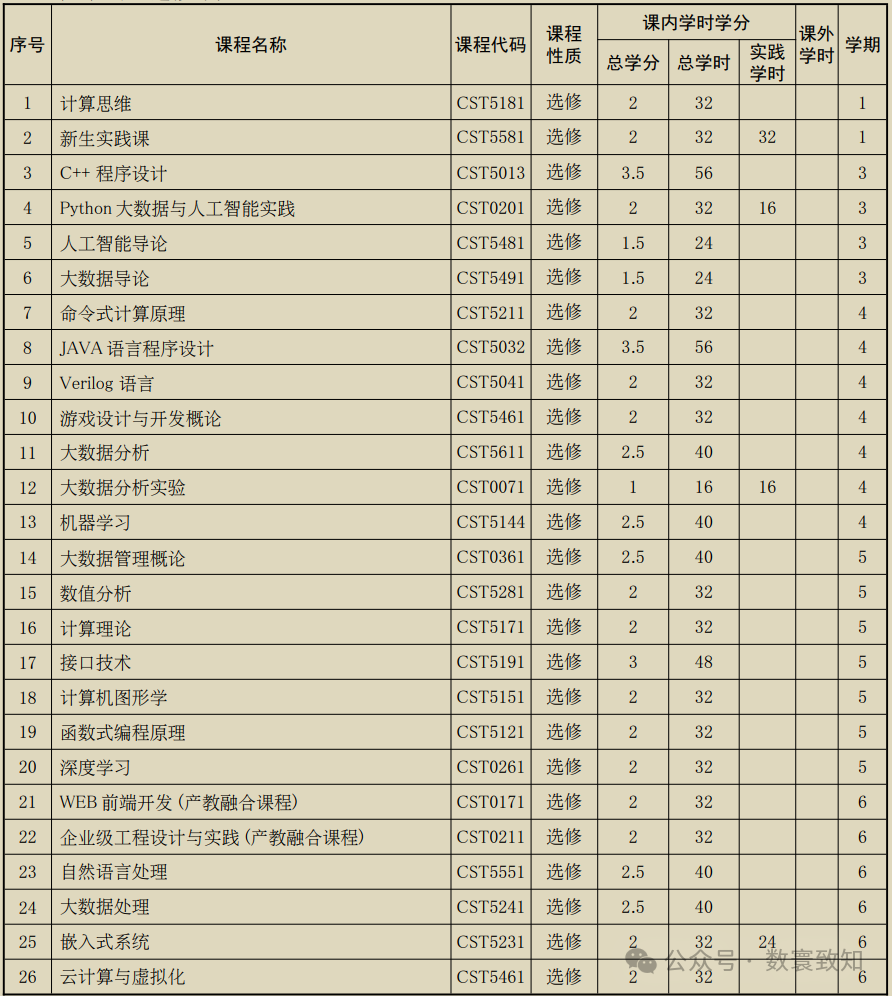
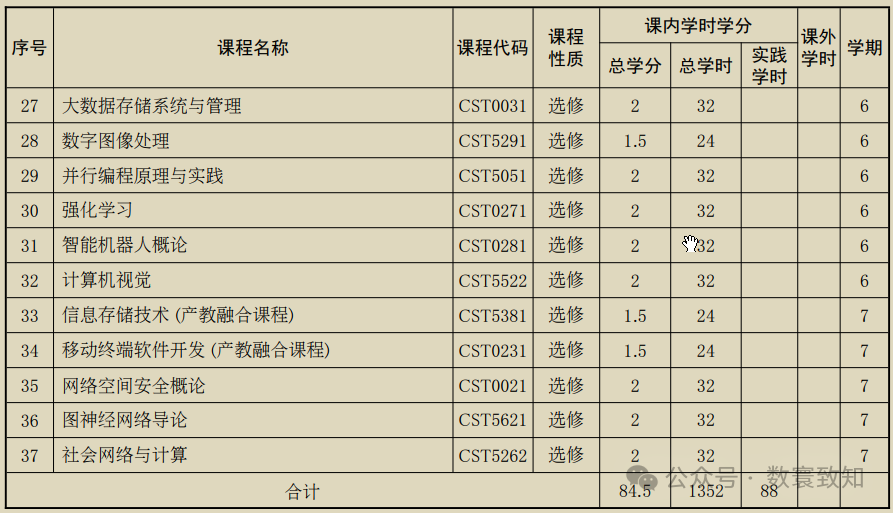
For example, a strong computer science university has the following four-year curriculum:
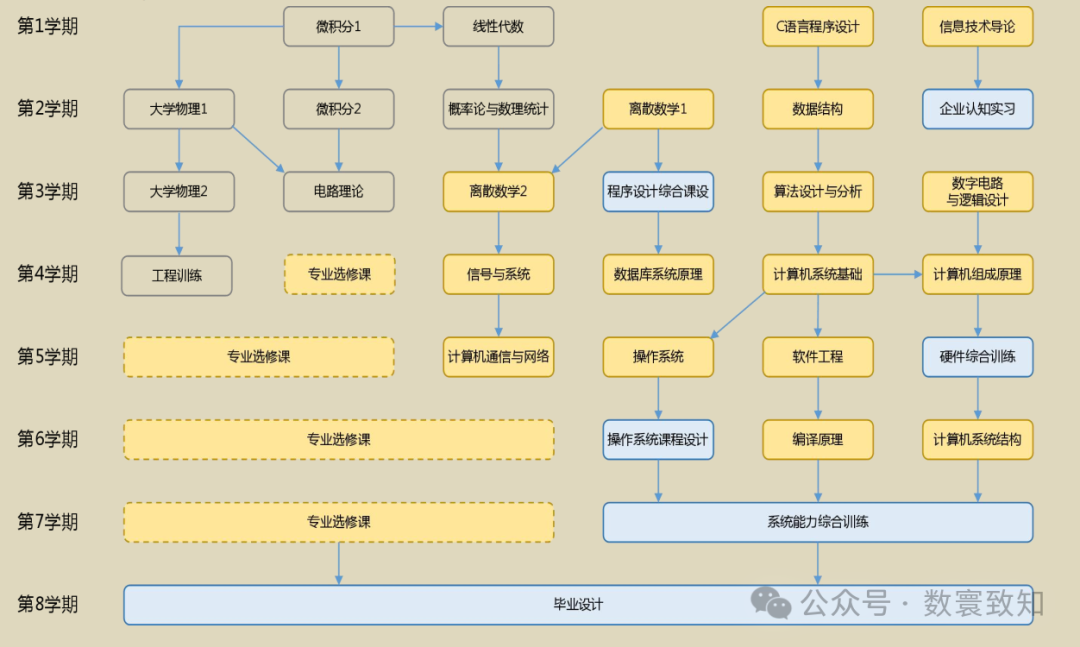
Elective courses in computer science are very rich, and students can choose based on their interests and research directions, without needing to select all of them, as overloading can be counterproductive.
-
Ranking of Computer Science and Technology Programs
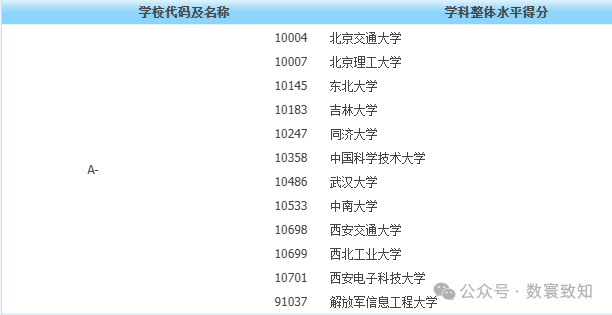
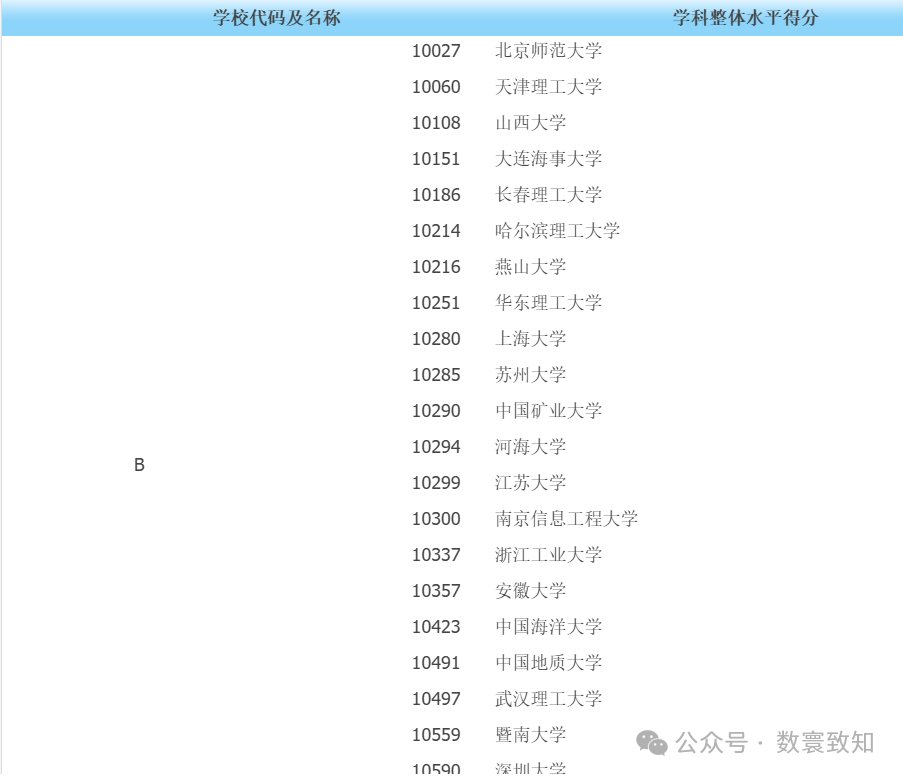
In this first-level discipline, there are 77 universities nationwide with “Doctoral Authorization”; 75 participated in the fourth round of discipline assessment; some universities with “Master’s Authorization” also participated in the assessment; a total of 238 universities were evaluated. (Note: Universities with the same assessment results are not ranked in order, but arranged by school code).
Universities above A-level are as follows; these universities have strong capabilities in computer science, and if your scores are sufficient, you can consider aiming for them.

A- level universities are as follows:
B+ level universities are as follows:

-
What can you do?
-
Technical Positions: AI Algorithm Engineer (Artificial Intelligence), System Architect, Software Development Engineer (Frontend/Backend/Full Stack), Big Data Engineer, Network Security Engineer.
-
Non-technical Positions: Product Manager, Technical Support, IT Consulting, Technical Sales, Project Management.
-
Industries: Internet giants, Fintech, Software Development Companies, Communication Equipment Manufacturers, Government Departments, Research Institutions, and almost all traditional industries that require information technology (such as manufacturing, healthcare, education).
-
What are the prospects?
-
Huge and Sustained Demand: Digital transformation is a trend of the times, and all industries need IT talents. Artificial Intelligence, Big Data, Cloud Computing, Internet of Things, and Cybersecurity are ongoing hot topics.
-
Leading Salaries: Starting salaries are high, and engineers with strong technical skills and rich experience have very competitive salaries, especially in leading companies and popular fields.
-
Fast Updates, Need for Lifelong Learning: Technology iterates rapidly, requiring continuous learning of new knowledge and frameworks.
-
Who is it suitable for?
-
Strong logical thinking, enjoys analyzing and solving problems.
-
Has a strong interest and curiosity in programming, algorithms, and new technologies.
-
Possesses strong mathematical (especially Discrete Mathematics, Linear Algebra, Probability Theory) and English skills (a lot of quality materials are in English).
-
Can withstand a certain amount of work pressure and adapt to a fast-paced environment.
-
What should you pay attention to?
-
Significant Institutional Differences: Top institutions have far superior resources, platforms, and opportunities compared to ordinary institutions. Pay attention to discipline assessment results.
-
Practice is Key: Theory must be combined with a lot of hands-on practice (coding, projects). Internship experience is very important.
-
Competition Exists: Entry-level positions are highly competitive, requiring continuous improvement of core competitiveness (technical depth, project experience).
-
Physical Challenges: Long hours in front of a computer require attention to eye health and appropriate exercise.
2. Electronic Science and Technology
This major cultivates high-quality innovative talents who can adapt to the needs of national scientific and technological development and economic and social development, and who can engage in scientific research, engineering design, technical development, manufacturing, application, operation, and management in the field of electronic science and technology. These talents should possess good innovative practical abilities and a broad international perspective.
Related majors include Electronic Information Engineering, Integrated Circuit Design and Integrated Systems, Micro Electronic Science and Engineering.
-
What to study?
Mathematics, Circuit Analysis, Analog/Digital Electronic Technology, Signals and Systems, Electromagnetic Fields and Waves, Digital Signal Processing, Information Theory, Embedded Systems, Microprocessor Principles, RF Technology, Wireless Communication, etc.
For example, a strong electronic science university has the following four-year curriculum:
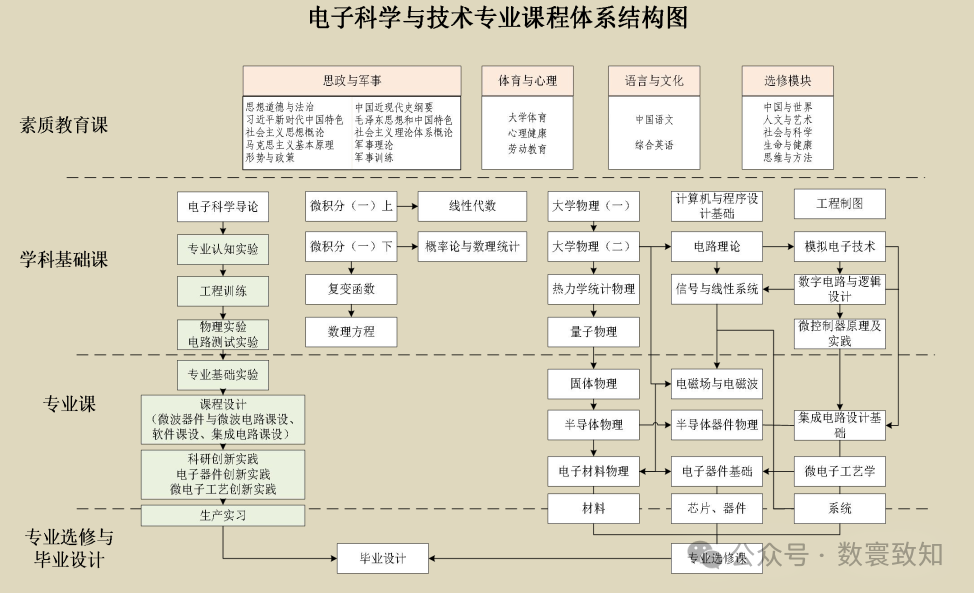
Elective courses are as follows:
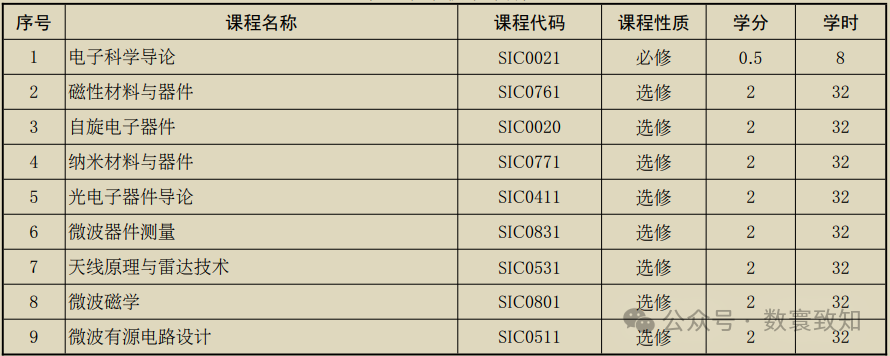
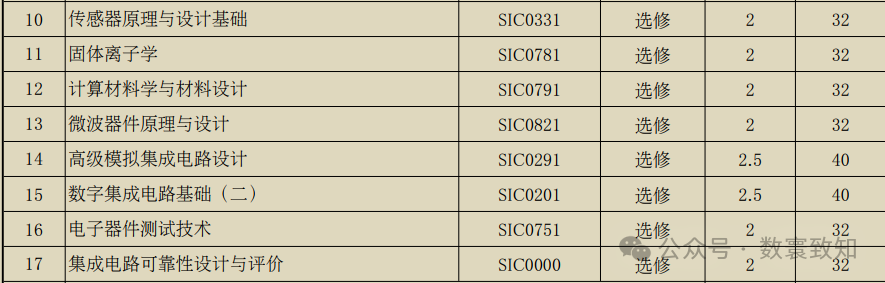
-
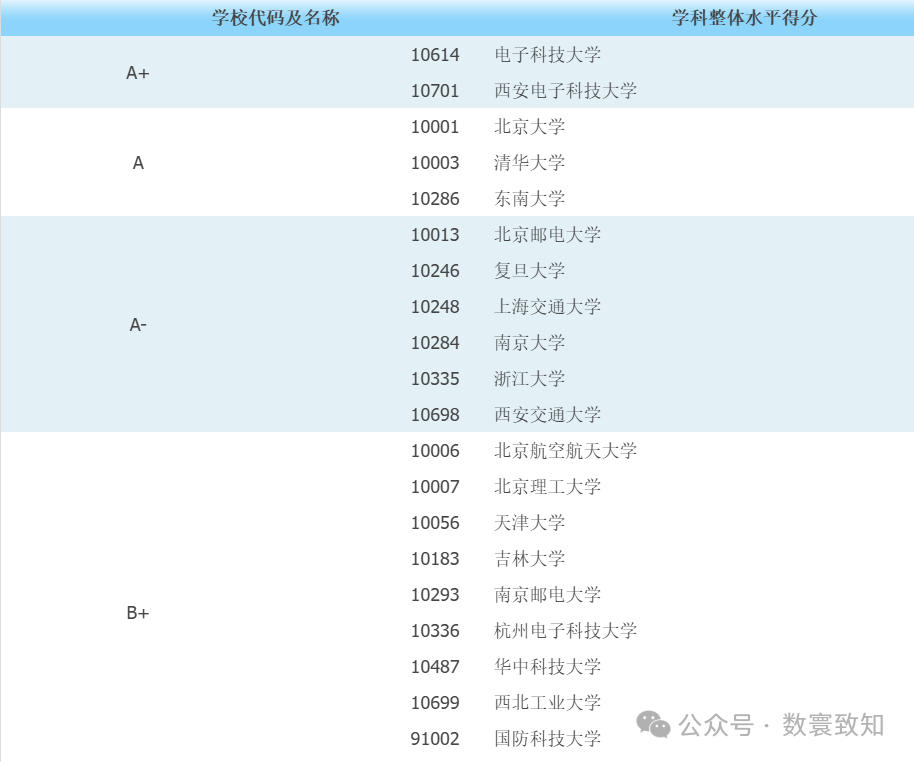
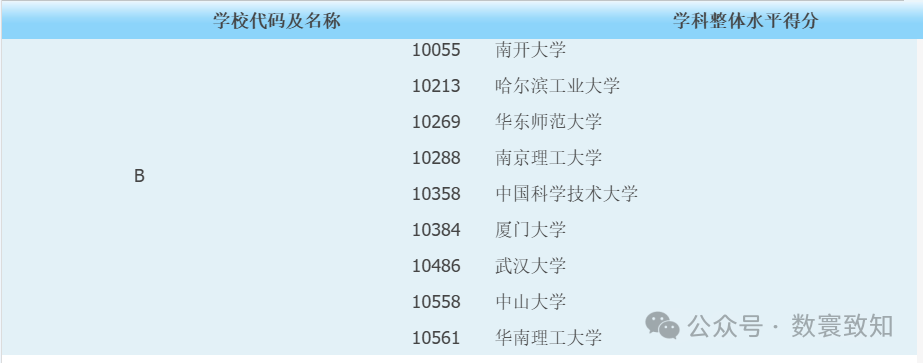
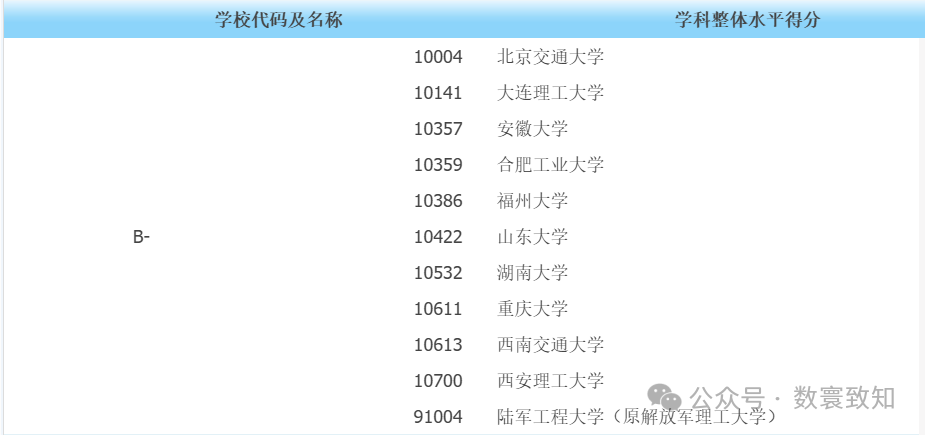
Ranking of Electronic Science and Technology Programs
In this first-level discipline, there are 52 universities nationwide with “Doctoral Authorization”; 49 participated in the fourth round of discipline assessment; some universities with “Master’s Authorization” also participated in the assessment; a total of 106 universities were evaluated. (Note: Universities with the same assessment results are not ranked in order, but arranged by school code).
-
What can you do?
-
Hardware: Chip Design (IC Design), Circuit Design, PCB Design, Embedded Development, RF Engineer.
-
Software: Communication Protocol Development, DSP Development, Driver Development.
-
Systems: Communication Network Planning, Design, Optimization, Maintenance (4G/5G/6G, Optical Communication), IoT System Integration.
-
Industries: Communication equipment giants like Huawei, ZTE; operators like China Mobile, China Unicom, China Telecom; chip design/manufacturing companies (like HiSilicon, Spreadtrum, TI, Qualcomm); consumer electronics companies (mobile phones, home appliances); aerospace, national defense, military industry; automotive electronics (intelligent driving); research institutions.
-
What are the prospects?
-
Core of National Strategy: Integrated circuits (chips), 5G/6G, satellite internet, intelligent connected vehicles are key development areas for the country, with a large talent gap.
-
Strong Salary Competitiveness: Especially in chip design, high-end communication, and national defense industries, salary levels are high.
-
High Technical Barriers: The knowledge system is complex, experience accumulation is important, and the career lifecycle is relatively long.
-
Who is it suitable for?
-
Solid foundation in physics (especially electricity) and mathematics.
-
Strong hands-on ability, enjoys hardware debugging or system design.
-
Interest in electronic devices, communication principles, and chip technology.
-
Patience and research spirit, able to handle complex system problems.
-
What should you pay attention to?
-
High Learning Difficulty: Courses are theoretically deep, with high mathematical requirements (Complex Variables, Integral Transforms, etc.), and strong practical components (experiments, projects).
-
High Hardware Investment: Requires good experimental equipment and platforms, with top institutions having significant advantages.
-
High Proportion of Further Education: Especially for those wanting to enter high-end fields like chip design and core algorithm research, a master’s degree is often the starting point.
-
Many Subfields: Undergraduate knowledge is broad but not deep, requiring early clarification of interest areas (such as RF, digital IC, communication algorithms, embedded systems).
3. Control Science and Engineering (Automation)
Mastering automation theories and core technologies, possessing strong practical abilities, familiar with interdisciplinary knowledge related to automation, and able to apply automation knowledge to analyze and solve practical problems, serving the high-quality development of the economy and society, and the construction of a modern socialist country, while having the potential to cultivate high-level talents in engineering technology.
Graduates with five or more years of experience are expected to engage in design and development of automatic control systems in innovative enterprises, undertake management tasks, and become backbones of the enterprise; or, after further education, work in leading enterprises’ R&D institutions and research institutions in industrial automation, mechatronics, artificial intelligence, industrial process analysis and processing, or continue to engage in scientific research in related fields in universities, gradually becoming technical backbones and leading innovative technology talents.
Related majors include Automation Robotics Engineering Intelligent Equipment and Systems Control Science and Engineering
-
What to study?
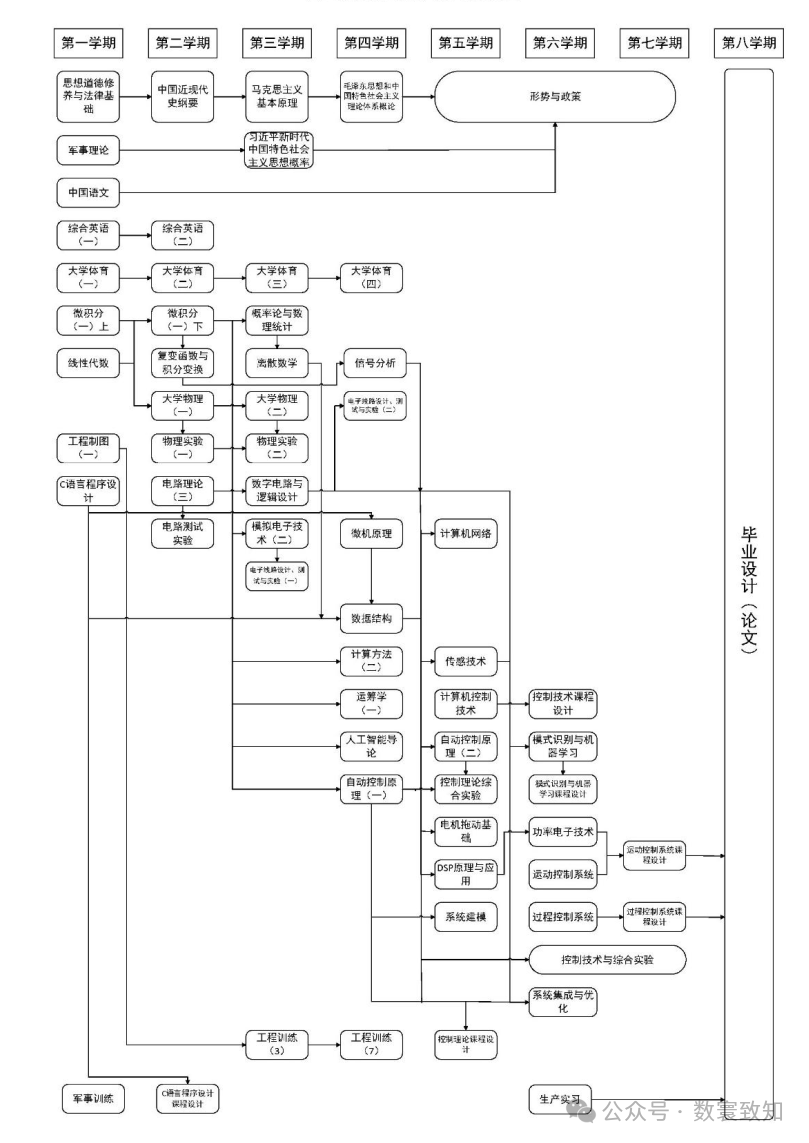
Principles of Automatic Control (core), Modern Control Theory, Process Control, Motion Control, Computer Control, PLC, Microcontroller/Embedded Systems, Sensor and Detection Technology, Motor and Drive, Power Electronics Technology, Basics of Robotics, Fundamentals of Artificial Intelligence, etc. The knowledge base is broad, combining software and hardware.
For example, a strong automation university has the following four-year undergraduate training system:
-
Ranking of Control Science and Engineering Programs
In this first-level discipline, there are 67 universities nationwide with “Doctoral Authorization”; 64 participated in the fourth round of discipline assessment; some universities with “Master’s Authorization” also participated in the assessment; a total of 162 universities were evaluated. (Note: Universities with the same assessment results are not ranked in order, but arranged by school code).
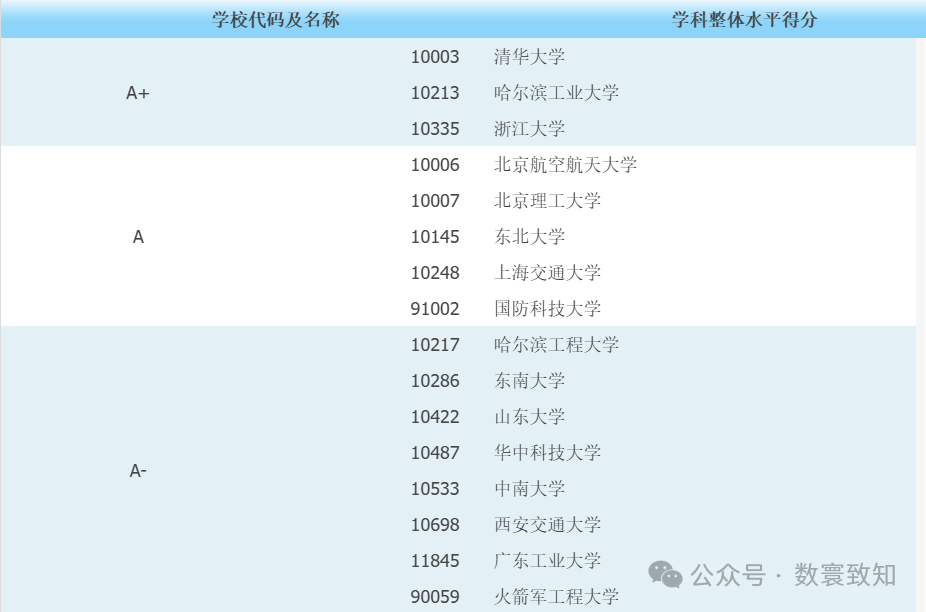
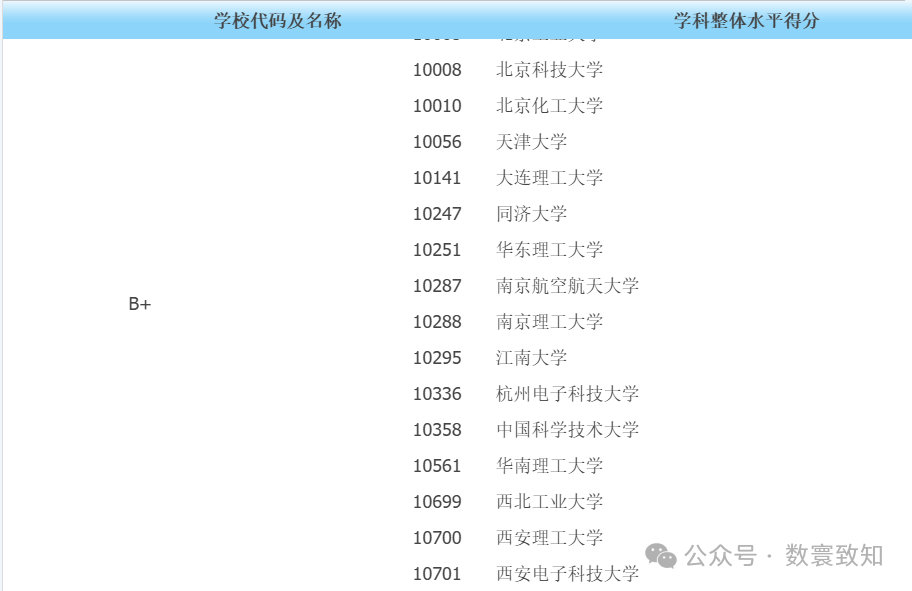
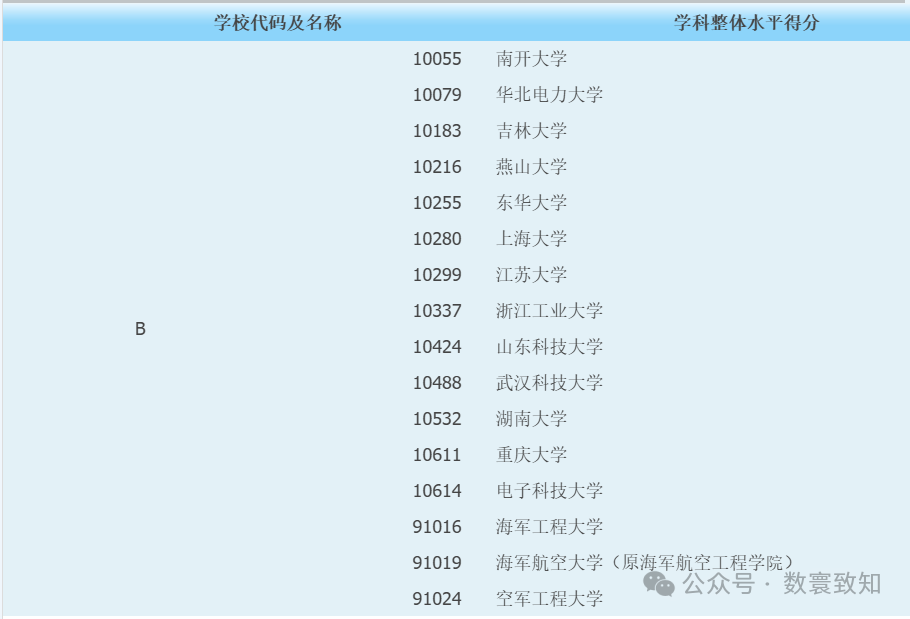
-
What can you do?
-
Industrial Control: Design, integration, debugging, and maintenance of automation systems (DCS/PLC/SCADA); Industrial Robot Application Engineer.
-
Embedded Development: Focused on embedded software development for control systems.
-
Intelligent Systems: Robotics R&D (motion control, perception, decision-making), intelligent equipment development.
-
Process Control: Automation in process industries such as petroleum, chemicals, and pharmaceuticals.
-
Industries: Manufacturing (automotive, 3C, machinery), Internet algorithm companies (development-oriented), industrial automation integrators (like Siemens, Rockwell, and Hanyin), robotics companies, power electronics companies, research institutes.
-
What are the prospects?
-
Core of Intelligent Manufacturing: Core supporting technology for “Made in China 2025”, with strong demand for industrial automation and robotics applications.
-
Wide Application: Penetrates almost all modern industries and some service industries (like logistics sorting).
-
Salaries: Linked to experience and technical ability, senior engineers and experts with core technologies can earn considerable salaries.
-
Who is it suitable for?
-
Strong system thinking, enjoys researching how to make machines operate according to set goals.
-
Good foundation in mathematics (control theory involves a lot of mathematics).
-
Combines software programming skills with some hardware knowledge (circuitry, electronics).
-
Interested in robotics, intelligent manufacturing, and intelligent systems.
-
What should you pay attention to?
-
Balance between being a “jack of all trades” and “specialization”: Undergraduate knowledge is broad but may not be deep; it is necessary to delve into a specific application area (like robotics control, process optimization).
-
High Practical Requirements: Laboratory projects, internships, and competitions (like RoboMaster) are very important.
-
Intersections with Computer Science and Electronics: Requires proactive learning of related field knowledge (like data structures, algorithms, embedded development).
4. Electrical Engineering
This major cultivates high-quality innovative talents who can adapt to the needs of national scientific and technological development and economic and social development, and who can engage in research, development, design, manufacturing, operation, and management in the fields of power systems, electrical equipment, and electromagnetic science, possessing an international perspective and global competitiveness.This major is also broad-based; in addition to electrical enterprises, it also provides a solid mathematical foundation for cross-industry fields such as internet development and AI.
-
What to study?
Mathematics, Circuit Theory, Analog/Digital Electronic Technology, Electromechanics, Power Electronics Technology, Power System Analysis (steady-state, transient), High Voltage Technology, Principles of Automatic Control, PLC, Microcontroller/Embedded Systems, Relay Protection, etc.
For example, a strong electrical engineering university has the following four-year curriculum:
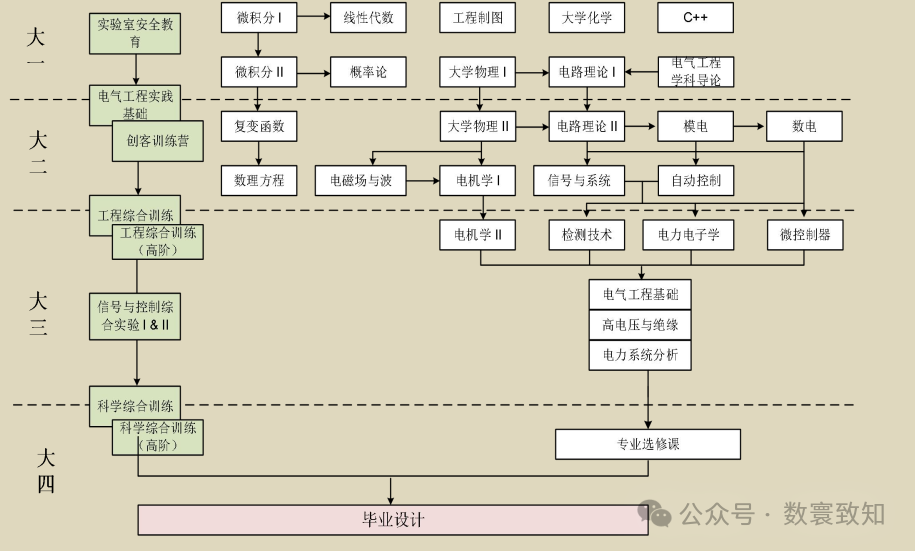
There are also many elective courses that can be chosen based on interests.
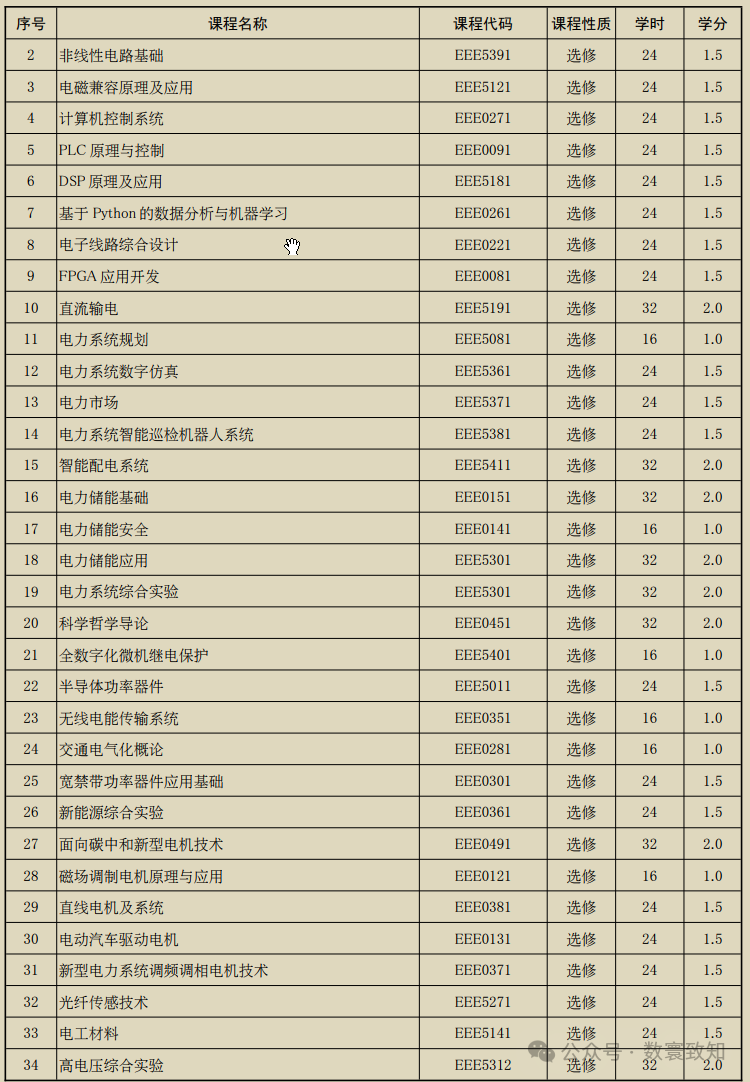
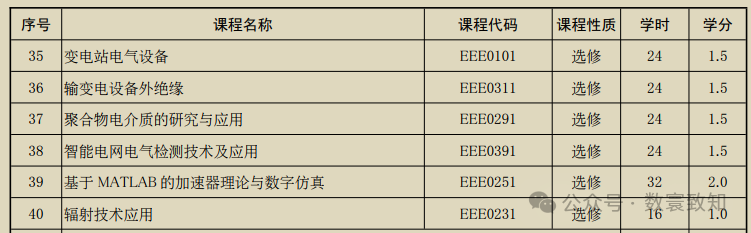
-
Ranking of Electrical Engineering Programs
In this first-level discipline, there are 40 universities nationwide with “Doctoral Authorization”; 39 participated in the fourth round of discipline assessment; some universities with “Master’s Authorization” also participated in the assessment; a total of 84 universities were evaluated. (Note: Universities with the same assessment results are not ranked in order, but arranged by school code).
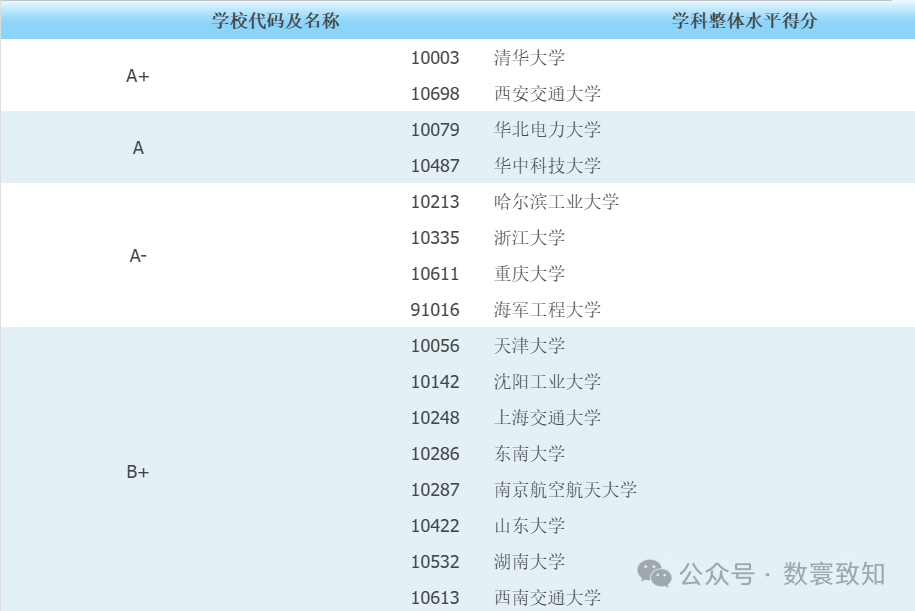

-
What can you do?
-
Power Systems: Planning, design, operation, scheduling, and maintenance for grid companies (State Grid, Southern Grid); operation and maintenance of power plants (thermal, hydro, nuclear, renewable energy); power design institutes.
-
Industrial Automation: Industrial control system design, PLC programming, application of frequency converters, integration of robotic applications (focused on control).
-
Power Electronics and Motor Control: Power supply design, electric drive systems for new energy vehicles, traction systems for rail transit, research and development of frequency converters.
-
Building Electrical: Intelligent building systems, power distribution design.
-
Industries: State Grid/Southern Grid and their subsidiaries, power generation groups, power design institutes, electrical equipment manufacturers (like ABB, Siemens, TBEA), new energy vehicle companies, rail transit (subway), industrial control automation companies, large manufacturing enterprises. Can also transition to internet algorithms, artificial intelligence.
-
What are the prospects?
-
National Key Industry, Stable Demand: Energy is the foundation of the national economy, and the power industry is relatively stable, especially in grid and large power generation enterprises.
-
Opportunities in New Energy Transition: Photovoltaics, wind power, energy storage, smart grids, and electric vehicle charging facilities create a large new demand.
-
Salary Levels: Salaries in grid systems are stable and above average in local areas (especially in first and second-tier cities and provinces like Jiangsu, Zhejiang, Shandong, and Hebei), while salaries in industrial automation are linked to experience and technical ability, with significant variation.
-
Who is it suitable for?
-
Good foundation in physics (electricity, mechanics).
-
Interest in energy, electricity, and automation systems.
-
Strong hands-on and practical abilities.
-
Seeking stability (leaning towards the grid) or passionate about industrial control and power electronics.
-
What should you pay attention to?
-
Entry Barriers to the Grid: The main route is to participate in the unified examination of the State Grid/Southern Grid, which has requirements for institutions, majors, and scores (institutions under the former Ministry of Electric Power have advantages).
-
Significant Differences in Subfields: Employment fields and content differ significantly among directions such as power systems, power electronics, motors, high voltage, and automation.
-
Work Environment: Some positions (like power plant operations, equipment maintenance, engineering sites) may require shift work or outdoor/on-site work.
5. Information and Communication Engineering
This major cultivates students with a solid theoretical foundation, engineering knowledge, practical skills, and innovative entrepreneurial abilities in the fields of communication engineering, 5G, 6G, and green low-carbon technologies. It includes basic professional knowledge in all aspects from information acquisition, analysis, storage, transmission, processing to application, as well as the basic principles and technologies of communication systems and networks. Graduates are expected to gradually become high-quality innovative talents who adapt to the needs of socialist modernization and the development of the information industry, practicing the core socialist values.
-
What to study?
Mathematics, Circuit Theory, Analog/Digital Electronic Technology, Computer Fundamentals, C/C++/Python Programming, Signals and Systems, Digital Signal Processing, Communication Principles (the core of the core, learning the basic theories and technologies of how information is modulated, encoded, transmitted, demodulated, and decoded), Information Theory and Coding, Electromagnetic Fields and Waves, Microwave Technology and Antennas, Communication Electronic Circuits, Communication Networks and Security, Computer Networks, Wireless Sensor Networks, etc.
For example, a strong communication engineering university has the following four-year curriculum:
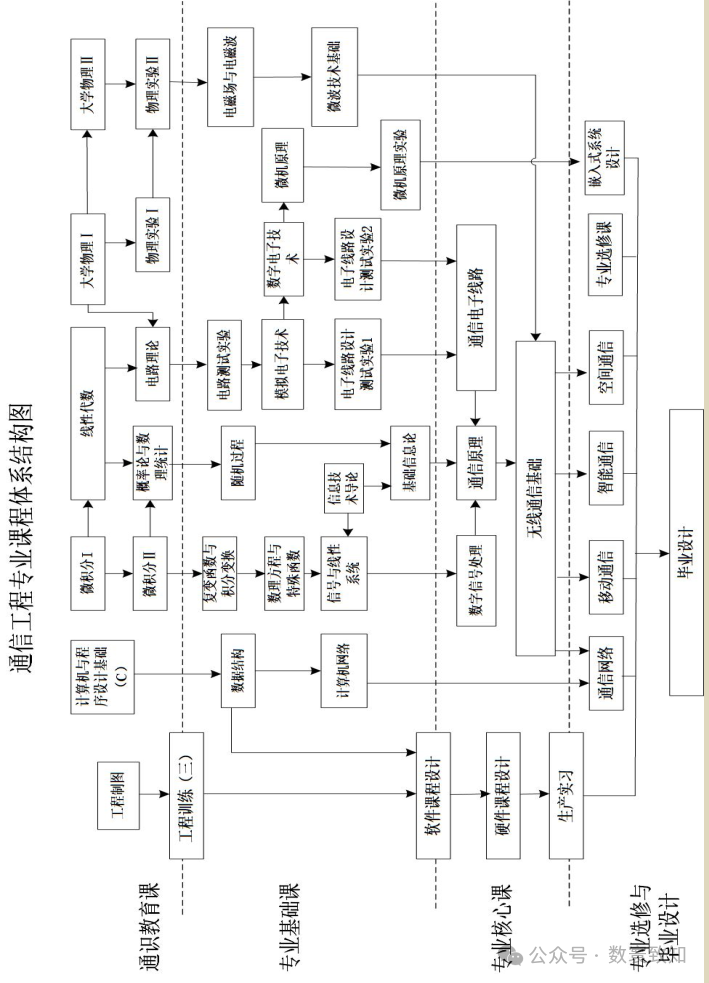
There are also many elective courses.The elective courses for the third year are as follows:
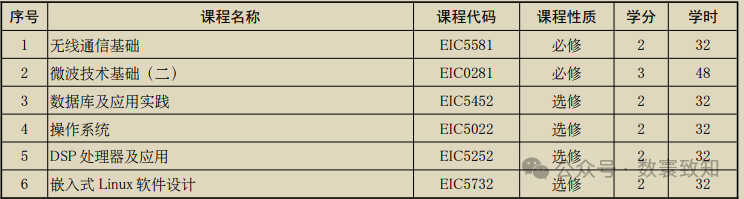
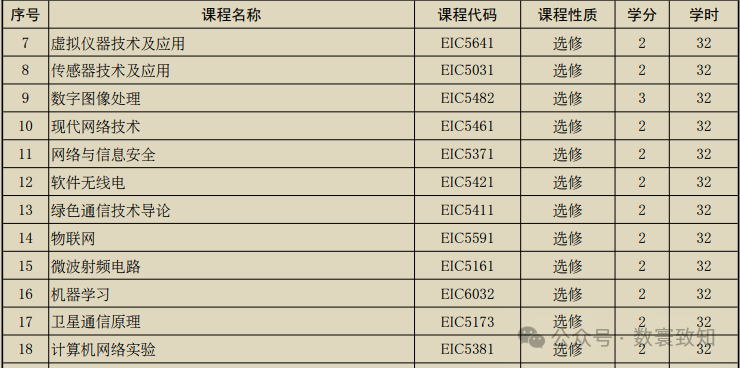
It can be said that the courses in communication engineering are very rigorous, and it can even be said to be the most challenging engineering major, with the highest relevance to mathematics and physics.
-
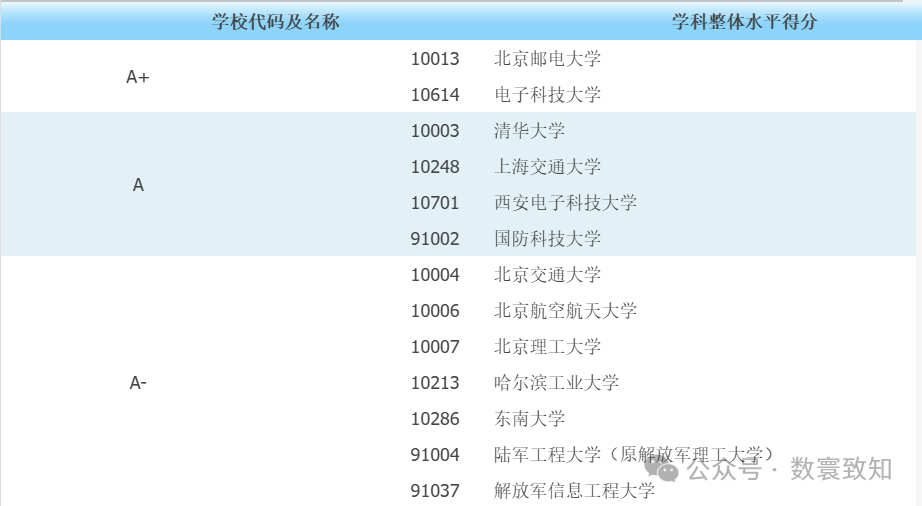
Ranking of Information and Communication Engineering Programs Strength Ranking
In this first-level discipline, there are 64 universities nationwide with “Doctoral Authorization”; 61 participated in the fourth round of discipline assessment; some universities with “Master’s Authorization” also participated in the assessment; a total of 137 universities were evaluated. (Note: Universities with the same assessment results are not ranked in order, but arranged by school code).


-
What can you do?
Graduates of the Information and Communication Engineering major have a wide range of employment opportunities, covering almost all fields that require information transmission and processing:
-
Core Employment Areas:
-
Communication Equipment Manufacturers: Huawei, ZTE, Ericsson, Nokia, etc. Engaging in R&D (hardware, software, algorithms), testing, technical support, sales, etc. This is the most relevant field.
-
Telecom Operators: China Mobile, China Unicom, China Telecom. Engaging in network planning, construction, maintenance, optimization, operational support, technical management, market/government enterprise solutions, etc.
-
Internet/Software Giants (ICT Integration): Tencent, Alibaba, ByteDance, Baidu, etc. Engaging in cloud computing infrastructure, audio and video transmission, network optimization, backend development, big data processing, IoT platform development, etc. Requires strong programming and networking knowledge.
-
Chip Design Companies: Qualcomm, MediaTek, Unisoc, etc. Engaging in the design, verification, and testing of communication chips (baseband, RF).
-
Research Institutions/Universities: Engaging in cutting-edge communication technology research, standard formulation, and teaching work (usually requires a doctoral degree).
Wide Employment Areas:
-
Fintech: Financial information systems, high-frequency trading communication, cybersecurity.
-
Automotive Electronics/Intelligent Driving: In-vehicle communication (V2X), sensor data processing, entertainment systems.
-
Aerospace/National Defense Industry: Radar, navigation, satellite communication, secure communication.
-
Medical Electronics: Medical imaging transmission, telemedicine, wearable health devices.
-
Consumer Electronics: Communication modules in smartphones, smart homes, and wearable devices.
-
IoT-related Enterprises: Sensor networks, platform development, AI algorithms, solutions.
-
What are the prospects?
Long-term Strong Demand: The infrastructure of the information society, emerging technologies like 5G/6G, IoT, artificial intelligence, cloud computing, and big data heavily rely on communication technology support, and the demand for talent continues to exist.
Fast Technology Updates: Requires continuous learning of new knowledge and technologies (from 4G to 5G to 6G).
Salary Levels: Overall, it is above average in engineering. Core R&D positions in top companies (like Huawei, internet giants) have very competitive salaries. Operators are relatively stable, but salary increases may not be as high as those in equipment manufacturers and internet companies.
Geographic Distribution: Employment opportunities are mainly concentrated in economically developed areas and high-tech industrial parks (like Beijing, Shanghai, Guangzhou, Shenzhen, Nanjing, Wuhan, Chengdu, Xi’an, etc.).
Who is it suitable for?
-
Choosing this major is best suited for those who possess or cultivate the following traits:
-
Solid Mathematical Foundation: Mathematics (especially Mathematical Analysis, Probability Statistics, Linear Algebra) and Physics (Electromagnetism) are key to understanding professional theories. If you struggled with math and physics in high school and have no interest, studying will be very challenging.
-
Strong Logical Thinking Ability: Analyzing complex systems, designing algorithms, and debugging circuits/programs all require clear logic.
-
Hands-on Practical Ability: Experiments, course designs, and projects require hands-on skills like soldering, debugging circuits, writing code, and configuring devices.
-
Passion for Continuous Learning: Technology iterates rapidly, and maintaining a habit and ability to learn is essential.
-
Certain Programming Skills: C/C++, Python, Matlab, etc. are commonly used tools, and software skills are becoming increasingly important.
-
English Proficiency: Many top technical materials, papers, standards, and equipment documentation are in English.
-
Interest-Driven: A strong interest in electronic products, wireless technology, networks, signal processing, and solving technical problems is a source of lasting motivation.
-
Patience and Attention to Detail: Debugging hardware circuits or complex software systems often requires great patience and attention to detail.
What should you pay attention to?
-
Mathematics and Physics are the Cornerstones: If you have anxiety about mathematics and physics or poor performance, consider carefully. The difficulty of university courses is much higher than that of high school.
-
Integration of Software and Hardware: You need to understand hardware (circuits, electromagnetic waves) and software (programming, algorithms). Understanding whether you prefer hardware design, software implementation, or theoretical algorithm research can help you focus on development during university.
-
The Level of the School is Very Important:
-
Top Universities (985/Top 211): Easier to enter core R&D positions in top companies, more opportunities for further education (graduate school/overseas).
-
Ordinary Universities: Employment options are still broad, but competition for core positions in top companies is fiercer, possibly requiring more outstanding project experience or further studies to enhance competitiveness. Choosing schools with a good industry reputation, laboratory resources, and internship opportunities is very important.
Clear Trend Towards Further Education: Graduates can find jobs, but a master’s degree is becoming increasingly common, especially in R&D positions. Most core R&D positions in top companies require a master’s degree or higher. When planning your applications, consider the acceptance rates for further studies, the atmosphere for graduate studies, and the strength of the school’s graduate training.
Pay Attention to Interdisciplinary Fields: The intersections of communication with computer science, artificial intelligence, control, and microelectronics are deepening. Choosing a school that also has advantages in related interdisciplinary fields is better.
Understand Specific Directions: Different schools’ “Information and Communication Engineering” majors may have different focuses (such as wireless communication, optical communication, networks, image processing, multimedia communication, etc.). Check the target school’s training programs, faculty strength, and laboratory research directions.
Practice! Practice! Practice! During university, participate in experiments, course designs, competitions (like electronic design competitions, intelligent vehicle competitions, “Challenge Cup”), research projects, and internships. Project experience is a very bright asset when job hunting.
Key Strategies for Filling Out Applications
-
Interest is the Primary Motivation: No matter how popular a major is, if you have no interest, it will be difficult to learn well and persist. Think about what you truly like and excel at.
-
Ability Matching is Fundamental: Objectively assess whether your mathematical foundation, logical thinking, hands-on ability, programming skills, and learning ability can support the intensity of study in your target major. For example, if you are weak in mathematics, be cautious about choosing AI, theoretical physics, or financial engineering; if you are poor in physics, be cautious about choosing electronic information or electrical engineering.
-
In-depth Understanding of Major Content: Don’t just look at the major name! Carefully study the specific training programs, core courses, faculty strength, research directions, experimental conditions, internship bases, and employment reports of the target major at the target school. Utilize the school’s official website, admission brochures, and resources from seniors.
-
Long-term Perspective on Prospects: Pay attention to national strategies (like the 14th Five-Year Plan, Made in China 2025, dual carbon goals), technology development trends (AI, new energy, biotechnology), and directions for industrial structure upgrades. But also be aware of the potential risks of “overheated” majors (like oversupply).
-
Institutional Level and Geography:
-
Top Institutions (985/Top 211): High platforms, abundant resources, many opportunities for further studies/overseas, and high recognition by enterprises, with significant advantages in foundational subjects (like mathematics, physics) and competitive fields (like computer science, finance). Aim high if possible.
-
Industry-Specific Institutions: Such as “Two Electric and One Post” (Electronics and Communication), the former “Four Little Dragons of Machinery”, “Old Eight Schools of Architecture”, “Two Dragons and Four Tigers of Electrical Engineering”, which have very high recognition in their specific fields, and may offer better value than ordinary 985/211 institutions with higher overall rankings.
-
Geography: Internship and employment opportunities are highly concentrated in economically developed areas (Beijing, Shanghai, Guangzhou, Shenzhen, and the Yangtze River Delta, Pearl River Delta). Institutions in the target region have local employment advantages. Consider where you want to develop in the future.
“Aim High, Steady, and Safe” Strategy:
-
Aim High: Schools and majors that you aspire to, with admission lines slightly higher than your ranking (there is a risk, as majors may be adjusted).
-
Steady: Schools and majors with admission lines that match your ranking (the most core choice).
-
Safe: Schools and majors with admission lines lower than your ranking, ensuring you can be admitted (to avoid slipping).
Consider Further Education Needs:
-
If you plan to pursue a master’s degree: pay attention to the school’s acceptance rates for further studies, academic strength (master’s and doctoral programs), and matching mentors for your target direction.
-
If you plan to study abroad: pay attention to the school’s international reputation and overseas cooperation projects.
-
Some majors (like mathematics, physics, biomedical engineering high-end R&D, core AI algorithms) almost require further education.
Understand Major Limitations: Pay attention to physical condition requirements (like color blindness affecting chemistry, biology, medicine, art, and some electronic information majors), and subject score requirements (like mathematics, English).
Don’t Blindly Follow “Hot” Trends: “Hot” is a dynamic change; today’s hot major may become fiercely competitive or saturated in four years. Choosing a direction that aligns with your characteristics and long-term national needs is more important.
Make Good Use of Parallel Application Rules: Understand the filing rules in your province (score priority/major priority/subject score difference), and reasonably order your applications to maximize your score.
Conclusion
Choosing an engineering major is a comprehensive consideration that combines personal interests, abilities, career aspirations, national needs, and market trends. There is no absolute best major, only the most suitable major for you.
-
Passionate about technology, strong logical thinking, and solid mathematical foundation: Computer Science, Electronic Information, AI, Automation, and Mathematics are the main battlefields.
-
Concerned about the future of energy, strong hands-on ability: Electrical Engineering, New Energy, and traditional machinery transitioning to intelligent manufacturing/robotics are directions to consider.
-
Interested in life and health, wanting to solve problems with engineering: Biomedical Engineering is worth exploring.
-
Mathematical genius, enjoying abstract thinking, with high aspirations: Build a solid mathematical foundation to shine in top fields like finance, AI, and research.
Be sure to do your homework, deeply understand the details of your target major and institution, and make rational and responsible choices based on your situation. Wishing you success in your exams and entry into your ideal university and major!