We often use touch screens and hear about various touch screen interfaces, such as LVDS, EDP, and MIPI. So, what are the differences between them?Let’s take a look.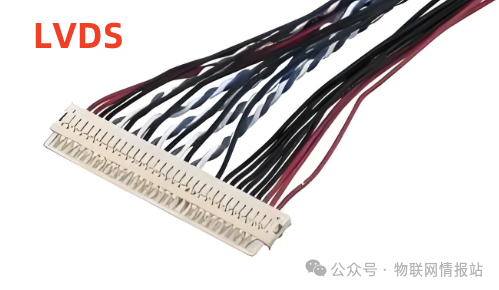
LVDS, EDP, and MIPI are three mainstream high-speed data transmission interfaces primarily used for display and video signal transmission, but they have significant differences in design goals, technical characteristics, and application scenarios. Here are their core differences:
1. Basic Definitions and Technical Architecture
-
LVDS (Low-Voltage Differential Signaling) is a pioneer in serial interface technology, using differential signaling (with a voltage swing of about 350mV) to transmit complementary signals over two signal lines, effectively suppressing electromagnetic interference (EMI). Its core advantages are low power consumption and strong anti-interference capability, making it suitable for long-distance transmission (up to several meters), but the protocol layer is relatively simple, only transmitting video data (in RGB or YUV format), requiring independent control signals (such as horizontal and vertical synchronization).
-
EDP (Embedded DisplayPort) is the embedded version of DisplayPort, established by VESA, specifically designed for internal displays. It uses a micro-packet structure and supports integrated transmission of video, audio, touch signals, and power management. The EDP 1.4 version has a bandwidth of up to 32.4Gbps, supporting 8K@60Hz resolution and adaptive refresh rates (such as dynamically adjusting frame rates to reduce power consumption).
-
MIPI (Mobile Industry Processor Interface) is a protocol alliance that includes various sub-interfaces (such as DSI for displays and CSI for cameras). MIPI DSI uses differential signaling (D-PHY or C-PHY), supporting mixed transmission of video streams and control commands. The protocol layer is complex but flexible, suitable for the low-power requirements of mobile devices.mipi.org. For example, MIPI DSI-2 supports both D-PHY and C-PHY physical layers, with a single-channel rate of up to 2.5Gbps.
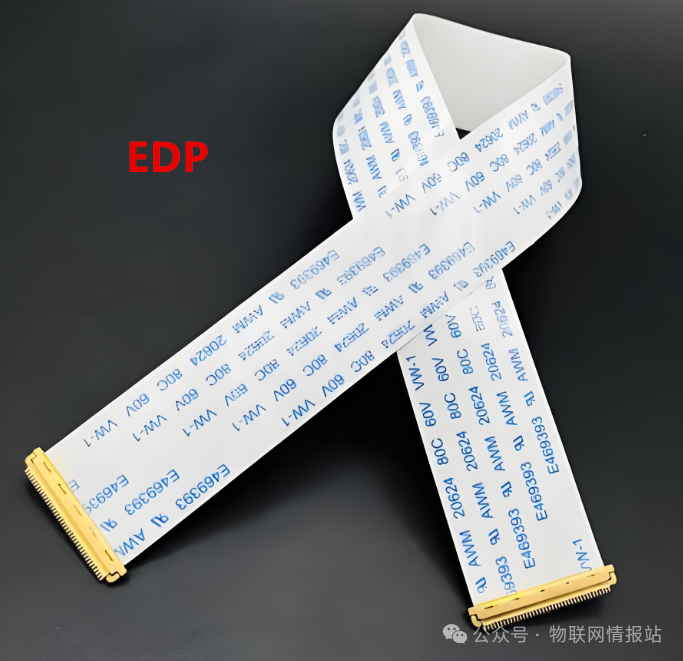
2. Application Scenarios
-
LVDS was widely used in laptops, industrial displays, and automotive systems in the past, and it still holds a place in industrial automation (such as machine vision), medical devices (such as ultrasound imaging), and automotive electronics (such as in-car screens). Its long-distance transmission and high anti-interference capabilities make it stable in harsh environments, but it has limited support for high resolutions (such as above 4K).
-
EDP is mainly used in laptops, tablets, and all-in-one computers, replacing traditional LVDS. With its high bandwidth and integrated functions (such as touch signal transmission), it has become the preferred choice for mid-to-high-end embedded displays, especially for devices requiring high resolution and refresh rates (such as 2K/4K screens).
-
MIPI almost monopolizes the smartphone, tablet, and wearable device markets. Its low power characteristics (such as only 2-5μA in ULPS mode) and flexible protocol layer (supporting dynamic refresh rate adjustment) perfectly adapt to mobile scenarios. Additionally, MIPI DSI is widely used in AR/VR devices, supporting high refresh rates of 120Hz.

3. Technical Feature Comparison
| Feature | LVDS | EDP | MIPI DSI |
|---|---|---|---|
| Signal Type | Differential signal (additional chip required for single-ended to differential conversion) | Differential signal (compatible with DisplayPort protocol) | Differential signal (D-PHY/C-PHY) |
| Transmission Content | Only video data (RGB/YUV) | Video, audio, touch, power management | Video streams, control commands, configuration data |
| Power Consumption | Higher (>100mW) | Medium (supports dynamic power management) | Very low (μA level in ULPS mode) |
| Bandwidth and Rate | Single channel up to 3Gbps, dual-channel supports 4K@60Hz | Version 1.4 32.4Gbps, supports 8K@60Hz | D-PHY single channel 2.5Gbps, C-PHY higher |
| Protocol Complexity | Simple (only physical layer) | Medium (micro-packet structure, supports expansion) | Complex (multi-layer protocol stack, supports various data formats) |
| Anti-Interference Capability | Strong (differential signal) | Strong (differential + protocol layer error correction) | Strong (differential + low voltage swing) |
| Cost | Higher (requires independent conversion chip) | Medium (high integration) | Low (cost advantages in connectors and chips) |
4. Typical Application Cases
-
LVDS
- Industrial Control: Production line monitoring screens (requiring long-distance transmission).
- Automotive Systems: Central control screens and dashboards (resistant to vibration and electromagnetic interference).
- Medical Devices: High-resolution displays in operating rooms.
-
EDP
- Laptops: Such as the Retina display in MacBook Pro.
- All-in-One: 4K touch screens in Dell XPS series.
- Docks: Achieving multi-screen output via EDP.
-
MIPI
- Smartphones: AMOLED screens in Samsung Galaxy S series.
- AR/VR Headsets: High refresh screens in Oculus Quest 2.
- Wearable Devices: Retina displays in Apple Watch.
5. Future Trends
- LVDS: Will continue to exist in industrial and automotive fields for a long time, but is gradually being replaced by EDP in consumer electronics.
- EDP: Will continue to evolve towards higher resolutions (such as 10K) and lower power consumption, potentially becoming the mainstream interface for automotive displays.
- MIPI: With the popularity of MIPI DSI-2 and C-PHY, it will further consolidate its position in mobile devices and AR/VR, while penetrating into industrial fields (such as miniaturized industrial screens).
Conclusion
- Choose LVDS: For industrial/automotive scenarios requiring long-distance transmission, high anti-interference, or low cost.
- Choose EDP: For embedded devices pursuing high resolution and integrated functions (such as touch).
- Choose MIPI: For mobile devices, low power requirements, or scenarios needing flexible protocol support.
In practical applications, interface conversion solutions (such as EDP to LVDS, MIPI to LVDS) are also widely adopted to meet the compatibility needs of different devices. For example, some industrial displays may support both EDP and LVDS, achieving signal adaptation through conversion chips.
To get more IoT information, please click the link below and follow us!