How do CPU, GPU, NPU, and FPGA each excel in deep learning?
With the rapid development of artificial intelligence, deep learning has become the mainstream method for AI research and applications. Faced with the demand for parallel processing of massive data, the computational power required by AI continues to rise, not only pursuing higher computational speeds but also imposing stricter challenges on hardware power consumption.
In addition to the general-purpose computing unit CPU, dedicated processors such as GPU, NPU, and FPGA also play irreplaceable roles in various deep learning tasks. So, which one is more suitable in different scenarios? How do their respective advantages manifest?
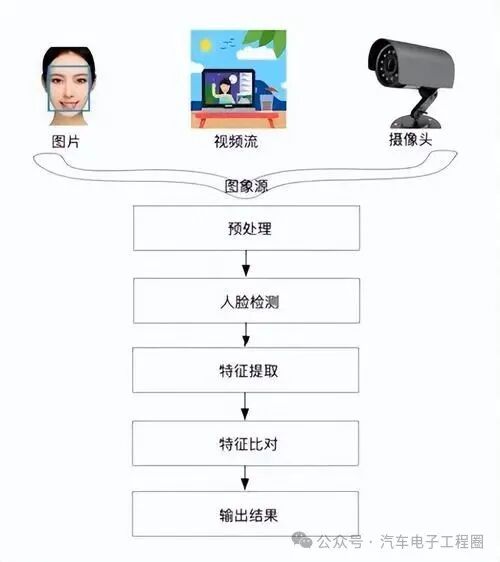
Taking facial recognition as an example, the dependency of each module in its processing flow on computational power is shown in the figure below:
Why do deep learning tasks rely on different hardware at different stages? What logic lies behind this? To answer this question, we must first discuss the basic architecture and performance characteristics of CPU, GPU, NPU, and FPGA.
CPU: Strong Generality, Superior Logic Control
The CPU (Central Processing Unit) is a large-scale integrated circuit composed of three main parts: the control unit, the arithmetic logic unit (ALU), and the cache. They complete data flow through a bus system.
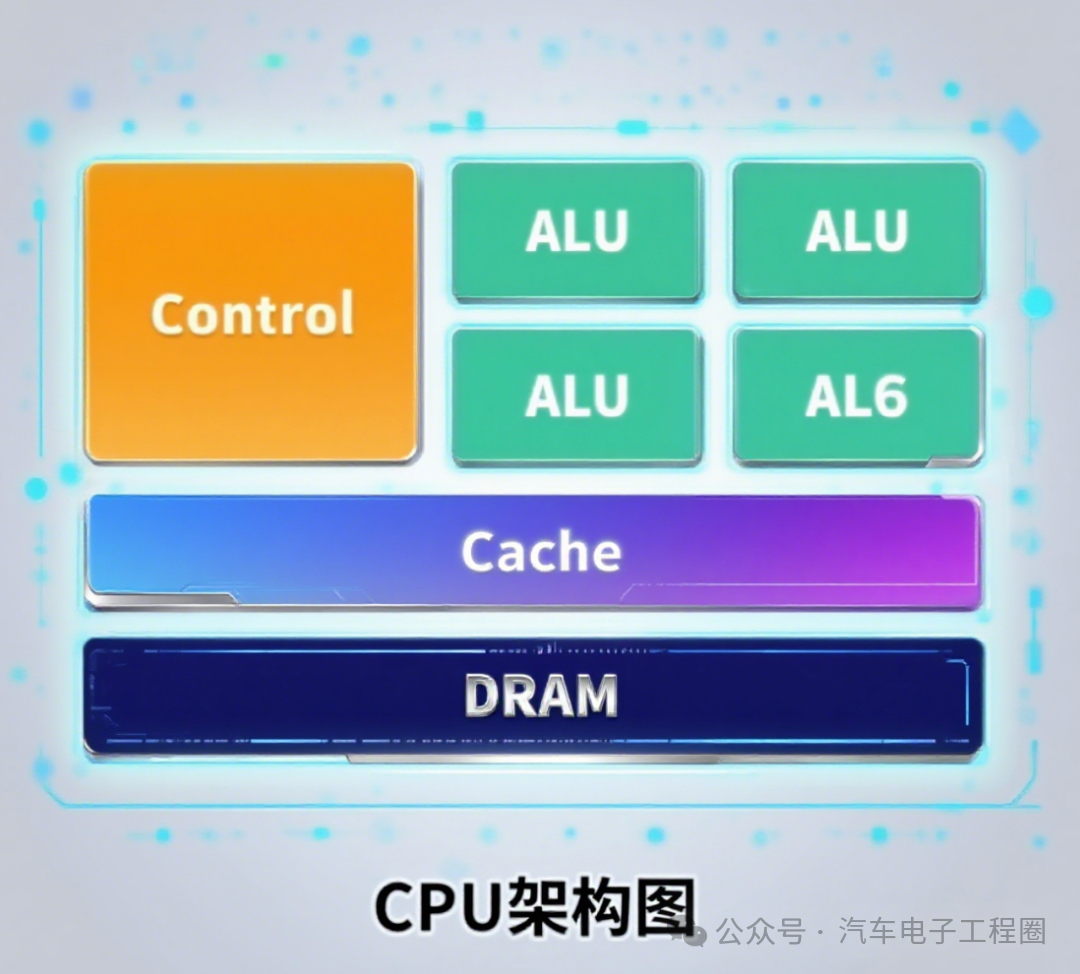
The CPU is based on the Von Neumann architecture, emphasizing sequential execution and program storage, thus performing excellently in logical judgment and task scheduling. However, the area occupied by the ALU used for computation in the CPU is far less than that of the control and cache systems, which limits its capability in large-scale parallel computation.
In other words, the CPU excels at “making decisions” but is not good at “solving repetitive math problems”.
GPU: The King of Parallel Computing, the First Choice for Training Models
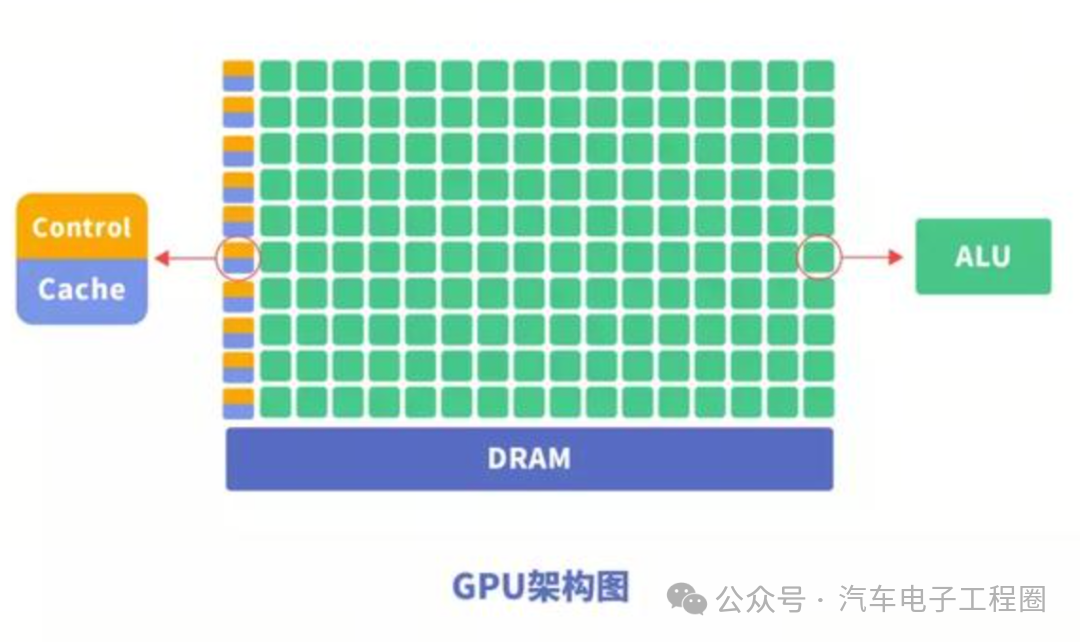
The GPU (Graphics Processing Unit) was originally designed for image rendering, but with its hundreds or thousands of ALUs, it has become a backbone in the field of deep learning. Compared to the CPU, most of the chip space in a GPU is occupied by ALUs, making it inherently suitable for executing a large number of matrix operations and convolution operations.
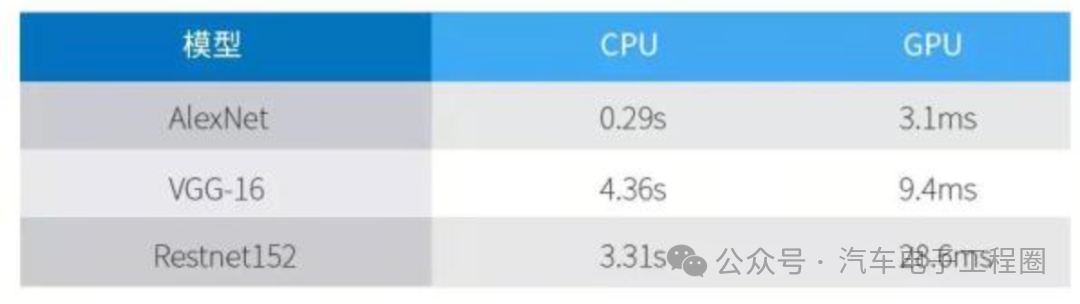
For example, studies show that in image classification tasks, the performance of GPUs far exceeds that of CPUs.
Advantages of GPUs include:
-
Support for a large number of parallel threads, suitable for training large models;
-
High memory bandwidth, improving data read and write speeds;
-
Powerful floating-point computing capabilities, suitable for common operations in deep learning.
However, GPUs are not a universal solution. Their high power consumption, large size, and high cost limit their use in edge computing or mobile devices. Additionally, GPUs still rely on CPUs for model scheduling and data transfer.
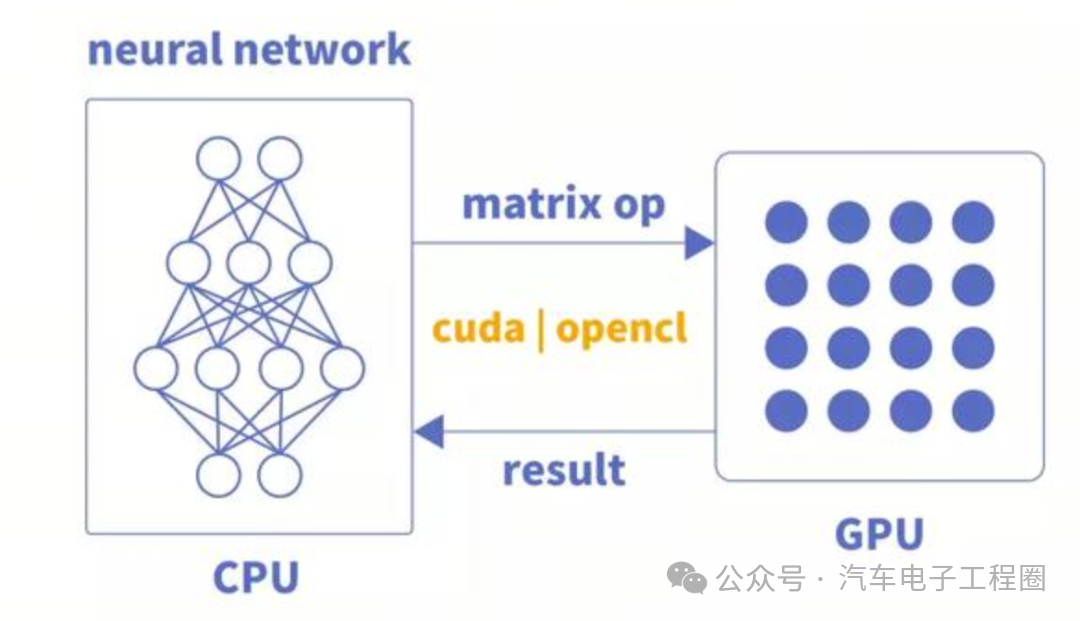
GPU Acceleration
Currently, GPUs only perform simple parallel matrix multiplication and addition operations, while the construction of neural network models and data flow transmission still occur on the CPU.
The CPU loads weight data, constructs the neural network model according to the code, and transmits the matrix operations of each layer to the GPU for parallel computation via libraries such as CUDA or OpenCL, outputting results; the CPU then schedules the matrix data calculations of the lower layer neurons until the neural network output layer calculations are completed, yielding the final result.
NPU: Designed for Neural Networks, Balancing Performance and Power Consumption
The NPU (Neural Processing Unit) is a processor specifically designed for AI scenarios, simulating human neurons and synaptic mechanisms to implement neural network operations at the circuit level.
Compared to CPUs and GPUs, NPUs adopt a “compute-in-memory” design, skipping a large number of control and scheduling instructions, significantly improving energy efficiency. An experiment shows that the processing capability of an NPU is 118 times that of a GPU at the same power consumption.
NPU Acceleration
Unlike GPU acceleration, NPU acceleration mainly manifests in that the computation results of each layer of neurons do not need to be output to the main memory but are passed to the next layer of neurons for continued computation according to the connections of the neural network, thus greatly enhancing both computational performance and power efficiency.
The CPU hands over the compiled neural network model file and weight file to the dedicated chip for loading, completing hardware programming.
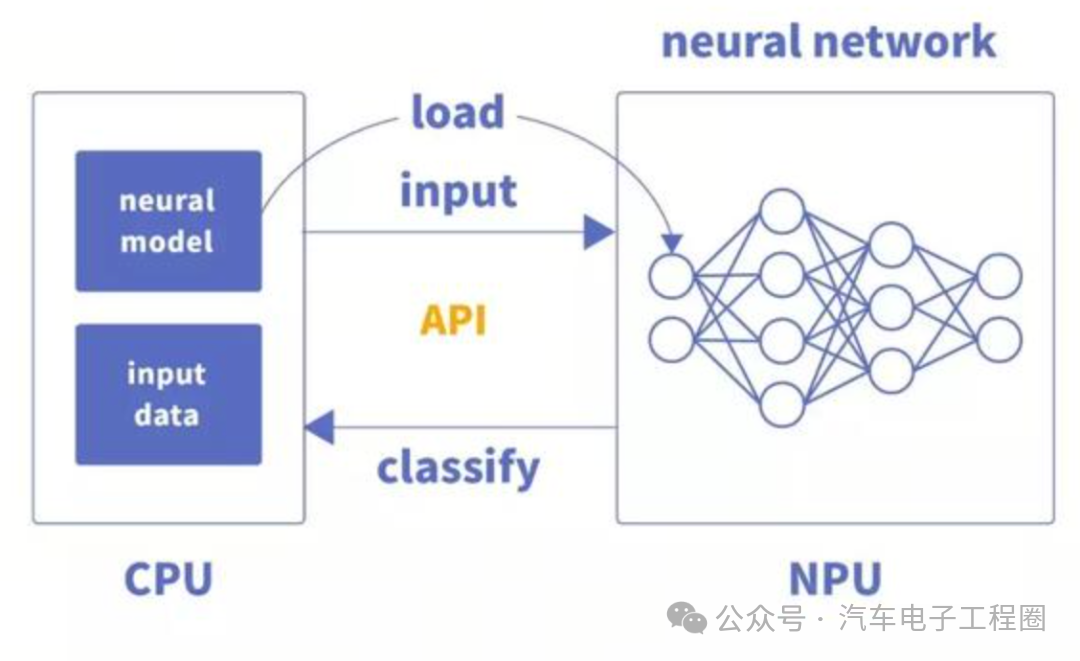
The NPU performs excellently during the inference phase, especially suitable for edge AI devices such as smartphones and cameras. Its collaborative process is as follows:
NPU Collaborative Processing Flow:
-
Turn on the NPU device;
-
Load model weights and generate computation tasks;
-
Configure input and output data;
-
Copy input data;
-
Run the model and output results.
Unlike GPUs, which output computation results to the main memory layer by layer, the outputs of the internal neurons of the NPU can be directly passed to the next layer, achieving a truly “neural network-style” processing.
FPGA: Programmable Hardware, a Flexible and Efficient Dark Horse
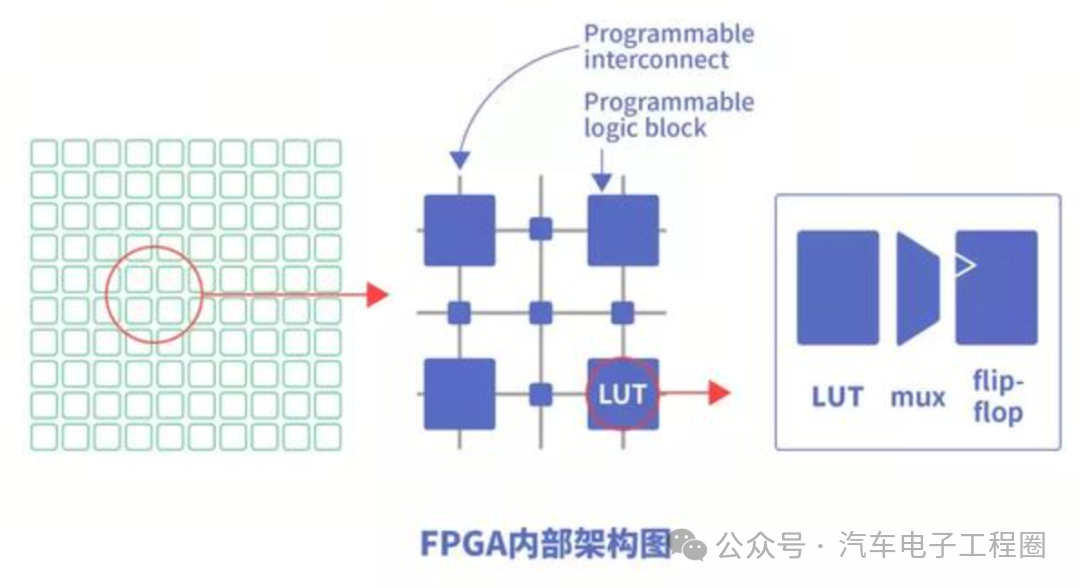
The FPGA (Field Programmable Gate Array) is an integrated circuit that can be programmed multiple times, allowing users to define its internal logic structure according to specific needs.
FPGA chips integrate a large number of lookup tables (LUTs) and flip-flops as logic units, forming custom circuit paths through hardware connections. This architecture skips the traditional instruction execution path, allowing algorithms to be “burned into hardware”, greatly enhancing execution efficiency.
Advantages of FPGAs include:
-
Hardware-level parallel processing capabilities;
-
Low power consumption, suitable for embedded devices;
-
High flexibility, allowing for rapid deployment of new algorithms.
However, FPGA development has a high threshold, complex programming languages, and relatively long development cycles, making it mainly suitable for inference tasks in scenarios where models are fixed and low power consumption is required.
Summary Comparison
| Feature | CPU | GPU | NPU | FPGA |
|---|---|---|---|---|
| Architecture Type | General Control | Parallel Computing | Simulated Neurons | Programmable Logic |
| Advantages | Strong Control Logic | Strong Parallel Capability | High Energy Efficiency, Low Power Consumption | Flexible Customization, High Performance |
| Applicable Scenarios | Model Scheduling, Control Processes | Model Training | Edge Inference | Low Power Devices |
| Programming Support | High | Medium | Low | High |
| Support for Large Model Training | No | Yes | No | No |
The demand for hardware in deep learning is no longer a single solution; different processors excel at different stages:
-
CPU: As the “brain”, responsible for overall scheduling and control;
-
GPU: As the “laborer”, responsible for massive computations;
-
NPU: Suitable for deployment in terminal devices, fast inference, and energy-saving;
-
FPGA: Provides flexible, low-latency hardware acceleration solutions for specific scenarios.
In the future, as the complexity of AI models continues to increase, heterogeneous computing architectures with multiple chips working together will become mainstream.