
With the development of autonomous driving technology and the acceleration of vehicle intelligence, there is an increasing amount of information that needs to be displayed in cars, leading to a growing number of displays. Looking at the newly released cars, the trend of large and multiple screens in vehicles is inevitable.
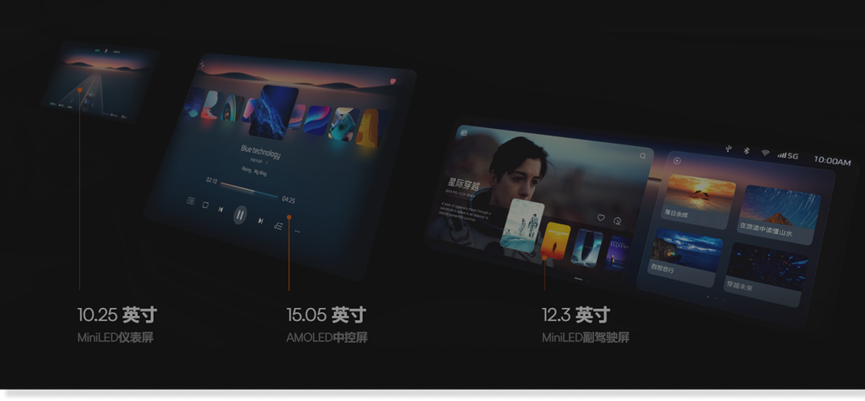
SAIC Feifan R710: 25-inch mini instrument screen, 15.05-inch OLED, 12.3-inch mini co-driver screen
Based on the characteristics of these screens, they can be roughly divided into four types: LCD, OLED, Mini LED, and Micro LED. Among these four types, Mini LED has captured a lot of attention in the past two years. In this article, I will briefly introduce these four display technologies.
1. Backlight vs Direct Display A display image is composed of multiple pixels, and the aforementioned technologies (LCD, OLED, Mini LED, Micro LED) can be divided into two categories based on the principle of light emission from these pixels: direct display and backlight. Each pixel emits light directly, which is what we call direct display; while light generated from a refracted source is reflected to the human eye to form the pixel, this is referred to as backlight. Below, we will deepen our understanding of this distinction through typical examples of backlight and direct display using the Mini LED solution.
1. What is Mini LED?
First, let’s briefly review what Mini LED is. Mini LED, also known as “sub-millimeter light-emitting diode,” refers to LED devices with chip sizes ranging from 50 to 200μm, positioned between small-pitch LED and Micro LED, representing a further refinement of small-pitch LED. Mini/Micro LED is a product of the fine development of LED displays, and as the technology path becomes clearer, it will become a new blue ocean for LED display applications.
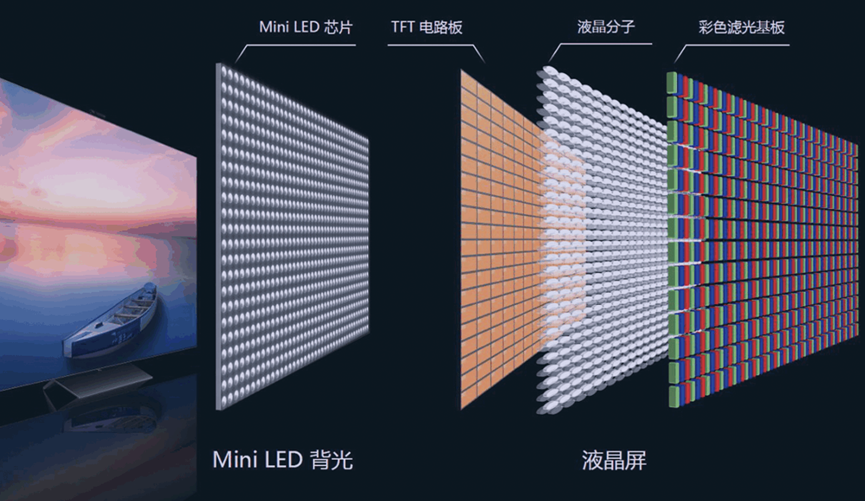
Huiwei Technology’s official website introduces Mini LED backlight panels
Compared to the current mainstream display technology LCD, Mini LED offers superior display performance, a significant increase in response speed, a thinner screen, and a substantial reduction in power consumption, which can extend battery life.
In comparison to OLED displays, Mini LED maintains excellent display quality and flexibility while offering faster response times and higher temperature reliability. An important feature of Mini LED compared to small-pitch LED is its depackaging, primarily targeting the high-end small-pitch LED market, enabling higher resolution and display quality.
2. Distinguishing Backlight and Direct Display from Different Mini LED Solutions
Using Mini LED for backlighting is essentially still LCD, while direct display uses Mini LED to directly show graphics. The liquid crystal panel circuit controls the orientation of the liquid crystal molecules to allow the backlight (of different colors) to shine on the display.
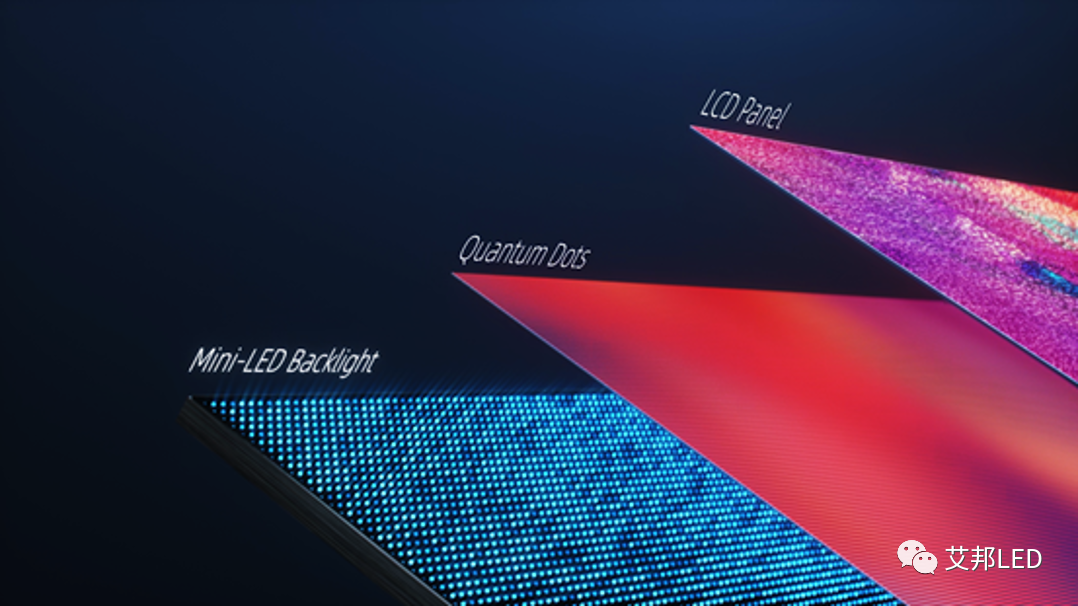
Mini LED backlight (blue layer)
Mini direct display is a combination of Mini RGB three-color chips, while Mini backlight consists of Mini blue light chips + QD, converted into white light, used in the backlight behind the liquid crystal.
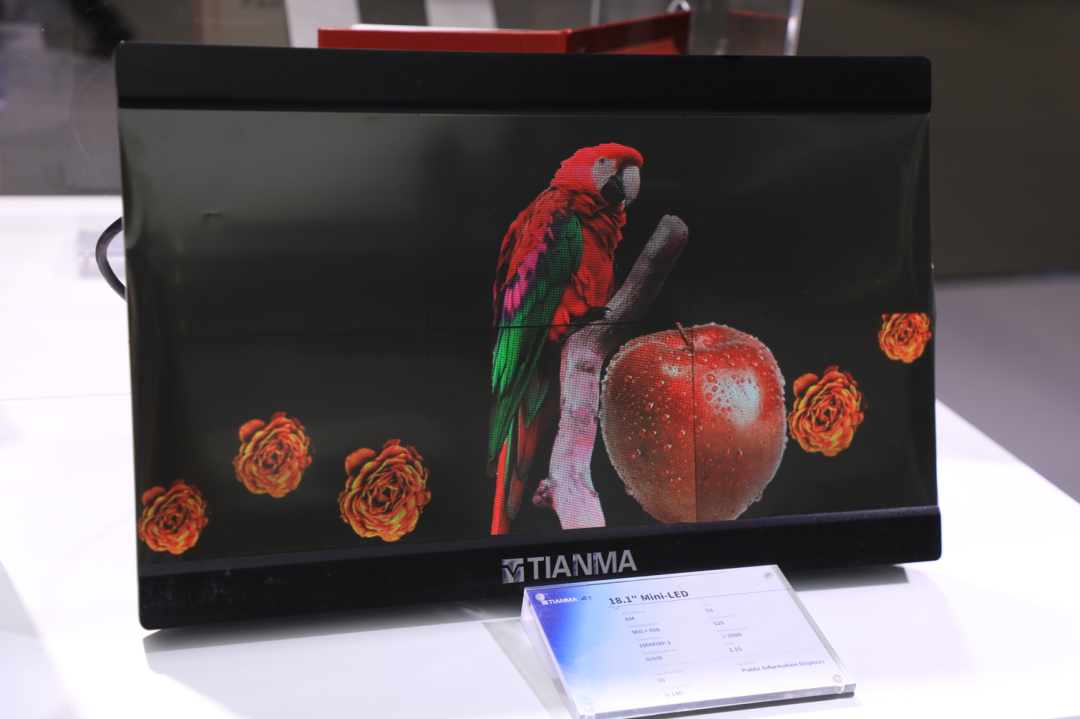 Tianma’s Mini LED direct display screen
Tianma direct display screen introduction:
Based on LTPS glass substrate using Mini-LED direct display technology, it can achieve high resolution, high reliability, and high contrast excellent display effects; at the same time, the AM driving scheme saves IC, has high circuit integration, and clear cost advantages.Using 6 individual units, seamlessly spliced into an 18.1-inch product, with an LED pitch of less than 0.50mm, it can easily enhance resolution compared to traditional small-pitch displays; and the contrast far exceeds that of current market traditional LCD displays, reaching million-level.
2. Comparison of Four Display Technologies
Currently, the aforementioned four display technologies each have their own advantages and disadvantages. Overall, the next generation of displays should theoretically be self-emissive, capable of flexible display shapes, with Micro LED/OLED development. However, due to some issues with mass production of these two technologies, Mini LED backlight technology has become a hot topic. Below is a simple comparative introduction to these four solutions.
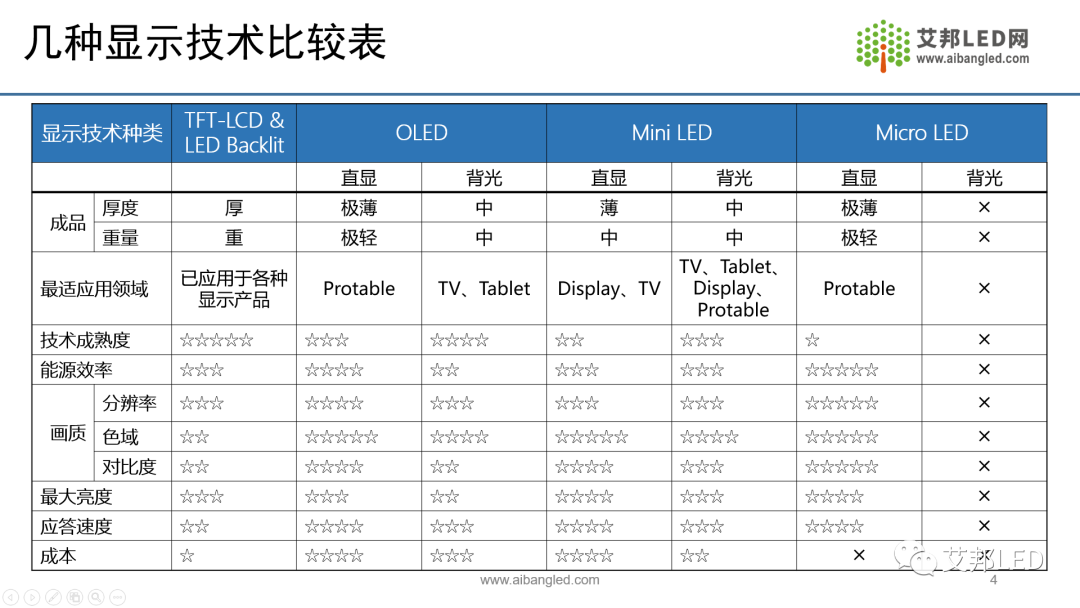
1. LCD
The structure of an LCD panel is relatively complex, consisting of a glass substrate, liquid crystal layer, color filter, polarizer, light guide plate, and backlight module, among other components. LCD refers to the liquid crystal layer, which is used to control the direction of light and does not emit light by itself, requiring LED backlight as a light source; moreover, LCD does not directly display images and needs color filters to create images. The color filter is composed of many pixel points, each pixel point contains red (R), green (G), and blue (B) sub-pixels, and according to the basic concept of color science, the RGB primary colors can be combined in different brightness ratios to create various colors in reality. The combination of different colored pixel points forms the colored images we see. 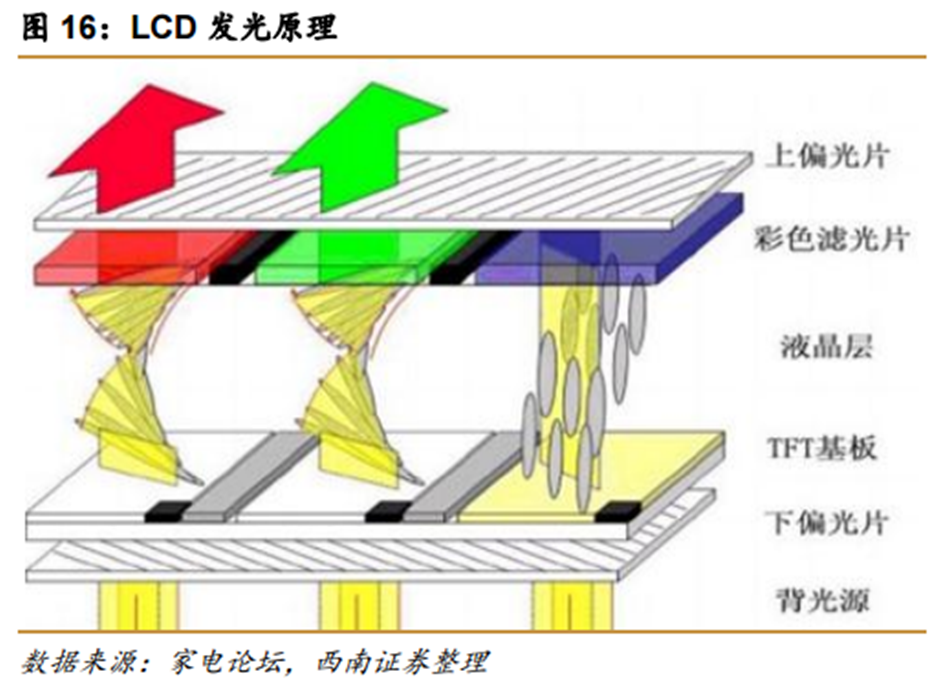
The LCD backlight layer typically consists of dozens to hundreds of LED beads larger than 200μm. These LED beads turn on and off together and cannot be controlled individually. The entire screen shares a large backlight layer for all pixel points.
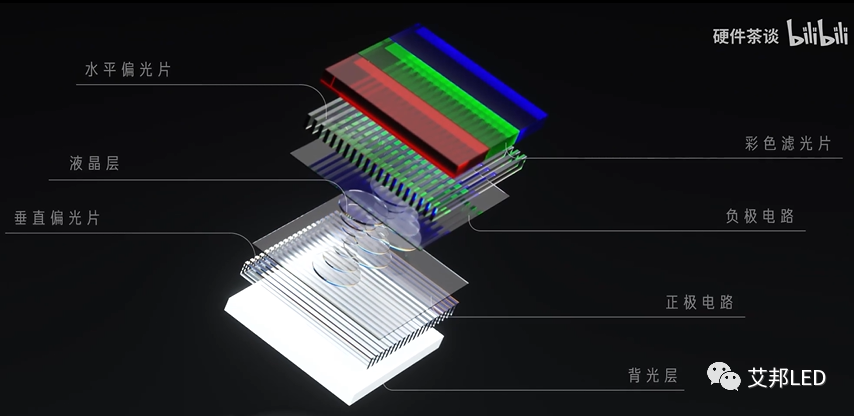
Cross-section of an LCD pixel
LCD display panels are relatively low-cost and have advantages such as small size, light weight, and low power consumption. The overall technology is also mature, with a low failure rate.
2. OLED
QLED (Quantum Light Emitting Diode) has unique optical properties, and when powered, it can display different colors based on particle size, while also having a long lifespan, wide color gamut, high brightness, and pure colors.
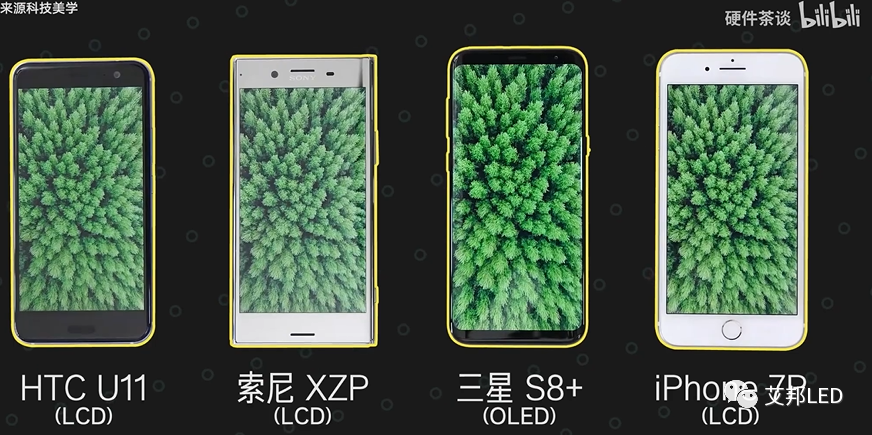
Compared to LCD, the advantages of OLED screens mainly include the ability to display pure black, no light leakage, nearly infinite contrast, short response time, flexibility, low power consumption, and short response time; the disadvantages of OLED screens compared to LCD mainly include shorter lifespan, screen flicker, and lower pixel density.
3. Mini LED
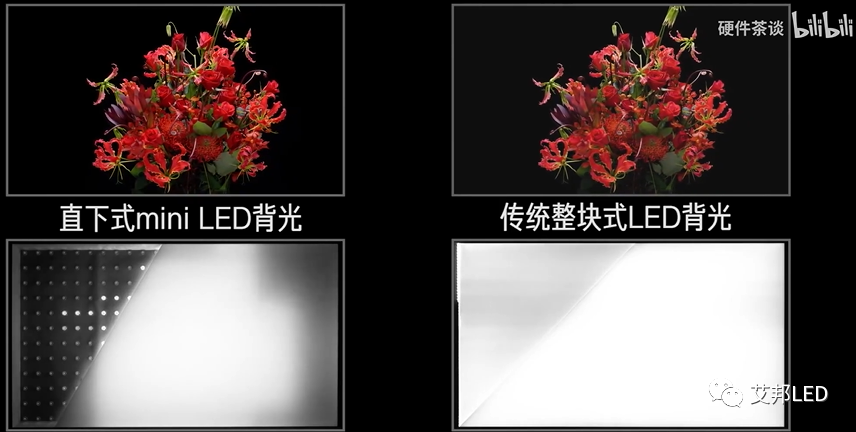
Mini LED miniaturizes the LED beads in the LCD screen backlight layer, with each LED bead measuring approximately 50-200μm, allowing for more backlight beads to be packed into the layer, resulting in better brightness and uniformity. Mini LED divides the backlight layer into small sections and uses LED chips for local dimming, thereby improving the black-and-white contrast issue that LCDs have been criticized for, achieving display effects close to OLED while avoiding lifespan issues.
4. Micro LED
Micro LED integrates all the advantages of LCD and OLED, featuring high picture quality, low energy consumption, and long lifespan, but with high manufacturing difficulty and production costs.
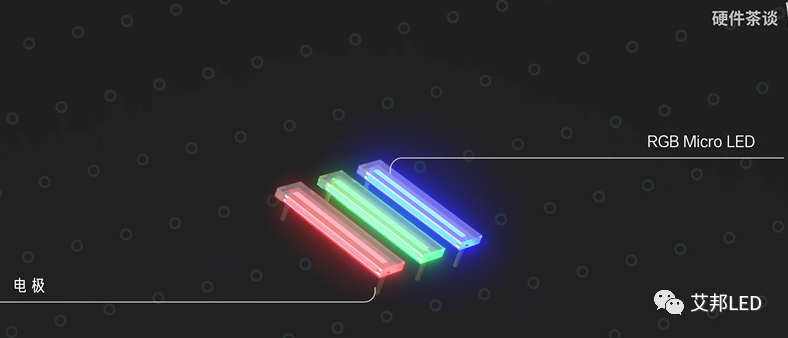
Cross-section of a Micro LED pixel

Welcome everyone to join the Mini LED group to obtain the PPT
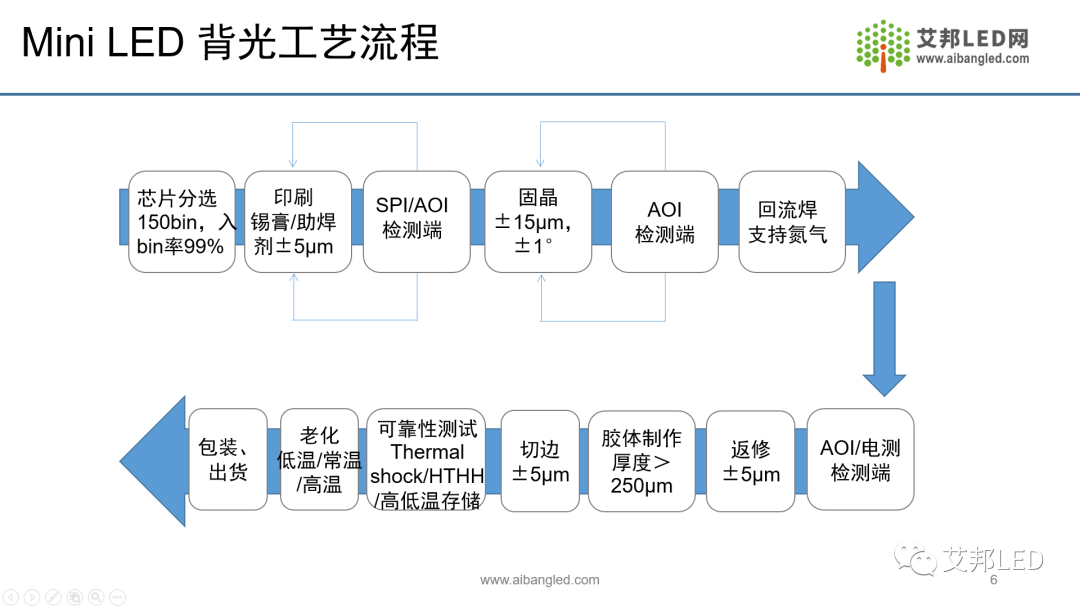
3. Mini LED Backlight Process Flow
The Mini LED process flow is roughly illustrated in the following diagram: sorting, printing, testing, solidification, testing, rework, and testing.