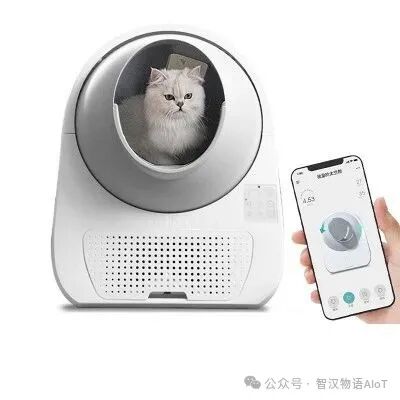
With the booming pet economy and the increasing attention of “cat owners” to pet health, smart cat litter boxes have become the darling of the market. However, traditional networked smart cat litter boxes (relying on Wi-Fi or 4G) generally suffer from high power consumption, dependence on fixed power sources, complex configurations, and potential privacy leakage risks, limiting their application in certain scenarios (such as locations without power outlets, rental homes, and privacy-conscious families). Low Energy Bluetooth (BLE) provides a new solution to these pain points. BLE is an ultra-low power, short-range, low-cost wireless communication technology, making it very suitable for devices like cat litter boxes that require long standby times and occasionally transmit small amounts of critical data.
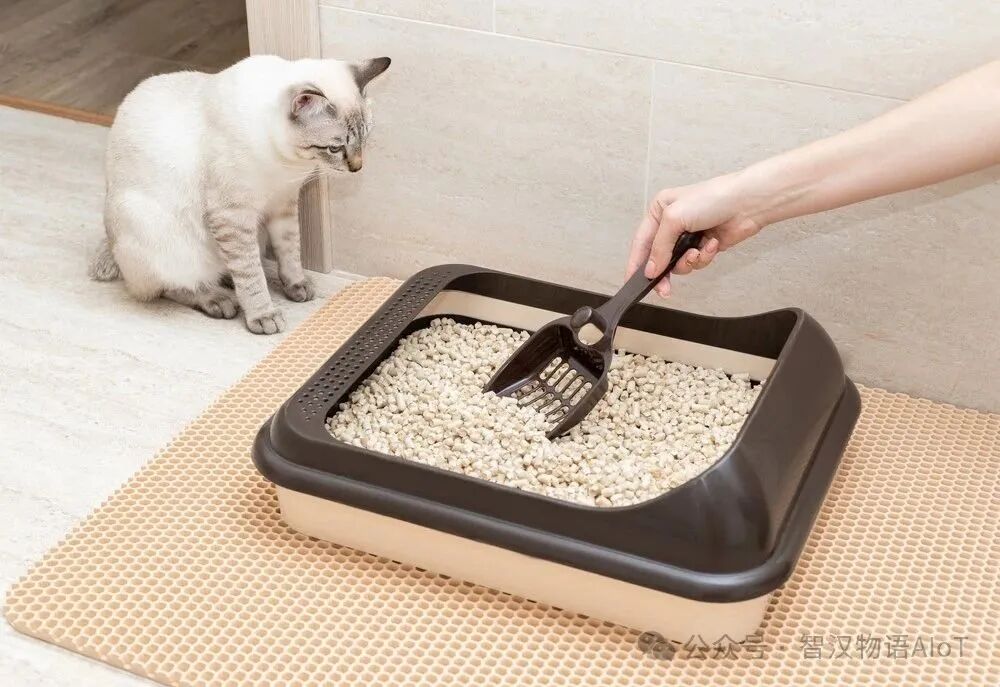
BLE smart cat litter box solutions are centered around their ultra-low power and near-field communication characteristics. The device typically remains in deep sleep (microamp-level power consumption), only briefly waking to process sensor data and record during key events such as when a cat enters or exits, allowing battery power to last for several months or even a year, completely freeing it from power cord limitations. The communication distance between the phone and the cat litter box is within 10 meters, enabling point-to-point data transmission without going through the cloud, maximizing privacy security, and can be activated through simple Bluetooth pairing. It can intelligently recognize a cat’s toilet behavior, monitor the remaining litter, and alert when it is low, supporting multi-pet households by identifying collars or weight profiles for individual tracking. Even when you are away, it can locally store several days of event data, which will automatically sync to the phone APP to generate health reports and analyses upon your return.
Hardware Architecture
To detect the cat’s activity and physical behavior, low-power passive infrared (PIR) sensors or more energy-efficient three-axis accelerometers are used to sense activity, while weight sensors are used to accurately perceive weight changes to determine when a cat enters/exits, identify multiple pets, and monitor litter levels. An advanced version can optionally include low-power gas sensors to detect specific gas concentrations (such as ammonia and hydrogen sulfide) to assess feces status or air quality. The core communication unit uses the Zhihan RC6626A Bluetooth BLE serial transparent transmission module for bidirectional communication with the phone.
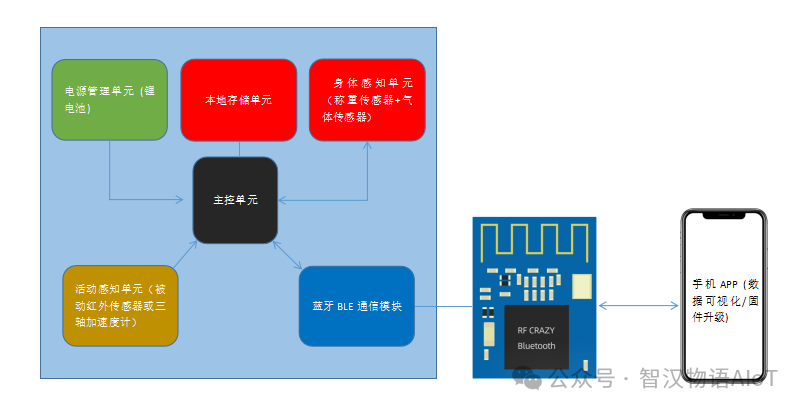
Bluetooth BLE Module
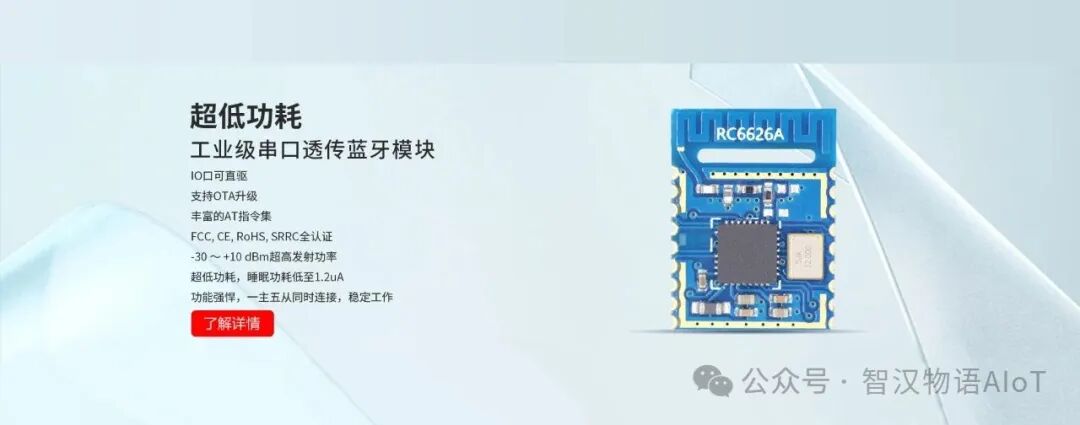
The core of the BLE smart cat litter box solution lies in the use of the Zhihan IoT RC6626A BLE module, which has a standby power consumption as low as 1.2 uA, ensuring stable battery life of several months or even a year with conventional dry batteries. With the serial transparent transmission of the RC6626A module, master-slave integration, and rich AT command features, it facilitates faster project implementation and development of other smart cat hardware. Its integrated OTA function also simplifies firmware maintenance and upgrades for the cat litter box.
Based on the BLE cat litter box solution, through its fine event-triggered mechanism, deep sleep ultra-low power hardware design, local storage, and near-field synchronous communication mode, as well as user-controlled centralized data processing on the phone, significant improvements in energy efficiency, ease of use, privacy protection, and flexibility of use have been achieved. In the future, with the further integration of BLE with open interconnect standards such as Matter, and the development of low-power edge AI chips and more efficient sensing technologies, smart cat litter boxes based on BLE are expected to continue playing an important role in pet health monitoring while maintaining their basic advantages, providing smarter analysis and limited remote status viewing capabilities.