The “Intelligence Paradox” of Embedded Systems
Under the dual pressure of the slowing Moore’s Law and the exponential growth of the Internet of Things, embedded systems are facing historic challenges: How to achieve intelligence on hardware with limited resources (<1MB memory, mW-level power consumption)? Traditional views hold that AI will disrupt the embedded field. However, upon delving into the essence of the technology, we find that the relationship between AI and embedded systems is not one of replacement, but rather through architectural reconstruction and computational paradigm upgrading, jointly giving rise to the next generation of Edge Intelligence ecosystem.
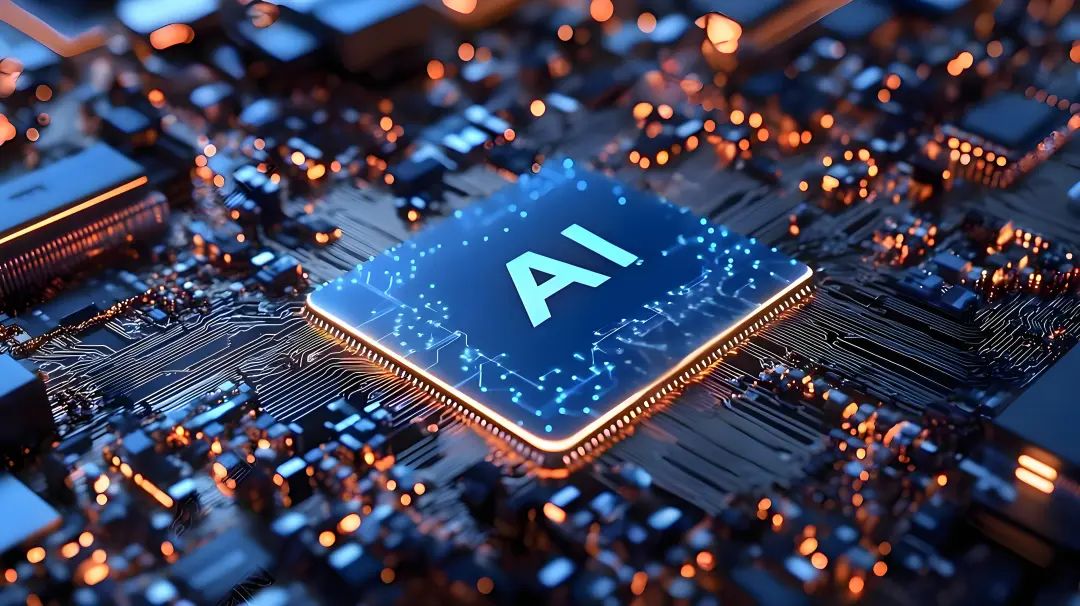
1. Redefining the Technical Boundaries Between AI and Embedded Systems
1. Complementarity Analysis of Computational Paradigms
-
Embedded Systems: Based on the von Neumann architecture, centered around deterministic state machines, pursuing Worst Case Execution Time (WCET) guarantees, typical scenarios include PID control and CAN bus communication.
-
AI Systems: Relying on data flow-driven non-deterministic computation, based on probabilistic statistics (e.g., Softmax output), adept at high-dimensional feature space mapping (e.g., residual learning in ResNet-50).
Key Contradiction: The statistical characteristics of AI fundamentally conflict with the strict timing constraints of embedded real-time systems.
2. Trends in Hardware Architecture Integration
-
Integration of Heterogeneous Computing Units:
-
Evolution of AI Acceleration in Traditional MCUs: STMicroelectronics’ STM32H7 series integrates the Chrom-ART accelerator, enhancing CNN inference efficiency by 5 times;
-
Dedicated AI Co-processors: Arm Cortex-M55 + Ethos-U55 NPU combination achieves TOPS/Watt level energy efficiency;
-
Memory-Compute Integration Architecture: Samsung’s MRAM-CIM technology breaks the von Neumann bottleneck, achieving zero-copy matrix multiply-accumulate operations in embedded scenarios.
-
Trade-offs Between Real-time Performance and Throughput:
-
Time-Sensitive Networking (TSN): In industrial control scenarios, AI inference tasks gain deterministic time slice allocation through TSN schedulers;
-
Mixed-Criticality Systems (MCS): AI tasks are divided into multiple criticality levels, sharing hardware resources with real-time tasks (e.g., NXP i.MX 8QuadMax’s multi-domain isolation architecture).
2. Three Empowerment Paths of AI for Embedded Systems
1. Perception Layer: From “Signal Processing” to “Semantic Understanding”
-
Limitations of Traditional Solutions: Sensor data processing based on threshold judgment (e.g., accelerometer-triggered interrupts) cannot cope with complex environments (e.g., factory vibration noise interference).
-
AI-Enhanced Solutions:
-
Tiny Neural Networks (TinyML): Utilize depthwise separable convolution to achieve 95% accuracy in anomaly vibration detection on Cortex-M4F (memory usage <50KB);
-
Event-Driven Architecture: Spiking Neural Networks (SNN) mimicking biological neural pulses, combined with Dynamic Vision Sensors (DVS), achieve power consumption as low as μW (e.g., Prophesee’s Metavision solution).
2. Control Layer: From “Predefined Logic” to “Dynamic Optimization”
-
Bottlenecks of Classical Control Theory: PID parameter tuning relies on human experience, making it difficult to adapt to non-linear time-varying systems (e.g., drone attitude control in turbulence).
-
AI Fusion Control:
-
Reinforcement Learning (RL) Online Parameter Tuning: Texas Instruments’ C2000 series DSP dynamically adjusts motor control loop bandwidth through Q-learning, improving efficiency by 12%;
-
Digital Twin Assisted Decision Making: ANSYS Twin Builder constructs physical models, collaborating with embedded RL agents for optimization (e.g., ABB robot joint torque distribution).
3. System Layer: From “Static Configuration” to “Self-Evolving”
-
Pain Points of Traditional Development: Firmware updates require downtime for burning, making it difficult to cope with long-tail scenarios (e.g., agricultural robots encountering unknown crop forms).
-
AI-Driven Evolution:
-
Lifelong Learning: Employing Elastic Weight Consolidation (EWC) algorithm, incremental model updates are achieved on NXP RT1060 with storage overhead <10KB/epoch;
-
Federated Learning (FL) Architecture: Millions of smart meters aggregate gradients via LoRaWAN, completing global model iterations on STM32WL55 while protecting user privacy.
3. The Irreplaceability of Embedded Systems: Constraints from Hardware Essence
1. The Ultimate Barrier of Physical Laws
-
Landauer’s Principle: Erasing each bit of information requires at least kTln2 joules of energy, which determines:
-
In energy harvesting scenarios (e.g., implanted medical devices), traditional embedded architectures (event-driven + clock gating) still outperform AI systems in energy efficiency by 2-3 orders of magnitude;
-
Under the limitations of quantum tunneling effects, the reliability advantages of MCUs with processes below 28nm become evident (e.g., Renesas’s 40nm SOTB technology leakage current is only 1/10).
2. Mathematical Proof of Functional Safety
-
Need for Formal Verification: The aerospace electronic DO-178C standard requires 100% code coverage, while the interpretability flaws of neural networks make it difficult to pass Model Checking (e.g., NuSMV toolchain);
-
Hybrid Verification Framework: Arm and MathWorks collaborated to launch the “Simulink + SCADE + CMSIS-NN” toolchain, encapsulating AI modules as verified atomic components.
3. The Physical Incompressibility of Real-time Performance
-
Insights from Einstein’s Theory of Relativity: Under the speed of light limit, the instruction cycle of a 1GHz processor is >1ns, which means:
-
The 200μs delay requirement for steer-by-wire must be directly responded to by hardware interrupts, rather than through an AI inference pipeline;
-
The status of Time-Triggered Architecture (TTA) in aerospace cannot be shaken (e.g., TTTech’s TTEthernet).
4. Paradigm Shift for Developers: From Bare-Metal Programming to “AI-Embedded Joint Optimization”
1. New Toolchain Ecosystem
-
Hardware-Aware Training (HAT): Google’s TensorFlow Model Optimization Toolkit supports weight clustering, enabling ResNet-18 to achieve <2% accuracy loss after 8-bit quantization on ESP32-S3;
-
Compiler Revolution: TVM’s AutoScheduler automatically generates optimal operator kernels for Cortex-M series (e.g., utilizing SIMD instructions to accelerate convolution).
2. System-Level Collaborative Design Methodology
-
Neural-Symbolic Integration:
-
Symbolic systems process rules (e.g., Autosar’s SWC components), neural networks handle perception (e.g., MobileNetV3), dynamically interacting through DDS middleware;
-
Case Study: MIT’s CodePhage project automatically synthesizes interface assertions between AI models and C code.
-
Cross-Layer Energy Consumption Optimization: From transistor-level (Power Gating) to algorithm-level (Early Exit), constructing a global energy consumption model (e.g., Cadence’s Joules RTL-to-SW solution).
5. Future Outlook: Embedded Intelligence in the Era of Ultra-Heterogeneity
-
3D Integration Technology: TSMC’s 3D Fabric solution vertically stacks SRAM, MRAM, and logic units, breaking through memory wall limitations;
-
Photon Computing Integration: Lightmatter’s Envise chip performs matrix operations in the optical domain, consuming only 1/10 of the power of electronic chips;
-
Biologically Inspired Architectures: Intel’s Loihi 2 neuromorphic chip achieves milliwatt-level continuous learning through asynchronous sparse computation.
Towards the Co-evolution of “Silicon-Based Life Forms”
The deep integration of AI and embedded systems is giving rise to a new type of “silicon-based life form”:
-
“Cells”: Deterministic embedded cores (e.g., lock-step cores) ensure vital signs;
-
“Brain”: Probabilistic AI units achieve environmental interaction;
-
“Energy Cycle”: PMIC systems that harvest energy from environmental vibrations and temperature differences.
In this transformation, embedded developers need to think from first principles: It is not about “replacing embedded systems with AI”, but rather “reconstructing the essence of computation to make artificial intelligence a new native characteristic of embedded systems”.