The scale of installed wind power capacity has repeatedly reached new highs, and the promotion and implementation of grid parity policies mark a new development stage for China’s wind power industry. The increasing service life and maintenance costs of wind turbines demand higher standards for condition monitoring and fault warning.
Among the major components of the turbine, the gearbox, blades, and generator have a high probability of failure. If not maintained in a timely manner, this can increase operational load, leading to severe failures such as jamming, shaft misalignment, and breakage, ultimately resulting in downtime, which seriously affects power generation and increases maintenance costs. Thereforeenhancing the precision of fault warnings through technological innovation to ensure stable operation throughout the turbine’s lifecycle is a common pursuit for current wind turbine manufacturers.
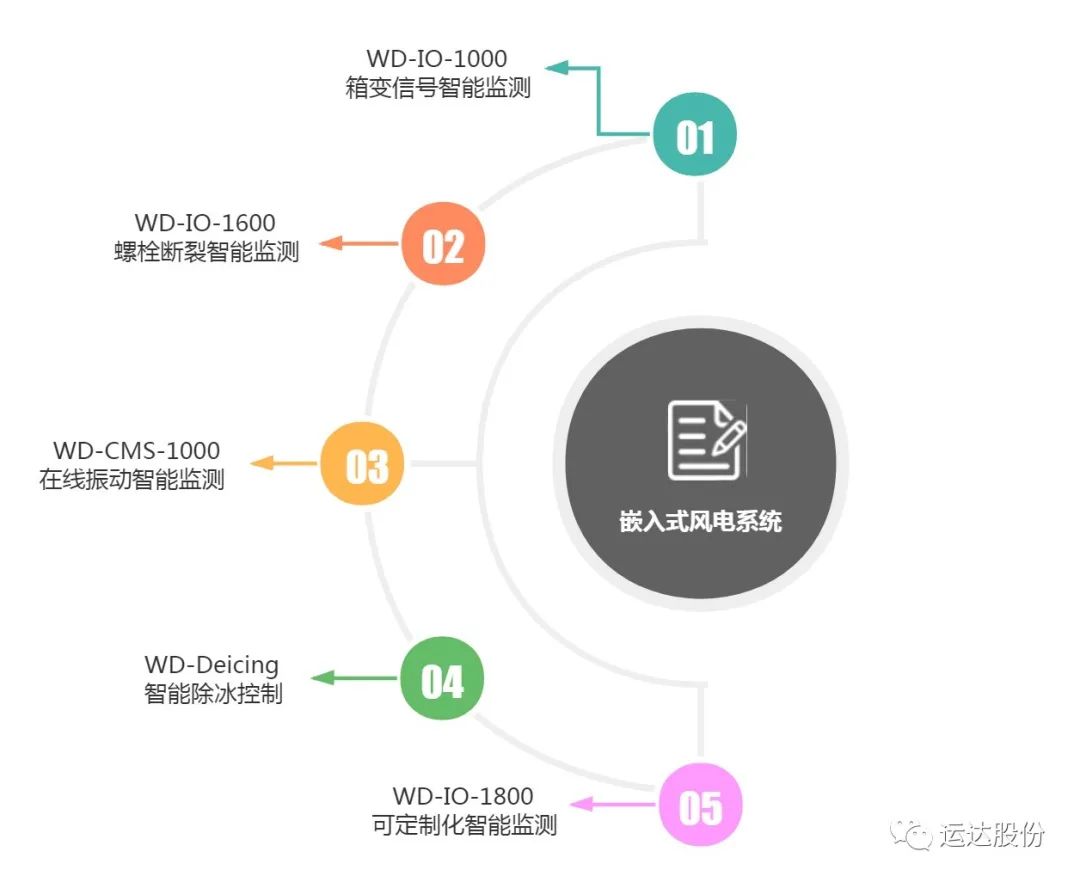
Figure 1. Embedded Wind Power Series Products
Standing at a new historical moment, Yunda Co., Ltd. summarizes over 40 years of experience in wind power design and development, combining operational data from tens of thousands of turbines at home and abroad, and has independently developed a low-cost, low-power, and high-real-time embedded system aimed at the wind power field, designed to achieve localization of controllers, improve warning precision, and assist in the transformation and upgrading of wind power.
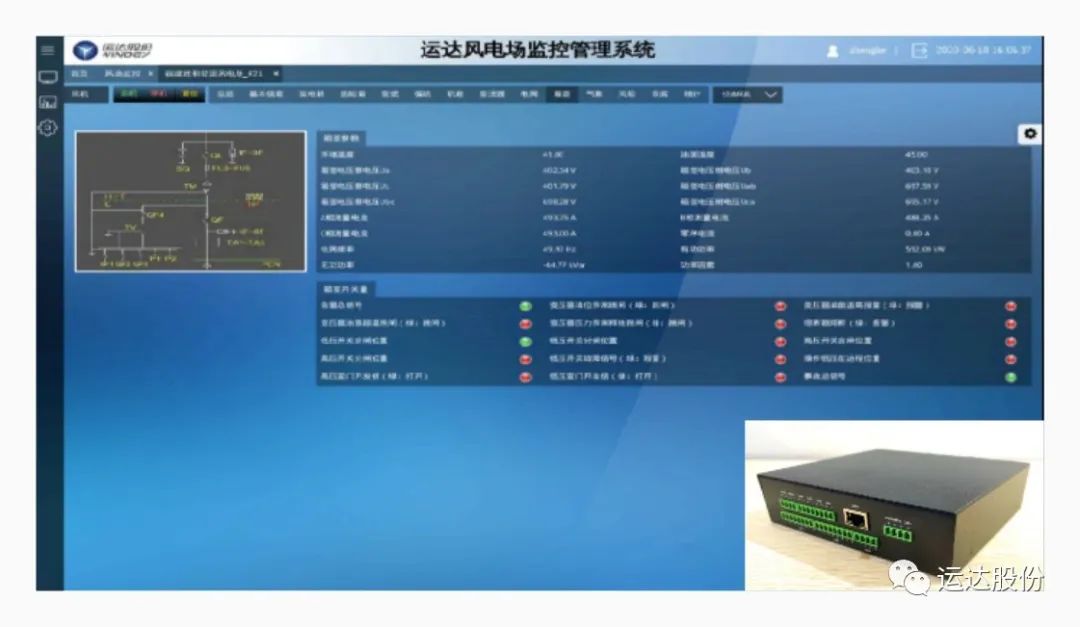
Figure 2. WD-IO-1000
The “WD-IO” series products are embedded systems designed for monitoring the modulated signals of wind turbines. They possess rich signal input and output capabilities, enabling monitoring of the status of the transformer, bolts, fire protection, and blade de-icing. This system supports Modbus, EtherCAT, TCP-IP, and other standard communication protocols, achieving real-time communication of monitoring signals with the wind farm monitoring system through diverse interfacing capabilities, and changing the traditional method that required shutdown and power-off for signal debugging and upgrades, thereby improving the reliability of wind turbines and the utilization rate of wind energy in wind farms.
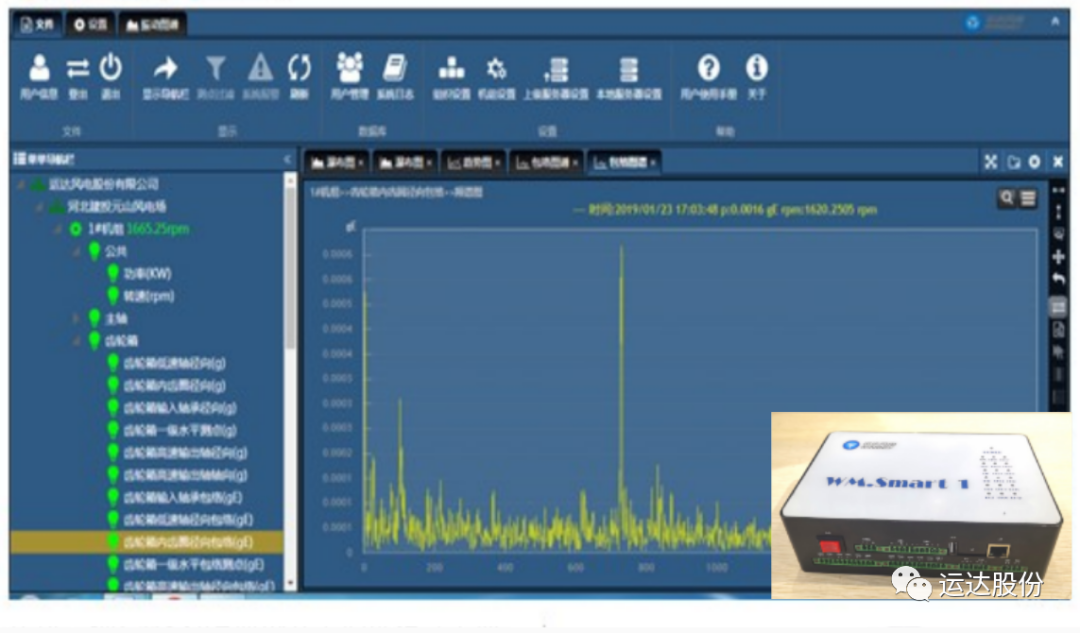
Figure 3. WD-CMS-1000
The “WD-CMS” series is an embedded system designed for vibration monitoring of wind turbines, utilizing a new high-reliability Linux+ARM+FPGA system architecture. It can continuously monitor low-frequency swaying, vibrations, impacts, rotational speed, load, gearbox lubrication and wear, and tower inclination and settlement. Through system cascading and expansion, and a modular software architecture, it can maximally meet the customized monitoring needs of owners, and through adjustable extraction rates via cascading integral comb filters, dynamic compensation, and fast Fourier algorithms, along with deep integration with main control data,compared to other manufacturers’ online vibration monitoring systems, the WD-CMS series has improved the effective value response of data collection from 95% to approximately 99.9%, thus enhancing the precision of fault warnings by about 2%, greatly improving operational accuracy and reducing unnecessary economic expenditures.
Looking Ahead
Looking ahead, Yunda Co., Ltd. will continue to strengthen its efforts in the embedded field, achieving strong guarantees for system safety, reducing the cost per kilowatt-hour, and providing differentiated services to create continuously upgraded investment returns for owners.