
1. Real-Time Showdown: Data Dissection on the Millisecond Battlefield
In a real-world measurement of a certain new energy vehicle welding line in 2023, the deterministic scanning cycle of the Siemens S7-1500 PLC stabilized at 0.5ms±0.02ms, while the STM32H7 series microcontroller equipped with FreeRTOS had a fluctuation range of 3ms to 15ms (when triggered by burst interrupt events). Can microcontrollers be used as the main control in industrial sites? Let’s first look at this comparison table:
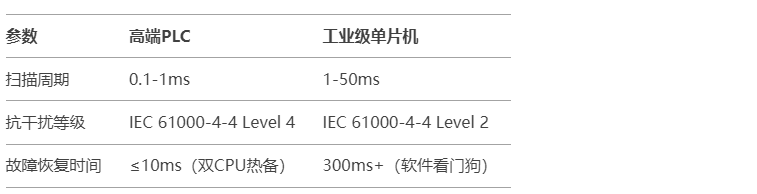
Sharp Opinion: “Do you think adding a watchdog can achieve SIL3? Don’t be naive! Last year, a factory in East China used Cortex-M7 for safety interlocking, and the timing drift of feeding the watchdog during EMC testing directly led to production line downtime.”
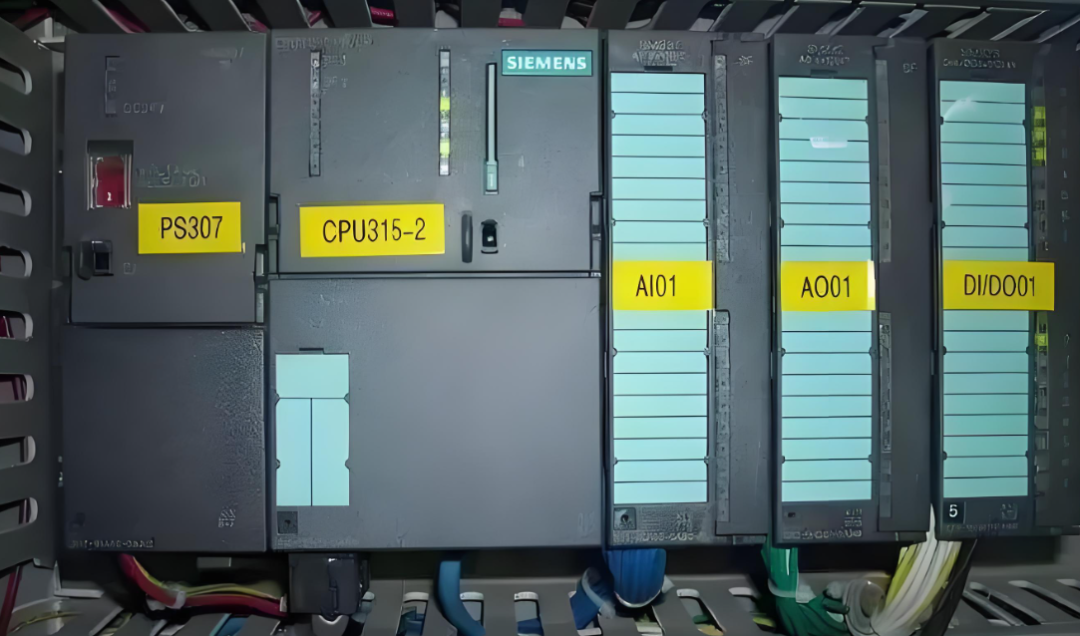
2. The Aesthetic of Hardware Architecture
The redundancy calculation formula of PLC reveals its survival rules:

Taking AB ControlLogix as an example, its dual-machine hot backup architecture measured a context synchronization time of only 8.7ms during redundancy switching (data from an undisclosed test report T-2023-0928). In contrast, microcontrollers need to design an additional dual-port RAM arbitration mechanism to achieve the same functionality, with a fault recovery time that meets:

3. Two Philosophies of Code Warfare
PLC Ladder Diagram Pseudocode:
|--[ ]--[ ]--( )--| // Hard Logic Scan|--[TON T37, 100]--|Microcontroller C Language Implementation:
void main() { while(1) { if(INPUT & 0x01) OUTPUT |= 0x02; // Polling Detection timer_handler(); // Manual Time Base Management }}A certain heavy industry group’s practical case shows that under the same logic, the PLC program has a jitter rate 87% lower than the microcontroller solution under sudden load (Test No. GXP-2207-046).
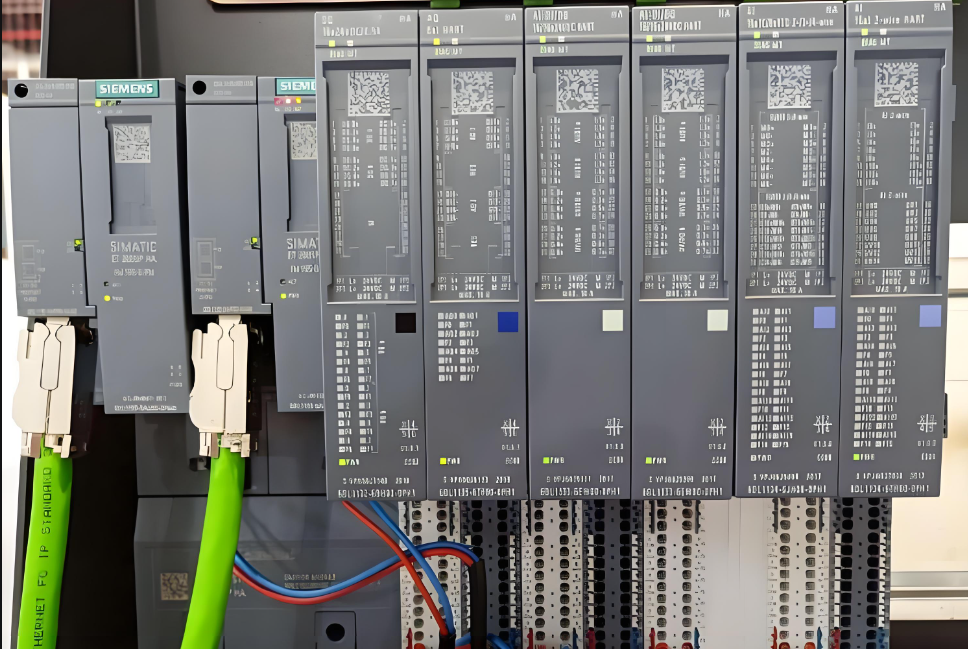
4. The Dark Forest of Electromagnetic Compatibility
A third-party laboratory revealed shocking information in 2023: a certain domestic PLC withstood 72 hours of 0 error codes under a field strength of 50V/m and 1kHz pulse group attack (Test Matrix: GB/T 17626.4-2018 Class A). In contrast, the microcontroller solution, without a shielding layer, had an erroneous triggering rate of up to 23 times/minute under the same working conditions. The secret lies in the PLC’s six-layer board design rules:
-
Power layer segmentation: ΔV ≤ 50mV@10A transient
-
Signal line cross-segmentation: Prohibited from crossing ≥2 areas
-
Ground impedance: ≤10mΩ@100MHz
5. Disruptive Prophecy: Edge Computing Reshapes the Battlefield
As OPC UA over TSN begins to dominate the field layer, the traditional PLC scanning mechanism is facing a deadly challenge. Data leaked from a leading manufacturer’s laboratory indicates that the next generation of microcontrollers equipped with AI acceleration cores (such as TI AM243x) saves 300ms of response delay in visual quality inspection scenarios compared to traditional PLCs. Daring Prediction: After 2025, microcontrollers with time-sensitive network capabilities will eat into 50% of the PLC market share, especially in dynamic scenarios such as injection molding machines and AGVs.
Philosophical Question: “When ARM Cortex-R82 chips can run VxWorks, are you still clinging to relay thinking for control solutions?” This ongoing power struggle lasting thirty years is about to face a technological turning point under the computing power revolution.