Nowadays, when renovating a house, many people choose to embed the refrigerator into cabinets, such as embedding it into kitchen cabinets or embedding it into sideboards.
The reason is very simple, it looks good and has a certain status.
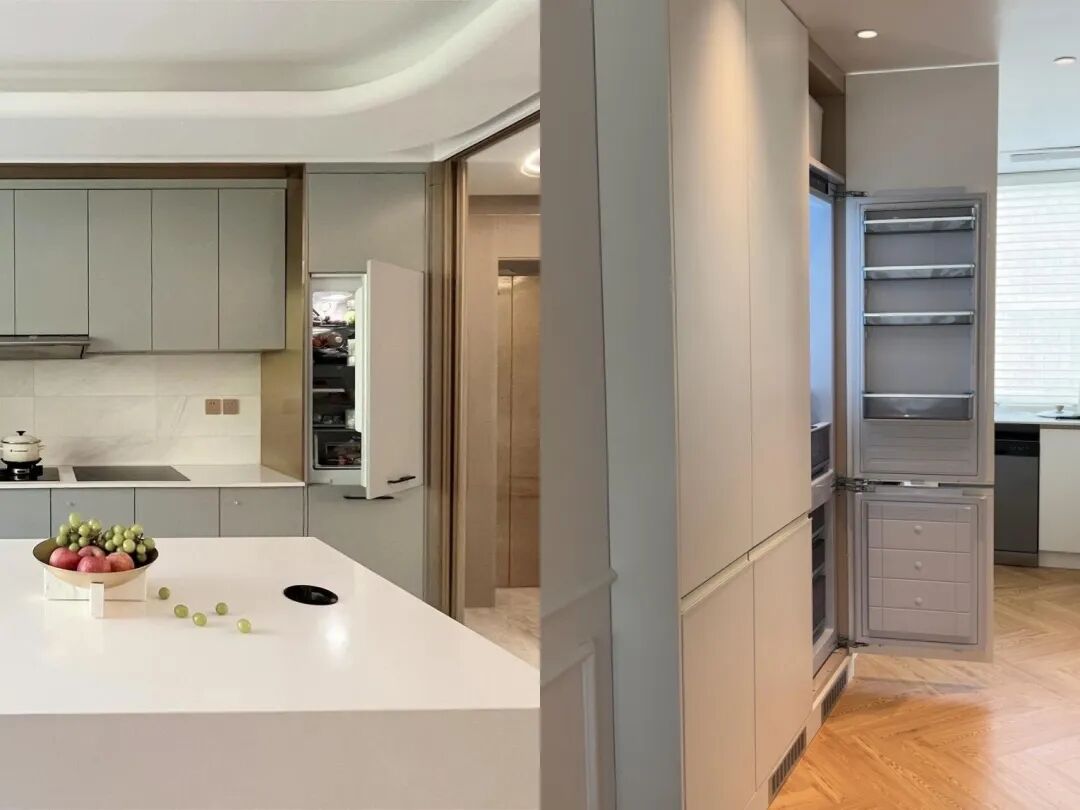
However, most people only consider aesthetics and do not take into account the requirements for the refrigerator, the size requirements, and the installation requirements of the cabinets, ultimately resulting in “fake embedding”, which is not only ugly but also makes knowledgeable people laugh.
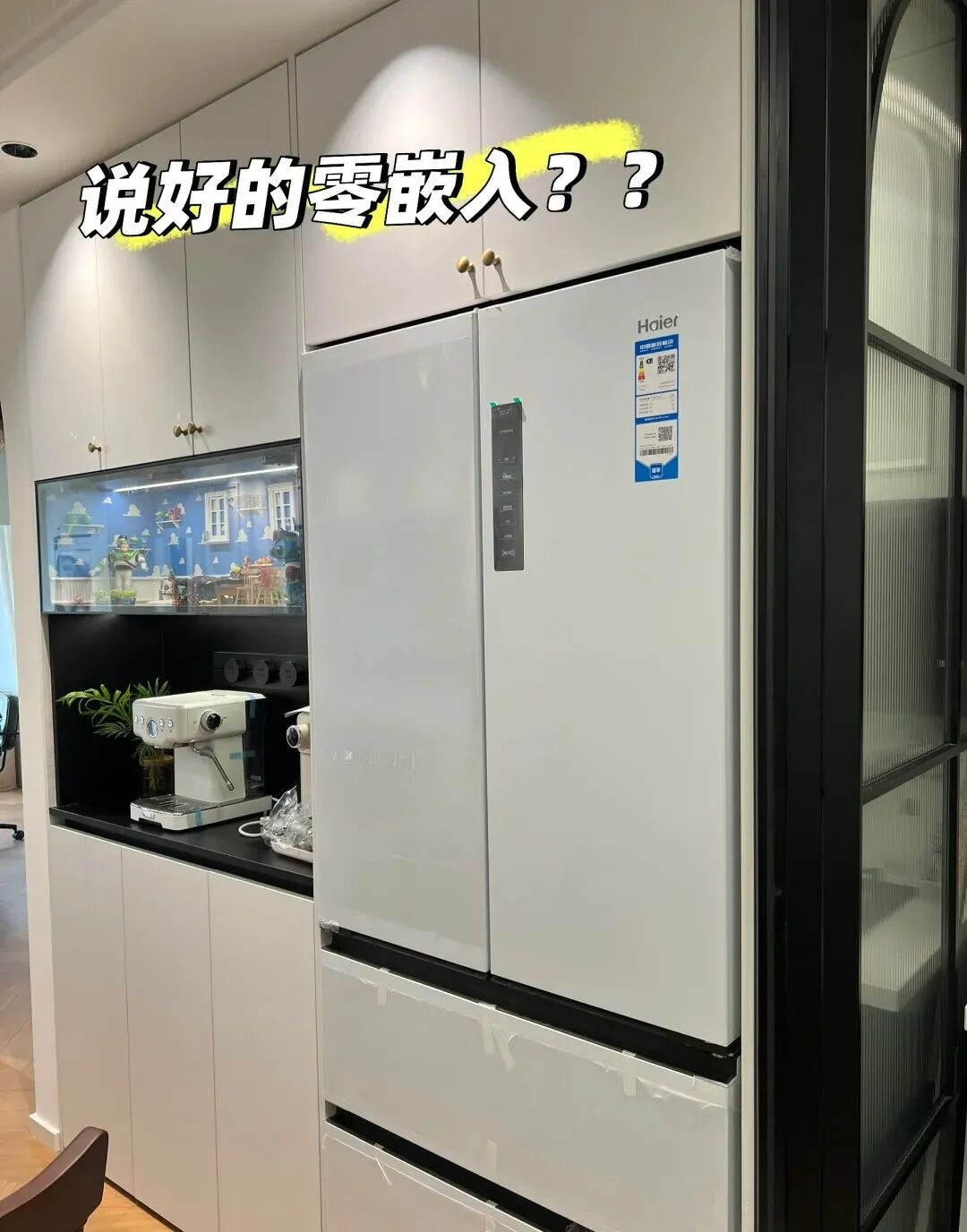
After seeing the “tragic experiences” of others, I realized: embedded design is not as simple as imagined, so much so that I dared not open the box and directly returned it!
.01
What is the difference between true and fake embedding?
The core difference between a true embedded refrigerator and a fake embedded refrigerator lies in these four “invisible details”:
1、 Reserved size mismatch
To achieve the effect of an embedded refrigerator, it is necessary to measure the refrigerator’s dimensions, heat dissipation space dimensions, and socket dimensions in advance; missing any one is not acceptable. However, most families just take a rough measurement and place an order, resulting in the refrigerator being either too thick and protruding or too narrow with large gaps that are very unsightly.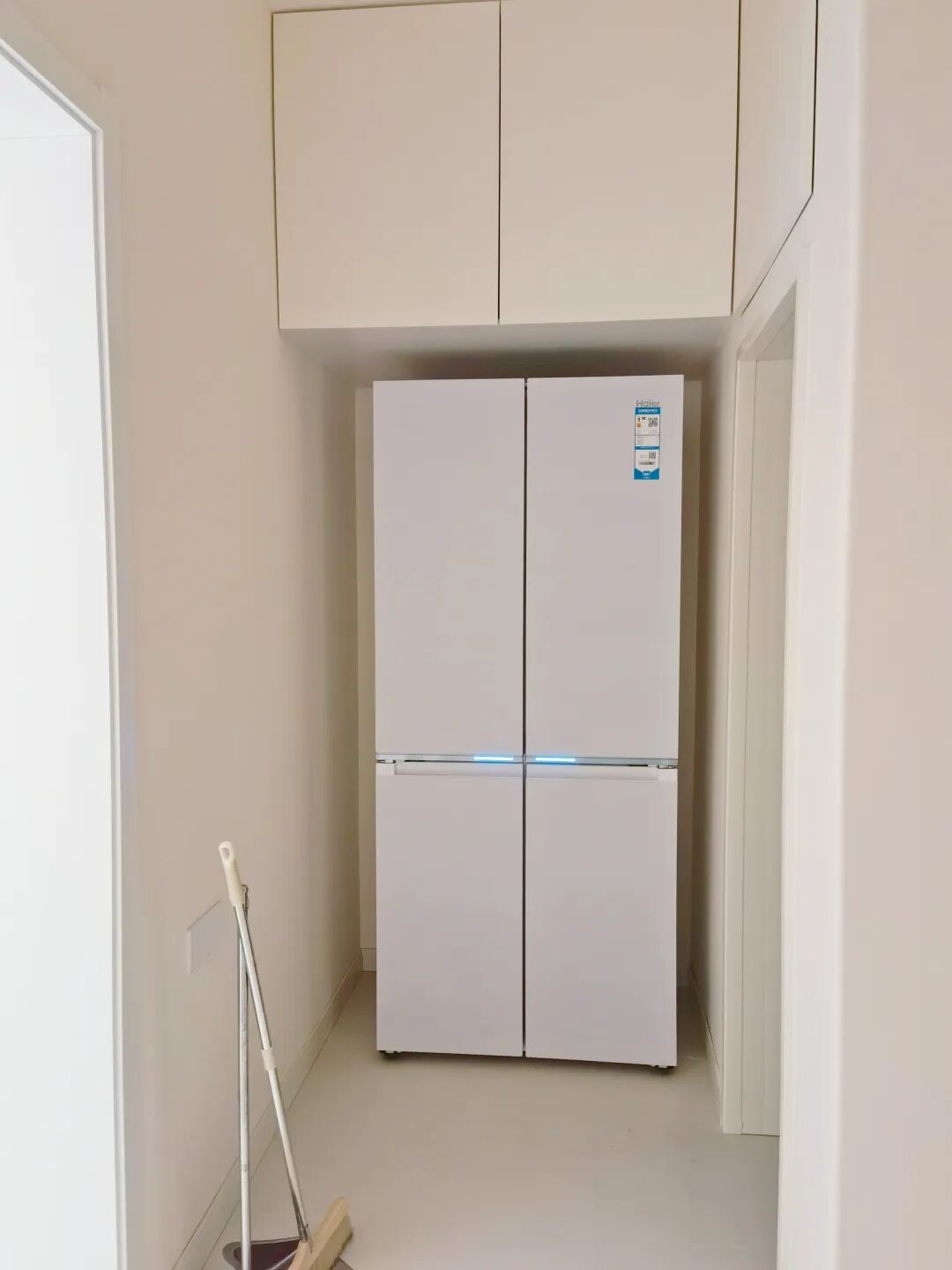 A true embedded refrigerator is one where the dimensions of the refrigerator and heat dissipation space dimensions are communicated to the custom designer in advance, and the width, height, and depth are aligned, even the socket position must avoid the back of the refrigerator, otherwise, the thickness of the plug can make the refrigerator “protrude”. Only in this way can it be ensured that the later embedded refrigerator achieves a satisfactory effect.2、 Heat dissipation method To achieve the embedded refrigerator effect, it is necessary to ensure that the refrigerator’s heat dissipation is not problematic; otherwise, various issues will arise during use, affecting usability. However, most people only consider aesthetics and price when purchasing a refrigerator, ignoring heat dissipation, often choosing ordinary refrigerators with heat dissipation openings on both sides, and once placed in the reserved position, they become embedded refrigerators.
 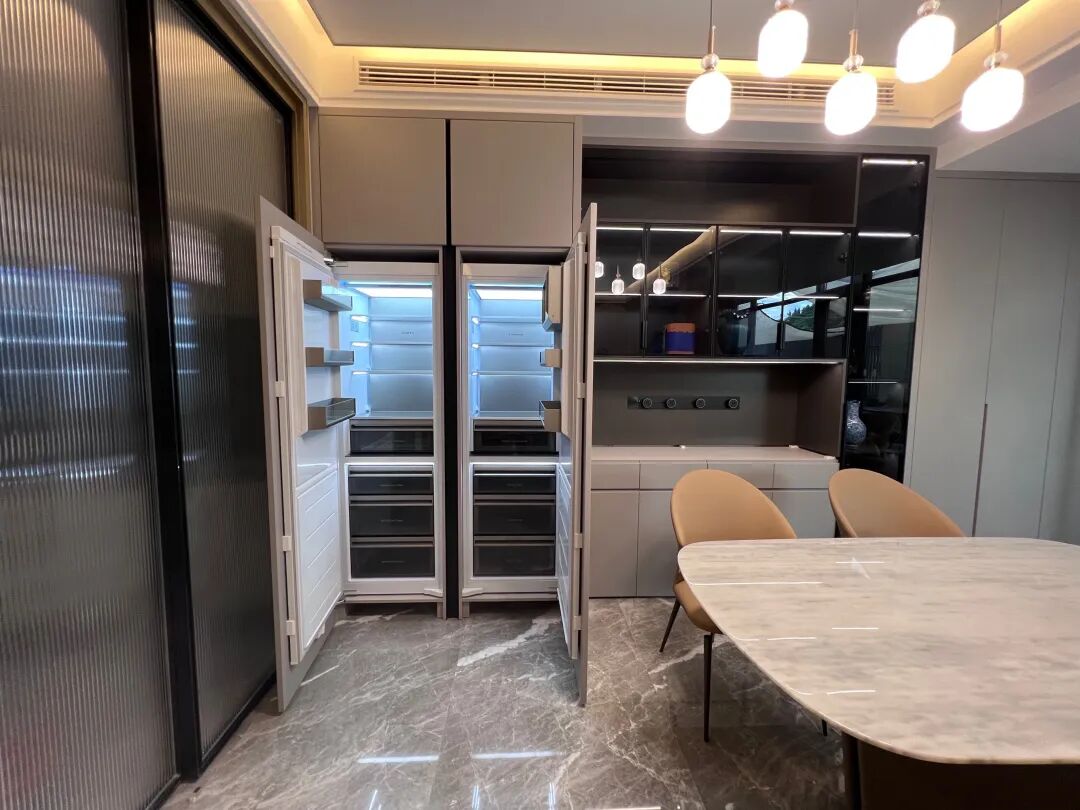 But in fact, this is not the case, because such refrigerators have heat dissipation openings on both sides, and once stuffed into the cabinet, the heat cannot escape, which not only wastes electricity but also easily breaks down. A true embedded refrigerator moves the heat dissipation openings to the bottom or top, allowing it to be installed almost “flush against the wall” on both sides, saving space and not affecting heat dissipation.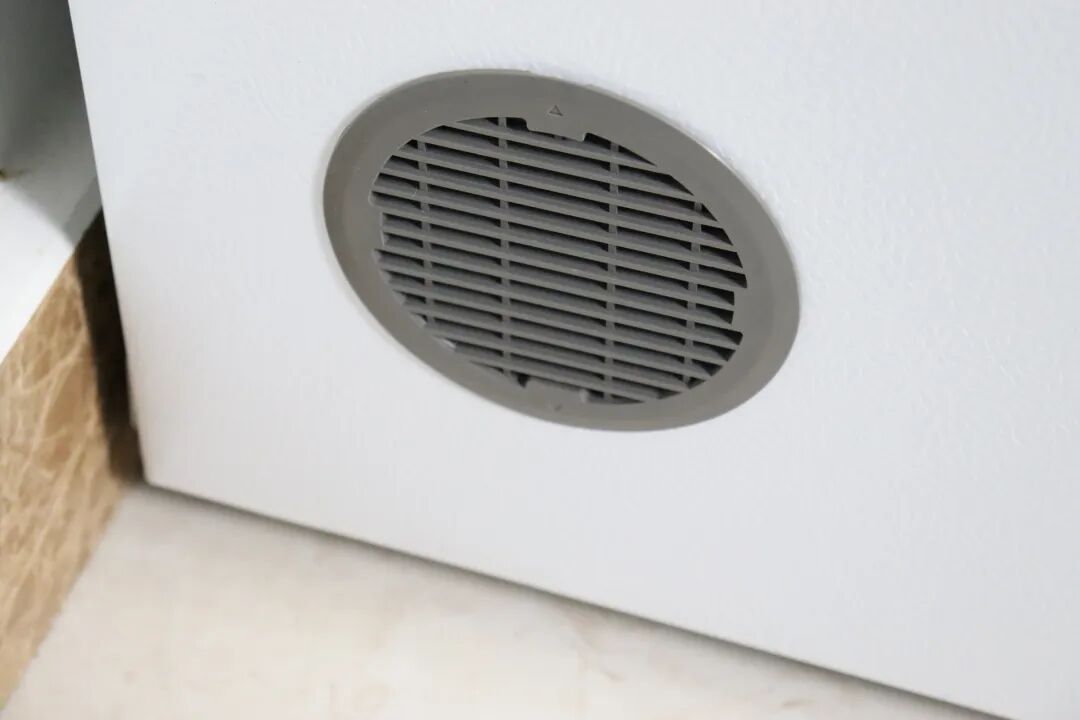
Only in this way can it be considered a true embedded refrigerator, and there will be no worries about later usage issues; otherwise, there will be
However, bottom heat dissipation also has its drawbacks, such as slow cooling speed, poor preservation effect, increased power consumption, and affecting service life, among other issues.
3、 Hinge design Ordinary refrigerators do not consider that they will later be made into a “fake embedded” effect when designing the door opening, so the refrigerator door will “tilt” when opened. Originally, this is not a problem, but once stuffed into the cabinet, if the gap is too small, it will get stuck in the cabinet; if the gap is too large, it will affect aesthetics and collect dust.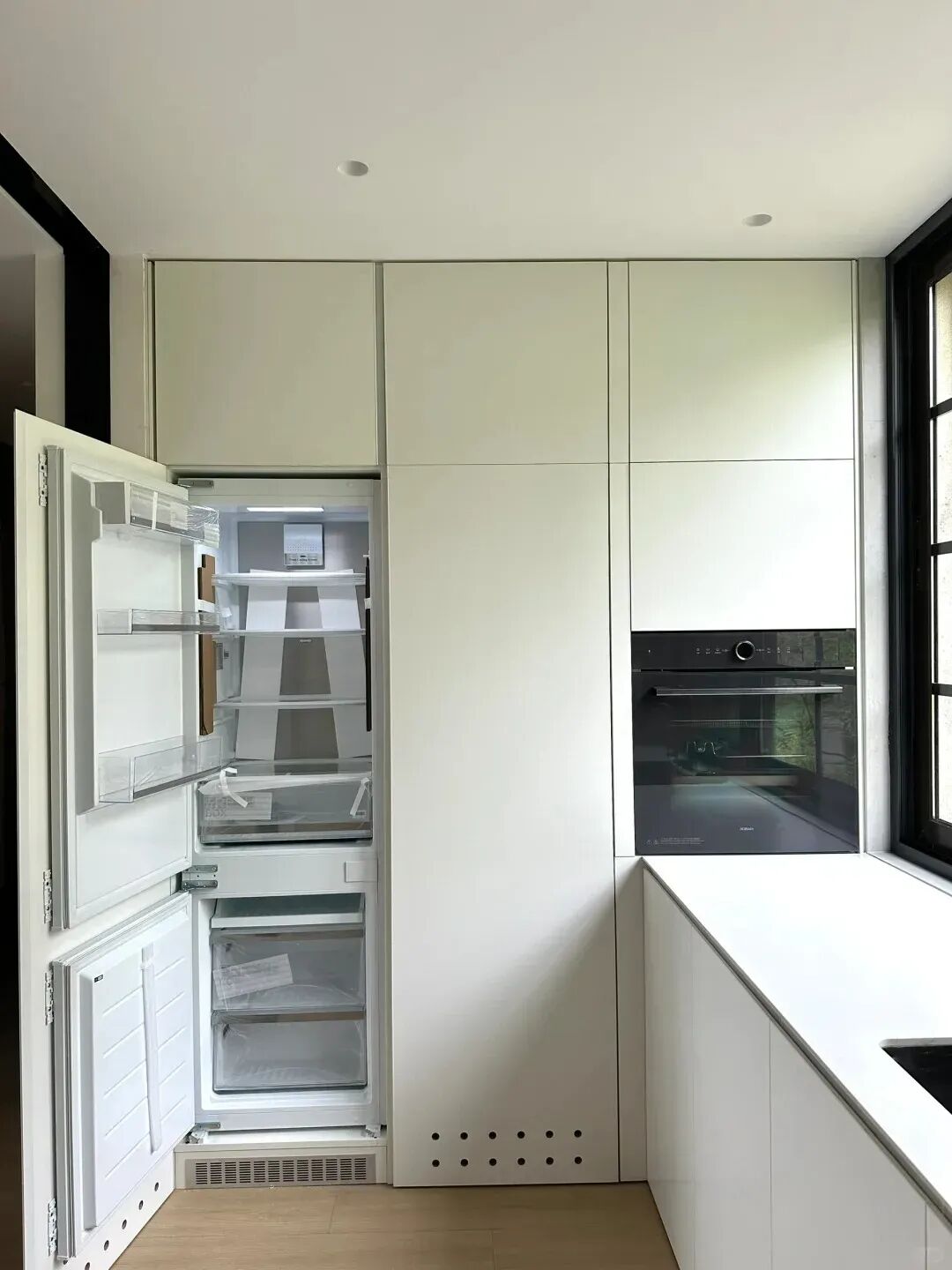 Additionally, it may scrape against the cabinet body, damaging the cabinet and affecting aesthetics. A true embedded refrigerator uses special hinges, allowing the door to easily open more than 90 degrees even when flush against the cabinet.4、 Embedding method Currently, the embedded refrigerators sold on the market are divided into free embedding, zero embedding, and flat embedding:
- Free embedding: leaving a 2-3 cm gap on both sides, sufficient for heat dissipation and door opening, but aesthetics are average;
- Zero embedding: leaving almost no gap on both sides, relying on bottom heat dissipation + special hinges to achieve “seamless”, which is currently mainstream;
- Flat embedding: the refrigerator is completely flush with the cabinet, even the door handle is hidden, the highest aesthetic value but the strictest size requirements.
Some merchants, in order to sell products, will trick consumers by selling ordinary refrigerators as “embedded”; once consumers bring them home, they will encounter problems with heat dissipation and door opening.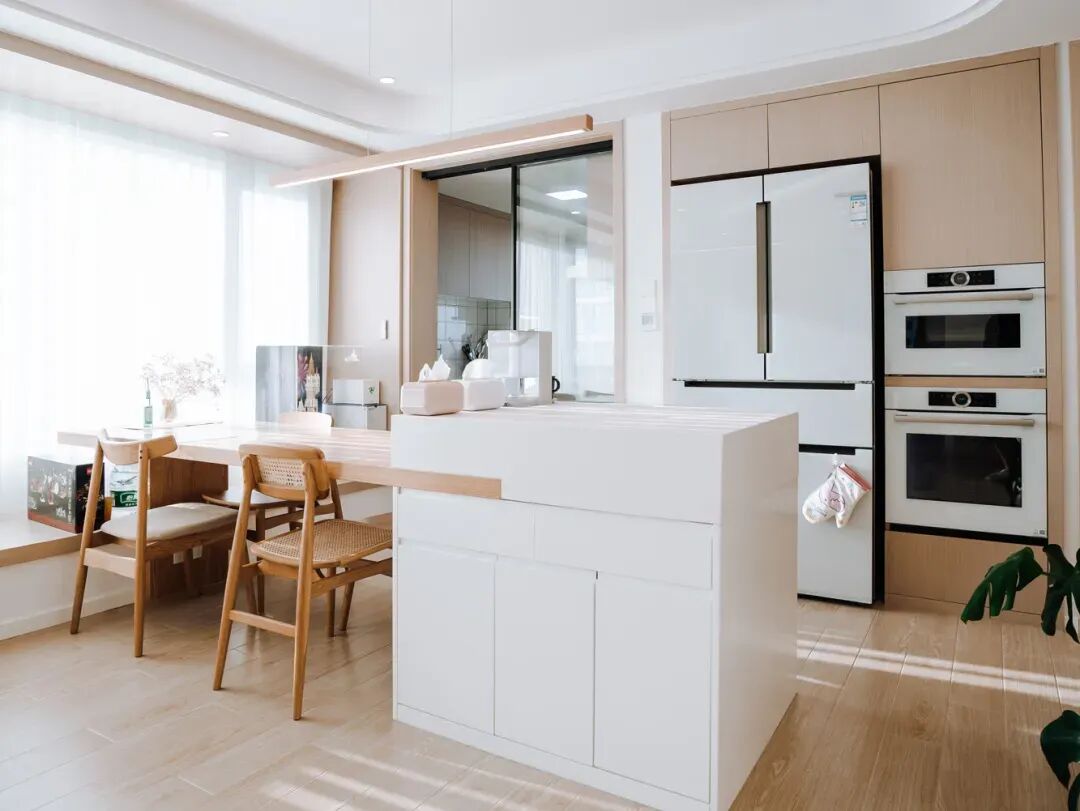 What is even more frustrating is that some “fake embedded” refrigerators do not have wheels at the bottom, making it easy to push in but difficult to pull out; moving it requires calling a moving service, turning it into “fixed furniture”.
.02
Want to install a true embedded refrigerator? Do these 3 steps in advance to avoid mistakes
I believe everyone wants to know how to achieve a truly embedded refrigerator effect, and since they are willing to spend money on a true embedded refrigerator, they do not want to be scammed.
Therefore, the following content is crucial!
1、 First choose the refrigerator
Since you want to achieve a true embedded refrigerator effect, the first step is to choose the right refrigerator, which means you need to select a true embedded model.
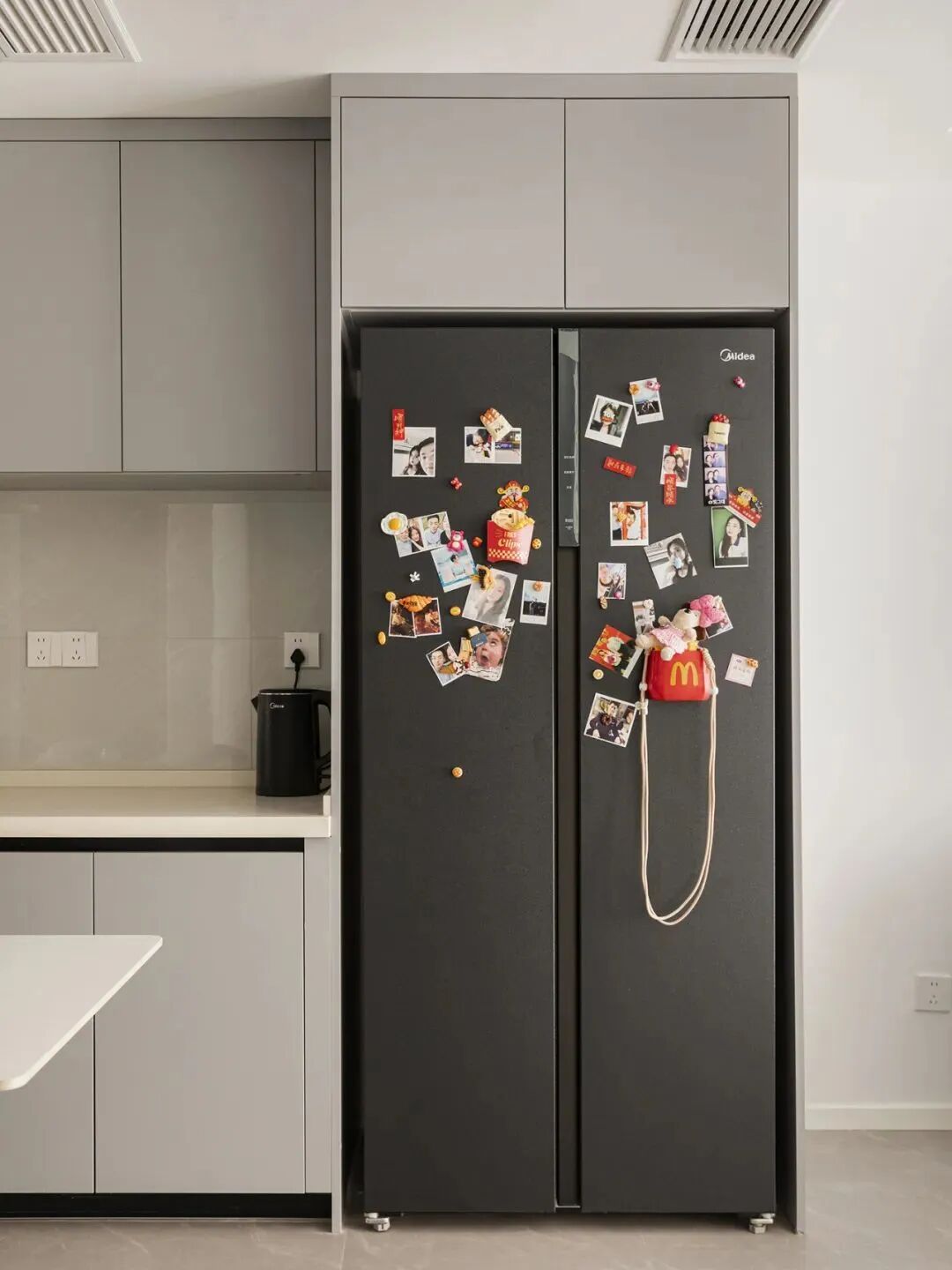
Do not think that anything labeled “embedded” is a true “embedded” refrigerator, because some merchants trick customers by placing “embedded” labels on fake “embedded” refrigerators, making them appear genuine.
Therefore, when selecting an “embedded” refrigerator, ask:
-
Where is the heat dissipation opening (bottom/top preferred)?
-
Can the hinge open the door with zero gap?
-
Does it have movable wheels (for easy maintenance later)?
Only by meeting the standards of a true “embedded” refrigerator can you consider purchasing; otherwise, do not buy.
2、 Dimensions must be “repeatedly checked”, do not be lazy
Once the refrigerator is purchased, it is crucial to pay attention to the subsequent dimension matching; this step is critical.
When matching dimensions, consider width, height, and depth, and also consider the thickness of the socket at the back, and the door opening method; only by considering all these details can you ensure that the later installation is seamless and visually pleasing!
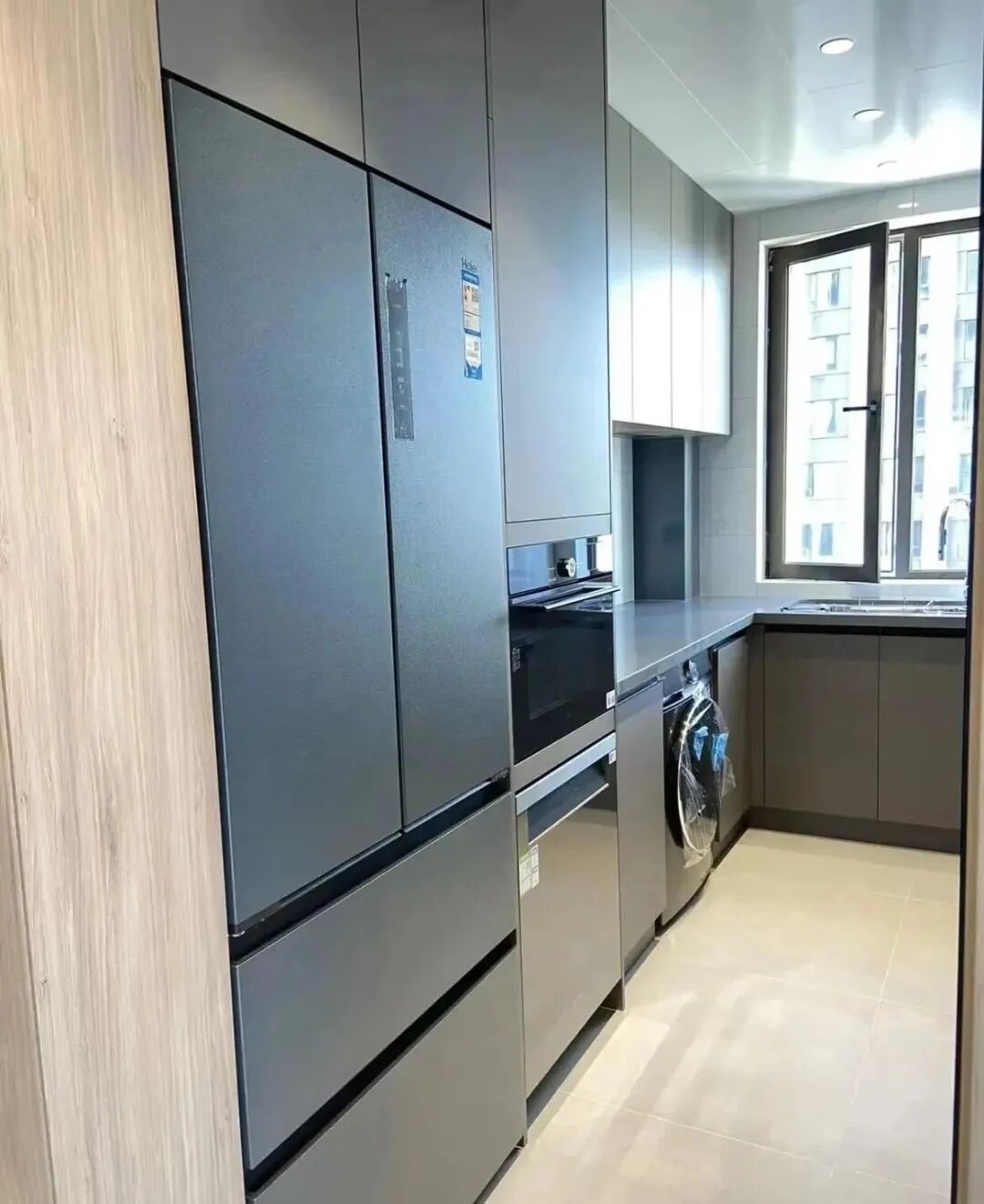
If possible, it is best to have the cabinet factory and refrigerator brand come together to measure, to avoid “each saying their own”.
3、 Do not ignore mobility
Although the refrigerator will be fixed in a certain position for a long time, this does not mean it is “one-time”.
In case of future repairs or moving, it should be easy to pull out.
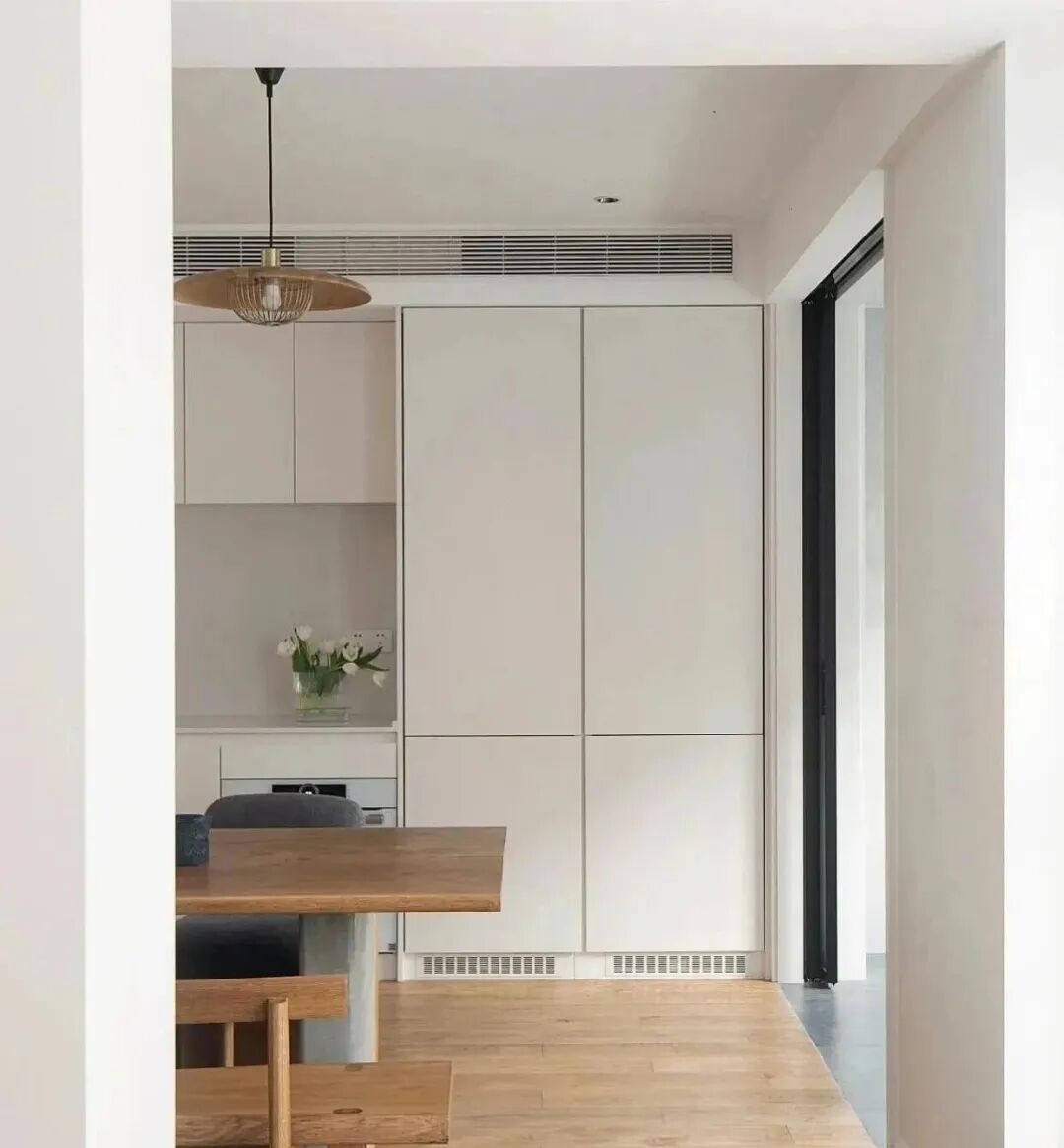
Therefore, pay attention to whether the bottom of the refrigerator has wheels, and whether there are stress points on the sides for easy movement later.
Generally speaking, a true “ embedded” refrigerator will consider these factors and will take care of these details.
.03
Precautions after delivery
Although the prices of refrigerators have decreased recently, true “ embedded” refrigerators are still relatively expensive, so after delivery, it is essential to pay extra attention and not overlook any details.
1、 First, let it sit according to the instructions
During transportation, the refrigerator may tilt, causing the compressor’s lubricating oil to become “disoriented”; therefore, after moving the refrigerator indoors, it should be allowed to sit first.
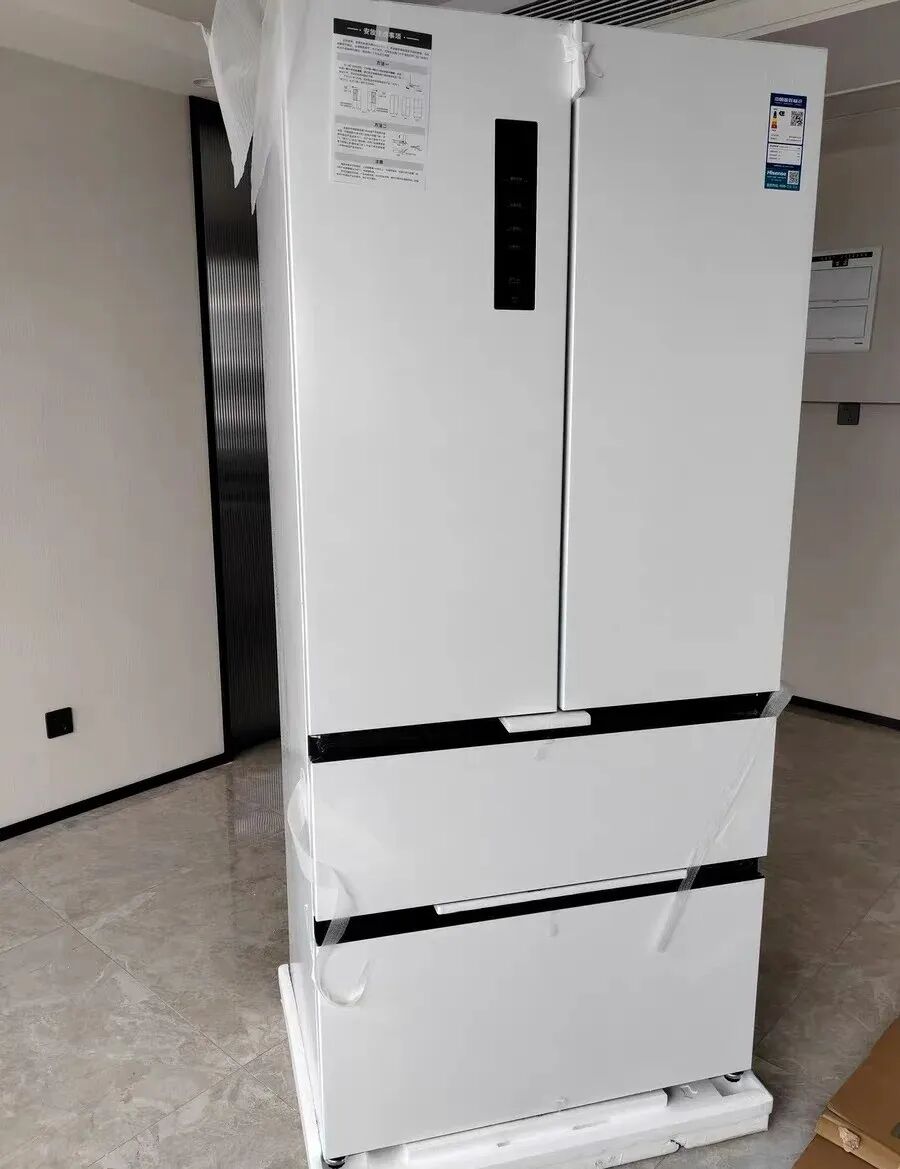
The recommended resting time varies by brand, but generally, it is suggested to be more than 4 hours, allowing the lubricating oil enough time to flow back into the pipes before powering on.
2、 Open the refrigerator to air it out
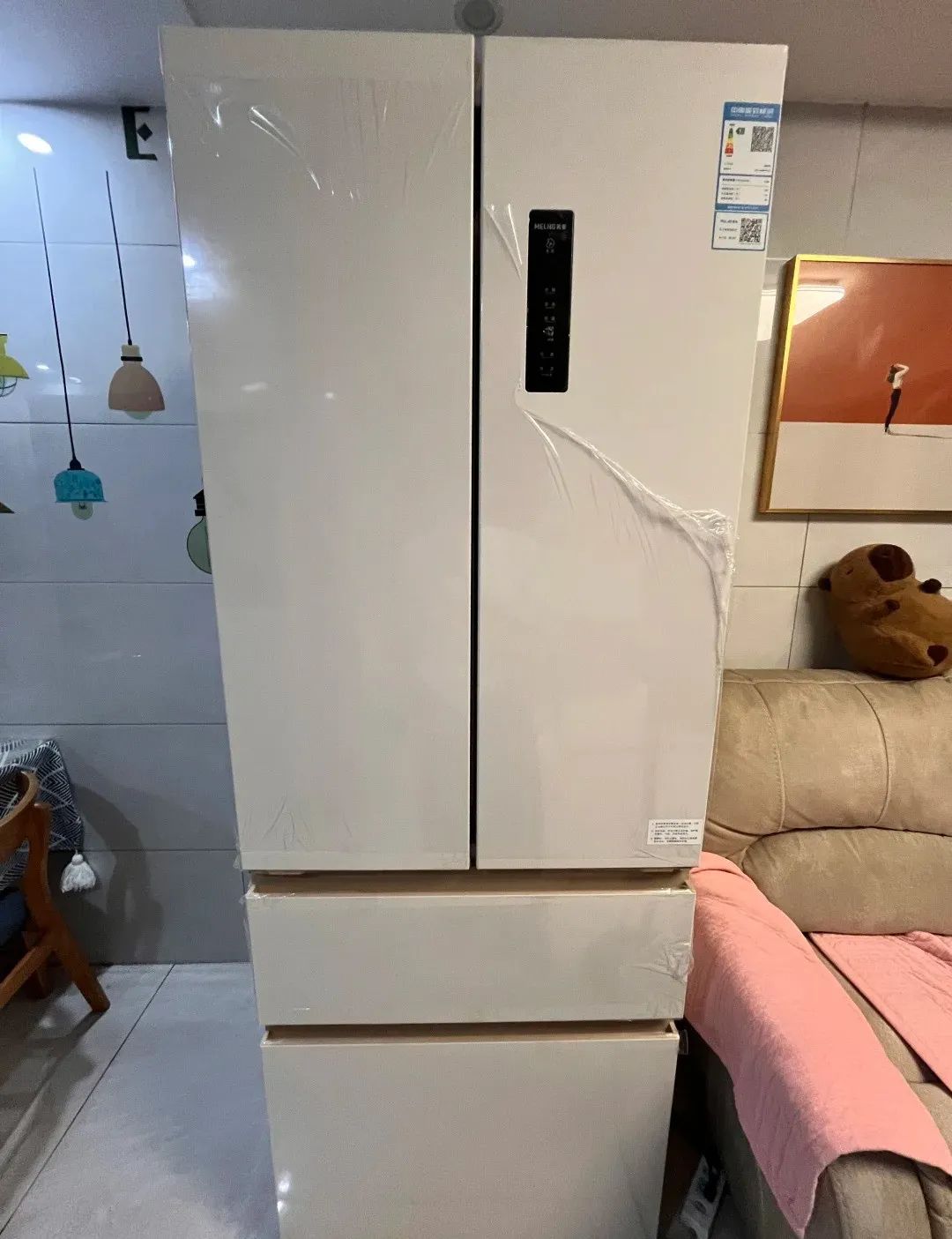
During the resting period, it is recommended to open all refrigerator doors and drawers, to let the odors inside dissipate.
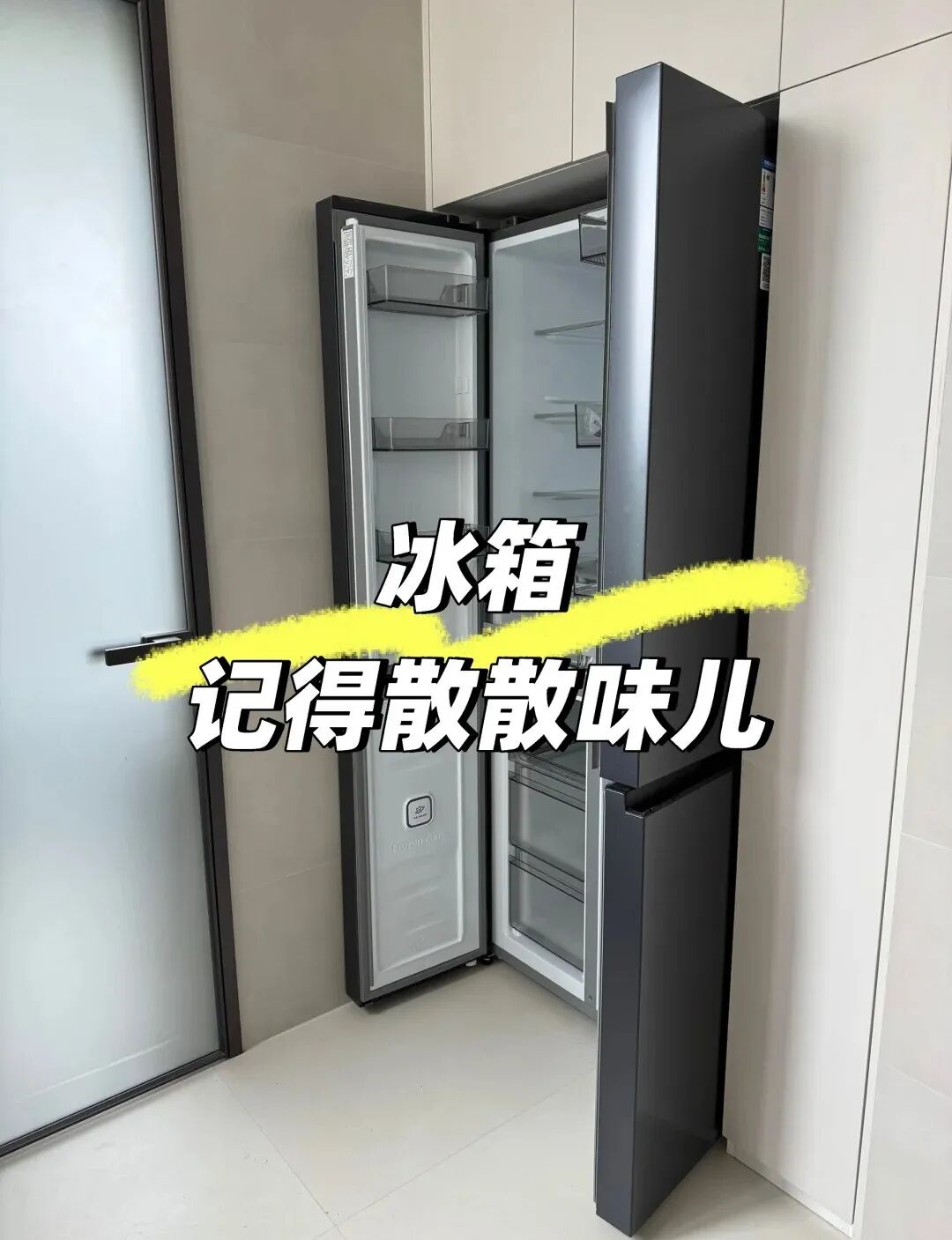
This is known as airing out.
3、 Check the details
While airing out, it is recommended to use a damp cloth with a mild cleaner to clean both the inside and outside thoroughly.

The benefit of this is to make the refrigerator cleaner, while also allowing for a thorough inspection of the refrigerator’s interior and exterior for any damages, enabling timely discovery of issues and prompt returns or refund requests.
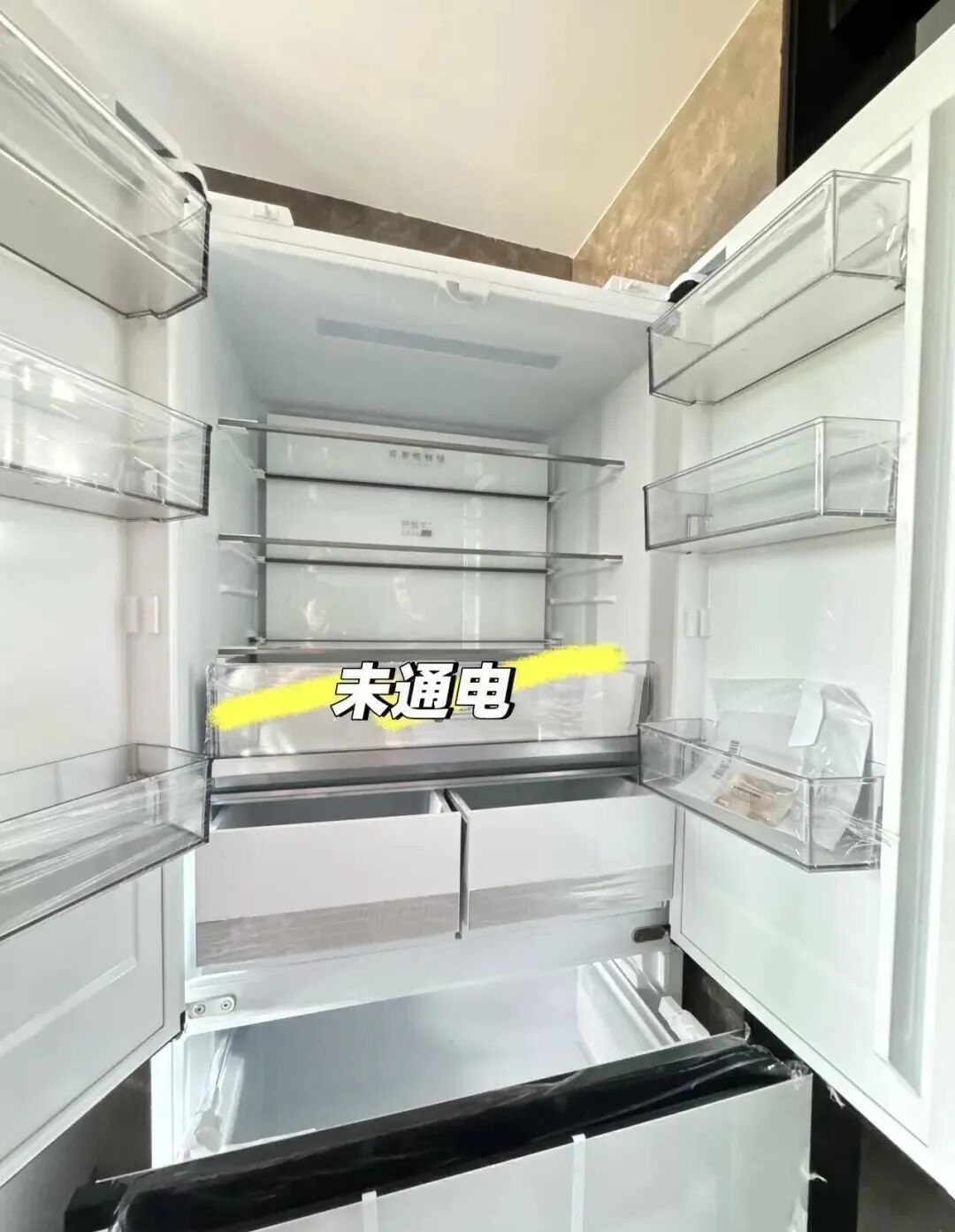
4、 Run it empty for a test
After the refrigerator has rested, it should be run empty for more than 8 hours.
During this period, carefully observe its noise, power consumption, freezing effect, and other aspects to determine whether it meets expectations; only after confirming can you proceed to the next step.
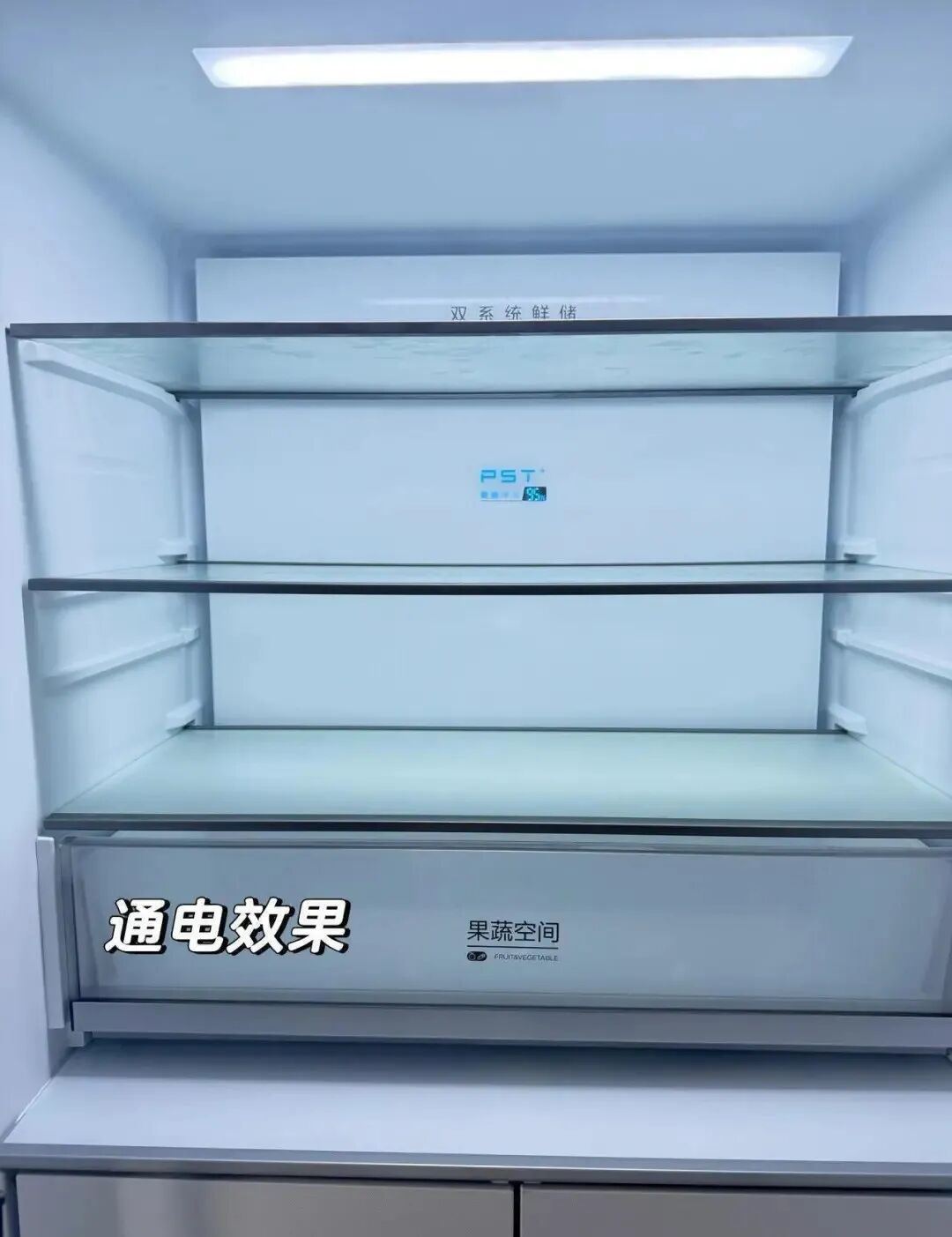
If any issues arise, contact customer service immediately for inspection.
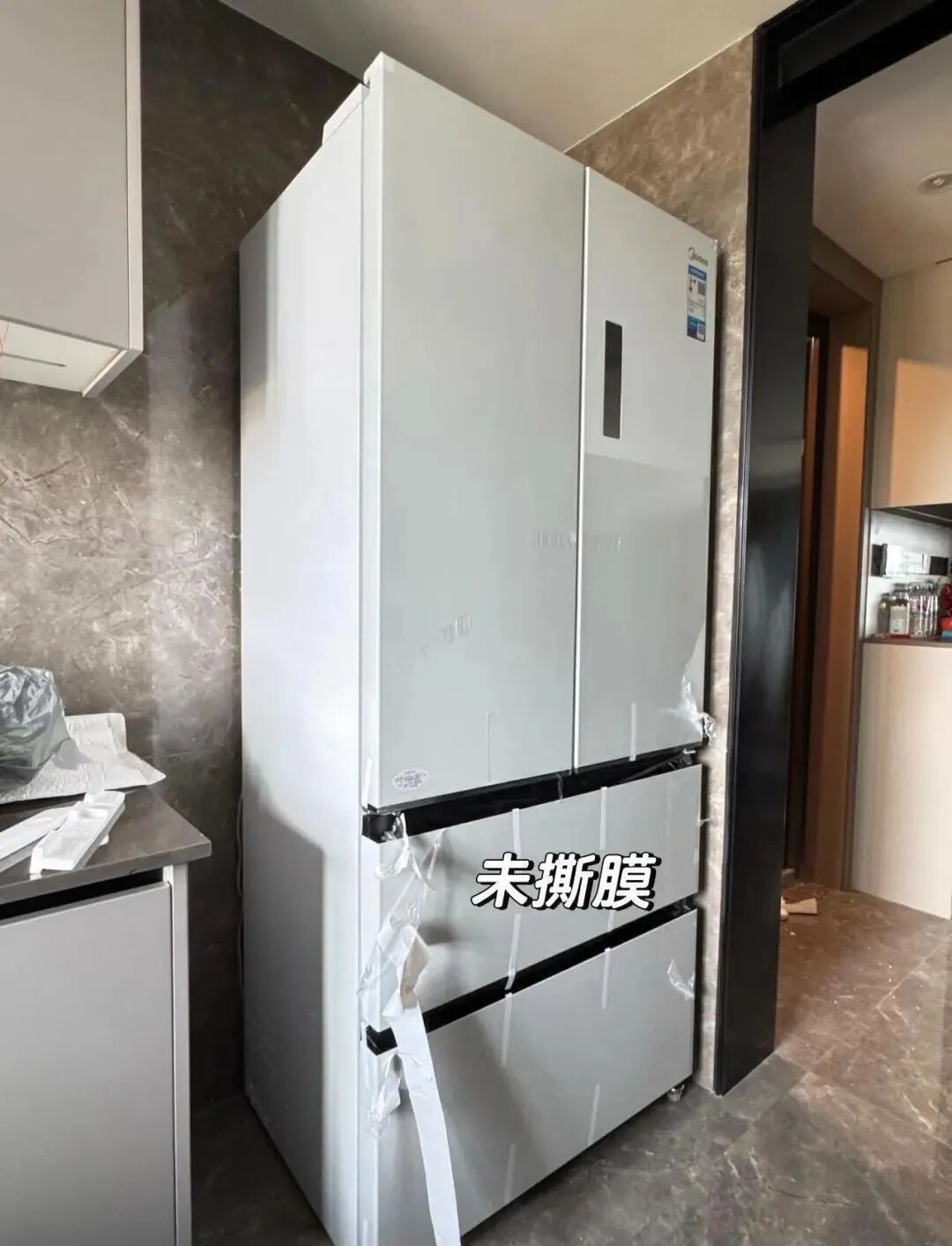
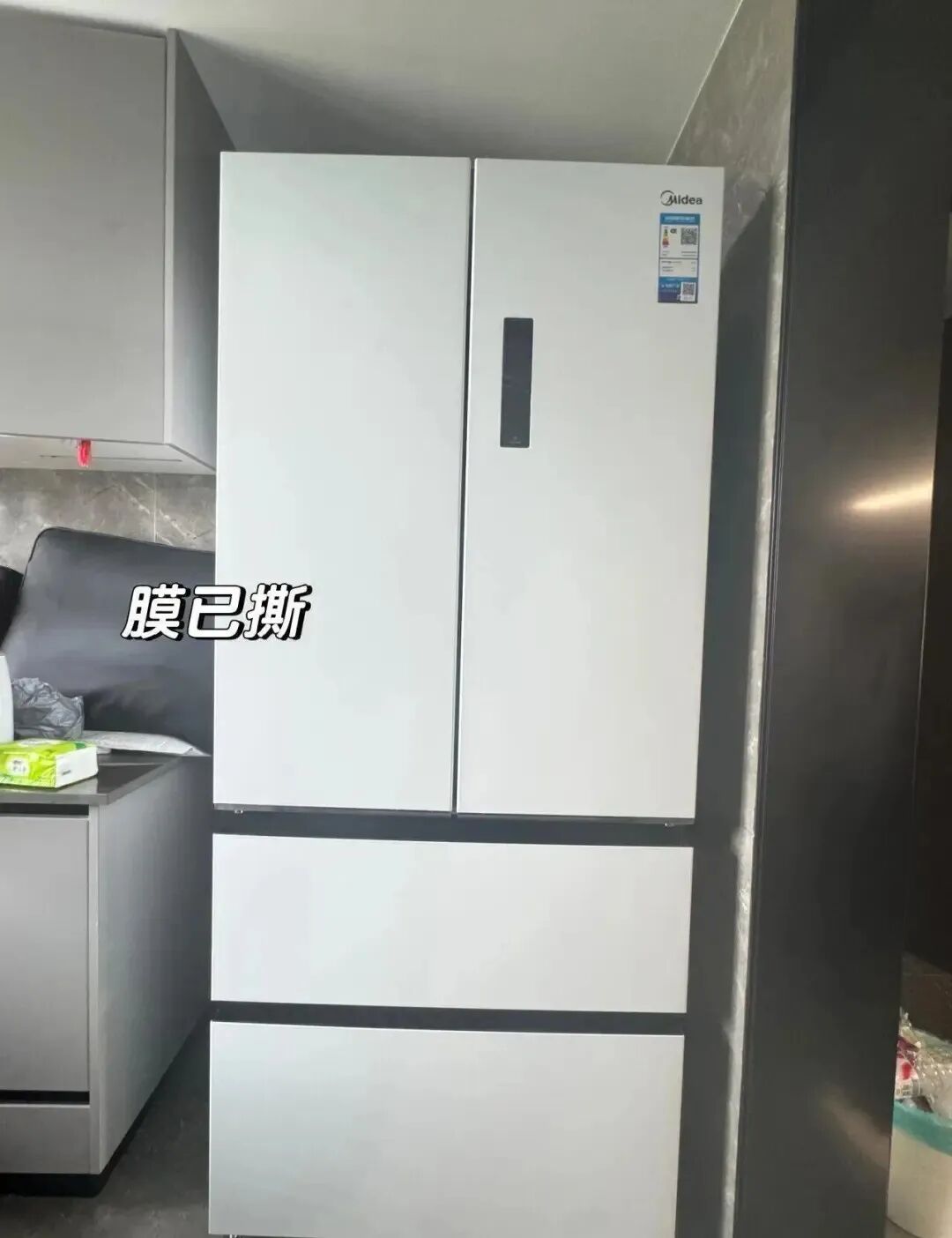
5、 Remove the protective film
After the refrigerator has been running for a week without any issues, you can remove the outer layer of protective film to allow for better heat dissipation.
Finally, to summarize:
The high-end feel of a refrigerator is not “forced” out, but rather a “natural fit”.
Do you have an embedded refrigerator at home? What pitfalls have you encountered? Feel free to share in the comments to help others avoid pitfalls!
( Images sourced from the internet, will be deleted if infringing)