The path of self-development for China’s chips is truly arduous; not only is it constantly hindered, but there are also frequent external interferences, and there are internal and external collusions to steal technology.
The main perpetrator of this chip espionage case, Zhang Kun, is an American, a PhD from the University of Michigan, and a returnee with a background at Qualcomm, who joined Huawei as early as 2011.
Ordinary people would certainly not suspect that an employee with an annual salary of over 20 million would steal the company’s technology, and the methods of committing the crime are chilling upon reflection.
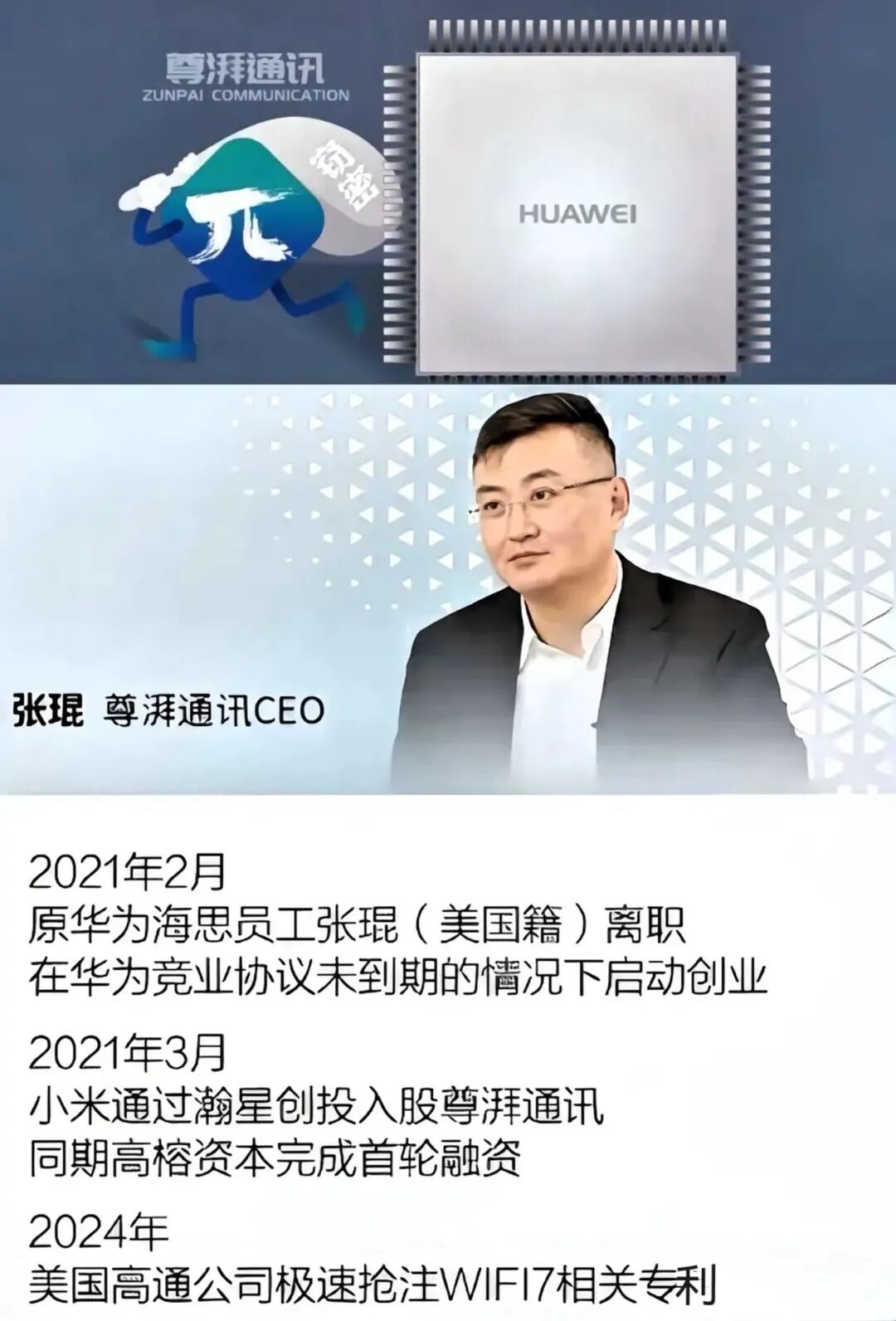
Not only was there collaboration among the group, but it was also premeditated; as soon as the company was established, it immediately received venture capital, and everything seemed to be arranged.
Although only 14 people were sentenced in this case, many more were involved, indicating a broader scheme of poaching within the organization.
These individuals resigned very skillfully; they did not all leave at once, but some remained at HiSilicon, working at Huawei during the day and going to Zunpai to work overtime at night.
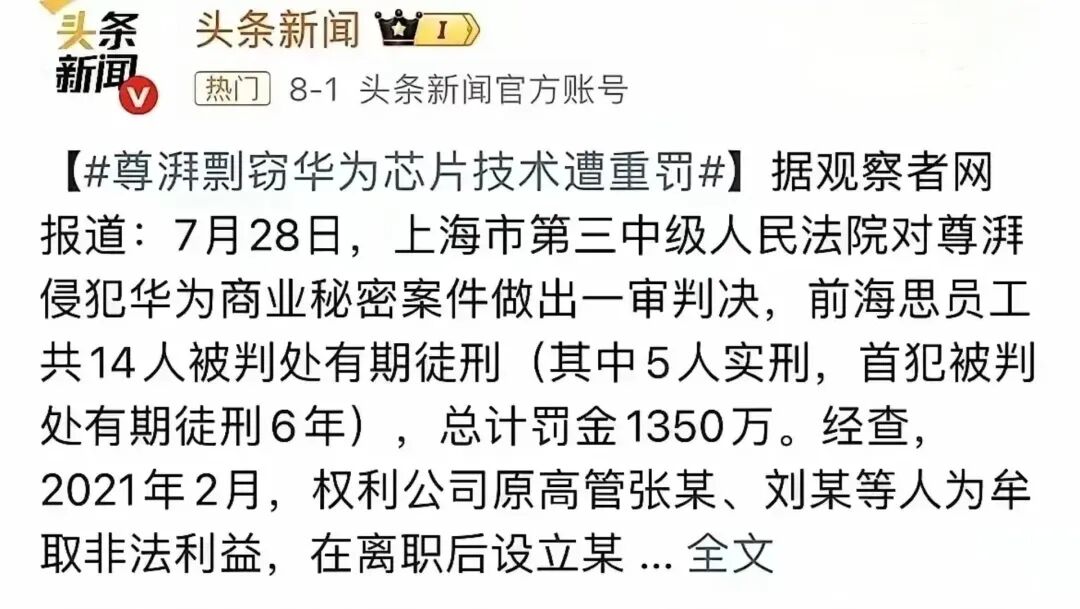
This represents a collusion between internal and external forces, secretly stealing core confidential technologies. During this period, dozens of former Huawei employees accessed a large number of non-job-related work documents before resigning.
These individuals stole 40 key technologies related to chips through copying, photographing with mobile phones, screen recording, and screenshots, and successively poached over a hundred Huawei employees, involving chip design, algorithms, RF, packaging, and other aspects.
The timing of this incident coincided with a very difficult period for Huawei, which can be described as internal and external collusion, undermining the foundation.
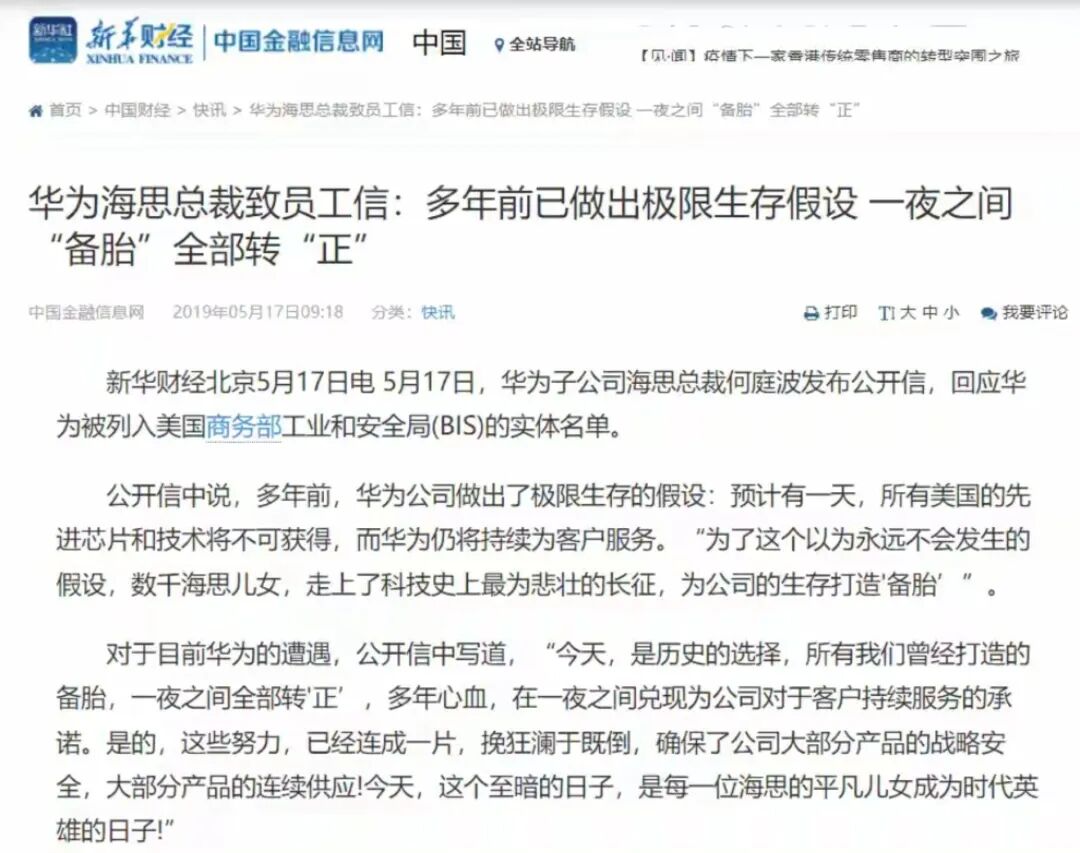
Huawei anticipated the possibility of being sanctioned by the United States as early as 2003, so research on chip technology began at that time.
Thus, Huawei’s current chip technology is the result of decades of accumulation, while Zunpai obtained the same technology in just two years.
The difficult path of China’s chip development is merely a microcosm, and this technology theft case is just one of the many setbacks.
Zhang Rujing, the founder of SMIC, established World Semiconductor in 1997. At that time, TSMC spent 5 billion USD to acquire it to prevent its development.
However, during the acquisition, TSMC promised to support Zhang Rujing in building a chip factory in mainland China, but after the project was completed, they went back on their word, forbidding him from establishing the factory, threatening that the shares acquired through the acquisition would be voided, and his residency would be revoked.
Nevertheless, Zhang Rujing was undeterred and went to Shanghai, where he founded SMIC in 2000.
Smartly, Morris Chang chose to sue SMIC in the United States for technology theft, demanding 1 billion USD in damages.

Due to the technological bottlenecks, SMIC was at a disadvantage. To avoid being stifled in its infancy, SMIC settled and paid 175 million USD, submitting its technology for TSMC’s review.
However, TSMC soon sued SMIC again, claiming it violated the previous settlement and demanding an additional 200 million USD in fines and the transfer of 10% of its shares.
To reach a settlement agreement, Zhang Rujing left SMIC, resigning as president and CEO, and it is rumored that he was also required to refrain from the industry for three years.
Thus, this time, TSMC claimed that its 2nm technology had leaked, and Xiang Ligang warned to be vigilant to prevent TSMC from having ulterior motives.
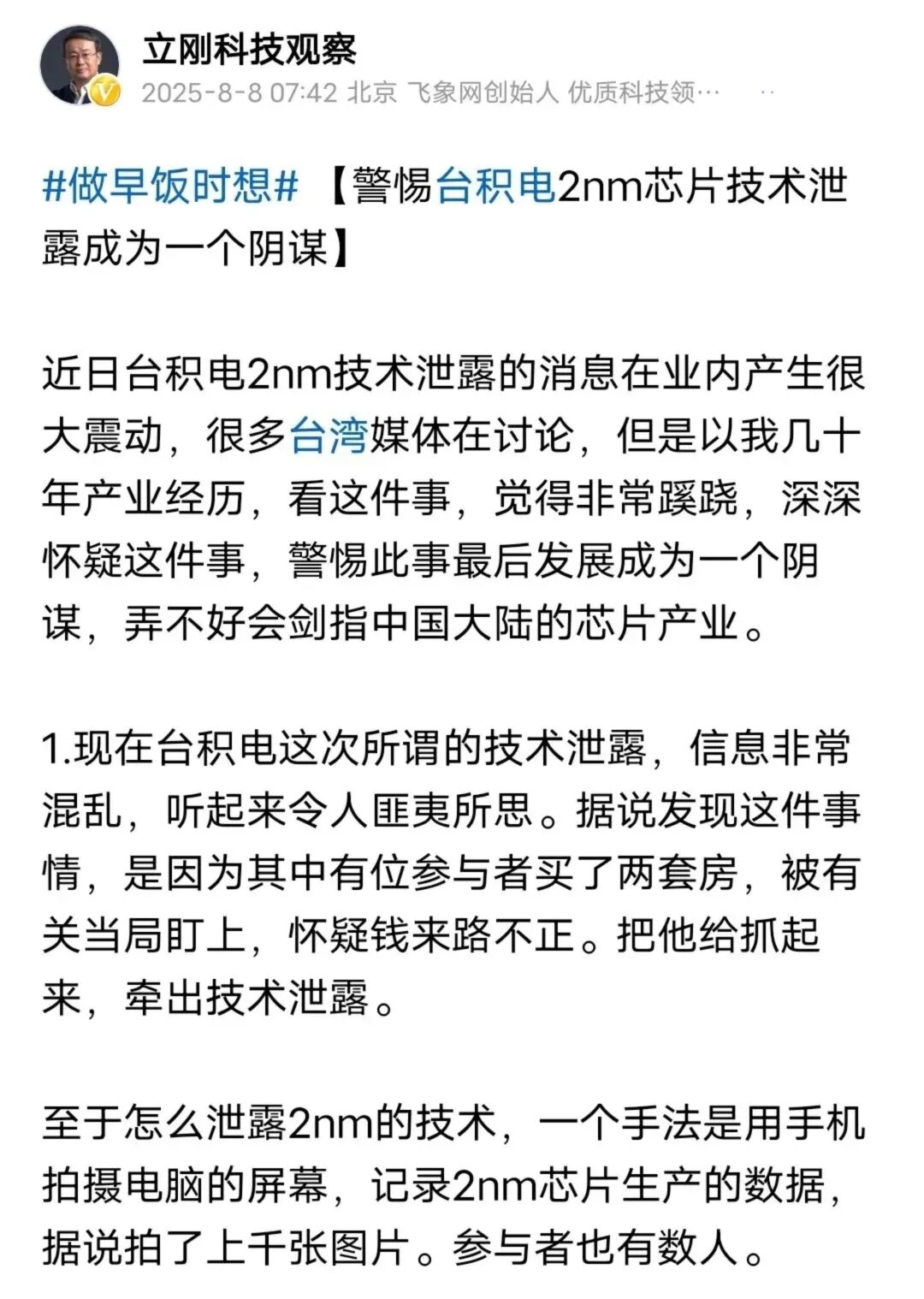
It is said that TSMC’s leak was also a result of internal and external collusion, where important data was recorded by photographing the computer screen with a mobile phone.
However, for such complex technology to leak, it requires the participation of many internal individuals, making the situation sound a bit suspicious.
Regardless of whether this incident is targeted at us, it is no longer important; China’s chip technology is no longer what it was a few years ago. Back then, due to bottlenecks, ZTE was sanctioned and had to obediently pay 14.2 billion yuan.
Now, if the United States wants to sanction China’s chip industry again, it is feared that no major company will comply and obediently pay fines, as almost all critical technology links have domestic alternatives.
If previously developing AI large models was based on CUDA, where everyone could only use NVIDIA chips, now this monopoly has been broken by DeepSeek, marking another breakthrough in a bottleneck industry.
Therefore, the development of China’s chip industry has been very tortuous; the current achievements are the result of decades of effort, and acquiring technology is indeed not easy. We must be vigilant against others breaking through from within.