Real-Life “Inside Job”
The reason I am writing today is that I came across a report on Observer Network this morning titled “Details of the Zunpai Chip Theft Case Exposed” which sent chills down my spine. It wasn’t because the story was thrilling, but because this group of people acted so “professionally” in real life, showing no signs of concealment.
The main character of the case is Zunpai, a company that claims to focus on the development of WiFi6 chips. However, its path to success was not through dedicated research and development, but by reaching into Huawei HiSilicon’s pockets—not just once, but in batches.
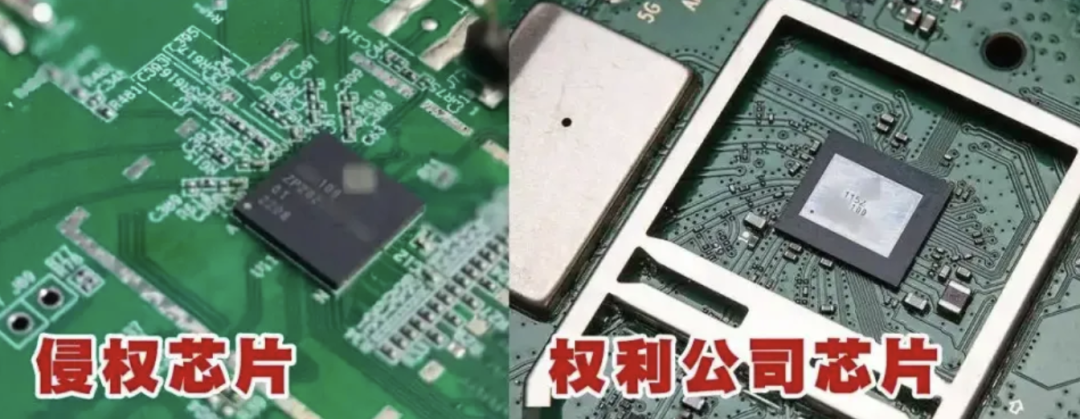
As early as the end of 2020, Zhang Kun, a U.S. citizen, began recruiting people, starting with his former subordinate Liu, then Zhou and Gu, forming a high-level team for a WiFi chip “all-in-one”—covering RF, SoC, algorithms, and packaging, leaving no one behind. What happened next? They directly poached people from Huawei, moving them en masse to Zunpai.
Even more outrageous, these individuals did not resign before leaving; they worked under Huawei’s banner during the day and clocked in at Zunpai at night, even working overtime on weekends for their “new employer.” Some, fearing non-compete agreements, even changed their names—Zhou became Hu, Gu became Du, and Wang became Wang Yang. It sounds like a spy thriller, but it’s all true.
The “Blood Oath” is the Chip Landscape, Criminal Actions Textbook
What they called a job change was actually a home invasion. More than twenty employees who left their jobs frantically accessed internal documents unrelated to them, copying, photographing, and intercepting chip circuit diagrams, layouts, and specifications. Joining Zunpai was their “blood oath.”
Even more absurd, while Zunpai was developing externally, there were current Huawei employees assisting internally. Liu, Gao, and others colluded with current employees like Tu and Zhao, hand-copying and taking screenshots to smuggle secrets out step by step. Some even bypassed security systems, intercepting core chip technologies as images and transmitting them through internal communication tools.
I just want to ask, is this still chip development, or is it a mafia operation?
In May 2022, Zunpai secured hundreds of millions in Pre-A round financing from over ten institutions. Six months later, they had another Pre-A+, and by early 2023, they were directly in the A round of financing. Money came in fast; investors might still be marveling at the speed of “domestic substitution,” but little did they know the cost of “speed” was trading on decades of others’ technological achievements.
Even more laughable, in November 2022, Zunpai produced its first version of the chip, quickly changed to a second version, and deleted the first version in an attempt to wash their hands of it. Liu’s resignation was also a facade to cover up the fact that he was still receiving a salary from Huawei while stealing secrets.
What do you call this? While shouting about innovation, they are running a marathon in stolen shoes.
The Law is the Bottom Line, Not a Suggestion
By the end of 2023, the story turned a page. With a command from the Ministry of Public Security, the Shanghai police dismantled Zunpai’s nest, arresting 14 people and seizing seven servers filled with infringing chip technologies. The assessment results were heartbreaking—over 90% of the 40 technical points were identical to Huawei’s confidential points.
The court ruled, sentencing Zhang Kun and four others to prison, with a total fine of 13.5 million. Liu, the “high achiever” who didn’t finish his studies at Peking University and repeated to get into Tsinghua, ended up with 1 year and 6 months of probation, and a fine of 700,000. Zhao, who helped calibrate technical plans without taking benefits, was sentenced to 1 year of probation. Wang, a textbook example of “not learning from past mistakes,” was fined for theft once, changed his name, and did it again, receiving 1 year and 9 months of probation and a fine of 700,000 this time.
Some say this is too harsh. I think it’s still light. Technology is not cabbage; stealing once cuts off others’ research paths for over a decade. Especially in the field of chips, every circuit diagram and every parameter line is earned through countless nights of hard work by researchers.
In traditional culture, this is called “eating the king’s salary while worrying about the king’s troubles.” But these people are “eating the king’s salary while digging the king’s wall.” The ancients scolded such people as “ungrateful” and “eating inside and digging outside,” which today translates to “breach of trust and infringement of trade secrets.”
Netizens’ Criticism is Not Unjustified
Under the news, netizens’ comments were even spicier than the news itself—“Severely crack down on this group of inside-out thieves!”“The tech war is a national fortune, and chips are the lifeblood; these people not only harmed Huawei but are helping others choke China’s neck!”“Receiving Huawei’s salary during the day and stealing Huawei’s life at night, these people deserve a lighter sentence!”
They are right; technological security is national security, especially in the chip field. China has worked hard to carve its own path in recent years, and with external blockades still in place, these people opened a backdoor voluntarily.
The Zunpai incident tells us—**the opposite of innovation is not backwardness, but speculation.** If you do not develop yourself, you will always be a link in someone else’s chain, or even become someone else’s pawn.
Conclusion
I write this not to stand for Huawei, but to remind—law is the bottom line, not a suggestion.
The 14 individuals in the Zunpai case, some of whom were industry elites and some who received the best education, ultimately fell in front of profit. They may have thought they were clever, able to evade risks and deceive the world, but in the end, the law still counts the total bill.
In this smoke-free battlefield of the chip war, stolen victories are not victories; stolen technologies will eventually become a noose.
Source Note: The content of this article is compiled from publicly available authoritative sources such as Observer Network, Toutiao, and Tencent News Client (specific reports can be verified through keyword searches on each platform). The information in this article is based on the organization and summary of the content from the above official and public channels, and is for informational purposes only, without representing any subjective stance or value judgment from this account. Special reminder: The content is sourced from publicly available materials on the internet. If there are any copyright disputes, please contact this account within 7 days of the article’s publication, and we will verify and handle it promptly; if no contact is made after the deadline, it will be deemed as no copyright dispute.