Smart Homes: From Individual Intelligence to Ecological Intelligence
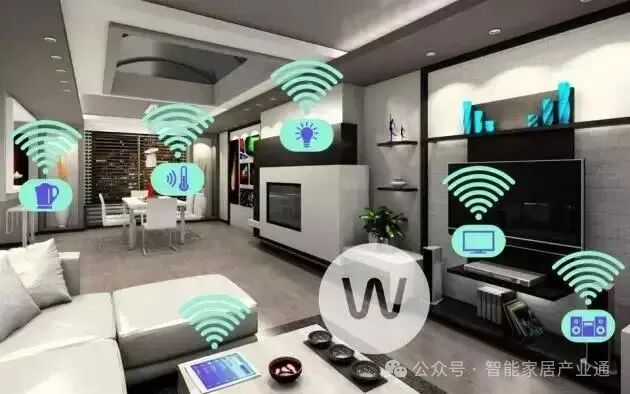
Today, smart homes are no longer a futuristic scene from science fiction movies; they are rapidly entering our daily lives. From smart speakers to smart locks, from smart cameras to smart curtains, various smart home products are emerging like mushrooms after rain, making our lives more convenient and comfortable.
When we get home from work, before even stepping through the door, we can simply tap on our phones, and the smart lock will automatically unlock, the lights will gradually turn on, and the air conditioning will have adjusted the indoor temperature to the most suitable state; after a busy day, we can collapse on the sofa and ask the smart speaker to play our desired music, with soothing melodies instantly filling every corner of the room; even when traveling, we can check the situation at home in real-time through smart cameras, providing a strong sense of security. These scenes, which once seemed unattainable, have now become daily routines for many families.
According to relevant data, the global smart home market has been growing rapidly in recent years, with the Chinese market showing immense potential. More and more consumers are beginning to accept and rely on smart home products, making the prospects for this market very bright.
However, as the variety of smart home products continues to increase, new problems have also emerged. There are often compatibility and interoperability issues between different brands and types of smart devices. For example, you may have purchased a smart speaker from Brand A, a smart air conditioner from Brand B, and smart curtains from Brand C, eagerly anticipating that they would work together to create a perfect smart living scene. But the reality can be disappointing; due to their use of different communication protocols and ecosystems, it’s like people from different countries speaking different languages, unable to communicate smoothly, making it difficult to achieve true smart interaction. You may want to control the air conditioning and curtains simultaneously through the smart speaker, only to find that it is impossible, which undoubtedly greatly reduces the user experience and limits the smart home industry from advancing to a higher level.
In this context, the competition for smart home platform ecosystems has become increasingly fierce. Major tech giants and traditional appliance manufacturers are entering the fray, attempting to create an open platform ecosystem that can accommodate various smart devices and become the “Android” of the smart home field. In this intense competition, who will stand out and lead the future development direction of the smart home industry? This is not only related to the commercial interests of enterprises but also closely tied to the lives of each of us.
The “Warring States Period” of Smart Home Platform Ecosystems
In the fierce competition of smart home platform ecosystems, numerous participants are showcasing their strengths, forming a “Warring States Period”. Platforms like Huawei HarmonyOS, Xiaomi AIoT, Apple HomeKit, and Google Fuchsia have emerged as major forces in this competition, each displaying unique charm and occupying a place in the market.
Huawei HarmonyOS relies on Huawei’s strong technological research and development capabilities and extensive market influence, showing rapid development momentum. It is based on the Harmony operating system, with a core “1+2+N” whole-home smart solution, constructing a large and open smart home ecosystem. “1” represents the smart host, serving as the core brain of the whole home smart system, responsible for data processing and system control; “2” refers to the family of smart central control devices and smart life apps, providing users with convenient interaction entry points; “N” encompasses ten subsystems including lighting, shading, fresh air, and security, achieving comprehensive coverage of home devices. With advanced distributed technology, HarmonyOS breaks down barriers between devices, truly realizing seamless collaboration among multiple devices. In Huawei’s ecosystem, smart devices of different brands and types can communicate and collaborate with each other, creating a highly intelligent and personalized home experience for users. By the end of 2024, the number of HarmonyOS connected devices has exceeded 640 million, with a cumulative commercial contribution of 150 billion GMV, demonstrating its significant influence.
Xiaomi AIoT has achieved remarkable success in the smart home field with its “Phone × AIoT” strategy. Xiaomi quickly accumulated a large user base by offering cost-effective smart hardware products. From smart speakers and cameras to smart air conditioners and refrigerators, Xiaomi’s AIoT product range is extensive, covering all aspects of home life. Its AIoT platform has seen strong growth in connected devices, reaching a total of 861 million IoT devices connected as of September 30, 2024, a 23.2% increase compared to the same period last year. The number of users with five or more devices connected to the Xiaomi AIoT platform has reached 17.1 million, a year-on-year increase of 24.9%. The Mi Home app, as the core control platform of Xiaomi’s AIoT ecosystem, has surpassed 100 million monthly active users, while the monthly active users of Xiao Ai have reached 135 million. By continuously optimizing the functionality and experience of the AIoT platform, Xiaomi enables users to easily achieve centralized control and intelligent interaction of various smart devices at home, making it popular among consumers with its affordable prices and rich product choices.
Apple HomeKit has garnered attention for its unique privacy protection mechanism and deep integration with the Apple ecosystem. It is a cloud-based protocol that is not tied to physical hardware; as long as a product is HomeKit certified and follows the relevant development framework, it can be integrated. In terms of communication methods, HomeKit uses Bluetooth and Wi-Fi, emphasizing localized communication with guaranteed data security. HomePod or Apple TV serves as the home hub, empowering Siri with powerful voice control capabilities, allowing users to easily control various smart devices with simple voice commands. For example, saying “Hey Siri, good night” can automatically dim the lights, gently close the curtains, and switch the air conditioning to sleep mode, making operations very convenient. HomeKit excels in security and privacy, with device data stored locally through end-to-end encryption, alleviating users’ concerns about privacy breaches. However, HomeKit also has some limitations, such as a relatively limited number of officially supported hardware and generally higher device prices, which somewhat restricts its market penetration.
Google Fuchsia is an operating system developed by Google to address future trends in smart homes and the Internet of Things. Based on the Zircon microkernel, it boasts excellent security performance and modular capabilities, efficiently running on various types of devices, from smartphones to IoT devices. One of Fuchsia’s key features is its commitment to achieving seamless connections and a unified ecosystem across devices, potentially breaking down barriers between different devices and providing users with a smoother smart experience. Currently, while Fuchsia’s market applications are still relatively limited, Google’s technical strength and vast resource reserves make it a potential force that cannot be ignored in the competition for smart home platform ecosystems.
The Battle for Dominance: The Ambitions and Layouts of Giants
 In this fierce competition for smart home platform ecosystems, major tech and appliance giants are showcasing their strong ambitions, actively laying out strategies to secure a foothold in this promising market.
Huawei’s layout in the smart home field is comprehensive and in-depth. Relying on its strong communication technology and research capabilities, Huawei has centered its efforts around HarmonyOS to create an open and integrated smart home ecosystem. In terms of technological research and development, Huawei continues to invest significant resources to optimize the Harmony operating system, enhancing its performance and stability in smart home scenarios. The distributed technology employed by the Harmony operating system is key to achieving interconnectivity among devices. Through this technology, different devices can assist each other and share resources, breaking down traditional boundaries between devices, providing users with a seamless smart experience. For example, when you bring a Huawei phone close to a HarmonyOS-supported smart speaker, the phone can automatically recognize the speaker and quickly complete the connection without cumbersome pairing operations, allowing for seamless music playback, which is both convenient and quick.
Huawei is also actively collaborating with numerous partners to expand the smart home ecosystem. To date, over 2,200 partners have joined HarmonyOS, covering well-known brands in various fields such as home appliances, security, and lighting. Midea, as a leading enterprise in the home appliance industry, has engaged in deep cooperation with Huawei in the smart home field. Together, they have developed a series of smart home appliances based on the Harmony operating system, such as ovens, water purifiers, and range hoods equipped with HarmonyOS. These products not only achieve quick connections and smart control with Huawei phones and tablets but also enable collaborative work among multiple devices through the distributed capabilities of the Harmony operating system. For instance, when you prepare to cook, you can simply click “Cooking Mode” in the app, and the oven will automatically preheat while the range hood turns on, creating a convenient and efficient smart kitchen experience for users.
Xiaomi has rapidly risen in the smart home market with its unique ecological chain model and “Phone × AIoT” strategy. Xiaomi attracts a large user base with its cost-effective smart hardware products. From the smart speaker Xiao Ai to smart cameras, air conditioners, and robotic vacuum cleaners, Xiaomi’s AIoT product range is extensive, covering nearly every corner of home life. In terms of ecological chain development, Xiaomi has nurtured many excellent ecological chain enterprises through investment and incubation. These enterprises, under Xiaomi’s unified planning and guidance, collaboratively develop and produce smart hardware products, forming a strong synergy. For example, Yeelight, as a member of Xiaomi’s ecological chain, focuses on the research and production of smart lighting products. Yeelight’s smart bulbs and ceiling lights not only excel in design and quality but also seamlessly connect and interact with other Xiaomi smart devices. Users can control Yeelight’s lighting through voice commands to Xiao Ai, enabling operations such as turning lights on and off, adjusting brightness, and color temperature, and can link them with smart cameras and smart locks to create intelligent security scenarios. When the smart lock detects the owner returning home, it automatically turns on the Yeelight smart light at the entrance while the smart camera stops monitoring, providing users with a thoughtful and safe homecoming experience.
Apple’s layout in the smart home field revolves around its core HomeKit platform. With its deep accumulation in hardware, software, and services, Apple is committed to providing users with a simple, secure, and efficient smart home experience. In terms of technological research and development, Apple continuously optimizes the functionality and performance of the HomeKit platform, enhancing its compatibility and stability with various smart devices. For instance, Apple updates the HomeKit framework and protocols to support more types of smart devices, including smart curtains, smart locks, and smart thermostats. At the same time, Apple has enhanced the optimization of the Siri voice assistant, making it smarter and more convenient for smart home control. Users can easily control smart devices at home through Siri voice commands, achieving various complex operations. For example, when you are lying on the sofa watching TV and want to dim the lights, you can simply say, “Hey Siri, dim the living room lights,” and the lights will automatically adjust to the appropriate brightness without manual operation, allowing users to fully enjoy the convenience of smart living.
In terms of collaboration, although Apple’s strategy is relatively cautious, it is gradually expanding its range of smart home ecosystem partners. Apple has established partnerships with well-known brands such as Haier and Midea, with some of their smart appliances already supporting the HomeKit platform. Through collaboration with these brands, Apple further enriches the product variety in the HomeKit ecosystem, providing users with more choices. For example, some of Haier’s smart refrigerators and washing machines, after being HomeKit certified, can be remotely controlled and monitored through Apple’s “Home” app. Users can set the refrigerator’s temperature remotely while on their way home or start the washing machine, so they can enjoy fresh food and clean clothes upon arrival, greatly enhancing the convenience of life.
The “Winning Move” in Ecosystem Competition
In the fierce competition of smart home platform ecosystems, several key factors play a decisive role, akin to the “winning move” in Go, influencing the ultimate direction of this contest.
The operating system, as the core foundation of smart homes, is essential for achieving device interconnectivity and intelligent control, and its importance is self-evident. An excellent smart home operating system must not only possess strong compatibility to support various types and brands of smart devices but also have outstanding stability and efficient performance to ensure that the entire smart home system can operate continuously and stably. Huawei’s Harmony operating system, with its unique distributed technology, breaks down barriers between devices, enabling hardware assistance and resource sharing, allowing different devices to work collaboratively and providing users with a seamless smart experience, making it a leader in the field of smart home operating systems.
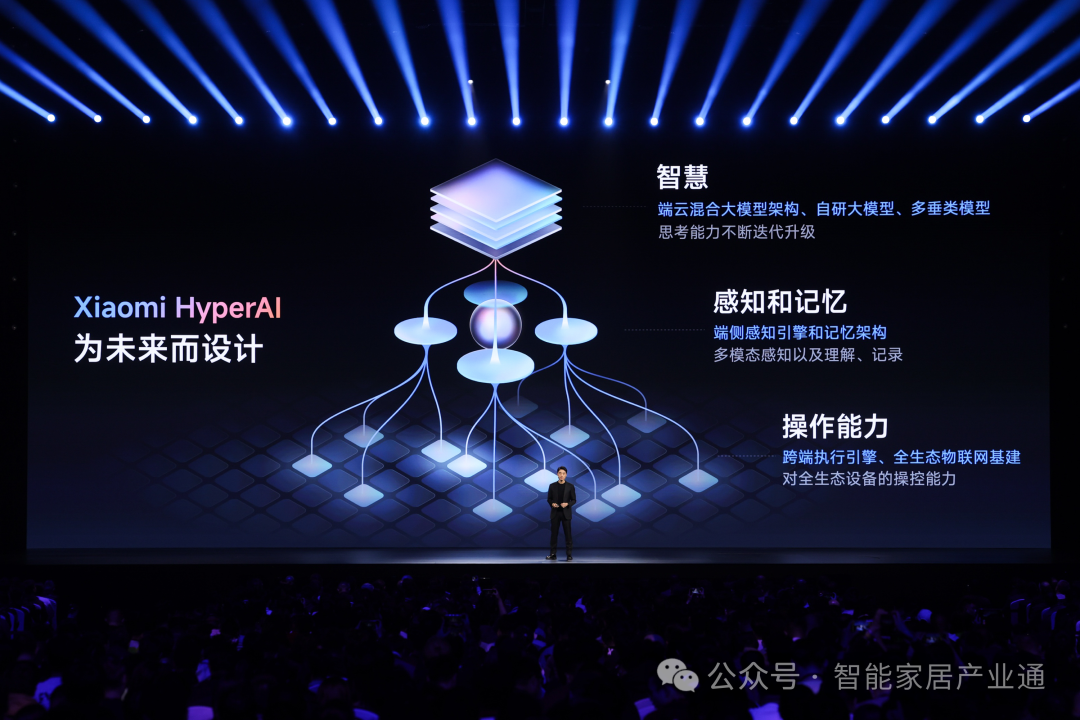
The application of AI large models injects more powerful intelligent interaction capabilities into smart homes, allowing home devices to understand and respond to user needs more intelligently. By learning and analyzing a large amount of user data, AI large models can achieve personalized scene recommendations and intelligent control. For instance, if a user typically activates sleep mode at 10 PM, the AI large model can automatically remind the user to activate sleep mode as it approaches 10 PM or directly execute related operations, such as turning off lights, adjusting air conditioning temperature, and starting air purifiers, providing users with more thoughtful and convenient services. The XIAOMI Smart Speaker Pro, released on February 27, 2025, features the “Super Xiao Ai” voice assistant, which utilizes AI large model capabilities to understand user voice commands more accurately, enabling more complex device control and scene linkage, greatly enhancing the user interaction experience.
The unification of communication protocols is key to solving compatibility issues among smart home devices. Currently, various communication protocols exist in the market, such as Wi-Fi, Bluetooth, and ZigBee, and the communication barriers between different protocols severely restrict the interconnectivity of smart home devices. The emergence of the Matter protocol brings hope for solving this issue. It is an open standard jointly formulated by global tech giants such as Amazon Alexa, Apple HomeKit, Google Home, and Samsung SmartThings, based on an IP framework, defining unified communication specifications at the application layer, allowing smart home devices of different brands and categories to interact according to a common “semantic rule”. Whether it is dimming and color adjustment of lighting devices, temperature settings of smart air conditioners, or status responses of smart cameras, all commands and feedback are transmitted in a unified data frame format and logic. From the perspective of the protocol stack, the Matter protocol defines functions through a unified device model at the application layer, allowing home devices such as LED lights, smart locks, and thermostats to form networks on the local area network without relying on specific cloud services. Even in the event of an internet outage, these devices can still maintain interconnectivity and stable operation. At the network layer, the Matter protocol is based on an IP architecture, seamlessly compatible with underlying wireless communication protocols such as Wi-Fi, Thread, and BLE, and can also bridge non-IP wireless communication protocols like Zigbee and Z-Wave. The promotion and application of this protocol are expected to break down barriers between different brands and ecosystem platforms, achieving true interconnectivity of smart home devices.
User experience and developer ecosystems are also important factors influencing the competition of smart home platform ecosystems. Providing user-centered, easy-to-use, and personalized smart home solutions that meet users’ needs for convenience, comfort, and safety is essential to winning user favor. A rich developer ecosystem can attract more developers to participate in the development of smart home applications, providing continuous innovation and diverse application scenarios for the platform ecosystem. Apple HomeKit has consistently excelled in user experience, with its simple operation interface, highly integrated control center, and seamless connection with other Apple devices, all providing users with an exceptional experience. At the same time, Apple attracts numerous developers to create various applications and accessories for the HomeKit ecosystem through its open developer platform, further enriching the functionality and application scenarios of HomeKit.
Where is the Next Android?
In this fierce competition for smart home platform ecosystems, who will become the next “Android” and lead the industry into an open and prosperous new era? This is a question of great concern to many practitioners and consumers. Based on the current market dynamics and the development of various platform ecosystems, Huawei HarmonyOS and Xiaomi AIoT both show potential to become the “Android” of the smart home field.
Huawei HarmonyOS, with its strong technical capabilities, open ecological philosophy, and extensive partner base, occupies an important position in the smart home market. The distributed technology of the Harmony operating system provides solid technical support for device interconnectivity, enabling it to break down barriers between devices and achieve true intelligent collaboration. Huawei’s deep cooperation with many well-known brands continuously enriches the product variety and application scenarios within the HarmonyOS ecosystem. From smart appliances to security devices, from lighting systems to health monitoring products, the coverage of HarmonyOS is expanding, providing users with a more comprehensive and convenient smart home experience. As the Harmony ecosystem continues to grow, it is expected to become the “Android” of the smart home field, driving the industry to a higher level of development.
Xiaomi AIoT, with its cost-effective products and large user base, has a broad foundation in the smart home market. Xiaomi, through its ecological chain model, has collaborated with numerous partners to create a diverse range of smart hardware products covering all aspects of home life. The continuous optimization and upgrading of the AIoT platform have led to significant achievements in device connectivity and user activity. Xiaomi focuses on user experience and product innovation, continuously investing in research and development to enhance the intelligence and usability of its products. Its application of AI large models in smart homes further enhances voice interaction capabilities and intelligent control functions, providing users with a more convenient and efficient experience. With these advantages, Xiaomi AIoT also has the potential to become the “Android” of the smart home field.
Of course, platforms like Apple HomeKit and Google Fuchsia are also continuously developing and improving, each possessing unique technical advantages and market positioning, and they too may stand out in the competition for smart home platform ecosystems. Apple HomeKit attracts many users with high privacy protection and deep integration with the Apple ecosystem, while Google Fuchsia is gaining attention for its advanced operating system architecture and forward-looking layout for future smart home development trends.
The competition in the smart home platform ecosystem continues, and the future is full of uncertainties. However, it is certain that whoever becomes the next “Android” will have a profound impact on the smart home industry. We look forward to the early arrival of an open, compatible, and intelligent smart home ecosystem that truly changes our lives, bringing us a more convenient, comfortable, and beautiful future.
Final Thoughts
The competition for smart home platform ecosystems is still in full swing, and this contest not only concerns the commercial expansion of major tech and appliance giants but also profoundly influences the development direction of the entire smart home industry and the life experiences of every consumer. In this rapidly developing field, platforms like Huawei HarmonyOS, Xiaomi AIoT, Apple HomeKit, and Google Fuchsia are showcasing their strengths, each leveraging their unique advantages and strategic layouts to compete for leading positions in the market.
From the current development trends, the smart home platform ecosystem is moving towards a more open, integrated, and intelligent direction. Continuous optimization of operating systems, in-depth application of AI large models, gradual unification of communication protocols, and ongoing enhancement of user experience will all be key forces driving industry development. In the future, we can expect to see a more complete smart home ecosystem where different brands and types of smart devices can truly achieve interconnectivity, providing users with comprehensive, personalized, and intelligent home services.
Disclaimer: Images and materials are sourced from publicly available resources on the internet, and this writing is intended to convey industry information. If there are any inaccuracies, please feel free to correct them. If there is any infringement, please add the author’s WeChat to delete the article.