Click the blue text Follow usFOCUS ON US
Last time, we introduced five types of 3D printing technologies that have garnered attention from the U.S. military, including arc additive manufacturing technology, Meltio3D’s metal deposition technology, liquid metal 3D printing technology, desktop carbon fiber 3D printing technology, and large-scale continuous fiber composite 3D printing technology. This article will continue to introduce five other technologies.
6. Powder Bed Laser Melting Technology
The powder bed laser melting (L-PBF) process is currently the most widely used metal 3D printing technology, attracting significant attention in both aerospace and military applications.
In September 2022, the U.S. Air Force indirectly funded SLM Solutions to develop the “world’s largest” PBF metal 3D printer and awarded a second-phase contract to blue laser expert NUBURU to develop blue laser-based regional metal 3D printing technology.
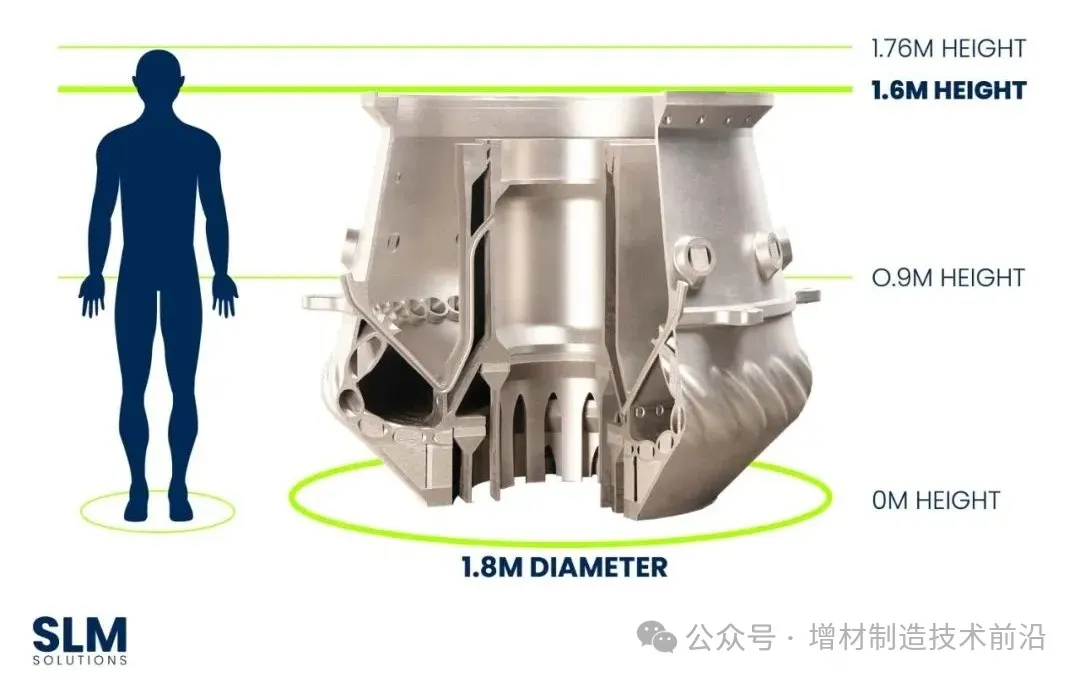
Currently, increasing the manufacturing size is an important development direction for metal 3D printing technology. Today’s L-PBF technology 3D printers have surpassed meter-level manufacturing sizes. To meet the requirements of the U.S. Department of Defense, SLM Solutions upgraded its NXG XII 600 to achieve a manufacturing size of 600 x 600 x 1500mm and equipped it with 12 lasers, claiming to have “lightning-fast speed and productivity.” Previously, SLM Solutions announced the launch of an ultra-large powder bed laser melting metal 3D printer capable of manufacturing parts measuring 3 x 1.2 x 1.2 meters, which may be the largest machine developed since the inception of this technology.
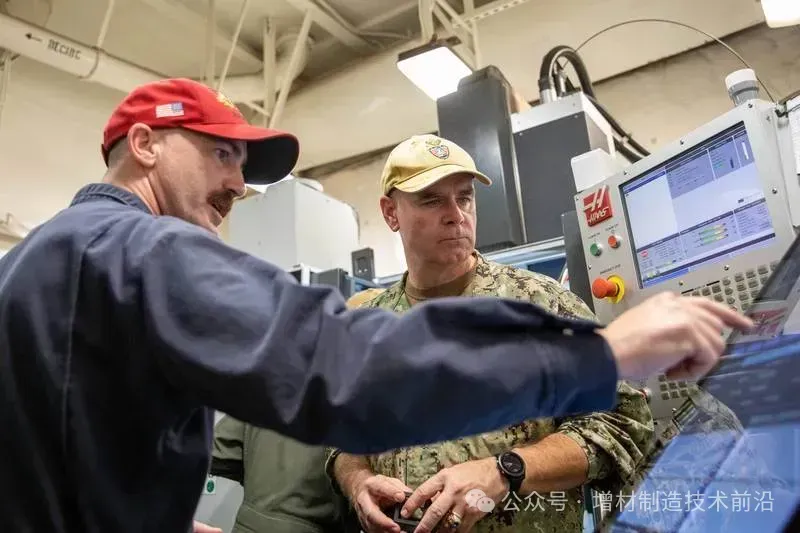 Wasp-classamphibious assault shipUSS Bataan’s mechanical repair shop workers discuss the newly installed additive manufacturing equipment with the U.S. Navy’s surface forces commander, Rear Admiral.
Efficiency is another key focus in the development of this technology, and regional metal 3D printing represents a breakthrough in addressing this issue. The U.S. Air Force has clearly recognized the potential breakthroughs brought by the combination of blue laser and regional printing, thus proactively laying out the development of new technologies.
7. Binder Jetting 3D Printing Technology
In 2020, ExOne, a company engaged in the development of binder jetting 3D printing technology, received a contract from the U.S. Department of Defense to develop a fully operational 3D printing mobile “factory.” This factory will be housed in a transport container approximately 12 meters long and can be directly deployed in the field via land, sea, or air, supporting battlefield, disaster relief, or other remote parts manufacturing tasks.ExOne‘s 3D printers support the production of over 20 types of metal, ceramic, or composite parts, capable of directly manufacturing final products or tools. During mission execution, logistics personnel no longer need to carry various specific spare parts; they only need to carry the relevant 3D printing materials and digital files of the parts. If some older parts lack digital files, staff can easily perform 3D scanning or digital design on-site and print as needed. As for materials, during wartime tasks, only a certain strength alternative is needed, without the need to seek the original manufacturing materials for specific parts.ExOne’s specially designed military 3D printer will feature a unique body style and other functions, making it a powerful military-grade product.
8. Friction Stir Additive Manufacturing
Friction stir additive manufacturing is developed based on the principle of friction stir welding. This process does not require a high-energy heat source or gas protection and can use materials in sheet, rotating rod, and powder specifications. It generates heat through the stirring pin and the connection piece’s stirring friction, softening the material at the connection point, and then connects the materials through axial pressure. Additionally, since there is no melting/solidification process of the metal during the forming process, the materials do not produce metallurgical defects such as thermal cracks or pores related to melting. Because the forming temperature is low and the forming occurs internally without being affected by external factors, such as material oxidation, the production process can be conducted in an open environment, significantly increasing the size of the manufactured components.
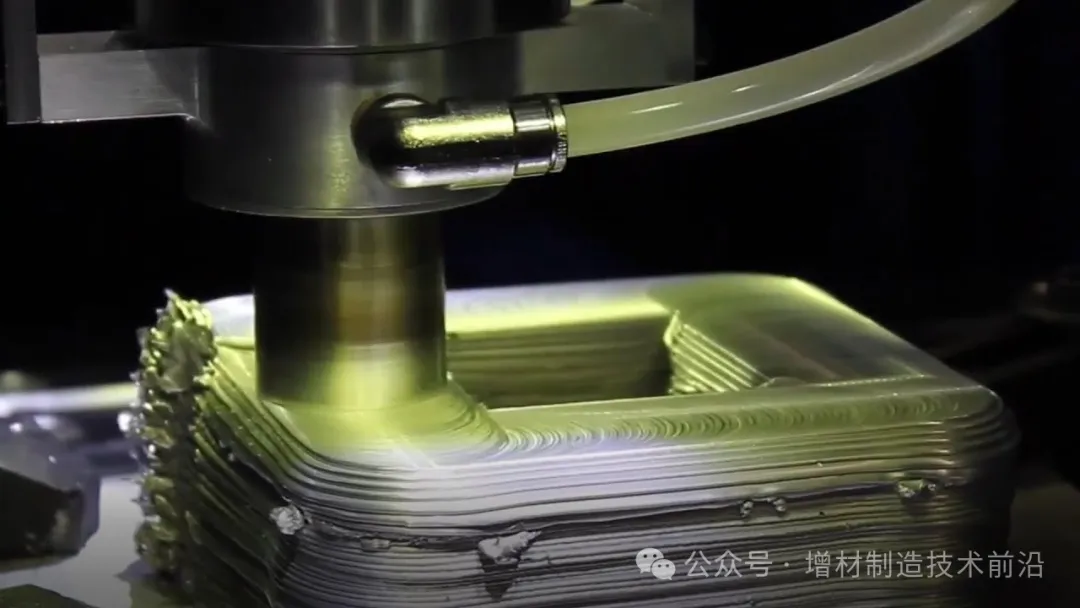
It is suitable for manufacturing large aluminum alloy components and has a high deposition rate. Meld Manufacturing in the U.S. has already applied this process in the maintenance of large trucks and defense armored vehicles.9. Construction 3D Printing Technology
At the end of 2019, in less than 36 hours, U.S. Marine Corps members used fast-drying concrete to 3D print a sufficiently large shelter to conceal a vehicle-mounted multiple rocket launcher system. The U.S. Army Corps of Engineers also developed a deployable 3D printer capable of quickly creating blast-resistant concrete structures, such as buildings, small bridges, shelters, and gatehouses.
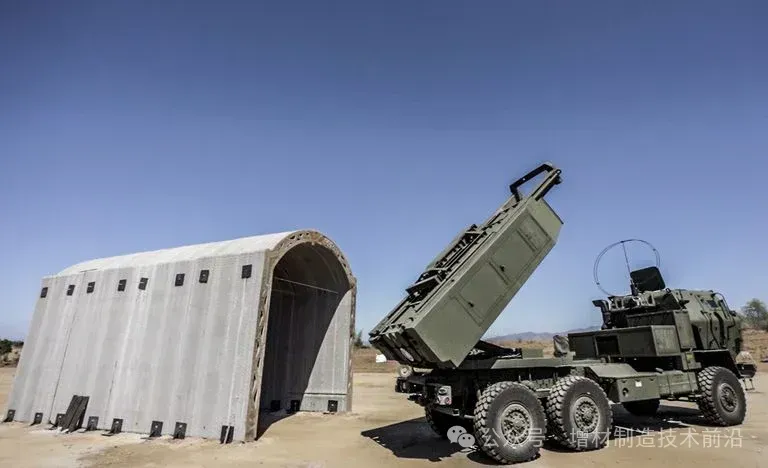 Marine Corps 3D printed rocket launch pod
Construction 3D printing technology is an innovative smart building technology that integrates computer graphics, mechanical part design and manufacturing, assembly processes, automation control, precision CNC, concrete materials, fluid mechanics, and other interdisciplinary technologies. The advantages of this technology include high efficiency, no formwork, labor savings, material savings, and low carbon environmental protection.
10. Cold Spray 3D Printing Technology
Cold spray additive manufacturing technology is a coating preparation method based on high-speed particle solid-state deposition. The sprayed particles collide with the substrate in a solid state, depositing through intense plastic deformation without creating thermal effects on the substrate, and can be directly sprayed to prepare blocks and components as a near-net-shape forming technology.
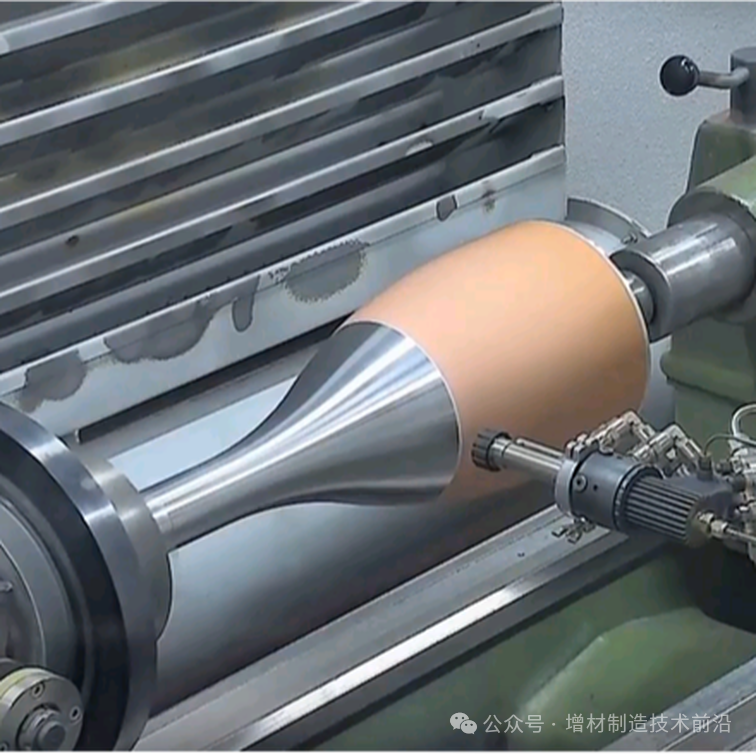
In 2022, Australian metal 3D printer manufacturer SPEE3D was selected by the U.S. Navy to provide its “MAINTENEX” maintenance technology for exercises. As part of this program, SPEE3D’s system will be deployed at ports and at sea during the U.S. Navy’s 2022 ANTX Trident technology demonstration. Through the research and development program, the U.S. Armed Forces aim to assess the potential of this metal 3D printing technology as a means of conducting combat damage repairs on vessels and reducing reliance on traditional supply chains that face disruption risks.
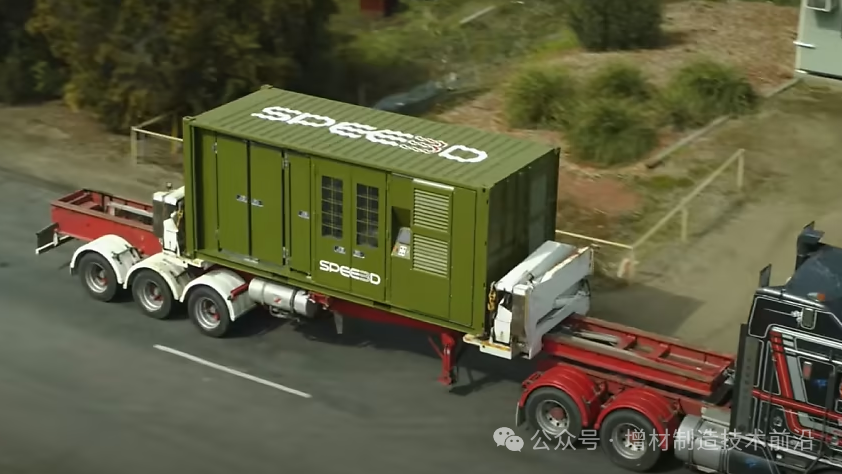
SPEE3D military pod
Machines developed by SPEE3D can produce parts up to 1000mm x 700mm in size and weighing up to 40kg, with speeds 100 to 1000 times faster than traditional metal 3D printers. Cold spray technology has proven capable of meeting military needs, namely producing spare parts on-site. The Australian Army has been the most extensive user of the SPEE3D system in such applications, with a series of successful 3D printing trials demonstrating the technology’s enormous potential for defense applications.In July 2023,the U.S. Air Force awarded a $1.25 million cold spray additive manufacturing contract to a company called Phase3D.
The U.S. military does not shy away from emphasizing the importance of 3D printing technology. In March 2023, the U.S. Army awarded $100 million for ground forces 3D printing and digital transformation; the U.S. Navy will also need to significantly increase the deployment of additive manufacturing technology to meet production deadlines over the next decade. Ensuring supply chain security and urgent demand, 3D printing has demonstrated enormous potential, and the U.S. military is eager to validate various types of 3D printing technologies, as well as laying out plans for next-generation technologies, which will further promote the application of 3D printing technology in the country.
Source: Additive Manufacturing Technology Frontier
Scan below for more information