Recommended Video





Data reliability is a critical issue in embedded product development, involving multiple levels of design and component selection. Starting from this issue, we will delve into the reliability of embedded data storage through a series of content.
 IntroductionData reliability is an unavoidable issue in embedded products, and many engineers struggle to find a perfect solution. Addressing data reliability is a systematic project that involves component selection, hardware design, system design, and application design. No single aspect can completely solve the problem. In this issue, we will first discuss component selection.
 Component Selection: Choosing Storage MediaDuring the component selection phase, the choice of storage media is crucial. For large-capacity storage, NAND Flash and eMMC are typically chosen, while small-capacity EEPROM, NOR Flash, and large-capacity hard drives are not within the scope of this discussion.1. eMMCComparison withNAND FlashBoth NAND Flash and eMMC are commonly used storage media, but they have significant differences in performance, cost, and reliability.eMMC comes with a built-in controller that can achieve data write leveling, which is beneficial for data reliability. If the processor’s performance and cost allow, it is recommended to prioritize eMMC as the data storage medium.If due to processor performance or cost constraints, NAND Flash needs to be selected, more distinctions and considerations are required. Currently, NAND Flash can be classified into four types based on process and storage density: SLC, MLC, TLC, and QLC:
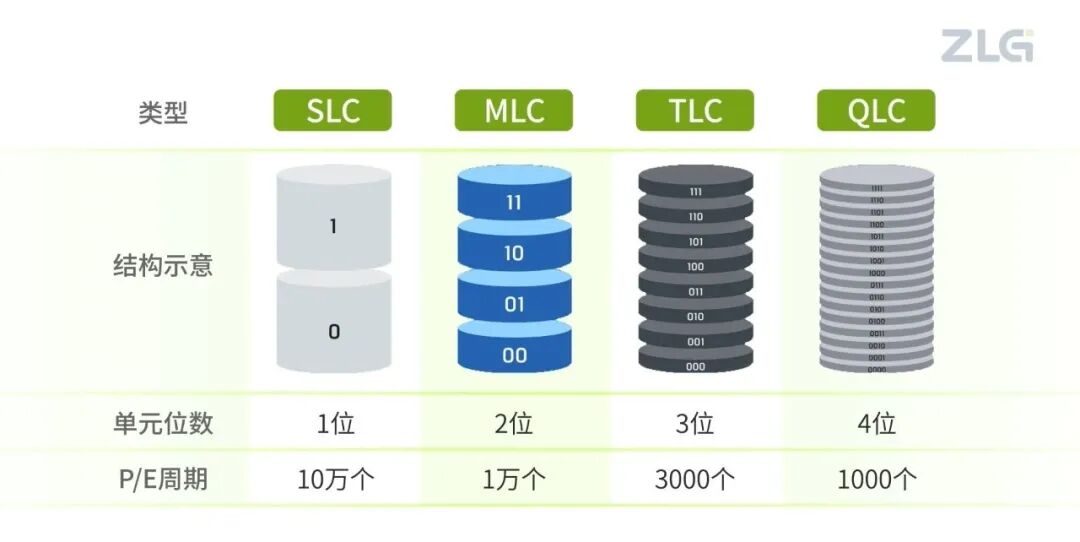
Figure 1 Detailed characteristics of SLC, MLC, TLC, and QLC
- SLC (Single-Level Cell): Each storage cell stores 1 bit of data, with up to 100,000 erase cycles, fast read/write speeds, and high costs. SLC NAND Flash is commonly used in applications with high data reliability requirements due to its high reliability and long lifespan.
- MLC (Multi-Level Cell): Each storage cell stores 2 bits of data, with typically 10,000 erase cycles, slightly slower read/write speeds, and moderate costs. MLC NAND Flash strikes a good balance between performance and cost, suitable for most embedded applications.
- TLC (Triple-Level Cell): Each storage cell stores 3 bits of data, with approximately 3,000 erase cycles, slower read/write speeds, and lower costs. TLC NAND Flash has advantages in capacity and cost but lower reliability, suitable for applications with less stringent data reliability requirements.
- QLC (Quad-Level Cell): Each storage cell stores 4 bits of data, with only 1,000 erase cycles, the slowest read/write speeds, and the lowest costs. QLC NAND Flash, while having large capacity and low cost, has fewer erase cycles and lower reliability, so it is recommended to use it cautiously.
To enhance data reliability, it is recommended to prioritize SLC and MLC while cautiously selecting TLC and avoiding QLC whenever possible.ZLG Zhiyuan Electronicshas been deeply engaged in the embedded field for over twenty years,with core boards, industrial control boards, and industrial control hosts strictly adhering to this selection principle, providing users with reliable data storage hardware foundations.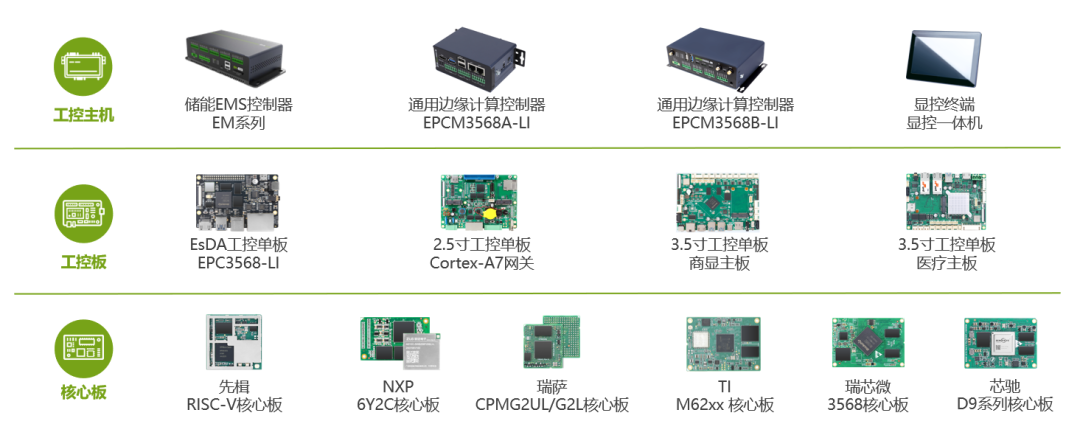 Figure 2 ZLG Zhiyuan Electronics Edge Technology Products
 Future Trends and Technology OutlookWith continuous technological advancements, some emerging storage technologies are gradually entering the market, expected to replace traditional NAND Flash and eMMC in the future. For example:
- 3D XPoint: Developed jointly by Intel and Micron, 3D XPoint storage technology features extremely high read/write speeds and durability, with erase cycles reaching hundreds of thousands, suitable for high-performance computing and data center applications.
- MRAM (Magnetoresistive Random Access Memory): MRAM combines the high-speed read/write capabilities of RAM with the non-volatility of Flash, offering unlimited erase cycles and extremely low power consumption, suitable for embedded systems and IoT devices.
- ReRAM (Resistive Random Access Memory): ReRAM stores data by changing the resistance state of materials, characterized by high density, low power consumption, and fast read/write speeds, suitable for high-capacity storage applications.
Data reliability is an important topic in embedded product development. From component selection to system design, every link is crucial. ZLG Zhiyuan Electronics is committed to providing users with high-quality, high-reliability hardware solutions. If you have other suggestions and ideas regarding embedded data reliability, feel free to leave comments for discussion.
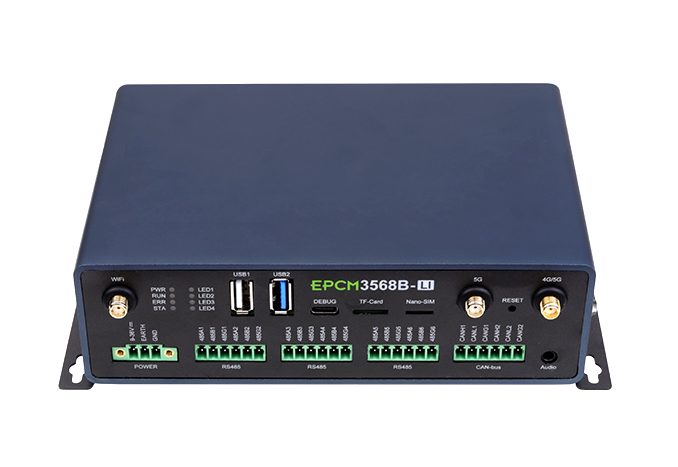 |
5G Industrial IoT Edge Computing Intelligent Gateway EPCM3568 Series |
Long press to purchase |