
Chinese-funded Artificial Intelligence Public Account
By 2025, the global number of edge AI hardware devices is expected to reach 2.3 billion, with these chips becoming the invisible engines of the intelligent world.
“No year in technological transformation is as exciting as 2025!” commented a senior engineer in the chip industry on the current market. With breakthroughs in large models like DeepSeek, edge AI is entering an unprecedented explosive period, and the industry has defined 2025 as the “Year of Edge AI”.
Meta AI scientists predict that the edge AI market will grow to $143.6 billion (approximately 10.4 trillion RMB) in the next eight years, achieving an astonishing tenfold growth over a decade.
Explosion of Edge AI: A Paradigm Shift from Cloud to Edge
As global tech giants compete to lay out AI Agents, with smart glasses, AI headphones, and automotive cockpits becoming the new favorites, a paradigm shift from cloud to edge is occurring. Edge AI, with its core advantages of low latency, high privacy, and low bandwidth dependency, is reshaping the future of human-computer interaction.
In automotive cockpits, voice assistants, environmental perception, and decision-making systems operate simultaneously; in industrial equipment, visual inspection and predictive maintenance collaborate in real-time—these scenarios rely heavily on the powerful support of edge SoC chips.
Nine Flagship Chips: The Core Driving Force of Edge AI
International Giants: Leading the Peak of Process and Performance
1. Qualcomm AR1 Gen2 (Expected to be released in 2025)
Process Node: 3nm
Positioning: Designed specifically for AI glasses
Breakthrough: The main chip cost ratio of the current Meta Ray-Ban glasses is as high as 31.6%, with the new generation improving performance by over 40%
2. Apple H Series Wearable Chips
Process Node: 4nm
Application: Apple Watch and smart glasses
Advantage: Leading the industry in energy efficiency, with excellent battery life
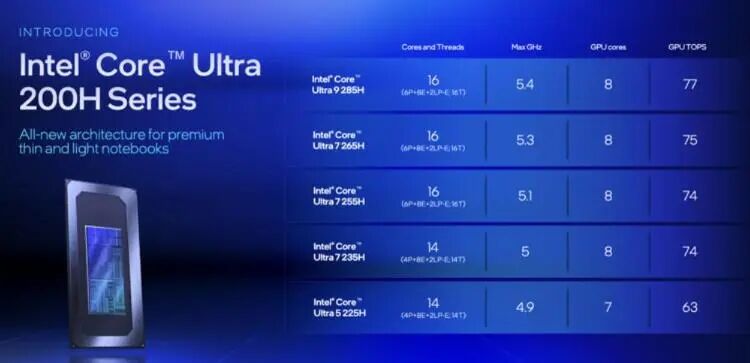
3. Intel Core Ultra 200H Series
Computing Power: 99 TOPS
Positioning: AIPC flagship chip
Performance: 22% improvement in gaming performance, supports local large model inference
Domestic Power: A Comprehensive Rise in Technological Breakthroughs
4. Rockchip RK3588
NPU Computing Power: 6 TOPS
Process: 8nm
Application: AIoT, robotics, automotive cockpits
Advantage: Supports deployment of 3B parameter models, already used in BYD’s digital cockpit
5. Rockchip RK3688 (Expected to be released in 2025)
NPU Computing Power: 16 TOPS
Breakthrough: Supports LPDDR5 and UFS 4.0
Positioning: The strongest domestic edge AI chip
6. Unisoc T9100
Innovation: Reduces inference power consumption by 60%
Process: 6nm
Application: BBK AI learning machine has been mass-produced

7. HiSilicon A²MCU Series
Architecture: RISC-V second-generation instruction set
Scenario: Embedded AI for smart appliances
Ecology: Dual ecological layout of “Star Flash IoT” + “A²MCU”
8. Hengxuan Technology BES2800
Positioning: Low-power wireless audio SoC
Application: TWS headphones, smart glasses
Advantage: Multi-concurrent, high bandwidth, low latency audio processing
9. Allwinner T113
Features: Industrial-grade stability (-40℃~85℃)
Application: Medical POCT devices, industrial control
Advantage: Supports extreme environments, accelerates domestic substitution
Explosive Growth: Smart Hardware Creates a Trillion Market
With AI glasses leading a new round of hardware revolution, Counterpoint predicts that the global smart glasses market will maintain a compound annual growth rate of over 60% from 2025 to 2029.
Wellsenn XR predicts even more optimistically: by 2029, annual sales of AI glasses could reach 55 million pairs, and by 2035, it is expected to exceed 1.4 billion pairs, comparable to smartphone shipment volumes.
In terms of cost structure, SoC chips account for as much as one-third of the cost in AI camera glasses, making them the largest component of hardware costs. For example, the main control SoC cost ratio of Xiaomi’s AI glasses is about 37%.
It is estimated that the SoC market for AI glasses alone is expected to exceed 10 billion yuan by 2030.
Technological High Ground: The Race of Advanced Processes and Heterogeneous Computing
To meet the demand for edge AI, SoC manufacturers are accelerating the advancement of advanced processes:
Qualcomm and Apple have entered the 4nm stage
In 2025, Qualcomm’s AR1 Gen2 process will upgrade to 3nm
Domestic Hengxuan and Amlogic have entered the 6nm stage
In architectural innovation, the “general core + dedicated core” heterogeneous design has become mainstream. Rockchip’s RK2118 audio SoC integrates Cadence HiFi 4 DSP and self-developed audio NPU, achieving deep integration of multi-core heterogeneous technology architecture, supporting complex algorithms such as voice separation/enhancement and music separation.
The RISC-V architecture is emerging, with its flexibility and scalability highly adaptable to edge customization needs. Manufacturers like HiSilicon and Allwinner are achieving differentiated competition through the RISC-V architecture, accelerating the localization process.
Multimodal Fusion and Ecological Competition
Multimodal interaction is becoming the next technological high ground. The multimodal AI sensor fusion interface launched by XMOS can fuse audio, image, and other sensor signals at the edge, enabling functions such as face detection and feature extraction. Unisoc’s heterogeneous distributed solution supports elastic computing power configurations from 1T to 100T, capable of running over 30 different parameter scale AI models simultaneously.
The completeness of the development toolchain is key to ecological construction. Unisoc’s self-developed AISDK provides a visual development environment, improving AI application development efficiency by 40%; XMOS offers a complete development toolchain and a rich software library, significantly reducing development difficulty.
A New Era of Edge Intelligence
With breakthroughs in models like DeepSeek-R1, the deployment of edge AI has become more inclusive. From smart glasses to industrial equipment, from automotive cockpits to medical instruments, edge SoC chips are becoming the core driving force of intelligent everything.
The global SoC market is expected to reach $206 billion by 2029, with a compound annual growth rate of 8.3% from 2024 to 2029. In this trillion-dollar market, Chinese chip companies have transformed from followers to competitors, competing with international giants in multiple dimensions such as process technology, architectural design, and ecological construction.
As science fiction scenarios gradually become everyday experiences, it is these “silicon brains” hidden deep within devices that are quietly reshaping our digital lives.
The competition for edge AI SoCs is not only a contest of technology but also a struggle for dominance in the infrastructure of the intelligent era—this war without gunpowder will determine the landscape of the global technology industry for the next decade.
Source:
https://www.sohu.com/a/856832875_121798711
http://quoteimg.cfi.cn/ybdata.aspx?id=20250423000609
https://www.counterpointresearch.com/edge-ai-devices-2025-report
https://wellsenn.com/reports/ai-global-market-2029