After attending many audio exhibitions, I found that the most common marketing tactic at some domestic DAC booths is to showcase the chip.
Many audiophiles evaluate a DAC solely based on the statement: “This DAC uses the xx chip, and that chip sounds bad.”
But have you ever thought, if the chip determines success or failure, why do some domestic DACs only linger in the low-end market while others can compete with top international brands? Is the “chip-only theory” in the DAC community valid?
In my opinion, the “chip-only theory” is like attributing the success of braised pork to the breed of pig— while it’s essential to choose a good pig, if the cooking time, soy sauce, cooking wine, and pan heat are all neglected, you can only end up with a pot of over-salted mummified meat.
Similarly, for DACs: the core chip determines the “potential ceiling,” but what truly transforms that potential into sound are power supply, clock, analog output stage, PCB layout, firmware filtering, and overall tuning— a long and frustrating industrial chain.
If you don’t want to waste money when buying a DAC, there are several industry insights you must understand:
1. Chip ≠ Complete Unit; it is the “baseline” rather than the “ceiling”
-
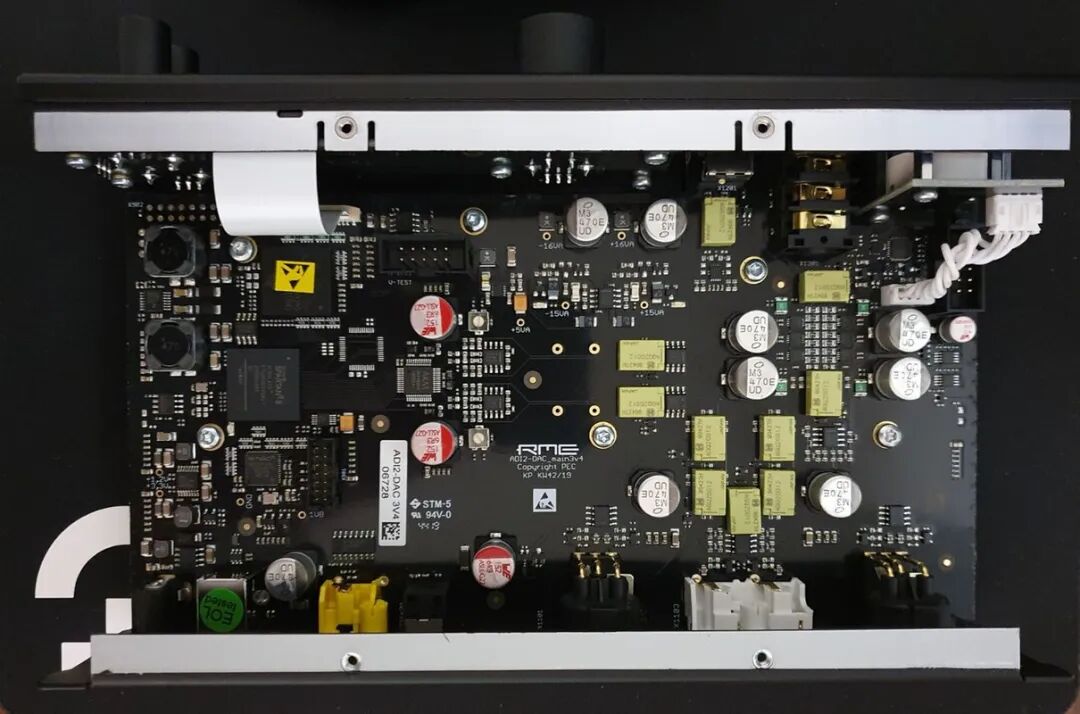
Using the same ESS 9038Pro in the RME ADI-2 DAC, Topping D90SE, and a certain domestic “brick” can yield sound experiences ranging from “clinically sterile” to “high frequencies scraping glass”— Chen Xiaotong has already criticized: “Judging quality solely by the chip is completely unfounded.”
-
In paid consultation cases, Chen Xiaotong breaks down the “implementation of decoding engineering” into several parts:clock jitter suppression, power isolation, I/V conversion topology, op-amp/discrete buffering, electromagnetic shielding, and bluntly states: “Two DAPs using the same chip can have a kilometer’s difference in sound quality.”
-
Extreme example: hobbyists can make a cheap ES9038Q2M sound better than those poorly made ES9038Pro mass-produced machines.
2. Why do “material stacking” domestic machines often fail? After listening to numerous domestic DACs, Chen Xiaotong summarizes:
| Issue | Typical Performance | Result |
|---|---|---|
| Power supply knowledge is lacking | Dual 9038Pro + small switching power supply + a bunch of low ESR capacitors | Noise blankets resolution, low frequencies lack power |
| Clock is just expensive, not isolated | OCXO purchased and soldered onto the board, power supply shared with digital logic | Jitter specs look good, but sound remains dry |
| Analog output stage copied from the datasheet | Op-amps in sockets for “swapping op-amps for flavor” | Soundstage collapses, transients are muddy |
| Tuning aesthetic is lacking | Testing room = office storage room, “only listening to two familiar songs for mass production” | High frequencies are sharp, harsh sounds, tiring to listen to |
| Quality control/EMC is random | Massive components with manual wiring, significant batch differences | Forum buyer reviews: some are transparent, others are piercing |
In summary: Treating DACs as “assembly machines” by stacking materials, yet lacking the experience loop—system-level design + double-blind auditory acceptance + long-term quality control.
3. How terrifying is the impact of specific technical points?
-
Power Supply
-
Digital, analog, and clock should ideally use multiple independent linear regulators, noise isolation is more critical than “large capacitors”.
Clock
-
Precision is not everything; phase noise + layout isolation are what matter; the reason a 10 MHz master clock sounds good is due to separate power supply + shielding, not just higher precision.
I/V and Subsequent Stages
-
Built-in current-to-voltage conversion in chips is often for convenience; truly high-end machines commonly use fully discrete Class A or transformers to extract the current signal and then determine the “flavor”.
Firmware and Digital Filtering
-
A certain German brand DAC wrote its own FPGA for the same 9038Pro, offering 5 switchable filters + PEQ, allowing the sound to be “post-surgically shaped”; a certain domestic brand used the chip’s default filtering, resulting in a completely different style—listening to the German DAC feels more spacious, it’s a living textbook.
PCB Layout
-
Star grounding, differential routing symmetry, sensitive areas avoiding switching power supplies—these “black magic” cannot be bought with materials.
4. From an audiophile’s perspective, my stance
I only believe in two things:
The chip can delineate the “sound quality potential range”— AK4499/ES9038 indeed has physical indicators higher than the old PCM1794, but that’s just the starting line.
Ultimately, whether to buy depends on the overall design and tuning skills of the brand. If a brand is unwilling to invest thought into the analog output stage and power supply, merely copying the datasheet, then even if they put 20 9038Pros on the board, it’s just “stuffing 20 golden peacocks into a pigeon cage”—good looks do not equal good sound.
Conclusion
The “chip-only theory” is a half-truth:
-
It ignores the power supply, clock, analog lines, firmware, and tuning— all of which determine the “quality”.
-
Domestic “material stackers” will continue to indulge in parameter sheets without completing system design and long-term auditory validation, only to be called “cold, hard, and soulless” at listening sessions.
To enjoy DACs well, the chip is just the ticket; the overall craftsmanship is the performance.
Having read this, I have shared all the important considerations with you.
But if you don’t want to think at all and still hope someone can guide you step by step, that’s fine. The following essential reading section is a summary of private insights I gathered after 8.5 months of discussions with chief designers from 12 domestic and international DAC brands, which even players with zero foundation can understand. After reading, you will:
1. Completely master the judgment methods for evaluating DAC quality.
2. Know how to choose different types of DACs to compensate for the sound shortcomings of your home HIFI system.
3. Gain some special tips and experiences in brand selection.
First, let’s discuss how to judge the quality of a DAC.
One harsh rule to set: Listening to chip models is entry-level; analyzing circuits, looking at measurements, and testing combinations is graduation. Use the following “DAC health check list” to save on tuition.
1️⃣ Disassembly & Parameters: Paper Performance Check
| Focus | Why It Matters | Quick Judgment Method |
|---|---|---|
| Power Supply Architecture | Linear/transformer partitioned power supply is cleaner than “a switching brick” | Weight ≠ sound quality, but if it’s under 3kg and packed with flagship chips, the power supply is likely compromised |
| Clock Isolation | Jitter cannot be suppressed, high-end chips are wasted | Check PCB: OCXO/FPGA area has metal shielding and independent regulation, that’s qualified |
| I/V & Analog Stage | Determines “liveliness” | Discrete Class A, transformer coupling ≥ textbook op-amp sockets |
| Third-party Measurements | Prevents manufacturers from creating dreams with PPT | Look for THD+N, Jitter, linear parameters from third-party testing agencies |
Quick Minefield Scan: Open the official website—if the homepage only has a “big chip poster + 120dB SNR” and doesn’t mention power supply and analog stage, just close it.
2️⃣ Listening Experience & Matching: System-Level REALITY Check
| Ask Yourself | Reference Criteria |
|---|---|
| What are the system’s shortcomings? | If your home has harsh high frequencies, don’t buy an “extreme resolution” 9038Pro + op-amp flavor; if you want to add density, choose a Lampizator with transformer output or a tube buffer. |
| Is the output level/gain appropriate? | Some “spec-stacking” machines output 5V hot, which can blow up preamps or active speakers, making the soundstage as cramped as 12px font. |
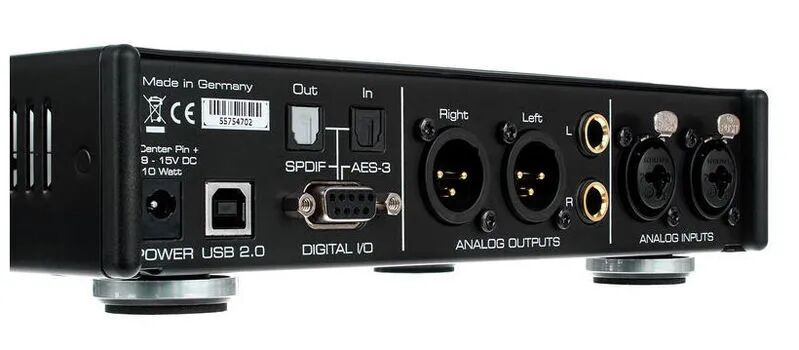
| Filter & DSP Playability? | RME and Chord allow you to switch filters and EQ, enabling “micro-shaping” to match the room; pure hardware decoding models can only accept their fate. |
| Blind Listening vs. Faith | Get friends to do blind A/B tests; don’t let “Hi-Res Gold Standard lights” brainwash you. If you can’t hear the difference in MQA unfolding, don’t pay for the licensing fee. |
3️⃣ Usage Scenarios & Future: Long-term Investment Return Rate Check
| Module | Pits to Avoid |
|---|---|
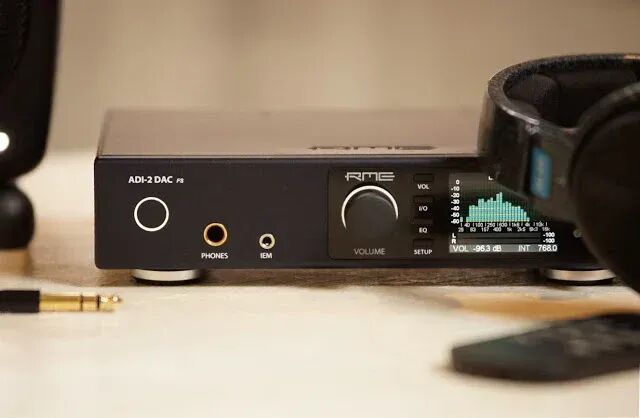
| Interfaces | At least USB (XMOS/UAC2), coaxial, optical; if you want to stream, look for those with network ports/ROON Ready/I²S, don’t rely on adapters. |
| Firmware Maintenance | Small domestic brands often have a “one-off” approach; after two years, drivers are packed away; RME and Benchmark still update after ten years. Check the “download” page update time on their website. |
| After-sales & Resale Value | Buying niche brands from overseas, if it breaks, sending it back to Europe or America for a board replacement = new machine price; established brands have high residual value, making it quick to recoup costs in the second-hand market. |
| Size & Heat Dissipation | Don’t place combined amplifier/headphone amplifier models at the bottom of the rack; Class A discrete outputs can overheat the DAC below. |
Ultimate Lazy Formula
Sound = Chip Potential × Implementation Quality × System Matching ÷ Manufacturer Integrity
-
Chip potential can only determine the upper limit; it won’t save a poor implementation.
-
Implementation quality looks at power supply, clock, and analog stage; this is real cost and experience.
-
System matching determines the lower limit of what you can hear at home.
-
Manufacturer integrity determines firmware updates, warranty, and character—essentially, whether you’ll be cursing later.
In summary:
First look at power supply layout, then independent measurements, and finally listen to combinations— DACs that meet these three criteria are worth your investment. The rest, no matter how luxurious they appear, are just “paper tigers covered in medals”.