Source: Embedded Miscellany, Uncle Wheat
Everyone has probably heard of FPGAs, but what can we do with them? After learning about them, what fields can I work in in the future?
I believe this is the question that everyone is most concerned about, as interest is the best teacher. If you find that the fields in which FPGAs can be applied do not interest you at all, then learning about FPGAs may be a waste of time. For example, if you want to become an accountant or a doctor, then learning about FPGAs is not necessary.
Of course, it is also possible that you suddenly discover its charm during the learning process and come to like it.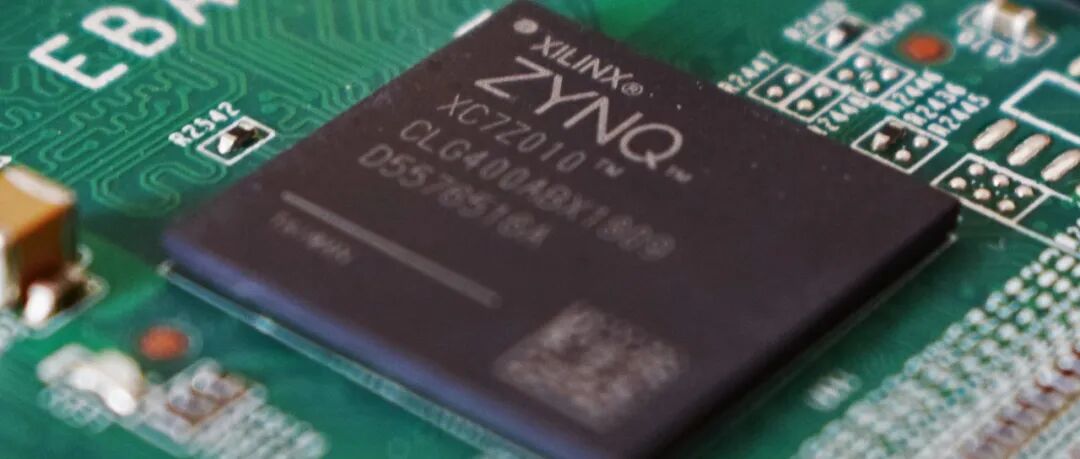 The application areas of FPGAs can be roughly divided into six categories, which I will explain one by one.
01
Communication SystemsThe application of FPGAs in the communication field is virtually limitless. Thanks to the internal structure of FPGAs, they can easily implement distributed algorithm structures, which is very beneficial for high-speed digital signal processing in wireless communications.In wireless communication systems, many functional modules often require a large number of filtering operations, and these filtering functions typically involve numerous multiplication and accumulation operations.By implementing distributed arithmetic structures through FPGAs, these multiplication and accumulation operations can be effectively realized.Especially, Xilinx FPGAs integrate a wealth of resources suitable for the communication field, including three main categories: baseband processing (channel cards), interface and connection functions, and RF (radio frequency cards):
- Baseband processing resources mainly include the implementation of channel encoding and decoding (LDPC, Turbo, convolutional codes, and RS codes) and synchronization algorithms (such as cell search in WCDMA systems).
- Interface and connection resources mainly include high-speed communication interfaces (PCI Express, Ethernet MAC, high-speed AD/DA interfaces) for wireless base stations and the implementation of corresponding backplane protocols (OBSAI, CPRI, EMIF, LinkPort).
- RF application resources mainly include the implementation of key technologies such as modulation/demodulation, up/down conversion (single-channel and multi-channel DDC/DUC for WiMAX, WCDMA, TD-SCDMA, and CDMA2000 systems), peak clipping (PC-CFR), and predistortion. In summary, as long as you master FPGAs well, you can definitely excel in the communication field.
02
Digital Signal ProcessingIn the field of digital signal processing, FPGAs are equally formidable, mainly due to their high-speed parallel processing capabilities. The greatest advantage of FPGAs is their parallel processing mechanism, which allows for the implementation of digital signal processing functions using a parallel architecture. This parallel mechanism makes FPGAs particularly suitable for repetitive digital signal processing tasks such as FIR filtering. For high-speed parallel digital signal processing tasks, the performance of FPGAs far exceeds that of general DSP processors’ serial execution architecture. Additionally, the voltage and driving capabilities of their interfaces are programmable, unlike traditional DSPs that are constrained by instruction sets.Due to the limitations of clock cycles in instruction sets, they cannot handle signals at very high speeds, making it difficult to deal with signals like LVDS at Gbps rates.Therefore, the application of FPGAs in the field of digital signal processing is also very extensive.
03
Video and Image ProcessingWith the changing times, people’s pursuit of image stability, clarity, brightness, and color has become increasingly high, evolving from standard definition (SD) to high definition (HD), and now people are even pursuing Blu-ray quality images.This has led to an increasing amount of data that processing chips need to handle in real-time, and the image compression algorithms have also become more complex, making it impossible to rely solely on ASSP or DSP to meet such large data processing volumes.At this point, the advantages of FPGAs become apparent, as they can process data more efficiently, making them increasingly popular in the image processing market when considering cost.
04
High-Speed Interface DesignHaving seen the performance of FPGAs in the communication and digital signal processing fields, I believe you can guess that FPGAs also have a place in high-speed interface design. Their high-speed processing capabilities and the ability to support hundreds or thousands of I/O determine their unique advantages in high-speed interface design.For example, if I need to interact with a PC to send collected data for processing or to transmit processed results to the PC for display, the interfaces for communication between the PC and external systems are quite rich, such as ISA, PCI, PCI Express, PS/2, USB, etc.The traditional approach is to use corresponding interface chips for each interface, such as a PCI interface chip. When I need many interfaces, I will need multiple such interface chips, which undoubtedly complicates our hardware peripherals and increases their size, making them inconvenient. However, the advantages of using FPGAs become immediately apparent.Different interface logics can be implemented internally within the FPGA, eliminating the need for so many interface chips. Coupled with the use of DDR memory, this makes our interface data processing much more manageable.
05
Artificial IntelligenceIf you pay attention to technology news, you must have noticed that 5G communication and artificial intelligence are everywhere. Indeed, the 21st century has unknowingly reached 2022, and in the past two decades, artificial intelligence has developed rapidly, and the successful development of 5G has given artificial intelligence a significant boost. It is foreseeable that the future will undoubtedly belong to artificial intelligence.FPGAs are widely used in the front-end of artificial intelligence systems, such as in autonomous driving, where various traffic signals such as driving routes, traffic lights, obstacles, and speed need to be collected using multiple sensors. FPGA can be used for comprehensive driving and fusion processing of these sensors. Additionally, some intelligent robots that need to collect and process images or process sound signals can also use FPGAs to accomplish these tasks, making FPGAs very handy for front-end information processing in artificial intelligence systems.
06
IC DesignThe term IC may sound particularly profound to many, as if it is something that ordinary people cannot touch, and IC design is even more so a task only a few can handle.It is undeniable that the threshold for IC design is indeed high, but we do not need to mythologize it too much. Simply put, we can compare it to PCB design. PCB design involves assembling specific functional circuit combinations on a printed circuit board using various components, while IC design involves building specific functional circuit combinations on a silicon substrate using MOS transistors and PN junctions—one is macro, the other is micro. If a PCB design fails, it is not a big deal to redesign and prototype it again, but if an IC design fails, the losses can be severe. As the saying goes, when a cannon fires, it costs a fortune.In the IC field, the cost of a lithography machine is indeed not an exaggeration; photoresist is extremely expensive, and the cost of photomask fabrication is also not cheap. Coupled with hundreds or thousands of processes, including labor, materials, machine wear, and maintenance, the losses can be quite painful, so IC design emphasizes a successful first version.
 To ensure the success of the first version of an IC, sufficient simulation testing and FPGA verification must be conducted. Simulation verification involves running simulation software on a server for testing, similar to ModelSim/VCS software; FPGA verification mainly involves porting the IC code to the FPGA, using FPGA synthesis tools for synthesis, layout, and routing to finally generate a bit file, which is then downloaded to the FPGA verification board for validation. For complex ICs, we can also break them down into several functional parts for separate verification, placing each functional module on a separate FPGA. The circuits generated by the FPGA are very close to the actual IC chip.This greatly facilitates IC designers in verifying their IC designs.Other applications include high-speed data acquisition in the power industry, high-speed and large-volume analog data acquisition and transmission in the medical industry, and radar, satellite, and guidance systems in the military industry, among others.
This article is for academic sharing only. If there is any infringement, please contact us to delete the article.
—THE END—