
Edge AI combines the advantages of edge computing and artificial intelligence, leveraging extensive edge resources to support AI applications, enabling rapid analysis of large volumes of real-time edge data and deriving insights from it. Numerous facts have demonstrated the superiority and necessity of edge AI. However, for organizations to truly realize the value of edge AI, they must consider the characteristics of their workloads before deployment and develop solutions with the capabilities needed to achieve the desired outcomes. In this article, industry experts from HPE share their insights on what to consider before deploying edge AI, hoping to assist your business.
Rugged vs. Controlled Deployment Environments
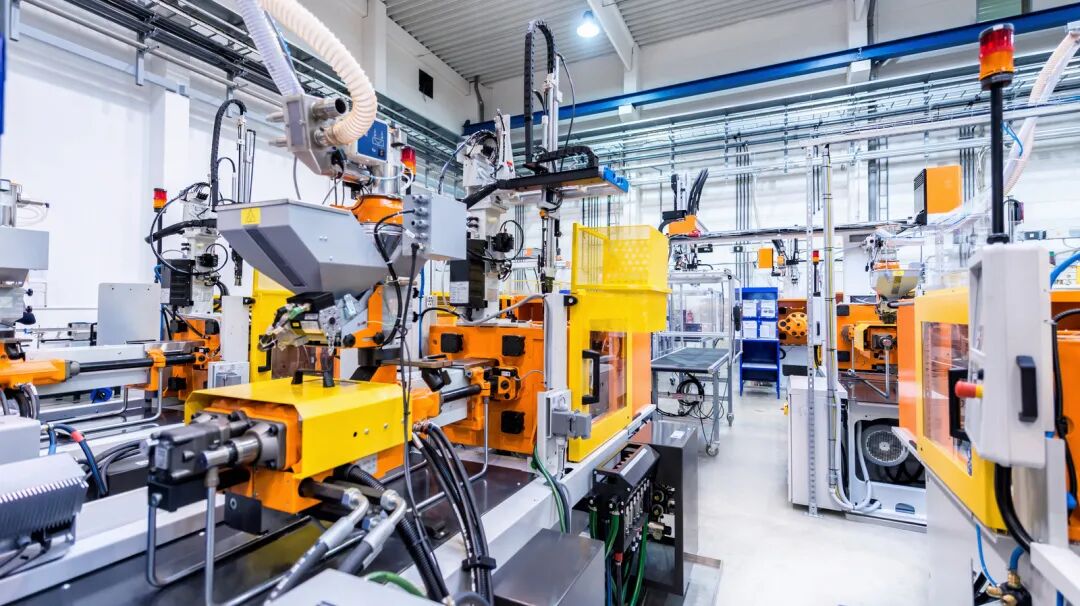
When making infrastructure decisions for edge AI solutions, it is crucial to understand the deployment location. For example, quality inspection applications in manufacturing may require servers to be placed on the factory floor to quickly provide computer vision inspection results as products pass through the assembly line. Similarly, power companies may want to process monitoring video on-site at substations to avoid the high costs of sending terabytes of data to a data center. These scenarios represent harsher deployment environments, necessitating robust and durable rugged devices to withstand airborne metal dust, explosive materials, or direct sunlight.
However, not all edge AI deployments require such strong protection. In controlled edge environments like office buildings, retail stores, and warehouses, similar devices to those deployed in data centers may also be applicable. In these controlled edge environments, the infrastructure you deploy may be very similar to what is seen in more standard IT environments.
Streamed Inference vs. Batch Inference
In an ideal scenario, all edge AI tasks would be solved through streamed inference or real-time analysis of collected data, but this is undoubtedly expensive. This is why you need to decide when to continuously apply AI models to the generated data and when to allow AI models to be “offline” periodically.
This also needs to be considered based on actual business needs; for tasks like quality inspection and fraud detection, companies require real-time information. In contrast, workloads such as supply chain monitoring do not need immediate data processing, and batch inference is easier to implement and more cost-effective than real-time analysis. It has been found that in certain scenarios, running batch inference at the edge every 20 minutes can provide a “near real-time” effect.
Additionally, depending on network infrastructure, data sources, and edge workloads, adopting a mixed approach of streamed and batch inference can optimize costs while providing better decision support.
Always Connected vs. Asynchronous Communication
The convenience and cost-effectiveness of data transmission can fluctuate with geography and environment, making it challenging to maintain a constant connection with all edge devices. However, during that 1% of time when the connection is lost, it is often when connectivity is most needed.
This is where most edge deployments go wrong. You cannot have the same expectations as when deploying in a data center; instead, you need to determine your tolerance for lost connections and design relevant algorithms to predict communication failures, which may require increased latency and multiple contact points. For example, some oil and gas drilling companies transport petabyte-scale data servers from offshore drilling platforms to centralized data centers and perform batch analysis on edge data.
Continuity vs. Periodic Model Retraining
For many workloads, AI models are periodically updated based on the data returned by the system. In most cases, organizations choose to batch upload data at scheduled intervals to retrain models. For example, autonomous vehicles send data to centralized data centers.
So, what if businesses could create a closed-loop system for model retraining at the edge?
Companies could more easily perform continuous retraining of edge AI models, observing specific results caused by certain data inputs and predicting when that event might occur again. This technology has various applications, including facial recognition.
Hierarchical vs. Flat Edge Capabilities
Does your edge AI solution only need to include devices with advanced AI capabilities? Or should you opt for a hierarchy where less capable devices transmit data to smarter edge computing servers for aggregation and inference? The answer often lies somewhere in between, requiring a solution design that accomplishes the task without adding unnecessary time and cost. Video surveillance is a great example. Smart cameras have sufficient onboard computing power to process and analyze the collected data. However, by building a hierarchical solution that includes standard cameras and an edge server, you can significantly reduce the costs of collecting and processing data on-site.

Automated Response vs. Decision Support
To truly unlock the value of edge AI, you must consider how it will impact your decision-making process. In certain scenarios, you need to allow edge AI to completely change your operations. For example, in manufacturing, edge AI can predict machine failures, necessitating a timely response maintenance program to keep production running smoothly.
However, be very cautious with automated responses based on edge AI; once a problem occurs, it can have serious consequences. For instance, during the pandemic, businesses adopted non-contact automatic temperature screening gates to ensure employee safety. But maintenance issues after a failure must be considered; otherwise, when an infrared camera fails, it could result in denying entry to all employees of the company.
Related Reading

Be Prepared: Manage Edge Data Before It Becomes a Problem

The Era of Transformation is Here: Edge Computing Has Great Potential



<< Swipe to view the next card >>