

Artificial Intelligence (AI) is becoming an indispensable part of our daily lives. From smart cameras to autonomous vehicles, AI models are now deployed on devices to quickly process information and assist in making real-time decisions.
Traditionally, many AI models have been run in the cloud, meaning devices send data to powerful remote servers for processing, which then return results. However, relying on cloud computing is not always ideal, especially in critical moments that require millisecond precision. Sending data back and forth can introduce latency, create privacy issues, and necessitate a continuous connection.
This is where edge artificial intelligence and edge computing come into play. Edge AI focuses on running AI models directly on devices such as cameras or sensors, enabling instant, on-site decision-making. Meanwhile, edge computing aims to process data near its source, typically on local servers or gateways, rather than relying on the cloud. This shift reduces latency, enhances privacy, and allows AI to operate efficiently even without continuous cloud access.
Edge AI is particularly useful in computer vision applications that require immediate processing of large amounts of visual data. Computer vision models like YOLO can perform tasks such as object detection and instance segmentation directly at the edge, powering smarter devices, robots, and industrial IoT AI systems.
In this article, we will break down the true meaning of edge AI and edge computing, explore the key differences between them, and discuss how their combination powers real-time AI without relying on the cloud. Finally, we will examine practical applications, especially in the realm of computer vision, and weigh the pros and cons of deploying AI at the edge.
 1
1
1. What is the difference between edge AI and cloud AI?
Edge AI refers to deploying AI models directly onto devices such as cameras, sensors, smartphones, or embedded hardware systems, rather than relying on remote servers or cloud computing. This approach allows devices to process data locally and make decisions on-site.
Edge AI models can perform tasks such as image recognition, speech processing, and predictive maintenance in real-time, rather than continuously sending data back and forth to the cloud. This capability is made possible by advancements in edge computing AI chips, allowing powerful models to run efficiently on compact devices.
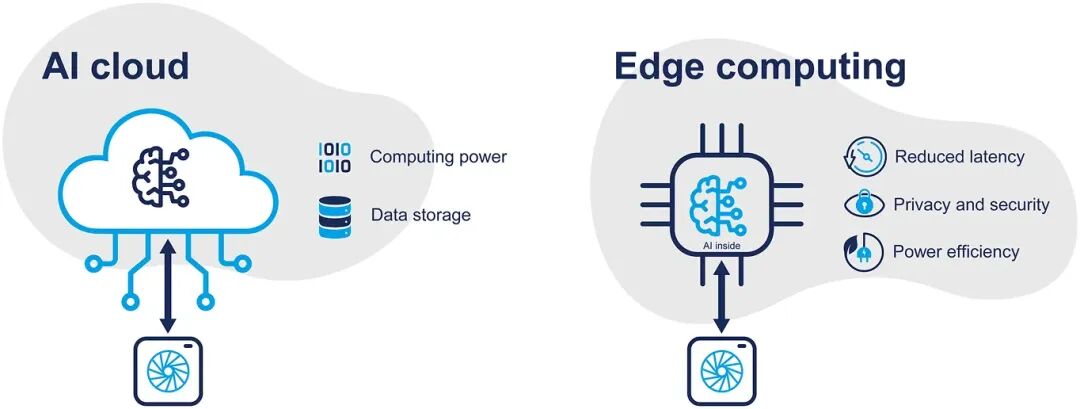
In the field of computer vision, edge AI can help devices like AI cameras detect objects, recognize faces, and monitor environments in real-time. Models like YOLO can quickly process data and provide real-time insights—all of which can run directly on edge devices. By shifting AI inference (the process of running a trained AI model to generate predictions or insights) to the edge, systems can minimize reliance on the cloud, improve privacy-focused AI on edge devices, and achieve real-time performance for applications where speed and data security are critical.
2
2. What is the difference between edge computing and edge AI?
While edge AI and edge computing sound similar, they serve distinctly different purposes. Edge computing is a broader concept that involves processing data at or near the source of generation, such as on edge servers (small computing centers placed near devices to process data), gateways, or devices.
The focus of edge computing is to reduce the amount of data sent to centralized servers by processing tasks locally. It supports everything from data filtering and analysis to running complex applications outside traditional data centers. Edge AI, on the other hand, specifically refers to AI models running on edge devices. In short, edge AI brings intelligence to the edge. These technologies together provide low-latency AI computing for industries that rely on speed and efficiency. For example, industrial cameras may use edge processing technology to transmit video streams but rely on edge AI to analyze footage, detect anomalies, and trigger alerts.
3
3. What is the difference between edge computing and edge AI?
The combination of edge AI and edge computing is key for industries to achieve real-time AI. Devices no longer rely on distant servers but can analyze data instantly, making faster decisions and operating reliably even in low-connectivity environments.
This capability changes the game for applications such as autonomous vehicles, robotics, and surveillance systems, where seconds can make all the difference. With edge AI, systems can respond immediately to changing conditions, enhancing safety, performance, and user experience.
In computer vision tasks, models like YOLO can detect objects, classify images, and track motion in real-time. By running locally, these models avoid cloud communication delays and can make precise decisions when needed.
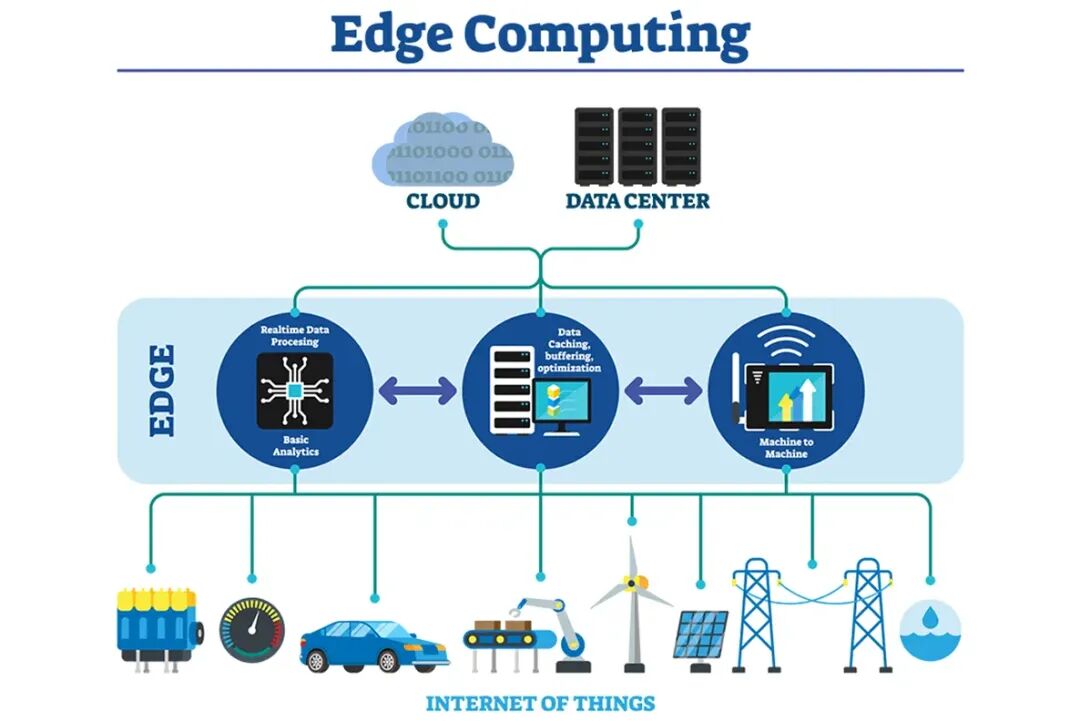
Additionally, edge AI supports privacy-focused AI. Sensitive data such as video feeds or biometric information can be kept on the device, reducing exposure risks and supporting compliance with privacy regulations. It also enables high-energy-efficient AI models for edge computing, as local processing reduces bandwidth usage and cloud communication, lowering power consumption, which is crucial for IoT devices. Edge AI and edge computing together provide the foundation for AI-driven IoT devices, enabling low-latency AI processing to keep pace with real-world demands.
4
4. Applications of Edge AI and Edge Computing in the Real World
Edge AI and edge computing can assist many industries by implementing AI at the edge. Let’s explore some of the most impactful computer vision use cases where these technologies power real-time decision-making:
-
Edge AI Smart Surveillance: AI-driven cameras can monitor environments and detect suspicious activities. By analyzing footage on-site, these systems reduce reliance on cloud processing and shorten response times.
-
Edge AI in Automotive and Autonomous Vehicles: Vehicles can use edge AI to instantly process data from cameras, LiDAR, and sensors. This enables critical tasks such as obstacle detection, lane keeping, and pedestrian recognition without relying on cloud servers.
-
Embedded AI for Robotics and Industrial Automation: Embedded AI models integrated into dedicated hardware such as robots or sensors can help robots analyze images, detect defects, and adapt to changes on the production line. Running locally improves accuracy and allows for quicker adjustments in dynamic environments.
-
Edge AI in Manufacturing: Smart factories can leverage edge AI to detect products, monitor equipment, and improve quality control. By processing visual data on-site, these systems can prevent defects and reduce downtime.
-
Edge AI in Smart Cities and Traffic Management: From real-time traffic analysis to pedestrian detection, edge AI enables urban planning for smart cities and safer streets through local processing.
-
Healthcare and Medical Devices: Portable imaging devices can use edge AI to analyze scan results instantly. This approach improves diagnostic speed while ensuring the security of sensitive health data on the device.
-
Agriculture and Environmental Monitoring: Edge AI drones and IoT sensors can assess crop health, monitor environmental conditions, and optimize resources in real-time.
Disclaimer: Some information in this article is sourced from the internet. If there are any errors in source attribution or infringement of your legal rights, please contact the author with proof of ownership, and we will promptly correct or delete it. Thank you.