Click the blue text to follow us
How Cloud and Edge Artificial Intelligence (AI) are Transforming the Internet of Things
Before 2019, most IoT systems consisted of ultra-low-power wireless sensor nodes, typically battery-powered, with sensing capabilities. Their primary purpose was to send telemetry data to the cloud for big data processing.
As the Internet of Things became a new buzzword and market trend, nearly every company began to implement it for proof of concept (PoC). Cloud service providers offer excellent dashboards that display data with appealing charts, assisting in achieving PoC. The main purpose of PoC is to persuade stakeholders to invest in IoT and demonstrate return on investment to raise funds for larger projects.

As this ecosystem expands, the need to send large amounts of data back and forth with the cloud becomes increasingly evident. This can clog bandwidth pipelines, making it harder for data to move quickly in and out of the cloud. It can also cause latency, which can be unpleasant at best and detrimental to applications that require guaranteed throughput at worst.

Despite standards like 5G and Wi-Fi 6E promising significant improvements in bandwidth and transmission speed, the number of IoT nodes communicating with the cloud has exploded. In addition to the number of devices, costs are also rising. Early investments in IoT infrastructure and platforms need to be monetized, as the increasing number of nodes requires infrastructure to be both scalable and profitable.
Around 2019, the concept of edge computing became a popular solution. Edge computing performs more advanced processing within local sensor networks. This minimizes the amount of data that needs to be transmitted back and forth to the cloud through gateways. This directly reduces costs and frees up bandwidth for other nodes when needed. Reducing the data transmitted by each node may also decrease the number of gateways required to collect data and transmit it to the cloud.

Another technological trend enhancing edge computing is artificial intelligence (AI). Early AI services were primarily cloud-based. With various innovations and improvements in algorithm efficiency, AI has rapidly shifted to the edge, making the use of AI a standard practice.

A well-known example is the Amazon® Alexa® voice assistant. It can detect and wake up upon hearing the trigger word “Alexa,” which is a common use of edge AI. In this case, the detection of the trigger word is performed within the system’s local MCU. Once successfully triggered, the remaining commands are transmitted to the cloud via Wi-Fi® for the most demanding AI processing. This minimizes wake-up latency, providing the best user experience.
In addition to addressing bandwidth and cost issues, edge AI processing also brings more benefits to applications. For example, in predictive maintenance, small sensors can be added to motors to measure temperature and vibration. Using a trained AI model, it can effectively predict when a motor will experience bearing failure or overload. This early warning is crucial for timely maintenance of the motor, preventing it from being completely scrapped.
This predictive maintenance significantly reduces line downtime, as equipment receives proactive maintenance before failures occur. This maximizes cost savings and minimizes efficiency losses. As Benjamin Franklin said, “An ounce of prevention is worth a pound of cure.”
As the number of sensors increases, gateways can become overwhelmed by telemetry data from local sensor networks. In this case, there are two options to alleviate this data and network congestion. One is to increase the number of gateways, and the other is to push more edge processing to the endpoint nodes.
The idea of pushing more processing to endpoint nodes (typically sensors) is gaining traction and is becoming increasingly prevalent. Endpoint nodes usually operate in the mW power range and spend most of their time in sleep mode in the µW power range. Due to the low power and low-cost requirements of endpoint nodes, their processing capabilities are also quite limited. In other words, their resources are very constrained.
For example, a typical sensor node can be controlled by a simple microcontroller, such as an 8-bit processor with 64 kB of flash memory, 8 kB of RAM, and a clock speed of around 20 MHz. Alternatively, the microcontroller can be as complex as an Arm® Cortex®-M4F processor with 2 MB of flash memory and 512 kB of RAM, with a clock speed of about 200 MHz.
Adding edge processing on resource-constrained endpoint devices is very challenging and requires innovation and optimization at both the hardware and software levels. Nevertheless, since systems will always include endpoint nodes, increasing edge processing capabilities as much as possible is economically beneficial.
In summary, regarding the evolution of edge processing, it is clear that endpoint nodes will continue to become smarter, but they must also continue to adhere to their low-cost and low-power resource requirements.
Edge processing will continue to prevail, as will cloud processing. The ability to choose where to allocate functions can optimize systems for each application and ensure the best performance at the lowest cost. Effectively allocating hardware and software resources is key to balancing these competing goals of performance and cost. A reasonable balance can minimize the data transmitted to the cloud, reduce the number of gateways, and maximize the capabilities of sensors or endpoint nodes.
Ultra-low-power camera example
The RSL10 smart imaging camera developed by onsemi® addresses these challenges with a design that can be readily used or easily added to applications. This event-triggered AI imaging platform incorporates several key components developed by onsemi and ecosystem partners, providing engineering teams with a simple way to achieve AI object detection and recognition capabilities in a low-power form.
The technology employed uses a compact yet powerful ARX3A0 CMOS image sensor to capture single-frame images, which are then uploaded to cloud services for processing. Before transmission, the images are processed and compressed by the Sunplus Innovation Technology image sensor processor (ISP). After JPEG compression, the image data is transmitted to the gateway or smartphone (with a companion app) via Bluetooth® low energy communication network much faster.

This image processor is a prime example of local (i.e., endpoint) edge processing. The images are compressed locally to reduce data size before being wirelessly transmitted to the cloud. This is an obvious benefit, as it shortens transmission time and reduces the amount of data sent to the cloud, saving power and lowering data-related costs.

This image sensor is designed to operate at ultra-low power, consuming only 3.2 mW during operation. It can also be configured to perform partial preprocessing on the sensor, further reducing active power, such as setting a region of interest. This allows the sensor to remain in low-power mode until an object/motion is detected in the region of interest.
Further processing and Bluetooth low energy communication are provided by the fully certified RSL10 system-in-package (RSL10 SIP), also from onsemi. This device features industry-leading low power operation and short time-to-market characteristics.
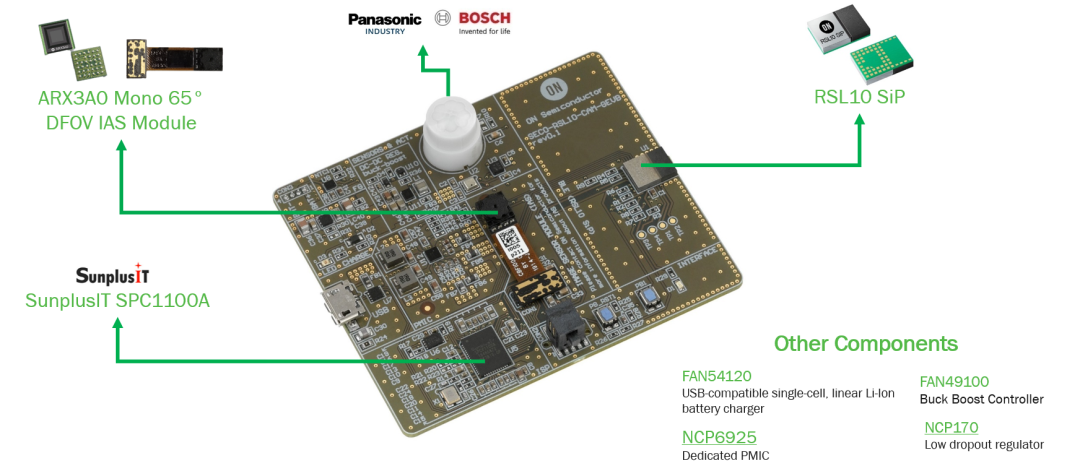
Figure 1: RSL10 Smart Imaging Camera Components
AI and Image Object Detection
As shown in Figure 1, the circuit board includes several sensors for triggering activities. These include motion sensors, accelerometers, and environmental sensors. Once triggered, the circuit board sends the image to a smartphone via Bluetooth low energy, and the companion app uploads it to cloud services, such as Amazon Rekognition® service.

The cloud service runs machine vision deep learning algorithms. For the RSL10 smart imaging camera, the cloud service is set up to perform object detection. Once image processing is complete, the smartphone app updates with the algorithm’s detection results and success probabilities. These cloud-based services are highly accurate, as they have trained machine vision algorithms on billions of images.

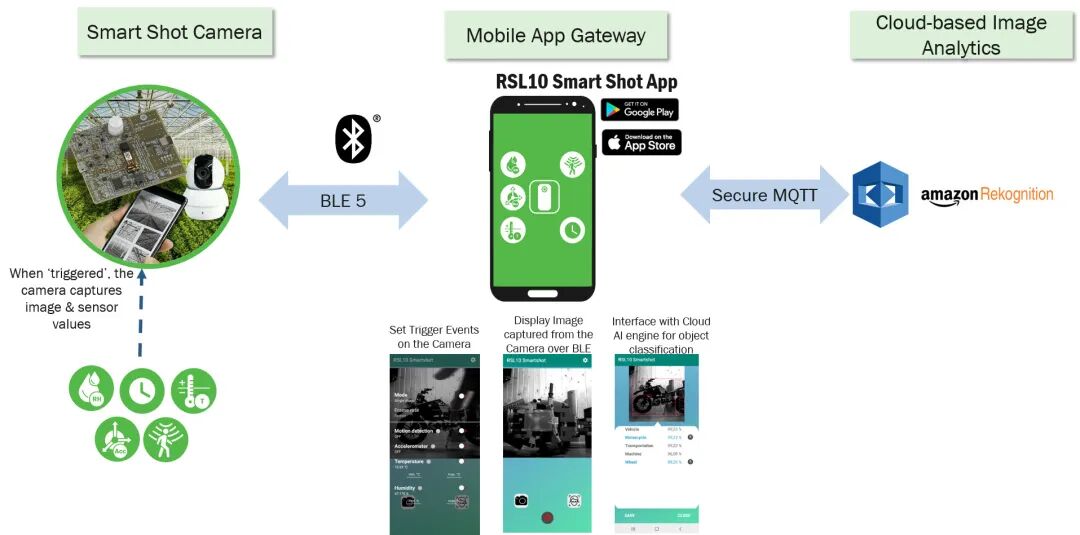
Figure 2: Seamless Connection from Edge to Cloud
Conclusion
As discussed in this article, the Internet of Things is transforming and optimizing further to achieve large-scale and cost-effective expansion. New connectivity technologies are continuously being developed to help address power, bandwidth, and capacity issues. Artificial intelligence is evolving, with increasing capabilities and efficiencies, enabling it to be deployed at the edge and even at endpoint nodes. The Internet of Things is growing and adapting to environmental changes to reflect ongoing growth and prepare for future expansion.
The onsemi RSL10 smart imaging camera is a modern example of how to effectively address these challenges and deploy an intelligent low-cost system that uses minimal bandwidth. This is a truly optimized IoT solution.
Onsemi’s strategic focus is on low power and high energy efficiency, and the technologies we develop successfully address the major challenges of deploying AI at the edge, namely power consumption, bandwidth, and latency.