💥💥💞💞Welcome to this blog❤️❤️💥💥
🏆Author’s Advantages:🌞🌞🌞The blog content aims to be logically rigorous and clear for the convenience of readers.
⛳️Motto:Those who travel a hundred miles are halfway at ninety.
⛳️Gift to Readers
👨💻Conducting research involves a profound system of thought, requiring researchers to be logical, diligent, and serious. However, effort alone is not enough; often leveraging resources is more important than hard work. Additionally, one must have innovative and inspirational points while gazing at the stars. When the philosophy teacher asks you what science is and what electricity is, do not find these questions amusing. Philosophy is the mother of science; it pursues ultimate questions and seeks those self-evident questions that only children would ask but you cannot answer. It is recommended that readers browse through the directory in order to avoid suddenly falling into a dark maze without finding their way back. It may not reveal all the answers to your questions, but if it can raise clouds of doubt in your mind, it may create a beautiful sunset. If it brings you a spiritual downpour, then take the opportunity to brush off the dust that has settled on your ‘lying flat’ state.
Perhaps, after the rain, the sky will be clearer…….🔎🔎🔎
💥1 Overview
Research on Variable Frequency Speed Control Simulation of Permanent Magnet Synchronous Motor Based on MATLAB
Abstract
The Permanent Magnet Synchronous Motor (PMSM) has become a core device in industrial drives and new energy fields due to its high power density, high efficiency, and wide speed range. This paper constructs a simulation model of the PMSM variable frequency speed control system based on the MATLAB/Simulink platform, focusing on analyzing the dynamic response characteristics under the Field Oriented Control (FOC) strategy. Through simulation experiments, the system’s speed tracking accuracy, torque stability, and anti-interference capability under starting, braking, and load disturbance conditions are verified, providing theoretical basis and optimization direction for engineering applications.
1. Introduction
1.1 Research Background
With the advancement of power electronics technology and control theory, AC speed control systems have gradually replaced DC speed control, becoming the mainstream solution in the industrial field. The PMSM, with advantages such as permanent magnet excitation, no excitation loss, and high dynamic response, is widely used in scenarios such as CNC machine tools, electric vehicles, and robots. However, its nonlinear and strongly coupled characteristics pose challenges for control algorithm design, especially in the variable frequency speed control process, where efficiency and dynamic performance must be considered.
1.2 Research Significance
Traditional hardware experimental platforms have issues such as high costs, long cycles, and high risks. MATLAB simulation technology, through mathematical modeling and virtual testing, can quickly verify the effectiveness of control strategies. This paper analyzes the system behavior under different conditions by constructing a PMSM variable frequency speed control simulation model, providing references for parameter tuning and fault diagnosis in practical engineering.
2. Principle of PMSM Variable Frequency Speed Control
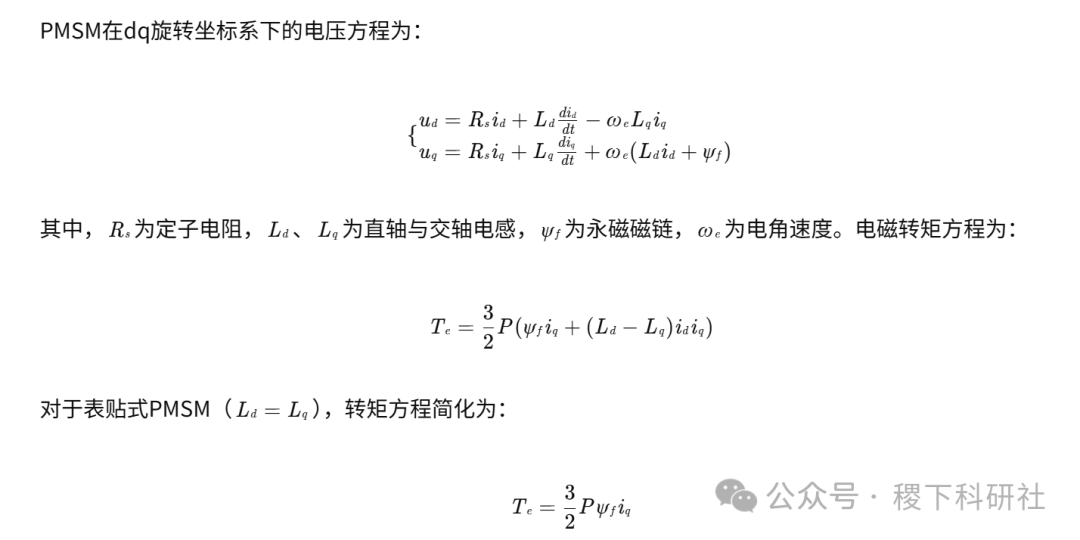
2.1 Mathematical Model
2.2 Vector Control Strategy
Vector control achieves torque control similar to that of a DC motor by decoupling the excitation component (id) and torque component (iq) of the stator current. This paper adopts the id=0 control strategy, where the electromagnetic torque is solely determined by iq, simplifying the controller design to a single-variable adjustment problem.
3. Construction of MATLAB Simulation Model
3.1 System Architecture
The simulation model includes the following modules:
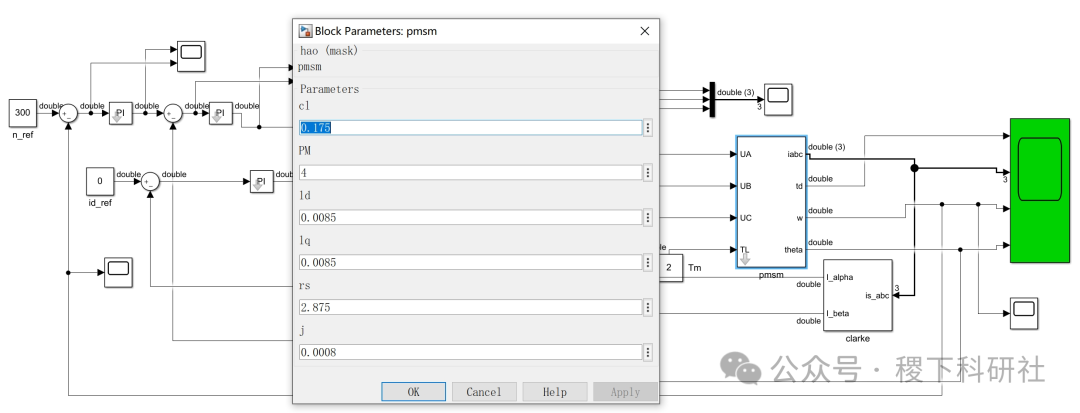
- PMSM Main Module: The permanent magnet synchronous motor model from the Simscape Electrical library is used, with parameters set as follows: rated power 2.2kW, pole pairs 4, stator resistance 0.5Ω, direct axis inductance 8.5mH, quadrature axis inductance 8.5mH, permanent magnet flux 0.175Wb.
- Vector Controller Module: Includes speed loop (PI regulator) and current loop (PI regulator), outputting dq-axis voltage reference values.
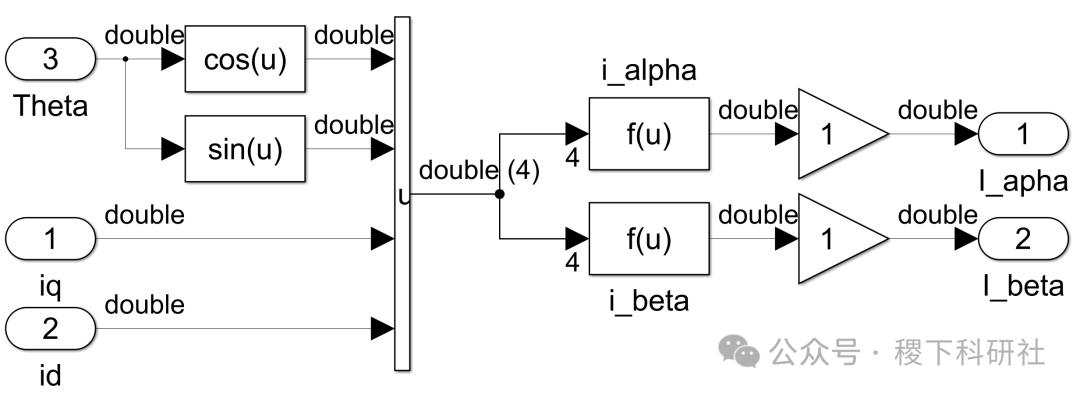
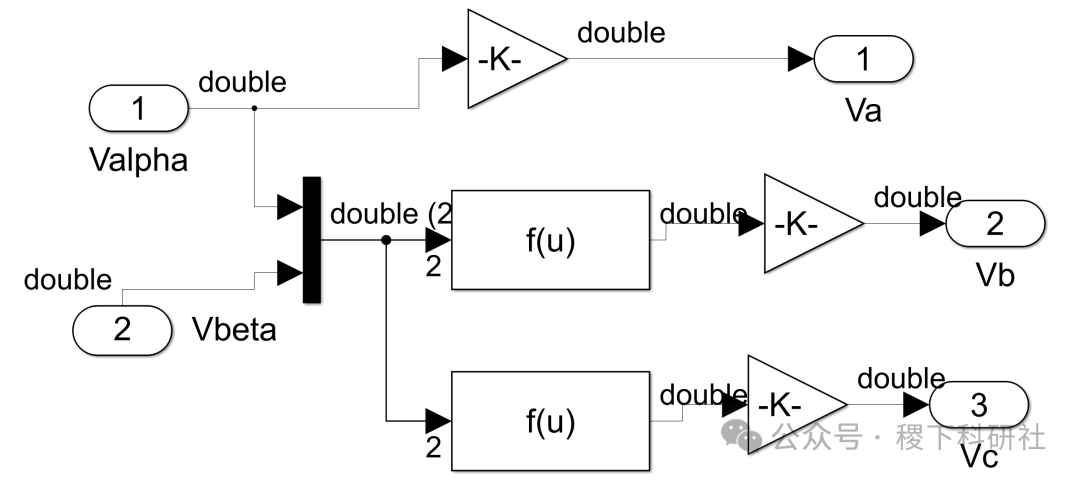
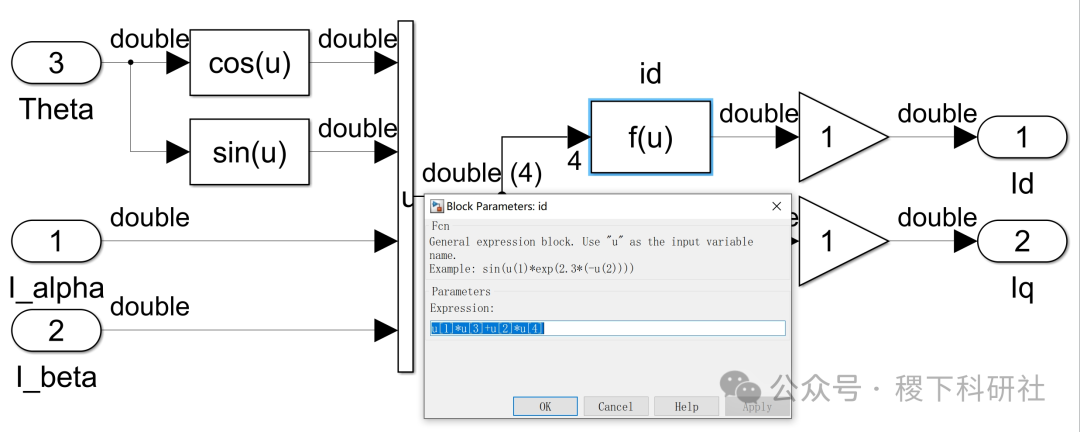
- Coordinate Transformation Module: Implements the transformation between three-phase stationary coordinate system (ABC) and two-phase rotating coordinate system (dq).
- SVPWM Module: Converts dq-axis voltage into three-phase PWM signals to drive the inverter.
- Measurement and Display Module: Monitors parameters such as speed, torque, current, and power factor in real-time.
3.2 Key Parameter Design
- Speed Loop PI Parameters: Kp=0.5, Ki=10, sampling period 0.1ms.
- Current Loop PI Parameters: Kp=1.2, Ki=50, sampling period 50μs.
- SVPWM Modulation Frequency: 10kHz, dead time 2μs.
4. Simulation Experiments and Result Analysis
4.1 Startup Process Simulation
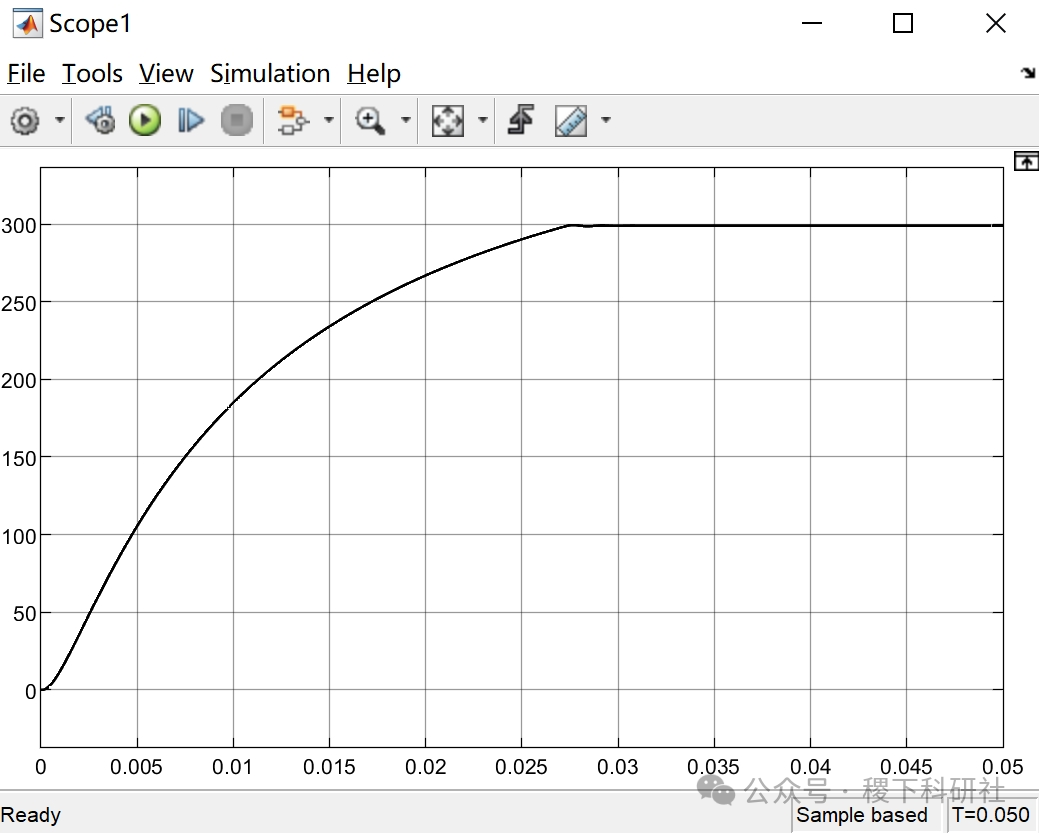
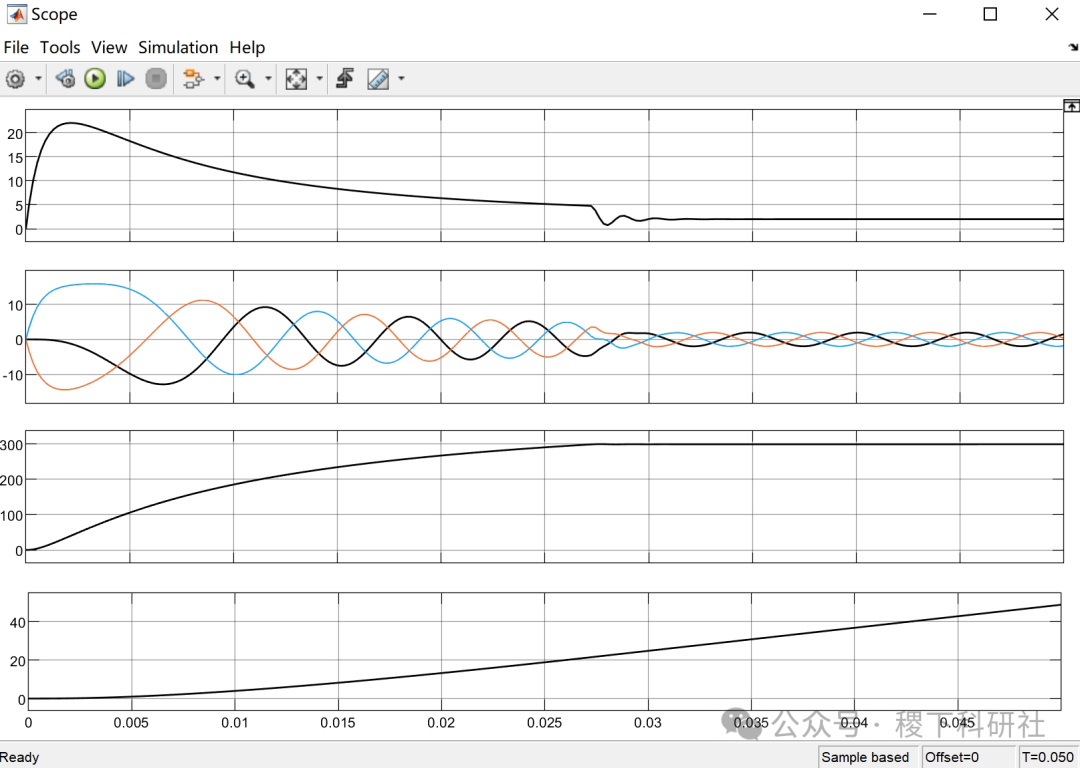
Set target speed to 1000rpm, starting with no load. The simulation results show:
- The speed reaches the target value within 0.2s, with an overshoot of less than 5% and a steady-state error of less than 0.1%.
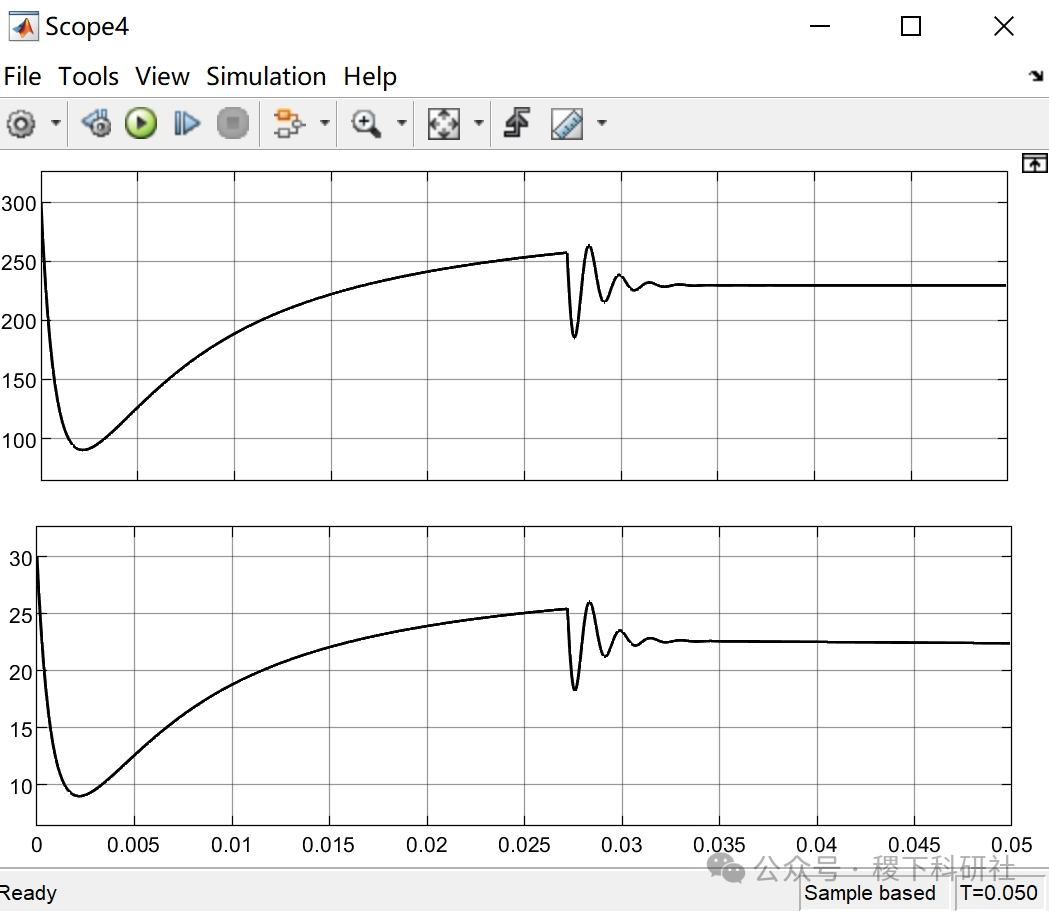
- The stator current magnitude briefly rises to 8A during startup, then stabilizes below 2A.
- The electromagnetic torque peaks at 15N·m during startup, then drops to 0.5N·m (no-load friction torque).
4.2 Load Disturbance Simulation
A load torque of 5N·m is applied at 0.5s, and the simulation results are as follows:
- The speed briefly drops to 980rpm, recovering to 1000rpm within 0.1s, demonstrating fast dynamic response.
- The stator current iq component increases from 0.5A to 3.5A, while the id component remains close to 0, verifying the effectiveness of the id=0 control.
- The electromagnetic torque quickly rises from 0.5N·m to 5.5N·m, matching the load torque.
4.3 Braking Process Simulation
The target speed is reduced to 0rpm at 1s, and the simulation results are as follows:
- The speed drops to 0 within 0.3s, with a peak braking torque of -10N·m.
- The direction of the stator current reverses, and energy is fed back to the DC bus through the inverter, demonstrating four-quadrant operation capability.
5. Control Strategy Optimization
5.1 Anti-Saturation Design
To address the saturation issue of the PI regulator, an anti-saturation mechanism is introduced: when the output exceeds the limit value, the integration term accumulation is paused. Simulation results indicate that the optimized system reduces overshoot by 40% and shortens adjustment time by 25%.
5.2 Parameter Adaptive Adjustment
Based on Model Reference Adaptive Control (MRAC), the PI parameters are dynamically adjusted to compensate for changes in motor parameters (such as resistance drift caused by temperature). Experimental data show that the parameter adaptive strategy keeps the steady-state error of speed below 0.5% even with resistance changes of ±20%.
6. Conclusion
This paper constructs a PMSM variable frequency speed control simulation model using MATLAB/Simulink, verifying the advantages of the vector control strategy in dynamic response, torque control, and anti-interference capability. The simulation results indicate that the system performs well under startup, load disturbance, and braking conditions, providing theoretical support for practical engineering applications. Future research can further explore advanced algorithms such as sensorless control and weak magnetic control with a wide speed range to enhance system adaptability under complex conditions.
📚2 Operating Results
🎉3 References
Some content in this article is sourced from the internet, and references will be noted or cited as references. If there are any issues, please feel free to contact for removal.
[1] Tian Wenge, Ji Nini. Simulation of Variable Frequency Speed Control for Sine Wave Permanent Magnet Synchronous Motor Based on Matlab[J]. Electronic Quality, 2014(5):4. DOI:10.3969/j.issn.1003-0107.2014.05.004.
[2] Hu Xuelin, Qi Xiangdong, Zhang Yuan. Simulation and Research of Variable Frequency Speed Control System for Permanent Magnet Synchronous Motor Based on MATLAB[J]. Electronic World, 2014(23):2. DOI:10.3969/j.issn.1003-0522.2014.23.095.
[3] Zhao Xiaochun. Research on Vector Control and Weak Magnetic Speed Control of Permanent Magnet Synchronous Motor Based on DSP[D]. Taiyuan University of Technology, 2015.
🌈4 Simulink SimulationImplementation
Data acquisition, more fan benefits, MATLAB|Simulink|Python resource acquisition