 ArticleOverview
In this article, DigiKey focuses on common development tools, components, and communication modules in wireless communication systems, providing detailed information onDigiKey‘s various related development resources, including commonMatter,Wi-Fi,BLE,LoRa andZigbee/Thread modules. The article concludes with a look at the future development trends of wireless communication technology in the Internet of Things, smart cities, and Industry 4.0.
With the rapid development of technology, wireless communication technology has become an indispensable part of modern life and industrial applications. From smart home devices, wearable devices to automated production lines and smart city infrastructure, the popularity of wireless communication systems has made the vision of interconnected devices a reality.However, the complex and variable application scenarios have also brought many challenges, such as signal interference, energy consumption control, bandwidth limitations, and data security issues.
To address these challenges, wireless communication technology continues to evolve, integrating various innovative solutions to meet the needs of different scenarios. At the same time, wireless communication systems based on different communication protocols and technologies (such as Wi-Fi, Bluetooth, Zigbee, LoRa, 5G, etc.) also play their respective advantages, achieving widespread applications in consumer electronics, healthcare, industry, and transportation. This article will focus on common development tools, components, and communication modules in wireless communication systems, helping readers choose product solutions that meet their application needs.
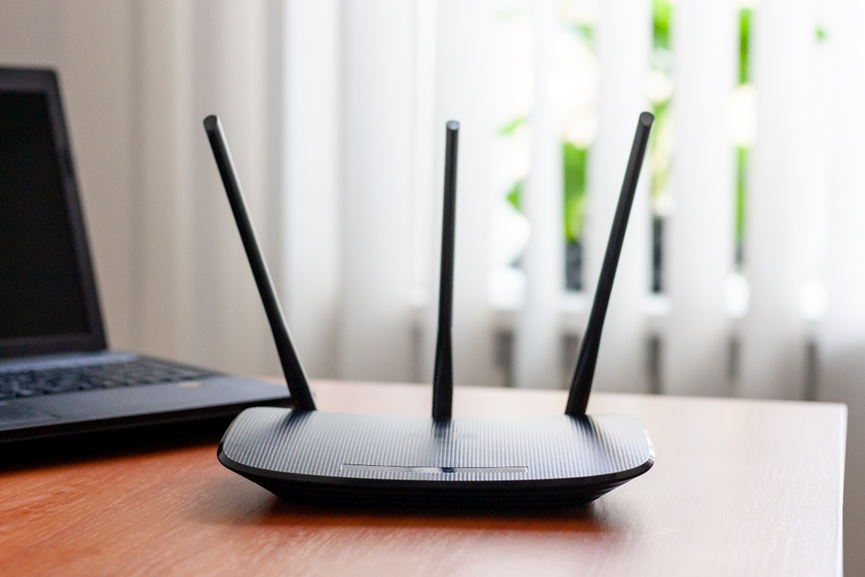
Common Development Tools and Components for Wireless Communication Systems
To assist customers in developing wireless communication systems,DigiKey offers a variety of support tools and components. This article will introduce some important products for your reference. Taking the recently popularMatter andThread communication protocols as examples,DigiKey provides a variety of chips and development boards to accelerate customers’ product development speed.
1. Thing Plus Matter – MGM240P
Thing Plus Matter – MGM240P is a development board designed specifically for IoT applications, supporting the latestMatter communication protocol and based on the Silicon Labs‘sMGM240P module. This product helps developers simplify the design and development of smart home devices, achieving seamless interoperability across platforms and brands.
Thing Plus Matter – MGM240P not only supportsMatter communication protocol, but also supports Bluetooth 5.3,Zigbee and other wireless protocols, providing flexible connectivity options, and integrates RF front-end and efficient antenna design, eliminating the need for additional antenna setups, simplifying the development process.
Thing Plus Matter – MGM240P has rich development resources, Silicon Labs provides powerful development tool kits and software support, such asSimplicity Studio, allowing developers to easily program, debug, and optimize, and supportsMatter development tools and SDK, enabling developers to quickly develop IoT products compatible withMatter and compatible withSparkFun Thing Plus series, making it easy to accessSparkFun‘s open-source community resources, quickly obtaining sample programs and technical support.
2. Nordic nRF5340 Development Tool Kit
Nordic‘s nRF5340 development tool kit is a multi-protocol wireless development board, designed for IoT, wearable devices, smart home, medical devices, and other applications. The nRF5340 development tool kit supports multiple communication protocols, including Bluetooth Low Energy (Bluetooth Low Energy 5.3), Bluetooth Long Range, Thread and Zigbee, 2.4 GHz proprietary communication protocols, meeting special application needs.
The nRF5340 development tool kit features a developer-friendly design, including an embedded SEGGER J-Link Debugger, and supports Nordic provided development tools (such as nRF Connect SDK and nRF Connect for Desktop), and supports Zephyr RTOS, making software development, debugging, and optimization convenient. Nordic also provides comprehensive technical support and development resources, including sample program code, technical manuals, and community support, facilitating quick onboarding.
3. NXP K32W041AM and K32W041A Wireless Microcontrollers
NXP‘sK32W041AM and K32W041A are wireless microcontrollers (MCUs) designed for IoT and smart home applications. These MCUs support multiple wireless communication protocols, includingZigbee 3.0, Thread and Bluetooth Low Energy 5.0, meeting the needs of different IoT application scenarios.
These two MCUs have built-in RF modules, supporting 2.4 GHz band wireless communication, and have high-efficiency RF performance, suitable for operation in interference-prone wireless environments, with high receiving sensitivity, providing stable and reliable wireless connections, enhancing communication distance and interoperability between devices.
The K32W041 series offers various development tools and support, including MCUXpresso SDK, Zigbee and Thread stack support, Matter communication protocol compatibility, meeting the latest smart home communication protocol standards, achieving interoperability between different brands and platforms.
4. u-blox R41Z Evaluation Kit
u-blox R41Z evaluation kit is a wireless evaluation platform developed specifically for IoT, smart home, and smart industrial applications, based on u-blox‘s NINA-B4 module. This module supports Bluetooth 5.0, Zigbee 3.0 and Thread communication protocols, providing flexibility for multi-protocol development, particularly suitable for developing short-range wireless communication devices.
NINA-B4 supports multiple low-power modes, suitable for IoT devices that need to run for long periods, such as environmental monitoring and security surveillance applications, and supports dynamic power management, automatically adjusting power consumption based on demand to achieve optimal energy efficiency.u-blox R41Z evaluation kit also provides various development tools and support, including u-blox Connect SDK, Nordic SDK, u-blox development tools, which can accelerate product development speed.
5. Nordic THINGY:52 IoT Sensor Kit
Nordic‘sTHINGY:52 IoT sensor kit is a multifunctional, ready-to-use IoT development tool, built-in multiple sensors and wireless communication capabilities, designed for IoT applications and rapid prototyping. This kit is based on Nordic nRF52832 SoC, supporting Bluetooth Low Energy (BLE), particularly suitable for smart home, health monitoring, and environmental monitoring scenarios.
THINGY:52 IoT sensor kit supports multiple platforms, can be integrated with Nordic nRF52 SDK, supporting multi-platform development, allowing developers to use Nordic provided examples and SDK resources for development, and provides open APIs and mobile applications, facilitating rapid integration and use of devices for data collection, analysis, and application development, and supports control via Raspberry Pi, suitable for developing IoT gateway applications and data management.
Common Wireless Communication Modules Enhance Application Integration
There are many types of communication modules, some supporting a single communication protocol, while others support multiple communication protocols. Below are some common communication modules.
1. Wi-Fi Modules
-
Espressif ESP8266: This is a miniaturized Wi-Fi module that supports TCP/IP communication protocol, applicable in simple IoT, smart home, and other scenarios, with advantages of low cost and rich development resources.
-
Qualcomm QCA4010: Supports Wi-Fi Direct and MQTT, applicable in high-performance smart home devices, with advantages of low power consumption and support for multiple communication protocols.
2. BLE Modules
-
Nordic nRF52810: This is a module that supports BLE 5.0, with extremely low power consumption, applicable in wearable devices, health monitoring, etc., with advantages of affordability and suitability for large-scale deployment.
-
TI CC2640: Designed specifically for BLE, with a built-in efficient processor, applicable in smart locks, Bluetooth peripherals, with advantages of high stability and suitability for commercial applications.
3. LoRa Modules
-
Semtech SX1276: Features support for LoRa communication and a wide frequency range, applicable in remote data transmission, with advantages of high sensitivity and low power consumption.
-
RAKWireless RAK3172: Built-in STM32L series microcontroller, applicable in industrial IoT, with advantages of modular design and ease of integration.
4. Zigbee/Thread Modules
-
Silicon Labs MGM240P: Supports Zigbee, Thread, and Matter, applicable in smart homes, lighting control, with advantages of multi-protocol support, suitable for diverse applications.
-
NXP KW41Z: Supports BLE and Zigbee, with efficient wireless processing capabilities, applicable in multi-protocol gateways, smart home devices, with advantages of stability and reliability, optimized power consumption.
|
Development Tool Kits / Microcontrollers |
Thing Plus Matter – MGM240P |
Nordic nRF5340 |
NXP K32W041AM and K32W041A |
u-blox R41Z Evaluation Kit |
Nordic THINGY:52 IoT Sensor Kit |
|
Processor Architecture |
ARM Cortex-M33 |
Dual ARM Cortex-M33 |
ARM Cortex-M4 |
ARM Cortex-M0+ |
ARM Cortex-M4 |
|
Wireless Communication Protocols |
Matter、Bluetooth Low Energy (BLE)、Zigbee |
Bluetooth 5.3、802.15.4、Thread、Zigbee |
Thread、BLE、Zigbee |
Bluetooth 5、802.15.4 |
Bluetooth 5、NFC、ANT、Thread |
|
Memory (Flash / RAM) (Flash / RAM) |
512 KB / 64 KB |
512 KB(Application) / 256 KB(Network) |
640 KB / 152 KB |
192 KB / 32 KB |
512 KB / 64 KB |
|
Functional Features |
SupportsMatter standard, suitable for smart home applications |
Supports low-power IoT and dual-core design |
SupportsMatter、IoT、Industrial Automation |
EvaluatesZigbee、Thread、BLE performance |
Built-in multiple sensors (environmental, motion, light, etc.) |
|
Development Environment Support |
Silicon Labs Simplicity Studio |
Nordic SDK、Segger Embedded Studio |
NXP MCUXpresso、IAR、Keil |
u-blox U-Connect、Keil |
Nordic SDK、nRF Connect for Desktop |
|
Power Consumption |
Supports low-power modes |
Low-power application design optimization |
Ultra-low power mode, suitable for battery-powered devices |
Low-power design |
Supports low-power modes |
|
Application Scope |
Smart home,Matter IoT devices |
Smart home, medical devices, industrial IoT |
Smart home, industrial automation, health monitoring |
IoT, smart home |
IoT, smart sensing applications |
|
Operating Temperature Range |
-40℃ ~ 85℃ |
-40℃ ~ 105℃ |
-40℃ ~ 125℃ |
-40℃ ~ 85℃ |
-20℃ ~ 60℃ |
|
Main Advantages |
Easy to integrate withMatter standard, supports multiple wireless communication protocols |
Supports multi-protocol dual-core design, suitable for complex IoT applications |
Features ultra-low power consumption and high-temperature resistance, suitable for industrial applications |
Evaluates Zigbee and BLE performance |
Built-in multiple sensors, supports various IoT applications |
|
Price Range |
Medium |
Medium to high |
Medium |
Medium |
Medium to low |
Conclusion
Wireless communication systems, as an important pillar of modern technology, are profoundly changing our ways of life and production. Despite facing multiple challenges such as signal interference, energy consumption limitations, data security, and multipath effects, the introduction of innovative technologies and solutions provides effective responses to these issues. From low-power designs to advanced Multiple Input Multiple Output (MIMO technology, from secure encryption protocols to dynamic resource allocation algorithms, every technological advancement enhances the stability, reliability, and scalability of wireless communication systems.
In the future, with the continuous advancement of the Internet of Things (IoT), smart cities, and Industry 4.0, wireless communication technology will take on greater missions, driving further digitalization and intelligence across various industries. The wireless communication system development tools, components, and communication modules introduced in this article will improve product development efficiency and speed, assisting in the development of more efficient, safer, and diverse wireless communication products to meet the growing market demand, achieving comprehensive connectivity and intelligence in human society.
In addition to this introduction to wireless communication product solutions, we also discussed the selection techniques for wireless communication technology and the design challenges faced in developing wireless communication systems. In the future, we will further analyze the technological developments in cellular network applications, so stay tuned. You can also click “Read More” toDigiKey webpage to learn more about professional technologies and solutions related to wireless communication.
 Editor’s Note:
As the saying goes, “To do a good job, one must first sharpen their tools.” In the development of wireless communication systems, the selection of development tools, components, and communication modules is crucial. Wise choices not only enhance development efficiency, improve system performance, and reduce development costs but also promote system integration, enhance system security, and adapt to future technological developments, ensuring the final system’s efficiency, stability, safety, and future scalability.
We hope the resources introduced in this article are helpful to you. If you have experience or questions regarding material selection in wireless communication system development, feel free to leave a message and share with DigiKey’s partners!

“Star” us, and don’t miss fresh cases and industry insights