The first 5GHz Arm chip is here! Qualcomm’s Snapdragon X2 series targets the PC market, will buying laptops change in 2026?
Performance matches x86, battery life is better, but there is still a key issue to be resolved
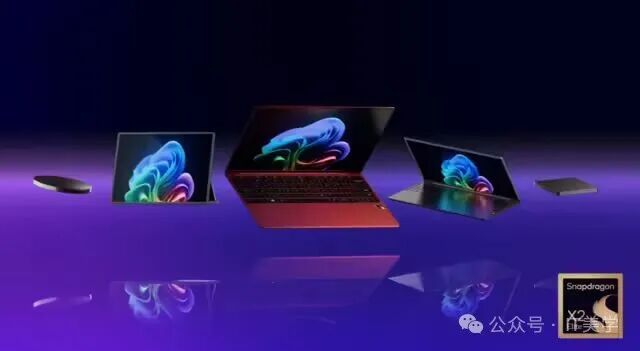
Qualcomm announced two heavyweight chips at the 2025 Snapdragon Summit – the Snapdragon X2 Elite and X2 Elite Extreme, with the X2 Elite Extreme directly breaking the frequency ceiling of the Arm architecture, becoming the first Arm chip capable of reaching 5GHz. These processors, built on a 3nm process, not only target the high-end laptop market but also plan to enter the mini-PC space, with devices expected to be available in the first half of 2026.
For ordinary users, this could mean that next year they can buy Windows laptops with longer battery life and stronger performance; but for the PC industry, this is another strong challenge from the Arm camp against the x86 hegemony – after all, for so many years, the x86 architecture dominated by Intel and AMD has almost monopolized the mainstream PC market.
First, let’s look at the hard power: 5GHz + 18 cores, has the Arm chip finally caught up with mainstream performance?
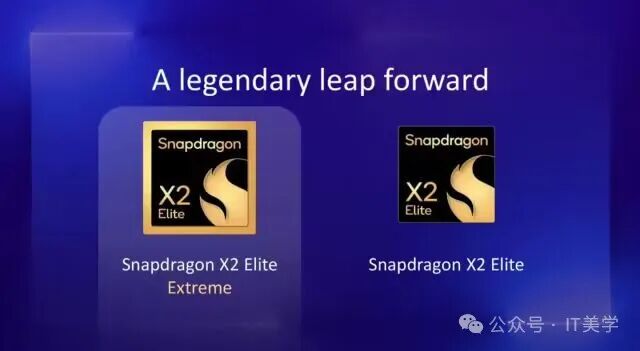
The two chips released this time have a clear positioning: the X2 Elite Extreme is the high-end version, while the X2 Elite is the standard version, with the former excelling in frequency and core performance.
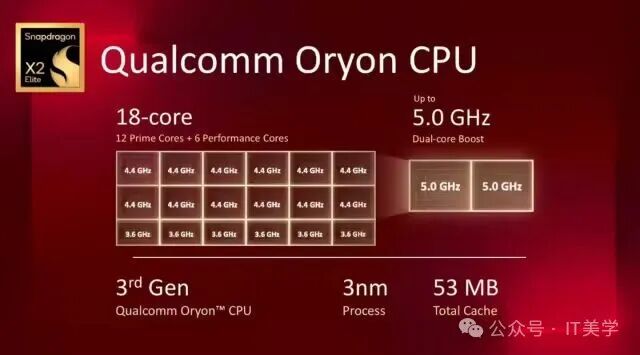
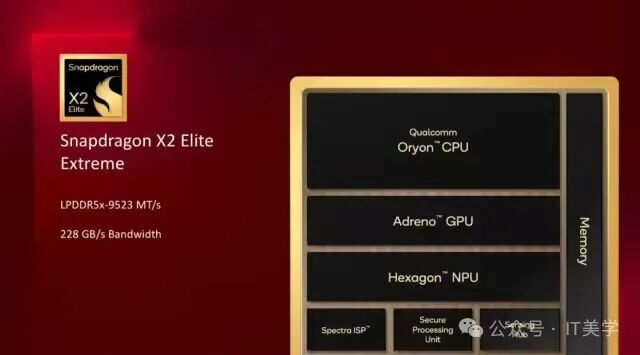
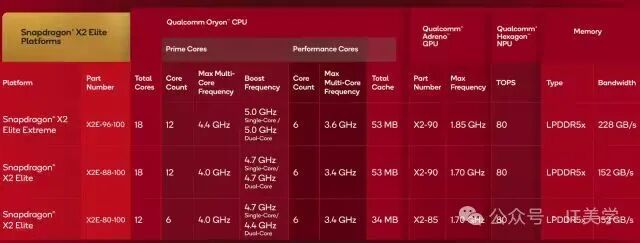
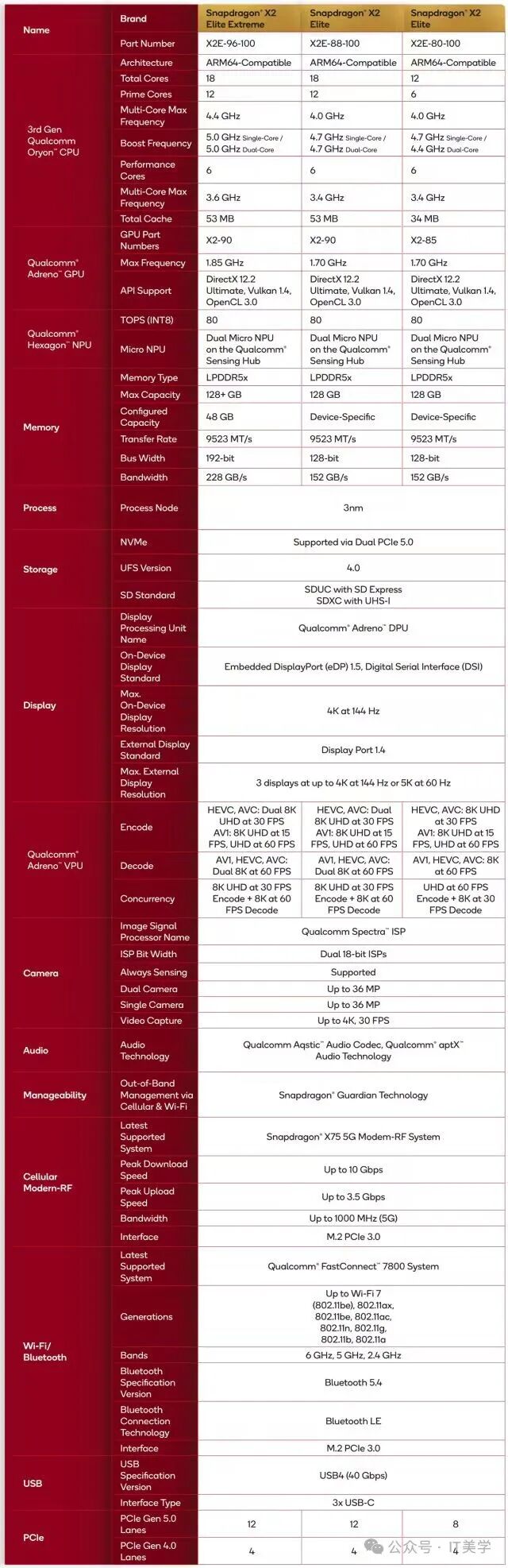
The most noteworthy X2 Elite Extreme is equipped with 18 cores, with up to two cores capable of reaching the high frequency of 5GHz – it is important to note that previous Arm architecture PC chips had a maximum frequency mostly around 3.5GHz, and this breakthrough to 5GHz means it can compete with mainstream x86 processors in single-core performance. A digital blogger analyzed: “With the single-core frequency increased, the speed of opening software and running lightweight games will significantly improve, which was previously a shortcoming of Arm laptops.”
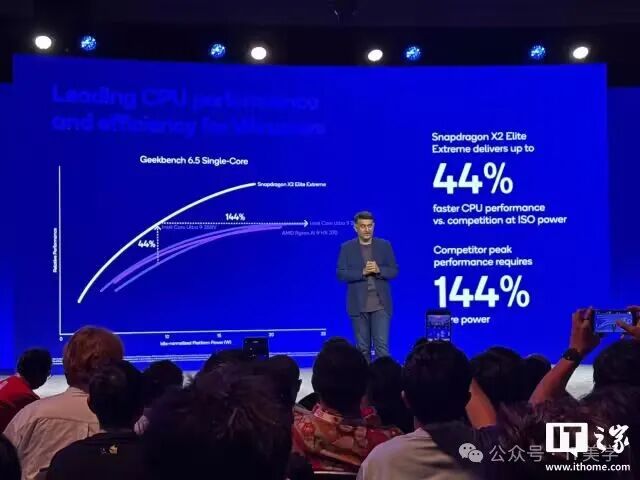
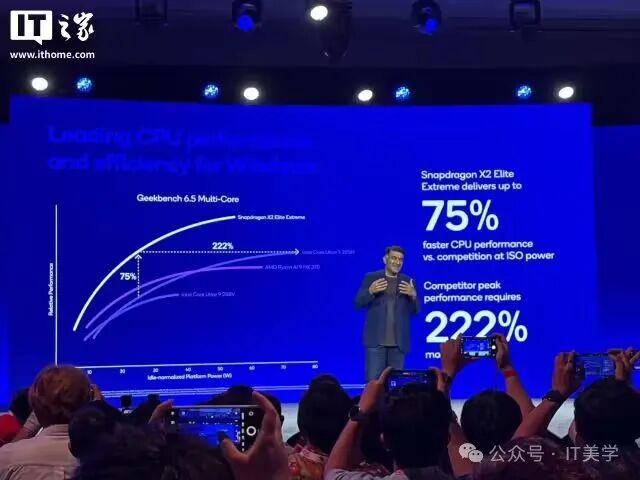
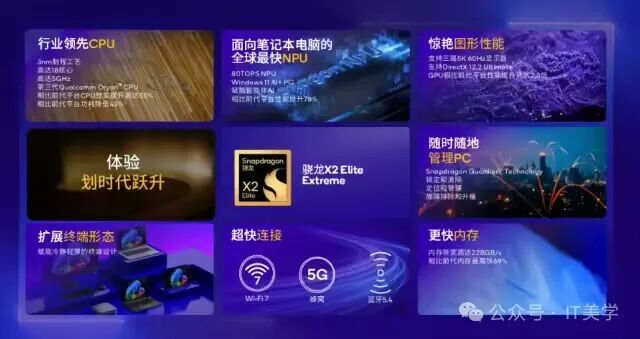
Performance improvements are also reflected in power consumption control. Qualcomm stated that under the same power consumption, the X2 Elite series outperforms competitors by 75%; during multitasking, performance is improved by 31% compared to the previous generation, while power consumption is reduced by 43%. This means that future Arm laptops may achieve “8 hours of continuous work without plugging in” while smoothly running lightweight design software. A netizen commented: “If this energy efficiency ratio can be achieved, I will no longer have to carry a heavy gaming laptop on business trips.”
The chip models are also segmented: the X2 Elite Extreme is X2E-96-100, while the X2 Elite has the 18-core X2E-88-100 and the 12-core X2E-80-100, with different core counts corresponding to different needs – the 18-core is suitable for designers who need multitasking, while the 12-core can meet ordinary office and entertainment needs.
Not just performance: AI and connectivity, hiding more practical upgrades
In addition to core performance, the upgrades in AI and connectivity capabilities of the X2 Elite series are also noteworthy.
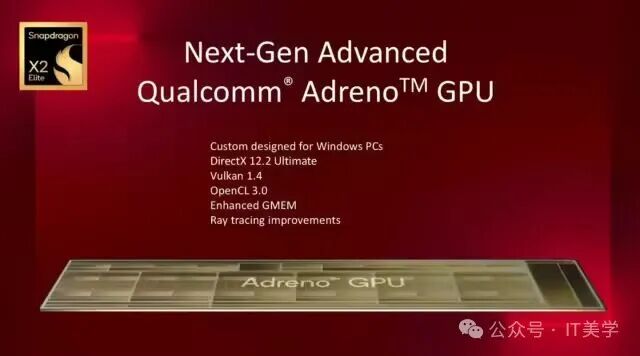
The newly equipped Adreno GPU has improved performance per watt by 2.3 times compared to the previous generation – simply put, when playing games or doing video editing, it can ensure smooth visuals without consuming too much power. Previously, playing “League of Legends” on an Arm laptop might result in frame drops, but in the future, it might be able to run at a stable 60 frames.
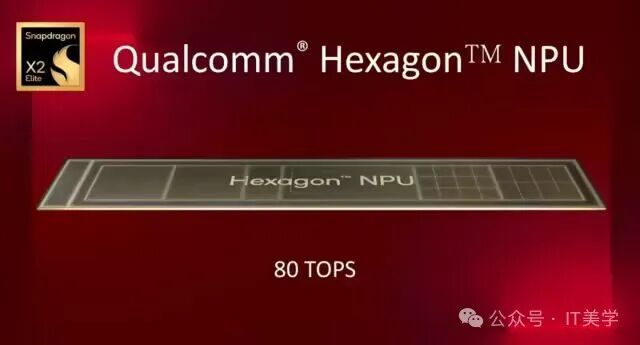
The AI computing power has also been significantly enhanced, with the 80TOPS NPU providing 78% more computing power than the previous generation, and it is currently the fastest AI processing unit in laptops. It can support Copilot+ and multitasking AI scenarios, such as generating PPTs in real-time with AI while using video software for automatic noise reduction, running both tasks simultaneously without lag. A netizen working in the new media industry expressed hope: “If AI editing can run smoothly on laptops, I could edit videos on the spot after shooting them.”
In terms of connectivity, the chip integrates the X75 5G modem, with peak download speeds reaching 10Gbps, and with the FastConnect 7800 module, it also supports Wi-Fi 7 and Bluetooth 5.4 LE. This means that even outdoors without Wi-Fi, large files can be downloaded quickly using 5G; when connecting to Bluetooth headphones, latency will be lower, making it more accurate to hear sounds while gaming.
For business users, Qualcomm has also added a “Guardian” feature, similar to Intel’s vPro, which allows for remote management of devices. For example, if an employee’s computer has issues, the IT department can fix it remotely without needing to visit, which is very practical for enterprises.
Key Issues: Can Arm Shake x86’s Position? There Are Two Hurdles to Overcome
Although the X2 Elite series has impressive specifications, there are two key issues to resolve before users will abandon x86 laptops.
The first is software compatibility. Currently, many professional software applications, such as certain industrial design tools and large games, are still optimized for the x86 architecture, and either cannot run on Arm laptops or run very poorly. Users have previously complained: “I bought an Arm laptop, but I couldn’t install CAD software, so it ended up being a backup machine.” Although Qualcomm has been promoting software adaptation, it will take time to perfect the entire ecosystem.
The second is competitive pressure. Not only is Qualcomm pushing Arm PC chips, but NVIDIA and MediaTek are also jointly developing a 20-core Arm processor, planning to launch it in 2026, directly competing with Qualcomm for market share; on the other hand, Intel and AMD are also accelerating the development of AI PC chips, trying to retain users with stronger AI capabilities. In the coming year, the PC chip market will enter a phase of “intense competition”, and who will ultimately win will depend on the actual experience of the end devices.
However, for consumers, the more intense the competition, the better – whether it is the long battery life of the Arm camp or the strong performance of the x86 camp, both will ultimately force manufacturers to produce better and cheaper products. If laptops equipped with the X2 Elite series can solve the software adaptation issue by the first half of 2026, it may truly rewrite the landscape of the PC market. What we need to do now is patiently wait for the real machine tests at next year’s CES to see how this 5GHz Arm chip performs in reality.
For more exciting content, follow us!