Nitrogen dioxide (NO2) in the air not only causes severe environmental pollution but also poses a significant threat to human health, making it an “invisible killer” that endangers both human health and the environment. Currently, there are many challenges in NO2 sensor technology that severely limit its application: difficulties in operating at room temperature, high energy consumption; lack of specificity for common gases such as SO2 and CO2, and sensitivity to humidity, necessitating technological breakthroughs to meet monitoring needs.
Recently, the team led by Cheng Jiangong at the Shanghai Institute of Microsystem Technology, Chinese Academy of Sciences, successfully developed a highly specific, room-temperature operating NO2 sensor. This gas sensor relies on a novel alternating conjugated polymer, which adapts to carbon nanotubes to form a robust and flexible skeletal structure, creating specific halogen bond synergistic active sites that enable precise capture and sensing of NO2 molecules. The detection limit at room temperature reaches 1.8 ppb, with excellent selectivity and environmental stability, making it suitable for NO2 gas detection in various scenarios such as smart buildings, industrial plants, and environmental monitoring stations.
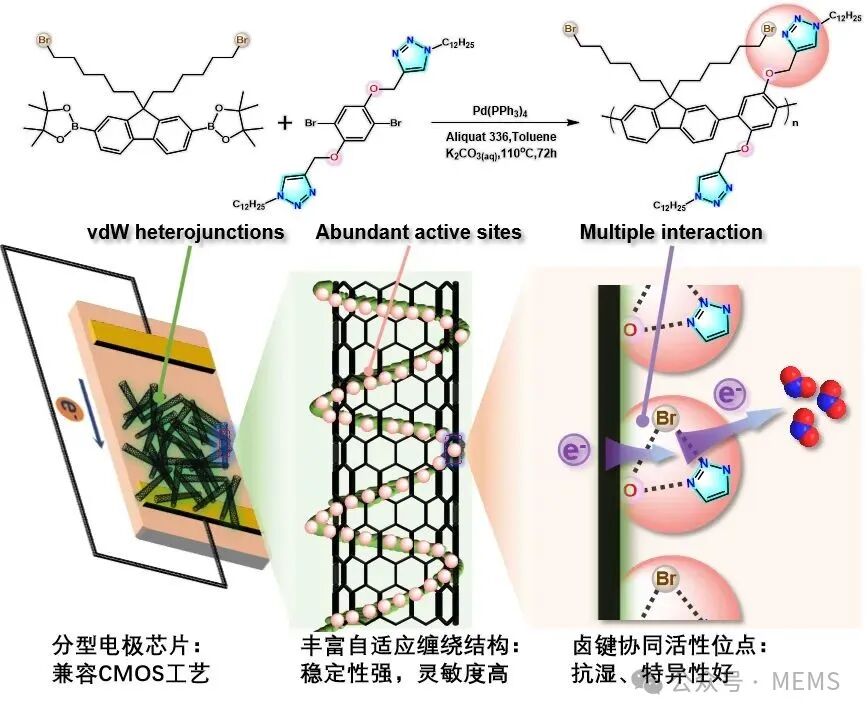
Figure 1: Schematic diagram of van der Waals heterostructure based on halogen bond synergistic active sites
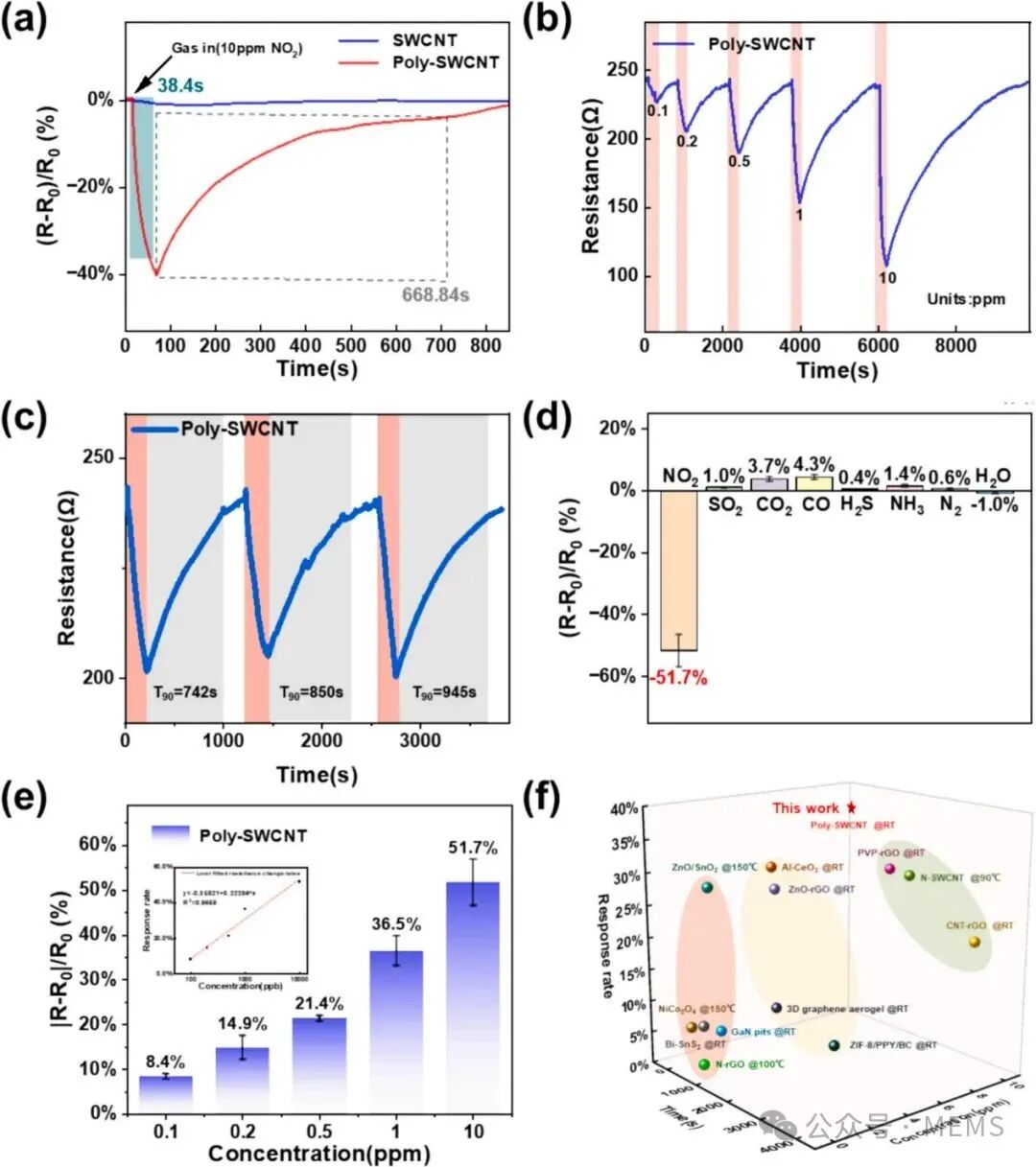
Figure 2: Electrical sensitivity performance of the gas sensor
The related research results, titled “van der Waals heterojunction-based NO2 chemosensor via a synergistic halogen bond site,” were published in the top journal Chemical Engineering Journal in the field of chemical engineering and environment. PhD students Luo Wen and Assistant Researcher Liu Huan from the Shanghai Institute of Microsystem Technology and Information Technology are co-first authors, with Researcher Cheng Jiangong, Researcher He Qingguo, and Associate Researcher Xu Wei as corresponding authors. This research work was supported by the National Key Research and Development Program, the National Natural Science Foundation, the Key Deployment Project of the Chinese Academy of Sciences, and the Shanghai Qiming Star Program.
Paper Information:
DOI: 10.1016/j.cej.2025.166906
Further Reading:
“Analysis of the SHT45 Temperature and Humidity Sensor by Sensirion”
“Environmental Gas Sensor Technology and Market – 2023 Edition”“Analysis of the SGX Sensortech Micro MEMS Catalytic Combustion Gas Sensor MP7227”“Analysis of the SGP40 Gas Sensor by Sensirion”“Analysis of the SGP30 Gas Sensor by Sensirion”