Click on the above “ Technical Training ” and select “Pin to Top”
Over 140,000 industrial control professionals follow this WeChat platform for technical sharing, learning exchanges, and industrial control videos.
Currently, PLCs are widely used centralized control devices in industrial production and automation control. PLCs replace cumbersome relay cabinets, AC contactor cabinets, etc., and are gradually becoming popular in production and control. The correct wiring of PLCs is a prerequisite for them to function properly, and mastering the wiring of PLC input and output ports is essential for every electrical worker.
Generally, the PLC power input terminal connects to AC220V to provide the operating power for the PLC. The PLC output power port is usually DC24V, which is the power output provided by the PLC itself. Correct wiring of the input and output terminals is crucial during PLC operation, as proper wiring is a prerequisite for the PLC to work. Below, we will focus on analyzing the common wiring types for PLC input and output terminals:
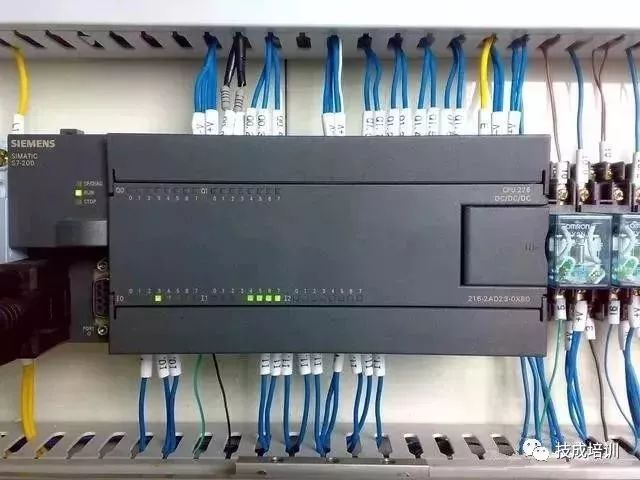
1. Common Wiring Types and Objects for Input Ports:
PLC input ports generally receive:
1. Digital Signal: buttons, limit switches, toggle switches, proximity switches, dip switches, etc. A simple example makes this clearer:
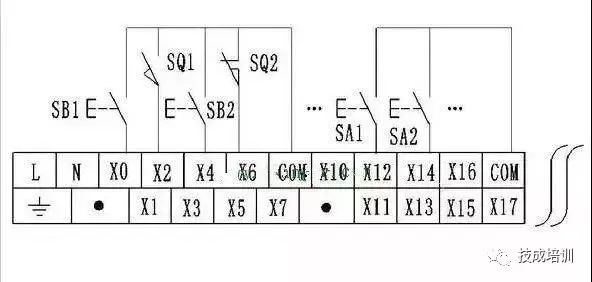
Wiring diagram between PLC and button switch
The wiring for a button or proximity switch is shown: one end connects to the PLC input terminal (X0, X1, X2, etc.), and the other end connects to the common terminal of the PLC (COM terminal).
2. Analog Signal: Generally from various types of sensors, such as pressure transmitters, level transmitters, remote pressure gauges, thermocouples, and resistance thermometers, etc. The wiring method may vary slightly depending on the type of analog signal acquisition device (two-wire or three-wire systems). As shown in the figure:
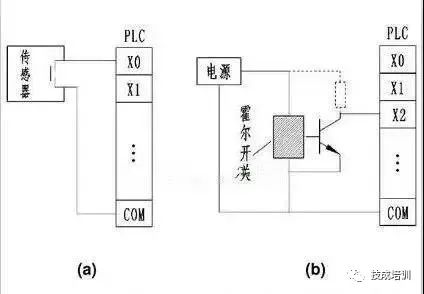
(a) Two-wire sensor; (b) Three-wire sensor
2. Wiring for Output Ports
PLC output port wiring can generally be divided into three situations: 1. Relay output. 2. Transistor output. 3. Thyristor output.
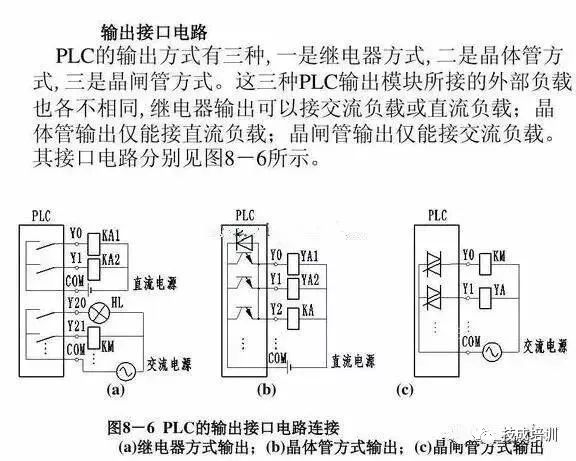
The type of power supply connected to the output load varies with the PLC output method. As shown in the figure: This is the basic wiring for PLC input and output, which is fundamental PLC knowledge.
2. Three Common Knowledge Points in the PLC Wiring Process:
1. PLC Power Circuit
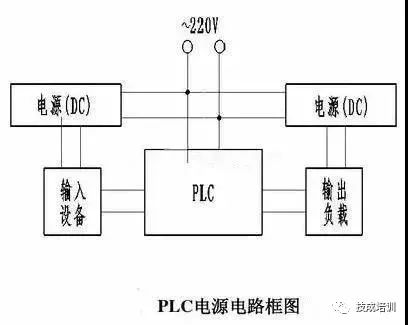
In addition to the AC power supply, the PLC control system also includes the PLC DC power supply. Generally, the PLC AC power supply can be directly supplied by the mains, while the DC power supply for input devices (switches, sensors, etc.) and output devices (relays) should preferably be supplied by independent DC power sources.
Most PLCs come with a 24V DC power supply, and this can only be used when the current required by the input or output devices is not very large.
2. Current Ratings for PLC Input and Output Ports
The input power of the PLC is generally DC24V, and the current rating for each input point is between 5mA-7mA. This current is the maximum current generated when the input port is short-circuited. When there is a certain load on the input port, the current passing through will correspondingly decrease.
The minimum current required for PLC input signal transmission is generally 2mA. To ensure the minimum effective signal input current, the total impedance of the devices connected to the input port should generally be less than 2K ohms.
PLC and sensor component interface circuit
(a) Two-wire sensor; (b) Three-wire sensor
This means that when the power of the sensor at the input port is larger, an external power supply needs to be connected.
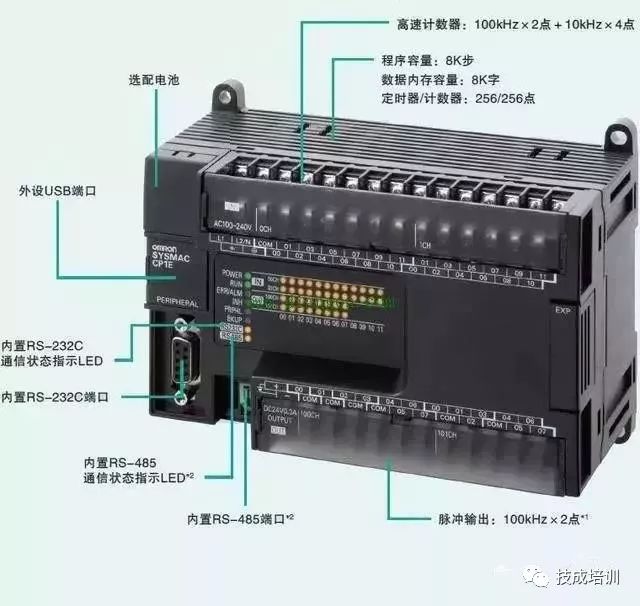
3. PLC Output Ports The maximum current that can pass through varies by PLC model, with most ranging between 1A and 2A. When the load current exceeds the maximum rated current of the PLC port, an intermediate relay is generally needed to connect external contactors or other devices.
Correct wiring of the PLC is a prerequisite for effective operation, and it is a fundamental skill of PLC. Mastering the common knowledge of PLC wiring is very necessary.
Share with friends to broaden knowledge
ClickRead Original to learn about electrical engineering, PLC, variable frequency servo, CNC robots, and more.