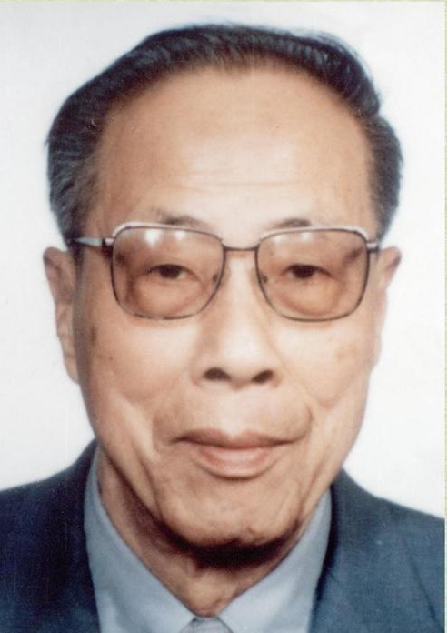
Pioneering Example | Chen Fangyun: Devoted to National Prosperity, Striving Not for Personal Gain.




A star in the sky bears his name,
And the whole nation mourns for him alone.
He lives in a dilapidated hut,
Yet he has created 200 billion wealth for China,
Those earth-shattering events that affect every Chinese person’s fate,
Hide the shadow of the same person behind them,
His name is Chen Fangyun.

Personal Achievements
Educational Journey
1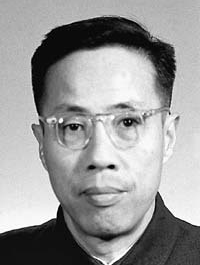
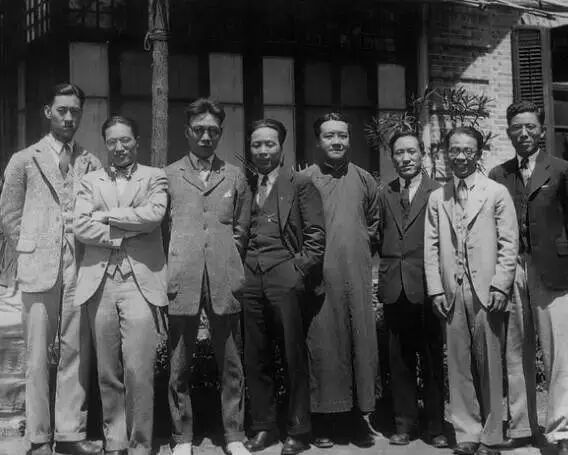
 Chen Fangyun was born in Huangyan, Zhejiang Province. He began his education at the age of 5, starting with the “Analects” and “Mencius.” In the autumn of 1928, at the age of 12, he entered Huangyan County High School, where he was a respectful and studious student, excelling in his main subjects such as Chinese, Mathematics, and English, laying a solid foundation for his studies.Before graduating from junior high, Chen Fangyun wrote a small article titled “Sending Autumn” in the graduation yearbook. This article candidly expressed his views on life. He believed that whether it is autumn or not is irrelevant; for a person, it is essential to strive regardless of the season.He graduated from Tsinghua University in 1934. During the War of Resistance, he passionately participated in the “December 9th” student patriotic movement, firmly establishing his ideals and aspirations for scientific salvation and national rejuvenation.In 1944, Chen Fangyun took the entrance exam for radio engineering in the UK and unexpectedly passed, studying abroad for four years, diligently honing his skills. At the British Radio Factory Research Laboratory, he immersed himself in experiments and successfully developed the first shipborne radar with his team.
2
Serving the Nation through Technology
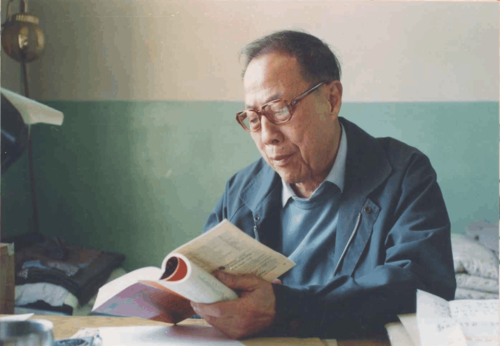
In 1948, Chen Fangyun returned to China with world-class electronic engineering technology, working at the Central Research Institute of Physiology and Biochemistry, where he developed electronic instruments and equipment in the field of bioelectronics.
Chen Fangyun set his life development direction towards the rejuvenation of the motherland and the nation, gradually establishing his ideal of scientific salvation, as he later recalled: “Participating in student movements and experiencing the revolutionary atmosphere gradually led me to volunteer to follow the Communist Party, working and contributing everything for the rejuvenation of the motherland and the nation… If there is any achievement in my work, it is precisely from this determination.”
After the founding of the People’s Republic of China, developing science and technology became an urgent task. In addition to continuing his research in electronics, Chen Fangyun actively responded to the party’s call, participating in various political activities and serving as the chairman of the trade union at the Shanghai branch of the Chinese Academy of Sciences. In 1953, he was transferred from Shanghai to Beijing to oversee the establishment of the Institute of Electronics. In 1954, the Electronics Institute was merged into the Physics Institute led by Qian Sanqiang, forming the Electronics Research Room.
In 1957, after the Soviet Union launched its first artificial satellite, Chen Fangyun conducted radio Doppler frequency measurements on the satellite and, together with colleagues from the observatory, calculated the satellite’s orbital parameters. This method became one of the main technologies used for tracking and orbiting artificial satellites launched by China in the future. In 1958, he shifted to research on pulse technology, successfully developing an internationally leading nanosecond pulse sampling oscilloscope. In 1963, Chen Fangyun and his colleagues developed a multi-channel pulse analyzer for atomic bomb explosion testing, which played a crucial role in atomic bomb explosion experiments. In 1964, he led a team to develop a single-pulse radar system for use on aircraft, which was widely used in China’s fighter jets.
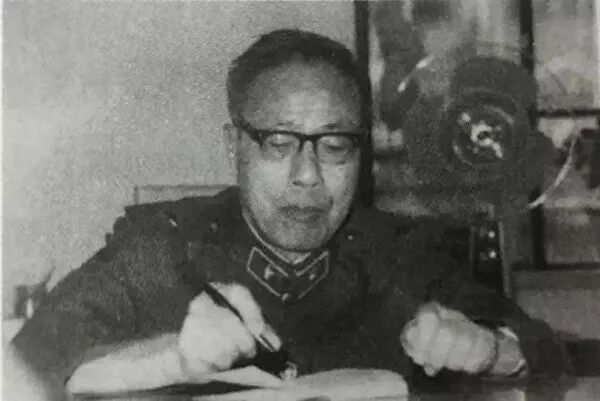
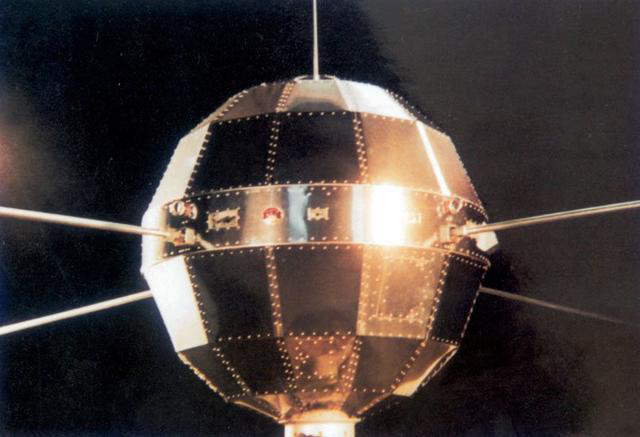
In 1965, the development of China’s first artificial Earth satellite officially began, with Chen Fangyun serving as the overall technical leader for satellite measurement and control, undertaking the arduous tasks of developing ground measurement control equipment, constructing stations and centers, and calculating orbits. After field investigations with other technicians, four Doppler measurement stations were established in Xinhua, Nanning, Kunming, and Hainan. This resolved three critical issues in satellite measurement: whether the satellite had entered orbit, whether the satellite’s orbit met predetermined requirements, and when the satellite reached a specific position. On April 24, 1970, China’s first artificial Earth satellite, “Dongfanghong-1,” was launched, and the ground observation system quickly captured the target for continuous tracking, measurement, and calculation, timely predicting the satellite’s passage over various parts of the world.
Chen Fangyun insisted on starting from China’s national conditions, following a path of developing space measurement and control with Chinese characteristics. Shortly after the successful launch of China’s first artificial satellite in April 1970, he proposed a plan to launch synchronous communication satellites. After detailed research and calculations, Chen Fangyun suggested using a “microwave unified measurement and control system” for tracking, orbiting, telemetry, and remote control during the launch and positioning of communication satellites, rather than dividing them into independent systems to perform their respective functions. The unified system greatly saved the volume and weight of the satellite payload, especially the number of onboard antennas, while also significantly reducing the scale and investment of ground equipment. This system played an extremely important role in the launch of China’s communication satellites from 1984 onwards, and Chen Fangyun and the scientific and technological personnel involved in this work were awarded the National Science and Technology Progress Award Special Prize.
Attitude Towards Life
3
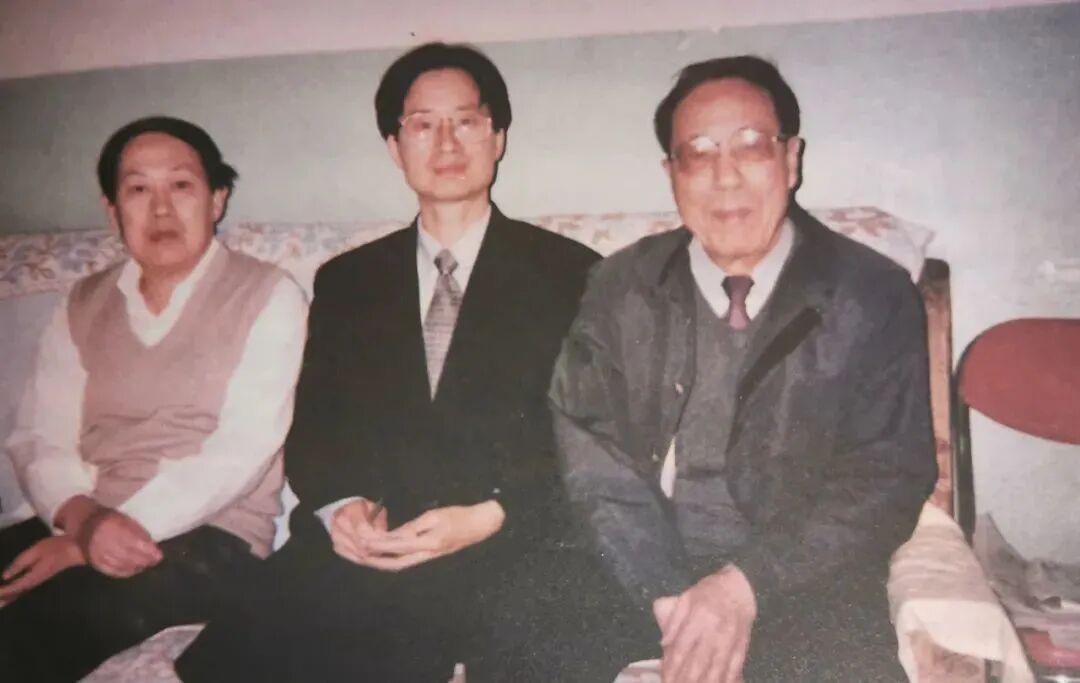
Chen Fangyun’s Life
“A skilled person in the capital, loves research and practicality, does not seek fame; to be called an expert is an overstatement, I am ashamed that my compatriots strive to surpass me.” This is Chen Fangyun’s self-encouragement and humility; “First, one must love the country; second, one must work hard; third, one must be indifferent to fame and fortune” is his requirement for his family; “Patriotic, diligent, humble, rigorous, knowledgeable, responsible, valuing education, and having foresight” is how his colleagues evaluated Chen Fangyun. Chen Fangyun joined the Communist Party of China in 1977, and throughout his long-term scientific research practice, he adhered to the concept of serving the people, demonstrating a rigorous and innovative scientific style, a noble character of diligence and dedication, and a political character of loyalty and responsibility.
Life is simple, the motherland is supreme. Chen Fangyun held high standards for work but low standards for life. Until his death, there was not a single decent piece of furniture in his home, and he was reluctant to change even the faded cloth curtains. He always flew economy class on business trips and only stayed in standard rooms at hotels, never in suites. However, he often helped colleagues in financial difficulties, sponsored young people to take exams and study abroad, and established a student reward fund for his hometown’s alma mater; when he learned that a student at Tsinghua University needed help, he donated 10,000 yuan, which was a considerable amount at that time. In the memory of his son, Chen Xiaodong, his parents made numerous donations like this, “My parents lived a life of poverty, and all the money they earned was donated to those in need while they were alive; our later lives depend on our own hard work.”
Chen Fangyun was extremely strict with his time management, dedicating almost all his time to scientific research. To save time, he even learned to cut his own hair, believing that going to a barber was a waste of time; either the barber was waiting for customers or the customers were waiting for the barber, and the wasted time in between was extremely regrettable. He did not wear clothes with zippers because he once spent time fixing a zipper; he refused to move to a larger house because he disliked the time wasted in moving; during holidays, he mostly chose to go to the library.
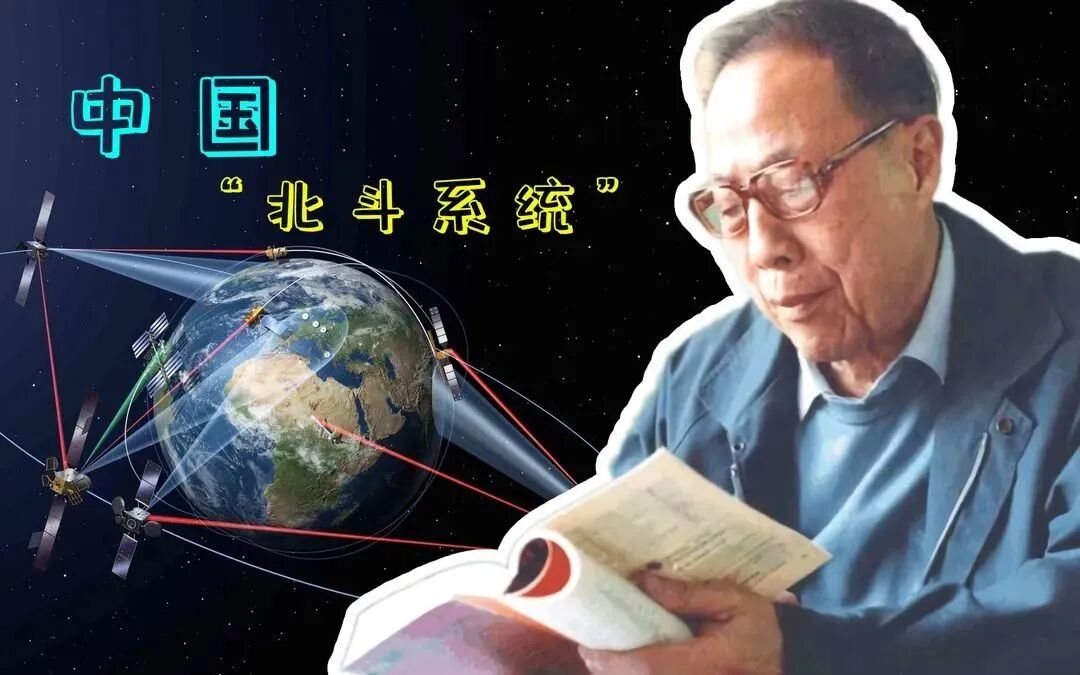
Chen Fangyun dedicated his life to the prosperity of the nation, remaining busy with research on small satellites (i.e., Beidou satellites) until he was hospitalized due to illness, continuing his research even in the hospital. In 2001, with the approval of the International Astronomical Union’s Minor Planet Naming Committee, the asteroid with the international permanent number 10929 was named “Chen Fangyun Star.” The Milky Way is vast, and the Beidou constellation shines brightly. Looking up at the sky, “Chen Fangyun Star” and the Beidou satellites complement each other, guiding and inspiring a new generation of scientific and technological workers to strive forward with determination, consciously fulfilling the mission of high-level technological self-reliance and self-improvement.
Conclusion
The path of life must be winding,Yet I must set my aspirations,
Devoted to national prosperity,
Striving not for personal gain.
Previous Recommendations



Text and Image Editor | Ren Keke
Editor | Wang Qianqian