1. The Three Elements of Musical Sound
1. Pitch refers to the highness or lowness of a sound, determined by frequency.
In physics, the speed of an object’s vibration is described by the frequency, which is the number of vibrations per second. A faster vibration results in a higher frequency and a higher pitch; a slower vibration results in a lower frequency and a lower pitch.
2. Loudness refers to the strength or size of a sound, commonly known as volume. The determining factor is amplitude.
The amplitude is the extent of the object’s vibration. Loudness is related not only to the amplitude of the sound source but also to the distance of the listener from the sound source.
3. Timbre refers to the quality or character of a sound, also known as tone color, determined by the material and structure of the sound source.

2. Key Points for Distinguishing the Three Elements of Musical Sound from Waveforms
1. The number of waveforms, or the density of the waveforms, indicates the speed of vibrations over the same period, which refers to pitch.
2. The height of the waveform, which is the vertical distance between the highest and lowest points of the waveform, indicates the size of the amplitude, which refers to loudness.
3. The shape of the waveform, specifically the small differences in the waveform, indicates timbre.
3. Typical Example Questions
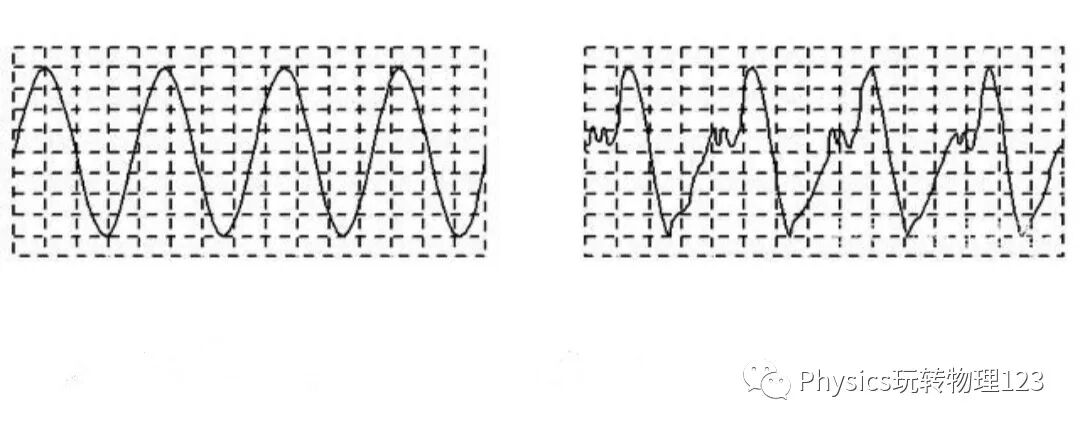
1. As shown in the figure, the waveforms produced by a tuning fork and a piano are displayed on the same oscilloscope. The two sets of sound waves ( )
 A. Different pitches
B. Different loudness
C. Different timbres
D. Different pitches, loudness, and timbres
Analysis: From the figure, it can be seen that the frequencies of the sound vibrations in both figures are the same, thus the pitches are the same; both have the same amplitude, so the loudness is the same; however, their waveforms are different, and the sound sources are different, hence the timbres are different. Therefore, the answer is C.
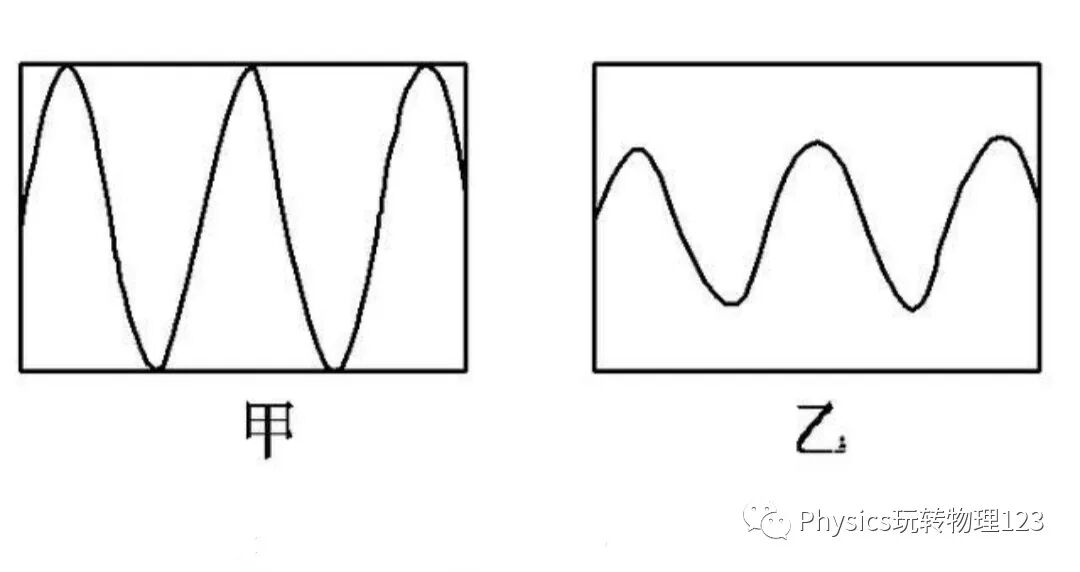
2. As shown in the figure, the two sets of sound waves captured by the oscilloscope when striking a tuning fork over the same period are as follows. Which of the following statements is correct? ( )
 A. The pitch of A is lower than that of B
B. The volume of A is smaller than that of B
C. The pitch of A is higher than that of B
D. The volume of A is larger than that of B
Analysis: The pitch of a sound can be compared by the density of the waveforms; loudness, also known as volume, can be compared by the amplitude of the waveforms. By comparing figures A and B, it can be seen that the number of vibrations over the same period is equal, which means their pitches are the same. The amplitude of waveform A is greater than that of B, so A’s volume is larger than B’s, thus the answer is D.
3. When the sound signal from a tuning fork with a frequency of 256Hz is input into the oscilloscope, the waveform displayed is as shown. If the sound signal from a tuning fork with a frequency of 512Hz is input into the same oscilloscope setup, its waveform may be ( )
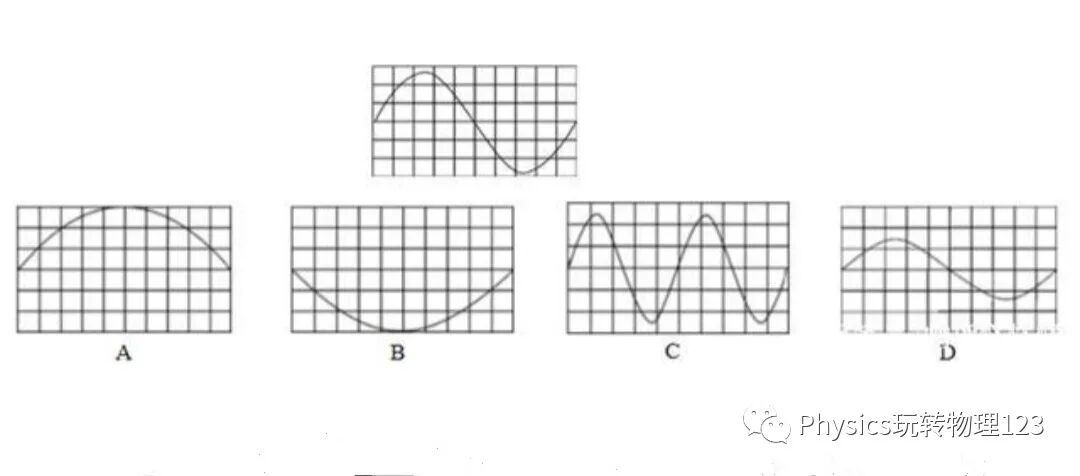
Analysis: First, it is clear that the waveforms produced by the 512Hz tuning fork and the 256Hz tuning fork are the same. Since 256Hz is less than 512Hz, it can be seen from the figure that option A has a frequency that is too low, option B has a different waveform, option C has the same waveform but a higher frequency, and option D has the same frequency. Therefore, option C meets the requirements. Thus, the answer is C.
4. (1) Please list an instrument you know, explain how it produces sound, and how it changes pitch and loudness.
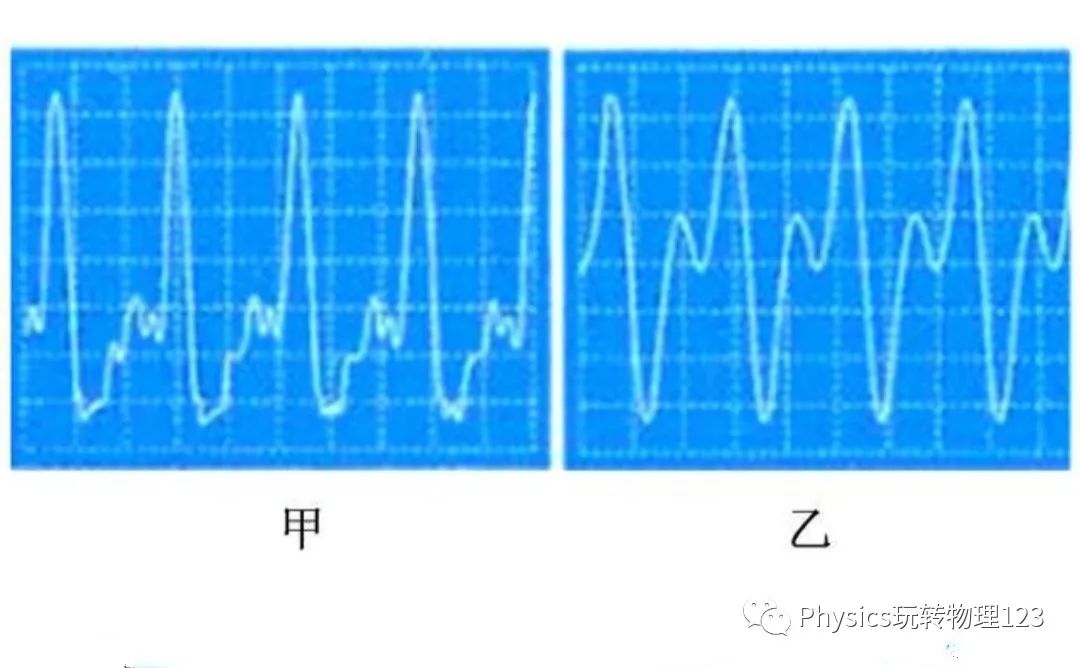
(2) The figure shows two waveforms obtained from the sound produced by the instrument input into the oscilloscope. Please compare the differences and similarities of these two sounds in terms of pitch, loudness, and timbre.
 Analysis: (1) Erhu: By plucking the strings, the strings vibrate, producing sound. This indicates that sound is generated by the vibration of the strings. The pitch can be changed by altering the length of the strings; the longer the string, the lower the pitch. The loudness can be changed by varying the force applied to the strings, with greater force resulting in greater loudness.
(2) In the waveforms, both have the same amplitude, so the loudness is the same; the time required for one complete vibration is the same, both being two divisions, indicating the frequencies are the same, so the pitches are the same; however, the shapes of the waves during each vibration are different, indicating different timbres.
5. Several students from the music group created their own instruments, and the waveform diagrams of the sounds produced are shown below. Which of the following statements is incorrect? ( )
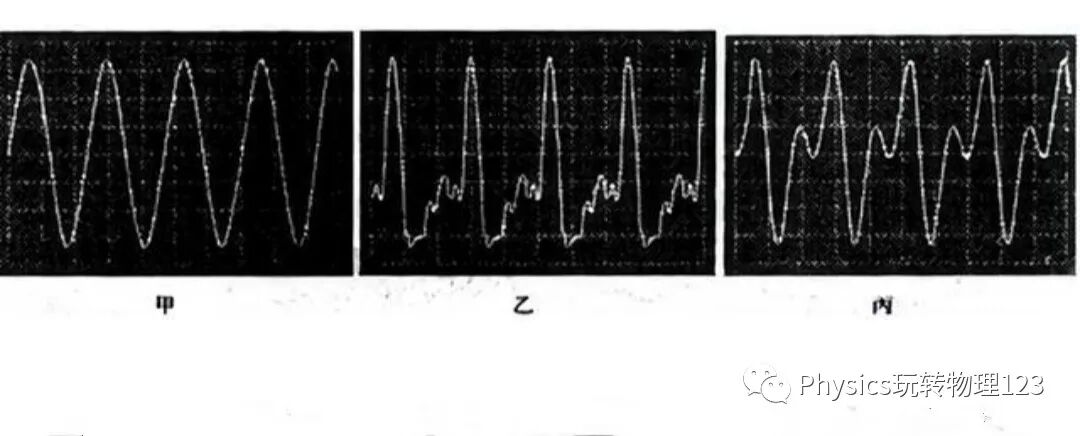 A. All instruments vibrate when producing sound
B. The timbres of the instruments are the same
C. The loudness of the instruments is the same
D. The pitches of the instruments are the same
Analysis: Sound is produced by the vibration of objects, so all instruments vibrate when producing sound, making option A correct and not the answer. From the waveform diagrams, it can be seen that the three instruments have the same frequency and pitch, and the same amplitude and loudness. However, the waveform diagrams are not identical due to the different materials and structures of the instruments, resulting in different timbres. Therefore, option B is incorrect and is the answer.

Special Statement:
1. Due to my limited professional and editing skills, there may be mistakes or errors during the editing process. I kindly ask readers to contact me promptly if any issues are found, and I will correct them immediately to provide accurate information to all readers. Thank you!2. This public account is a platform for learning and communication, with no commercial purpose. Some resources come from websites, and if there is any infringement, please contact me promptly, and I will delete them immediately. Thank you for your understanding.(WeChat ID: Andy)