
Overview of Attack Principles
This complex HTTP request smuggling attack exploits the differences in parsing behavior between front-end proxy servers and back-end application servers. The new technique uses malformed chunked transfer encoding to bypass existing security controls and inject unauthorized secondary requests into web applications.
Key Points
- Exploiting malformed HTTP chunked encoding to create parsing discrepancies between front-end and back-end
- By injecting hidden secondary requests to bypass security controls
- It is recommended to apply patches and migrate to HTTP/2 protocol
Analysis of HTTP Smuggling Vulnerabilities
This attack targets a fundamental vulnerability in the implementation of the HTTP/1.1 protocol, where different servers parse ambiguous request formats inconsistently. Attackers can leverage these parsing discrepancies to bypass Web Application Firewalls (WAF), Content Delivery Networks (CDN), and load balancers, potentially gaining unauthorized access to sensitive back-end resources.
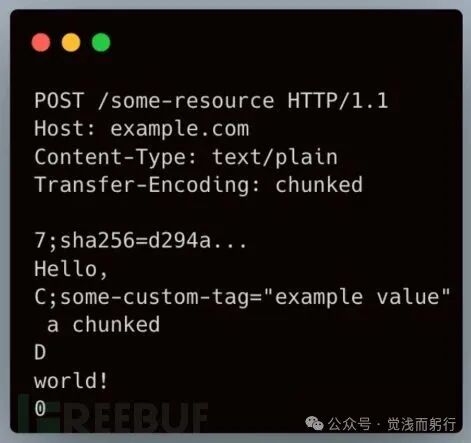
According to RFC 9112, each chunk contains a header that represents the size in hexadecimal format, followed by an optional chunk extension starting with a semicolon. Researchers have found that attackers can manipulate chunk extension parsing by sending malformed headers containing bare semicolons (without the correct extension).
Details of Attack Implementation
This parsing discrepancy leads to different interpretations of malformed syntax between front-end systems and back-end servers. The attack pattern is as follows: the attacker sends a chunk size line ending with a semicolon but without an extension, causing the front-end parser to treat the entire sequence as a single request, while the back-end parser interprets the newline after the semicolon as the end of the chunk header.
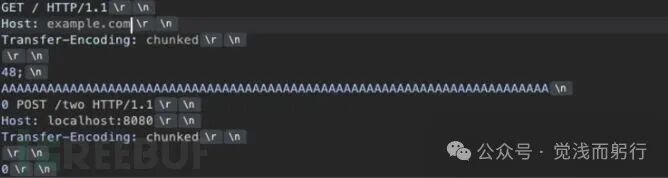
This allows the attacker to embed a secondary HTTP request after a zero-length chunk, which the back-end system processes as a legitimate independent request, effectively bypassing front-end security validation.
Root Cause of Vulnerability and Mitigation Measures
The vulnerability stems from inherent design flaws in HTTP/1.1, particularly its text-based parsing method and the various ways to express message boundaries through Content-Length headers, Transfer-Encoding specifications, or delimiters. Many server implementations prioritize compatibility over strict adherence to RFC standards, leading to lax parsing of malformed requests and creating exploitable inconsistencies.
Security experts emphasize that affected systems should deploy comprehensive patches, and organizations that keep their software up to date can achieve full protection. However, the most effective long-term mitigation measure is to migrate to the HTTP/2 protocol, which employs a binary framing mechanism that eliminates ambiguous parsing scenarios, thus preventing request smuggling attacks.
This incident highlights the importance of protocol-level security considerations and reveals the fundamental vulnerabilities of HTTP/1.1—despite existing protective measures, these vulnerabilities continue to provide opportunities for complex bypass techniques.
References:
New HTTP Smuggling Attack Technique Let Hackers Inject Malicious Requests