Despite the increasing attention on the memory capabilities of AI agents, existing solutions inherently have limitations. Most solutions rely on flat, narrow memory components, which restrict their ability to personalize, abstract, and reliably recall user-specific information.MiRIX Conversation Window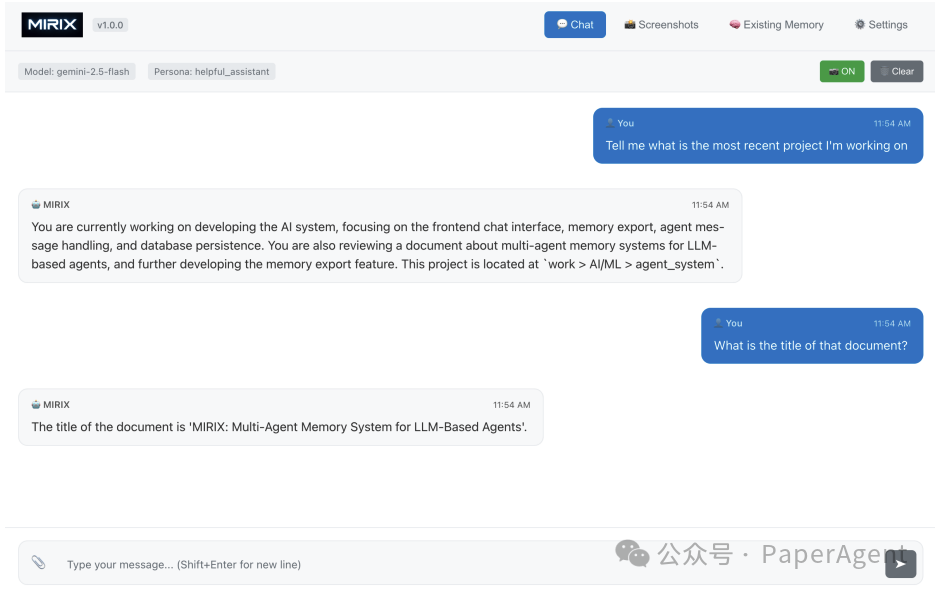 To address this, we proposeMIRIX, a modular Multi-Agent Memory System that redefines the future of AI memory by tackling the most critical issue in the field—enabling language models to truly possess memory capabilities. Unlike previous methods, MIRIX breaks through the limitations of text and incorporates rich visual and multimodal experiences, making memory genuinely useful in real-world scenarios.
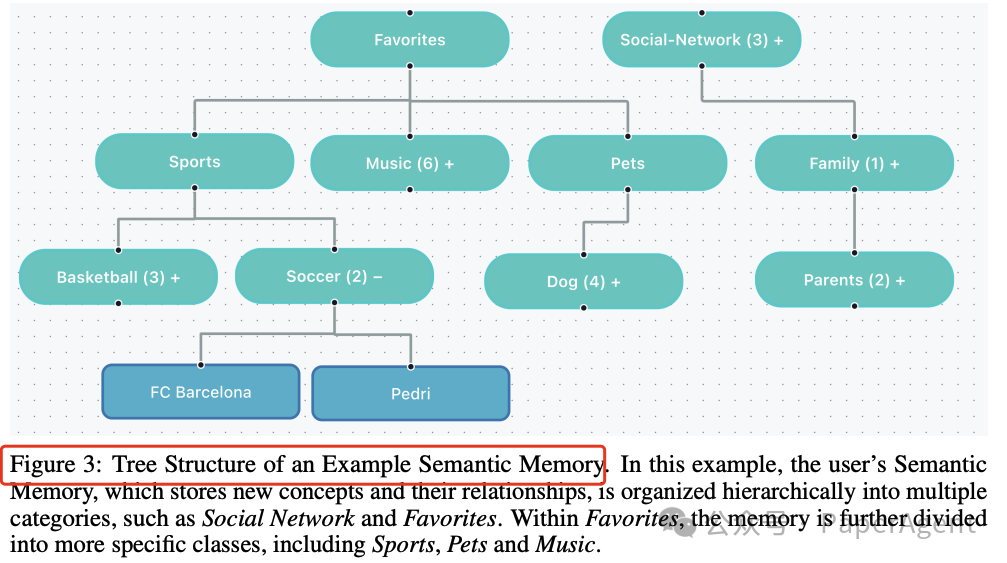
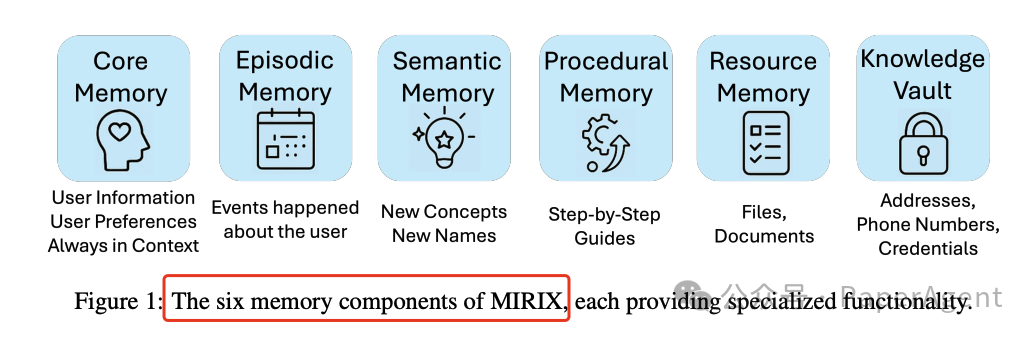 MIRIX consists of six different, carefully designed types of memory: Core Memory, Episodic Memory, Semantic Memory, Procedural Memory, Resource Memory, and Knowledge Vault, paired with a multi-agent framework that can dynamically control and coordinate updates and retrievals. This design enables agents to persistently store, reason, and accurately retrieve diverse, long-term user data on a large scale.Semantic Memory: displayed in a tree structure, such as the user’s social network, interests, etc.
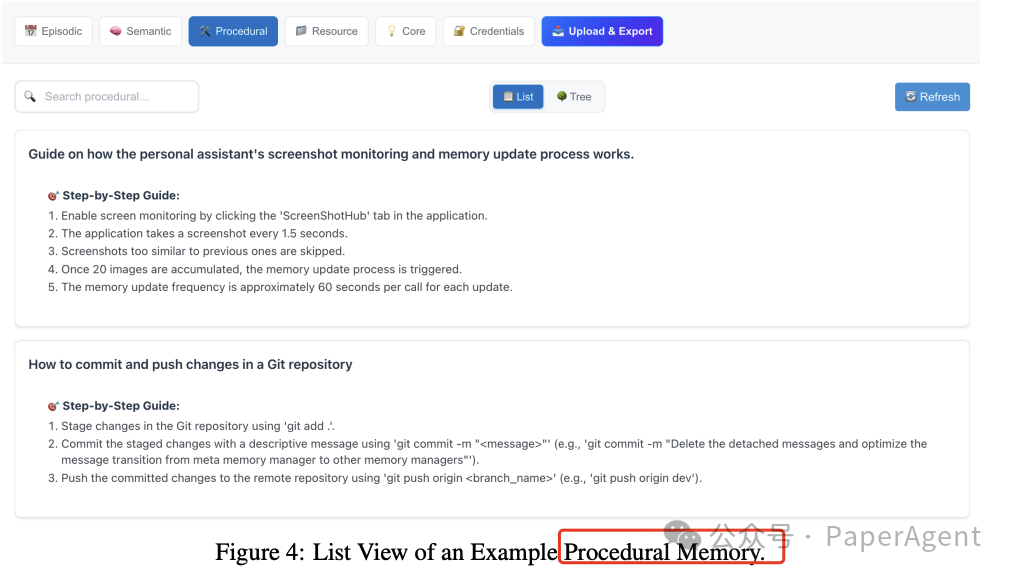
 Procedural Memory: displayed in a list format, such as frequently visited locations, task steps, etc.
 MIRIXMethod Details:
-
Structure of Memory Components:
-
Core Memory: Stores high-priority, persistent information that is always visible to the agent, divided into two modules: “Personality” and “Human”.
-
Episodic Memory: Stores timestamped events and time-based interactions, similar to structured logs or calendars.
-
Semantic Memory: Stores abstract knowledge and factual information that is not tied to specific times or events.
-
Procedural Memory: Stores structured, goal-oriented processes, such as operation flows and interaction scripts.
-
Resource Memory: Handles documents, transcriptions, or multimedia files that the user is actively engaged with.
-
Knowledge Vault: Serves as a secure repository for sensitive information (such as credentials, addresses, contact information, and API keys).
-
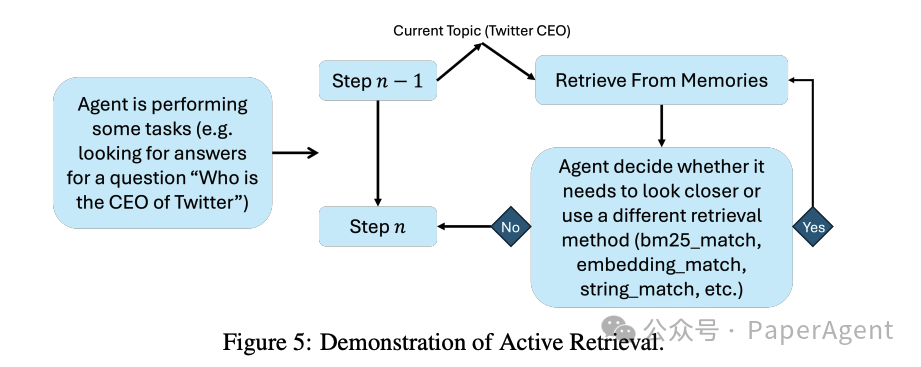
Retrieval Design: MIRIX supports various retrieval functions, including embedding matching, BM25 matching, and string matching, and is expanding to include more diverse retrieval strategies.
-
-
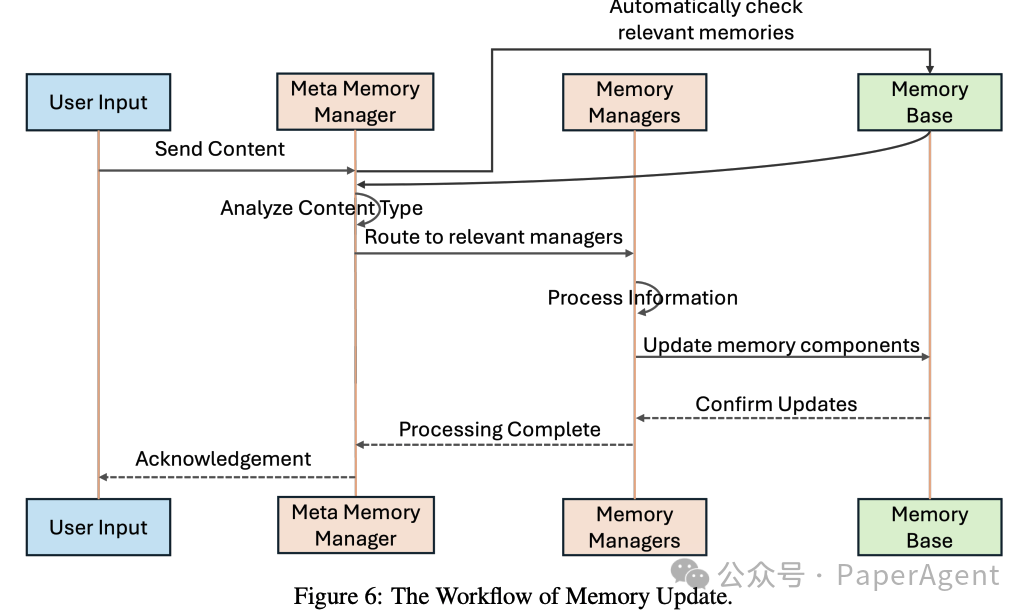
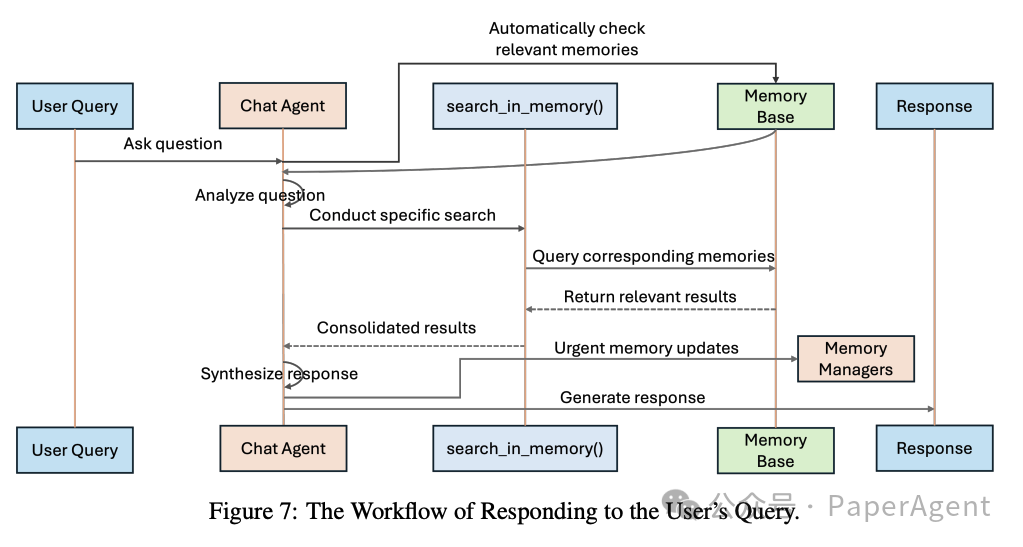
Multi-Agent Workflow: When user input is received, the system first searches the memory repository, then passes the retrieved information and user input to the meta-memory manager, which analyzes the content and determines the relevant memory components, routing the input to the appropriate memory manager for parallel updates.
-
First, on ScreenshotVQA, a multimodal benchmark containing nearly 20,000 high-resolution computer screenshots that require deep contextual understanding, existing memory systems are unable to apply. MIRIX improved accuracy by 35% over the RAG baseline in this test while reducing storage requirements by 99.9%.On LOCOMO, a long dialogue benchmark with unimodal text input, MIRIX achieved a state-of-the-art performance of 85.4%, far exceeding existing baselines. These results indicate that MIRIX sets a new performance standard for memory-enhanced LLM agents.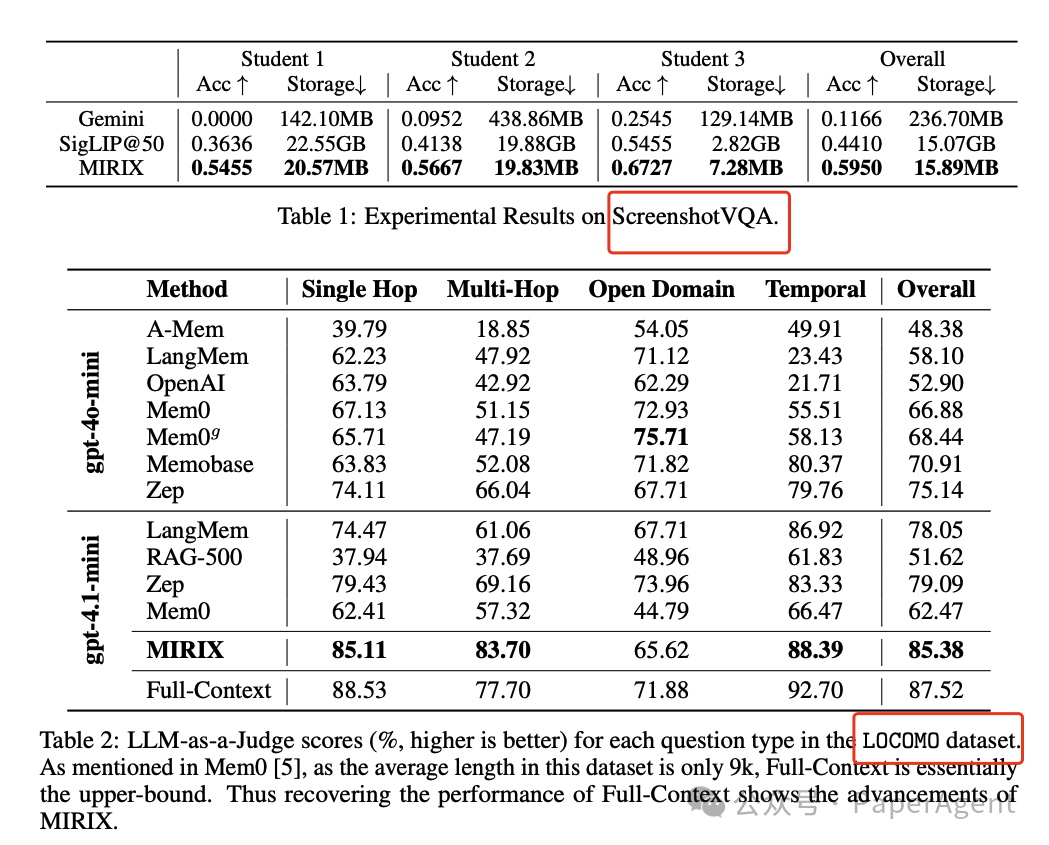
https://arxiv.org/pdf/2507.07957MIRIX: Multi-Agent Memory System for LLM-Based Agentshttps://github.com/Mirix-AI/MIRIXhttps://mirix.io/
Recommended Reading
-
• Hands-on Design of AI Agents: (Orchestration, Memory, Plugins, Workflow, Collaboration)
-
• Challenging Transformers: Google’s New Architecture Mixture-of-Recursions Doubles Inference Speed
-
• OpenAI, Google, Anthropic, and others Rarely Collaborate on a Paper: New Techniques for the Safety of Agentic AI Systems!
• AI+OCR Practical Implementation: 9 Industry Cases + Comprehensive Solutions (Download Included)
Feel free to follow my public account “PaperAgent“, where I share a large model (LLM) article every day to exercise our thinking, with simple examples and not-so-simple methods to enhance ourselves.