The above ☝️☝️☝️ is about a food-related public account, where each recipe has detailed steps and high-definition images, making it easy for kitchen novices to get started. Follow it to unlock more deliciousness and keep your meals surprising throughout the seasons!
1. Basic Concepts of MQTT Protocol
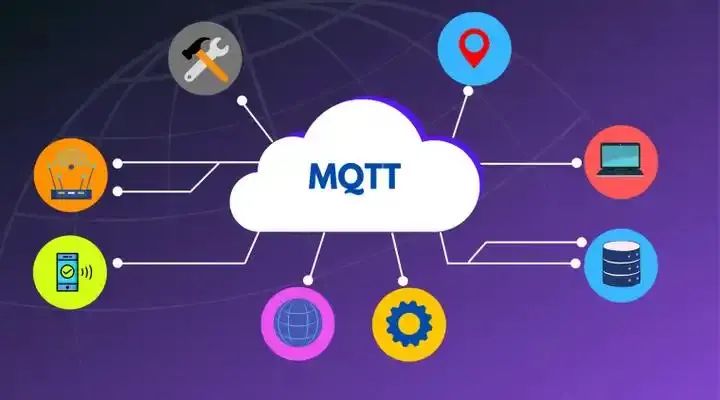
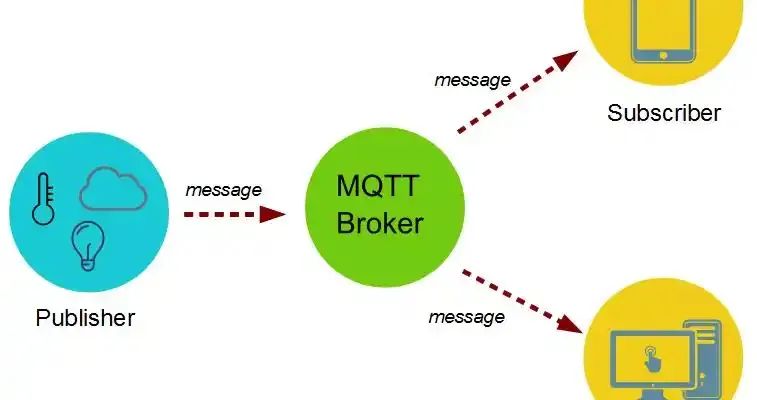
(1) Origin of MQTT Protocol: The MQTT protocol was initially designed to meet the communication needs between sensors deployed in remote areas and control centers in the oil and gas industry. These areas often have weak network infrastructure, limited and unstable bandwidth, making traditional communication protocols difficult to adapt. The MQTT protocol emerged due to its lightweight and low bandwidth consumption characteristics, and after years of development, it has become one of the important standards in the field of IoT communication. (2) Definition and Essence of MQTT Protocol: MQTT, which stands for Message Queuing Telemetry Transport, is essentially a message transmission protocol based on a publish/subscribe model. In this model, the message sender (publisher) and receiver (subscriber) do not communicate directly but interact through an intermediate message broker.
The publisher publishes messages to specific topics, while the subscriber subscribes to topics of interest from the message broker. When a new message is published to a topic, the message broker pushes that message to all subscribers who have subscribed to that topic. This decoupled communication method greatly enhances the flexibility and scalability of the system. 2. Characteristics of MQTT Protocol (1) Lightweight Design: 1. Streamlined Protocol Header: The message header of the MQTT protocol is designed to be extremely concise, with a minimum size of only 2 bytes. Compared to some traditional communication protocols, its header overhead is significantly reduced. This allows MQTT to run efficiently on resource-constrained devices such as microcontrollers and sensors.
These devices typically have limited memory and computing power, and MQTT’s lightweight characteristics make it easy to adapt without placing excessive burdens on the devices. 2. Low Bandwidth Requirement: During data transmission, the MQTT protocol uses a compact encoding method to minimize unnecessary data transmission. Whether in narrowband networks or unstable network environments, MQTT can complete message transmission with low bandwidth consumption.
For example, in some remote monitoring scenarios, devices communicate with servers through 2G or 3G networks, and the MQTT protocol can ensure stable data transmission under limited bandwidth conditions, ensuring the normal operation of the monitoring system. (2) Reliable Message Transmission
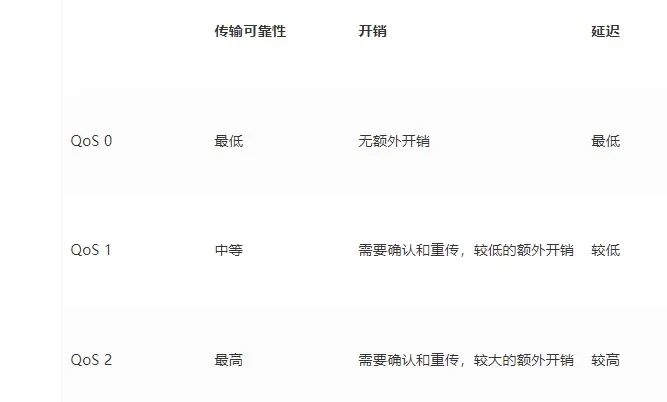
1. QoS Levels of Service Quality: The MQTT protocol supports three different levels of Quality of Service (QoS) to meet the reliability requirements of messages in different application scenarios. • QoS 0 (At Most Once Delivery): After sending the message, it does not wait for confirmation from the receiver and sends the next message directly. This method has the highest transmission efficiency, but messages may be lost due to network issues. It is suitable for scenarios where real-time message delivery is required, but accuracy is less critical, such as the rapid transmission of real-time sensor data, where losing one or two pieces of data does not significantly affect the overall business. • QoS 1 (At Least Once Delivery): After sending the message, it waits for confirmation from the receiver. If confirmation is not received within the specified time, the message is resent. This method ensures that the message is eventually received but may result in duplicate receipts. Most IoT application scenarios can adopt QoS 1, ensuring reliable message transmission without incurring excessive overhead like QoS 2. • QoS 2 (Exactly Once Delivery): Through complex handshake and confirmation mechanisms, it ensures that messages are received only once. This is the highest level of service quality and is suitable for scenarios where message accuracy is critical, such as the transmission of financial transaction data or medical device data, where any loss or duplication of data could lead to severe consequences. 2. Persistent Sessions: The MQTT protocol supports persistent session functionality. When a client connects to the message broker, it can choose to set a persistent session flag. If set to persistent session, even if the client disconnects, the message broker retains the client’s subscription information and unprocessed messages. When the client reconnects, it can continue to receive previously unprocessed messages, ensuring continuity and reliability of message transmission. (3) Flexible Topic Structure: 1. Hierarchical Topic Naming: MQTT topics use a hierarchical naming structure, with “/” as the separator. For example, “home/room1/temperature” represents the temperature data topic for the first room in a home.
This hierarchical naming method gives topics a clear structure, making them easy to manage and understand. Different devices and functional modules can be distinguished through different topics, facilitating message publishing and subscription. 2. Wildcard Subscriptions: The MQTT protocol supports wildcard subscriptions, including “+” and “#” wildcards. “+” represents a single-level wildcard. Wildcard subscriptions greatly enhance subscription flexibility, allowing clients to subscribe to a group of related topics based on their needs without subscribing to each specific topic individually. 3. Application Areas of MQTT Protocol
(1) Smart Home Field: 1. Device Interconnectivity: In smart home systems, various smart devices such as smart bulbs, smart plugs, smart locks, and smart cameras connect to home gateways or cloud servers via the MQTT protocol. Users can publish control instructions to the corresponding topics through a mobile app or voice assistant to achieve remote control of the devices.
For example, on the way home from work, a user can publish a message to the “home/light/control” topic to turn the lights on or off. Meanwhile, smart devices can also publish their status information, such as the brightness of the bulbs and the power consumption of the plugs, to the corresponding topics for real-time viewing by the user. 2. Scene Linkage: Based on the publish/subscribe model of the MQTT protocol, smart home systems can achieve scene linkage functionality. For instance, when a smart lock detects a user returning home (publishing a “home/door/open” message), the system can automatically subscribe to that topic and trigger a series of actions, such as turning on the lights (publishing a command to the “home/light/control” topic) and adjusting the air conditioning temperature (publishing a command to the “home/airconditioner/control” topic).
(2) Industrial IoT Field: 1. Device Monitoring and Management: In industrial production, numerous machines and sensors are distributed across the production site. Through the MQTT protocol, these devices can publish operational status data, such as temperature, pressure, and speed, in real-time to the monitoring system’s topics. Management personnel can subscribe to these topics to understand the operational status of the devices in real-time and promptly identify potential equipment failures.
For example, when the temperature of a motor is too high, the temperature sensor on the motor will publish temperature data to the “factory/machine1/temperature” topic. Once the monitoring system subscribes to that topic and detects that the temperature exceeds the threshold, it will immediately issue an alarm to notify maintenance personnel for handling. 2. Remote Control and Debugging: For some industrial equipment located in remote areas or hazardous environments, engineers can achieve remote control and debugging through the MQTT protocol. By publishing control commands to the corresponding topics of the devices, engineers can remotely start or stop devices and adjust their operational parameters. Meanwhile, devices can also send debugging information and fault logs back to the engineers, improving the efficiency and convenience of equipment maintenance.