Recently, Leju (Shenzhen) Robotics Technology Co., Ltd. completed a business change, adding shareholders such as Moutai Jinshi Industrial Fund, Dongfang Precision, and CITIC Securities Investment, with registered capital increasing from 1.90235 million RMB to 2.268683 million RMB. The new lineup of shareholders includes national-level entities, cross-industry companies, and experienced investment institutions, among which the entry of Moutai’s fund is particularly noteworthy.
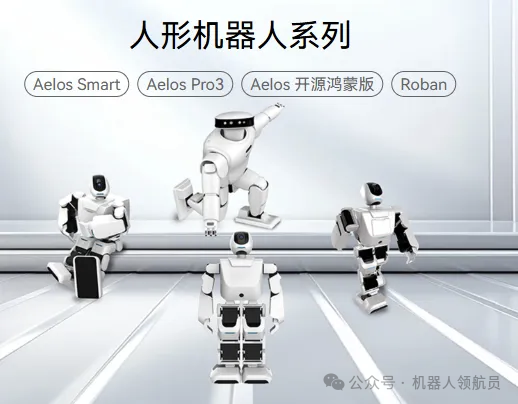
As a leader in the liquor industry, Moutai has been actively promoting digital transformation in recent years, piloting warehouse inspection robots in 2018, investing in the Tan Factory packaging logistics park storage project in March 2025, and entering the large model technology sector in May. This cross-industry bet on humanoid robots further expands its technological layout.
Leju Robotics was established in 2016 by a team of post-90s graduates from Harbin Institute of Technology, focusing on core robotic technology research and multi-scenario applications. Its product matrix is rich, covering general humanoid robots, educational robots, logistics robots, and more, with application scenarios involving scientific research education, smart healthcare, industrial manufacturing, and other fields.
The company has many highlights in its development: in 2016, it launched the country’s first small bipedal educational robot “Aelos,” which entered over 5,000 schools nationwide and was showcased during the “8 minutes of Beijing” at the Pyeongchang Winter Olympics; in 2022, it participated in the development of curling robots to assist training for the Beijing Winter Olympics; in December 2023, it released the high-dynamic humanoid robot “Kuafu,” which is the country’s first open-source HarmonyOS robot capable of jumping and adapting to multiple terrains, with a localization rate of over 90% for core components, becoming its breakthrough product.
The launch of “Kuafu” has led to a series of collaborations: at the end of 2023, it reached a partnership with Haier to explore smart home scenario applications; in March 2024, it jointly exhibited humanoid robots for home scenarios, demonstrating skills such as laundry and watering plants; in the same year, it collaborated deeply with Huawei Cloud to create embodied intelligent solutions using the Pangu large model, with related products showcased at the Huawei Developer Conference; in June, it jointly released a 5G-A embodied intelligent robot with China Mobile and Huawei, tackling technical challenges such as multi-machine collaboration.
In terms of industrial layout, Leju is taking a three-step approach: first focusing on research scenarios, then expanding into industrial scenarios such as the automotive industry and 3C factories, and finally laying out the home healthcare field. Currently, it has cooperated with multiple local governments, enterprises, and universities to promote the implementation of industrial humanoid robot solutions and explore healthcare scenario applications, with plans to achieve a production volume of 1,000 to 2,000 humanoid robots by 2025.
Currently, the humanoid robot industry is on the brink of explosion, with continuous technological breakthroughs moving from the laboratory to small-scale production. As AI integrates with hardware and sensor upgrades occur, humanoid robots will gradually transition from concept to tool in family, industrial, and healthcare scenarios, ultimately becoming partners of humanity.