IntroductionMedical robotics technology is leading innovation in various fields such as precision surgery, rehabilitation therapy, and patient assistance. Existing rigid robots have high precision but lack flexibility, posing risks of tissue damage and difficulties in natural interaction with humans. Therefore, the use of soft robotics technology, which utilizes soft materials, has garnered significant attention.Soft robots are made from materials such as silicone, hydrogels, and electroactive polymers (EAP), which have the advantage of naturally adapting to biological tissues. Additionally, by employing pneumatic, hydraulic, and smart material-based driving methods, they achieve lighter and safer interactions compared to traditional rigid robots. Thanks to this characteristic, soft robots have been actively researched in various medical fields, including implantable medical devices, rehabilitation aids, telemedicine systems, and surgical robots. This article aims to explore the latest research trends surrounding implantable medical robots and surgical assistance haptic systems that utilize soft robotics.Applications of Soft Robotics in MedicineImplantable Medical Robots
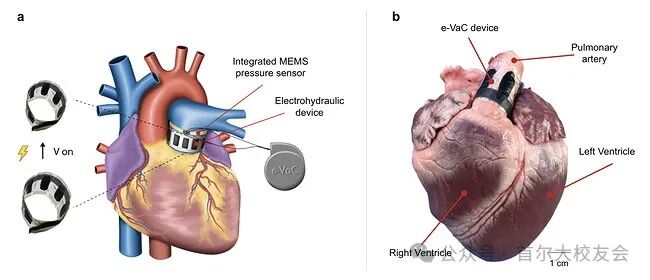
Implantable medical robots are devices implanted inside the body to assist specific functions or enhance treatment outcomes. Existing implantable medical devices are primarily made from rigid materials such as metals and plastics, which may cause adverse reactions like inflammation and fibrosis due to friction with tissues during long-term use. Furthermore, the fixed mechanical structure makes it difficult to flexibly respond to physiological changes in the body.To address these issues, transplantable medical robots utilizing soft robotics are being developed. Soft robots possess physical properties similar to biological tissues, allowing them to deform smoothly within the body and adapt well to human anatomy. Additionally, by employing pneumatic and hydraulic driving technologies, they can compress or control tissue movement without external mechanical devices, maximizing therapeutic effects.

For example, recent research has developed an electroactive polymer (e-VaC) soft actuator to assist blood flow in patients with heart failure. This device wraps around the pulmonary artery to regulate pressure within the ventricles, compressing the pulmonary artery to increase peak pressure during heart contraction and adjusting pressure during relaxation, optimizing blood flow through a co-flow effect (Figures 1 and 2). Unlike traditional mechanical pumps, the e-VaC interacts safely with the pulmonary artery using soft materials, allowing for targeted treatment based on the patient’s physiological characteristics.Surgical Assistance and Haptic Medical DevicesIn precision surgical procedures, the surgeon’s sense of touch plays a crucial role. Existing robotic surgical systems enhance visual information using high-resolution cameras and robotic arms but have limitations in providing sufficient tactile feedback. Particularly in remote robotic surgeries, it is challenging to accurately assess the strength or resistance of tissues during surgery, making it difficult for even skilled surgeons to make intuitive judgments.To address these issues, haptic feedback technology based on soft robotics is being developed. Soft haptic devices utilize flexible materials and smart actuators to safely provide direct tactile information to the fingertips or skin, helping surgeons perceive tissue characteristics more intuitively in remote surgical environments.Recent research has developed a haptic feedback device for remote needle insertion surgeries. This device is designed so that during the remote insertion of a needle, the operator can directly feel the sensation of the needle piercing through a membrane (Figure 3). To achieve this, soft actuators based on electroactive polymers provide haptic feedback by stretching the skin of the surgeon’s thumb and index finger. Experimental results indicate that with this haptic device, the moment of penetrating the membrane can be detected without visual information, achieving an accuracy of 98% (Table 1). This is expected to enhance the accuracy of surgeries in remote medical environments and improve the safety of surgical procedures.
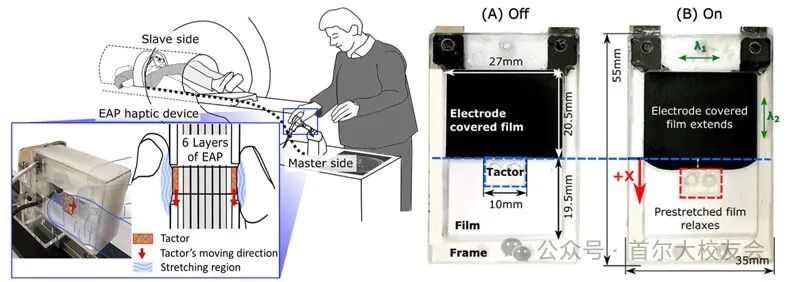
Figure 3: Haptic machine that allows the operator to feel the force of the needle while remotely controlling it
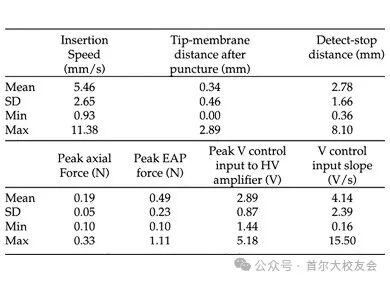
Table 1: Summary of user learning resultsRecent Research and Technology Development TrendsIn recent years, soft robotics technology has rapidly developed in the medical field, aiming to provide more precise and effective treatment solutions. In particular, innovative research is being conducted in areas such as self-healing materials, digital twins, AI-based robotic control, telemedicine, and surgical robots. These technologies are becoming crucial factors for the durability of medical robots, personalized treatment for patients, and achieving precise medical services in remote environments.Self-healing and living biomimetic materials applications:Recently, self-healing soft robots based on hydrogels that can repair themselves after damage are being developed. This technology can enhance the durability of implantable medical robots or wearable devices and help minimize maintenance in medical environments requiring long-term use.AI and digital twin-based robotic control:To optimize the movements of medical soft robots in real-time, AI-based machine learning models and digital twin technology are being integrated. Digital twins generate virtual robot models based on patient body data for simulation, allowing real-time adjustments to robot movements.Expanding applications of robotic surgery and telemedicine:With the development of 5G and ultra-high-speed data transmission technologies, remote surgical systems utilizing soft robots are being developed. Unlike traditional telemedicine systems, the combination of soft haptic feedback and AI-assisted control technology has led to the creation of a new generation of systems that provide surgeons with tactile feedback during surgery, gradually being applied in actual clinical trials.Conclusion and OutlookSoft robotics is a core technology that can overcome the limitations of existing medical robots and contribute to precision medical surgeries and personalized treatments for patients. In the future, as the integration with biomimetic materials, AI control technologies, and telemedicine systems accelerates, the application space of soft robots in the medical field is expected to expand further.
Disclaimer: This article aims to convey and share industry information and professional knowledge for personal learning, reference, and academic exchange purposes only, and is not for commercial use. The cited literature has been indicated with authors and sources. All images appearing in this article are reproduced, and due to limited capabilities, there may be inaccuracies in interpretation, representing only the author’s personal views. If there are any infringements on the original authors’ or collaborators’ interests, please contact the public account for deletion.