Driven by the global wave of digitalization, the Internet of Things (IoT), smart manufacturing, automotive electronics, and smart home sectors are evolving at an unprecedented pace. As the core of edge intelligent devices, the MCU (Microcontroller Unit) market is also experiencing explosive growth. According to Mordor Intelligence, the global MCU market is expected to reach $34.75 billion by 2025 and $57.25 billion by 2030, with a compound annual growth rate (CAGR) of 10.5% during the forecast period (2025-2030).
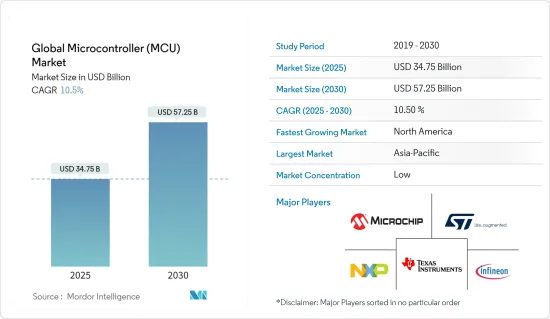
This trend is driven by deep penetration in industrial automation, new energy vehicles, AI, and IoT, along with an urgent demand for high-reliability, low-power MCU chips. In response to this emerging demand wave, global MCU manufacturers are accelerating their product line layouts, including the introduction of AI accelerators, heterogeneous computing units, and ultra-low-power architectures to meet a wider range of intelligent application scenarios.
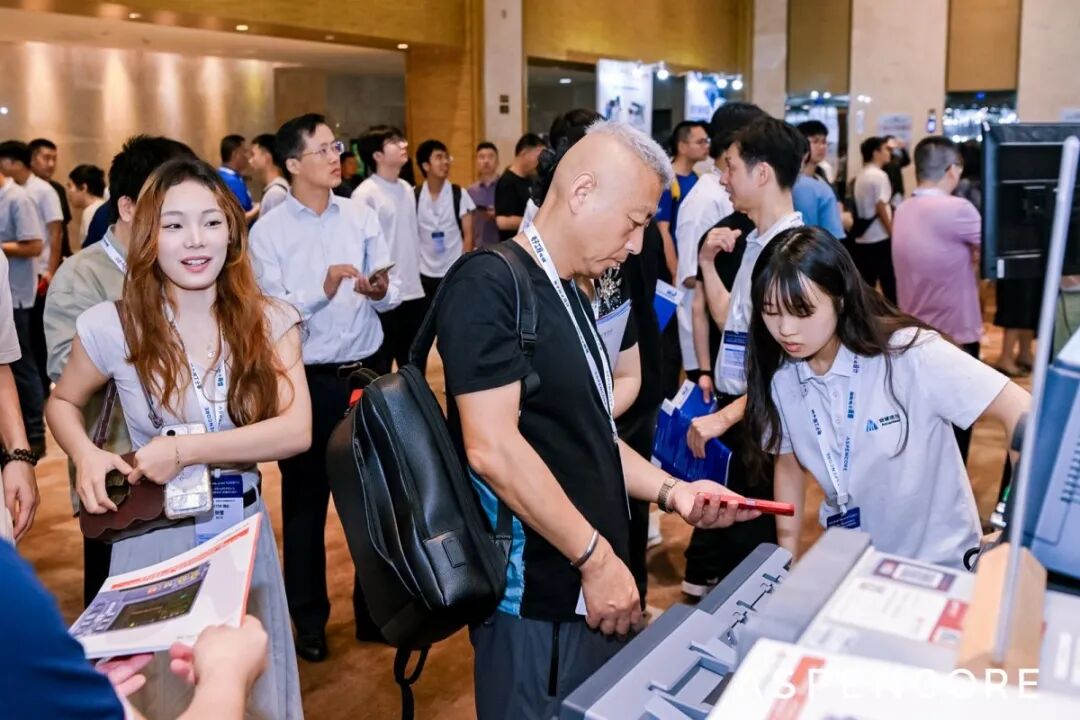
Against this backdrop, on July 24, the “2025 MCU and Embedded Technology Forum” hosted by the globally renowned media group AspenCore was grandly held at the International Conference Center of Kexing Science Park in Nanshan, Shenzhen. The forum, themed “Intelligent Driving the Future,” brought together representatives from companies such as Renesas Electronics, Anko Technology, Wuhan Xinyuan Semiconductor, Lingdong Microelectronics, and Yiswei to discuss innovative breakthroughs in MCUs and embedded technology, market trends, and application scenarios, providing attendees with comprehensive and in-depth industry insights while also building a high-quality platform for promoting technical exchanges and cooperation in the industry.
Introduction to Renesas Embedded Product Matrix
Renesas Electronics, built on a strong foundation of technological innovation from Hitachi, Mitsubishi Electric, and NEC, has continuously strengthened its product lineup through acquisitions of companies like Intersil, IDT, and Dialog, and has now developed into a global leader in embedded solutions targeting high-growth markets such as automotive, industrial/infrastructure, and IoT.
According to Liu Jiewen, Marketing Manager of Renesas Electronics’ Embedded Processor Division, the company focuses on a rich MCU and MPU product line that comprehensively covers process nodes from 130nm to 14nm. Leveraging advanced non-volatile memory processes and ultra-low-power technologies, it provides cutting-edge AI technologies and development platforms for various application markets.
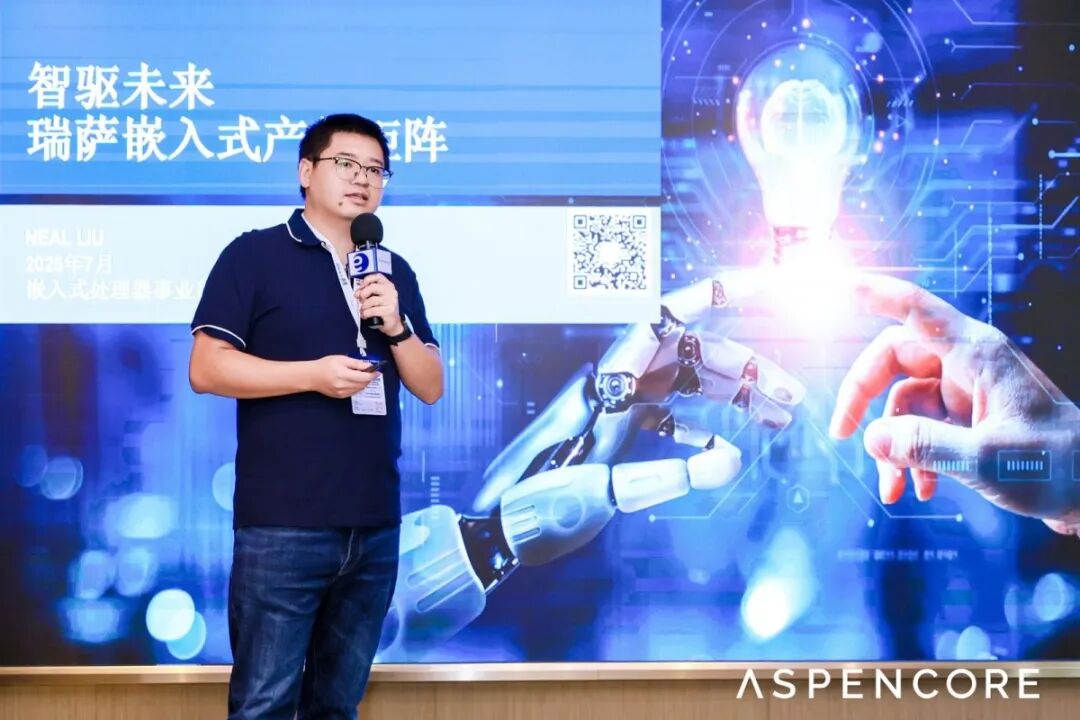
Liu Jiewen, Marketing Manager of Renesas Electronics’ Embedded Processor Division
In terms of core technology, Renesas Electronics possesses ultra-high-performance, high real-time multi-core processor architectures, high-performance graphics and video processing technologies, and DRP-AI ultra-efficient AI accelerators. Its latest ARM V8.1M architecture Cortex M85 and M55*, Ethos-U55 NPU achieves a computing power of 0.25 TOPS, while Helium technology significantly enhances machine learning performance beyond that of M7. The products integrate large-capacity embedded flash and RAM, offering various functionalities such as general-purpose, HMI/graphics, and motor control, and include an embedded Renesas security engine, with CPU performance reaching 1GHz and power consumption as low as 200nA in standby mode.
Renesas Electronics has a broad product layout covering automotive-grade, specialty, and standard products across multiple fields. The RL78 ultra-low-power MCU product family boasts advantages such as wide operating voltage, high quality, safety, high scalability, and high integration; the RX high-performance MCU product family spans from low-end to high-end product lines, meeting various performance and power consumption needs; the RA MCU product family is mostly based on the latest generation ARM v8 architecture and employs advanced security technology TrustZone.
Additionally, Renesas Electronics has built a comprehensive ecosystem, providing full support from development tools, software packages to application cases and reference designs. Its MCU and MPU products are widely used in industrial automation, collaborative robots, and embedded AI, helping various industries achieve intelligent upgrades.
Liu Jiewen particularly emphasized Renesas Electronics’ localized development in the Chinese market. The company closely collaborates with over 50 local partners to launch localized solutions, provide technical support, and assist in talent cultivation through university programs, aiming to shape the next generation of embedded development innovators.
Anko Supports MCUs from PSV Testing to Mass Production Programming
Fu Guo, Vice President of Anko Technology, elaborated on the technological breakthroughs of the new AP8000V2 platform in his speech, which achieves full-process coverage from post-silicon validation (PSV) testing to mass production programming. The platform deeply integrates testing and programming through software-defined instrumentation (SDI) technology and service-oriented architecture (SOA), supporting both Chip Level and Board Level programming modes to meet automation needs in different scenarios. Its innovative differential transmission technology effectively addresses signal interference issues in mass production programming, combined with multi-chip parallel processing capabilities, significantly enhancing production efficiency.
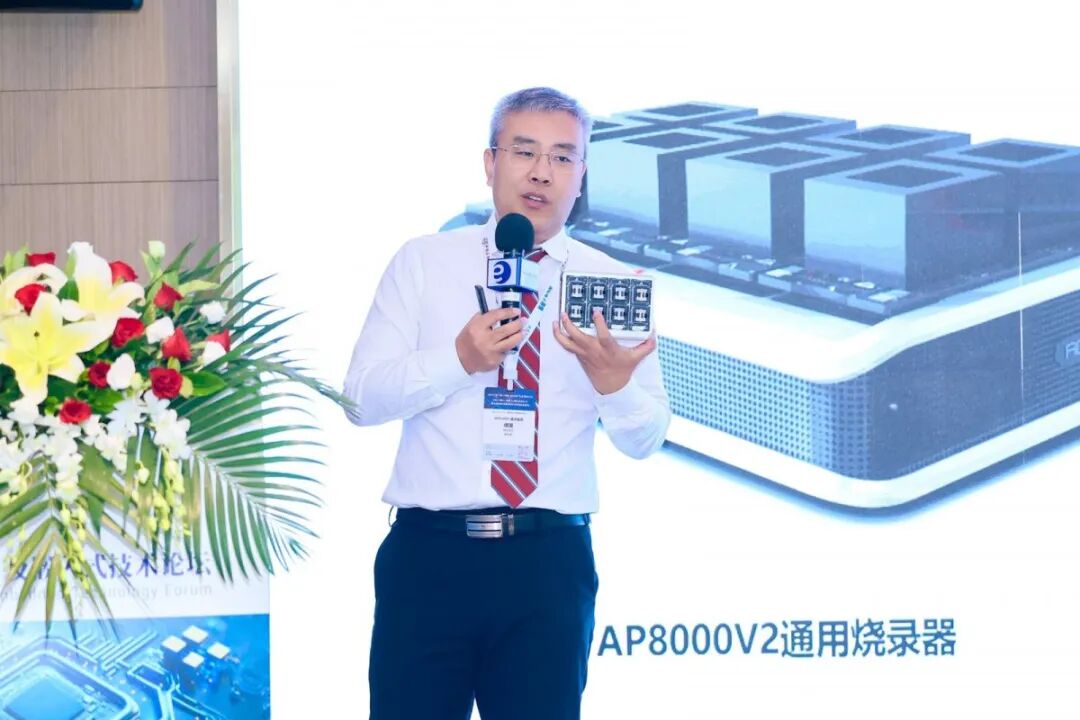
Fu Guo, Vice President of Anko Technology
In terms of performance parameters, the AP8000V2-H model supports Gang8/Gang16 parallel programming, with a maximum power of 12.2W per site and a total power of 36W, capable of meeting the demands of high-power chips. The platform is compatible with all packaging forms including UFS, eMMC, MCU/MPU, with programming speeds exceeding 400MB/s (eMMC HS400 mode), and integrates optical communication interfaces and ultra-large capacity storage options. Fu Guo emphasized that the platform ensures stable output across a wide voltage range of 0.8V-12.5V through precise voltage self-calibration circuits and ESD protection patents, with current control accuracy reaching Class 1A.
In terms of technological innovation, the platform’s AI and robotics technology integration solution has validated its reliability in complex scenarios such as AI server motherboard PCBA programming. Compared to previous products, the AP8000V2 has achieved a 10G network port upgrade while maintaining software compatibility with the AP8000 platform, facilitating a smooth transition for customers. Currently, this platform serves leading global companies such as Huawei, Bosch, and NVIDIA, processing over 10 billion chips annually, with its differential transmission principles and secure programming technologies supported by dozens of invention patents.
Fu Guo concluded that the AP8000V2 redefines the performance benchmark for mass production programming equipment through full-process automation, high-power adaptability, and multi-protocol compatibility, providing an integrated solution for the semiconductor industry from R&D validation to large-scale production.
Wuhan Xinyuan Semiconductor Continues to Focus on 32-bit MCUs
Zhang Yafan, Technical Director of Wuhan Xinyuan Semiconductor, systematically elaborated on the company’s strategic layout and technological breakthroughs in the 32-bit MCU field during his speech. He highlighted the core technological advantages of the new generation CW32L01x series products: integrating a 4-channel independent DMA engine, supporting automatic retransmission and multi-mode data transmission, significantly improving data throughput efficiency in complex scenarios; and achieving hardware processing of trigonometric functions and other mathematical operations through a Cordic hardware acceleration engine, with a calculation speed improvement of over 3 times compared to software solutions, while saving 50% of RAM resource usage.
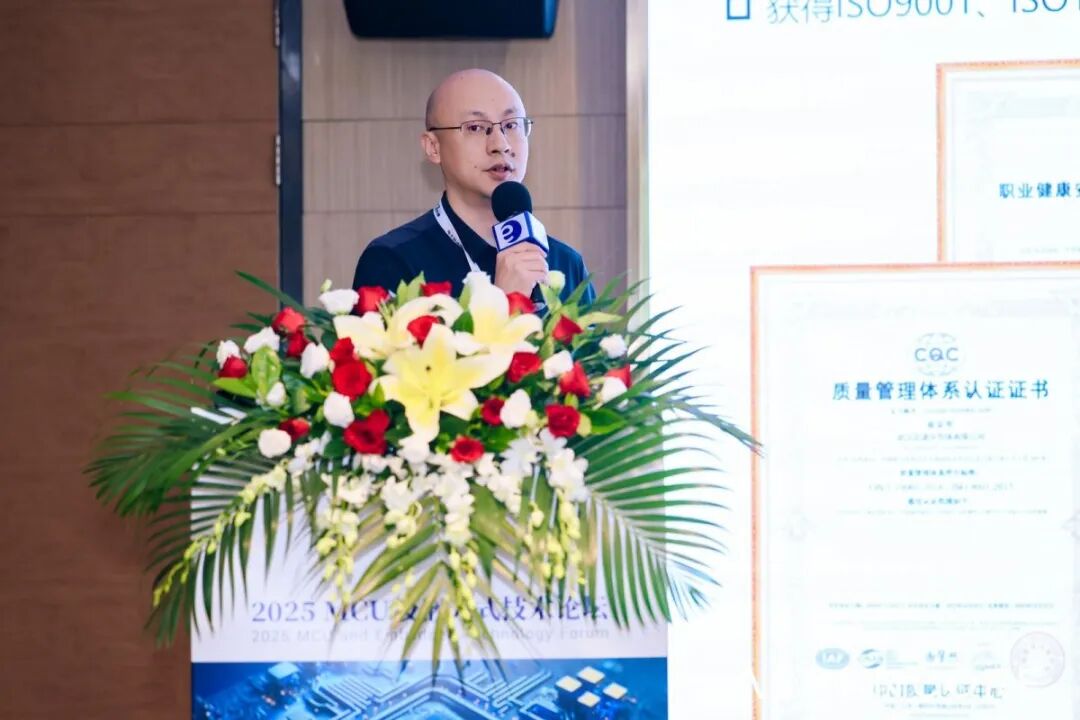
Zhang Yafan, Technical Director of Wuhan Xinyuan Semiconductor
Regarding the improvement of the product lineup, Zhang Yafan announced the latest progress of the ultra-low-power M0+ platform: following the mass production of CW32L010, the CW32L011/012 series has entered the stage of bulk supply, forming a multidimensional product matrix covering general high performance (F series) and secure low power (L series). Among them, the CW32F030 series achieves a balance of performance and cost in scenarios requiring high reliability, such as motor control and wireless charging, through an integrated hacker-level code encryption module and full-port filtering debounce design.
The speech particularly emphasized the achievements in ecosystem construction: the CW32 technology community has been awarded the title of “Quality Cooperation Community” by the Lichuang Open Source Platform, and by providing a complete development toolchain, reference design solutions, and technical forum support, it has attracted over 20,000 developers to participate in ecosystem co-construction. In terms of application scenario expansion, the CW32L01x series has successfully penetrated 12 subfields such as electronic cigarettes, gimbal control, and automotive instrumentation, showcasing precise control capabilities in scenarios such as drone flight control and electric toothbrush drives with its 6 pairs of complementary PWM outputs and flexible phase-shifting functions.
Zhang Yafan stated that Wuhan Xinyuan Semiconductor will continue to increase R&D investment in 32-bit MCUs, planning to launch a new generation of products equipped with AI acceleration engines by 2025, consolidating its differentiated competitive advantage in the domestic MCU market through a dual-wheel drive strategy of “technology deepening + ecosystem co-construction”.
Lingdong Microelectronics Reshapes MCU Application Boundaries with High Reliability and Low Power New Products
Guan Bing, Product Manager of Shanghai Lingdong Microelectronics, systematically explained the technological evolution and ecosystem layout of the MM32 MCU product matrix in his speech. He highlighted the product strategy covering four major series: value, mainstream, low power, and performance, constructing a complete solution from basic control to high-end applications.
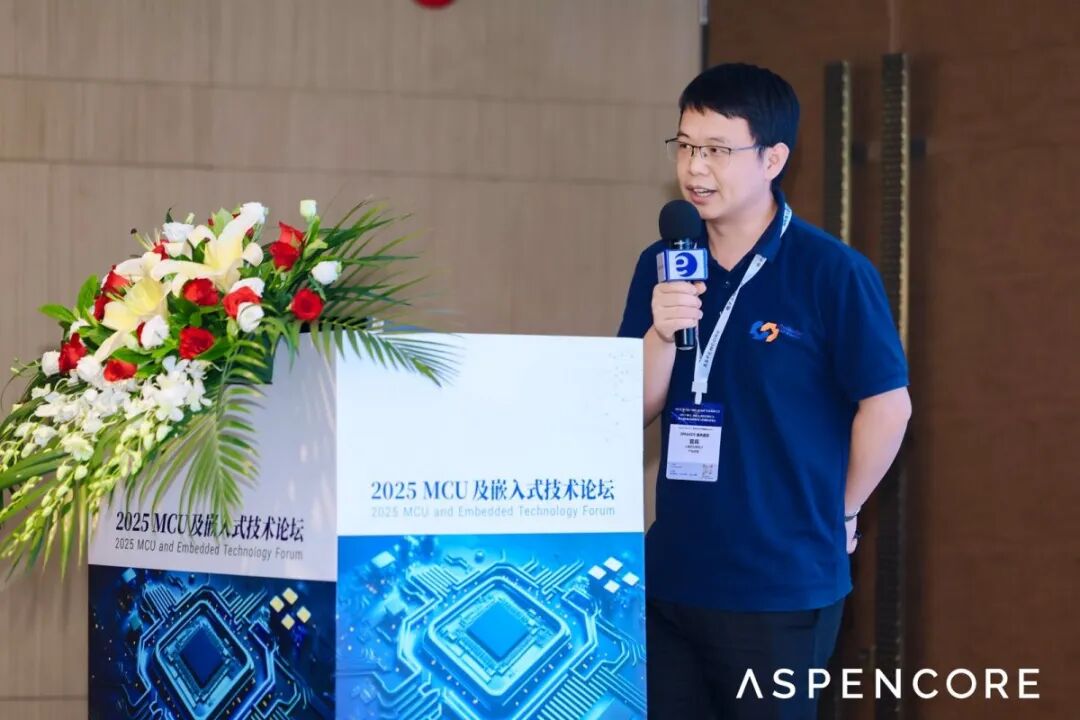
Guan Bing, Product Manager of Shanghai Lingdong Microelectronics
In the value series, the MM32G0001, centered on a 48MHz Cortex-M0 core, integrates 16KB Flash and 2KB RAM, achieving a compact design through TSSOP20/QFN20 packaging, suitable for cost-sensitive scenarios such as wireless charging and motor control. The mainstream series representative MM32F0120 is equipped with a 72MHz M0+ core, 64KB Flash, and 8KB RAM, supporting USB PD protocol and multi-channel USART communication, showcasing high integration advantages in fast charging protocol conversion and battery management systems.
Guan Bing particularly emphasized the technological breakthroughs in the low-power series: the MM32L0130 adopts a 48MHz Cortex-M0+ architecture, with a built-in segment code LCD driver module, achieving a standby power consumption as low as 300nA, making it an ideal choice for long-lasting scenarios such as portable medical devices and smart meters, combined with LQFP32/64 packaging. The flagship of the performance series, MM32F5370, is equipped with a 180MHz Star-MC1 processor, 512KB Flash, and 128KB RAM, integrating QSPI interfaces and full-speed USB 2.0, supporting CAN-FD bus and multi-channel 12-bit ADC, achieving precise control and high-speed communication in high-end applications such as industrial monitoring and photovoltaic inverters.
The speech revealed that Lingdong Microelectronics is building competitiveness through a three-dimensional layout of “hardware + software + ecosystem”: in addition to providing a full range of MCU products, it has established a complete ecosystem including development boards, algorithm libraries, and reference designs, significantly shortening the product development cycle for customers.
Yiswei Computing Drives Smart Terminal Innovation with RISC-V Ecosystem
Lei Qinggang, head of the market department for intelligent control products at Yiswei Computing, systematically elaborated on the company’s technological layout, product matrix, and industry application cases in the RISC-V field, explaining how the company empowers smart terminals and embodied intelligence development through a controllable RISC-V ecosystem.
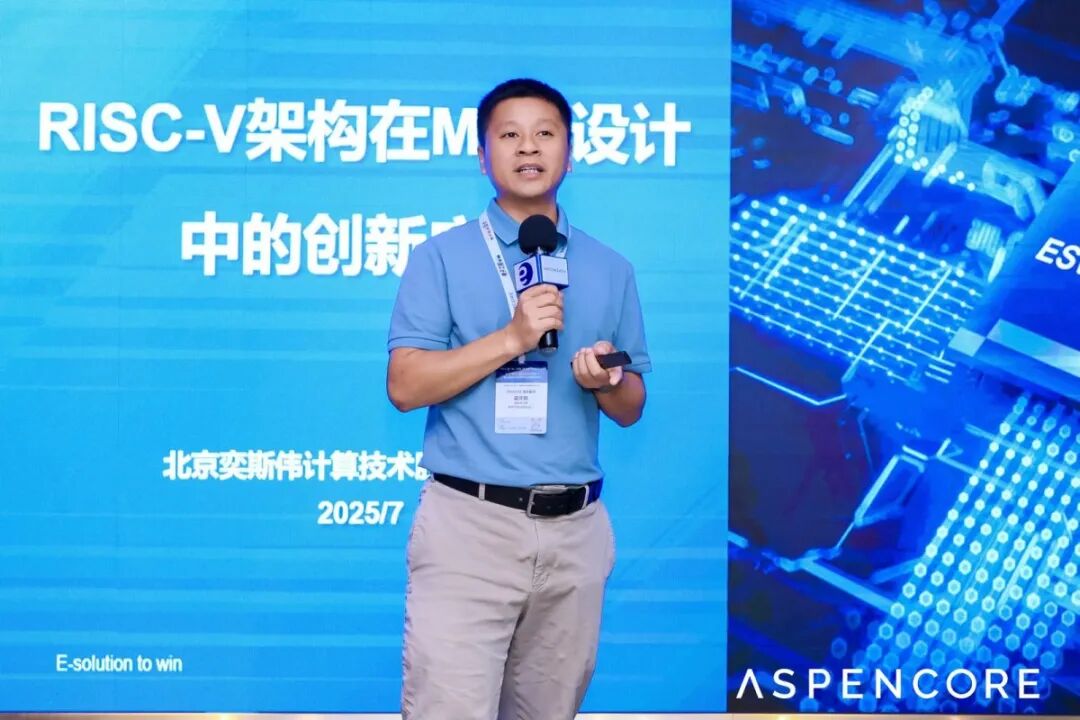
Lei Qinggang, head of the market department for intelligent control products at Yiswei Computing
Lei Qinggang first introduced Yiswei Computing’s business positioning and technological strategy. As a provider of intelligent solutions in the AI era, Yiswei focuses on the “RISAA” (RISC-V + AI) ecosystem technology platform, building system-level solutions covering smart terminals, embodied intelligence, and industrial fields based on RISC-V cores. Its product line includes MCUs, SoCs, AI accelerator cards, and multimedia processing chips, serving scenarios such as smart homes, smart cars, and industrial robots. Lei Qinggang particularly emphasized that Yiswei Computing provides full-stack support from IP cores to development tools through an innovative model of “software-defined hardware,” helping customers achieve rapid iteration and differentiated competition.
In terms of core technology, Lei Qinggang showcased Yiswei Computing’s RISC-V core design capabilities. Its self-developed core series includes general-purpose (E100/E200), high-performance (S500/S700), and automotive-grade (E320A/R500A) products, supporting multi-stage pipeline architectures from 2-stage to 12-stage, with a maximum clock frequency of 168MHz, and integrating features such as vector computing, AI acceleration, and functional safety (ASIL-B/D). For example, the S516 core adopts an 8-stage superscalar architecture, supporting 1024-bit wide vector instructions, significantly improving AI and multimedia processing efficiency; while the E330 core achieves a balance between low power consumption and high code density through a 6-stage pipeline and Zicond instruction extension. Lei Qinggang pointed out that Yiswei Computing’s RISC-V core provides customers with “deep customization” capabilities through configurable instruction sets, safety features, and PPA optimization.
Regarding specific application scenarios, Lei Qinggang shared Yiswei Computing’s RISC-V MCU product matrix. In the automotive field, the EMU5103 automotive-grade motor MCU integrates LIN bus, motor pre-drive, and multi-channel PWM, supporting ASIL-B functional safety level, suitable for scenarios such as vehicle fans and seat control; in the white goods field, the EMU7xxx series, with a high-performance core of 168MHz, 2MB Flash, and multi-interface design, meets the complex control needs of washing machines, air conditioners, and more. Additionally, Yiswei Computing has launched ultra-low-power MCUs for the industrial control and robotics market, supporting multi-protocol communication and real-time task scheduling, helping devices such as cleaning robots and drones achieve intelligent upgrades.
Lei Qinggang emphasized that Yiswei Computing provides flexible services from IP licensing to system-level solutions through a three-pronged business model of “fully customized + semi-customized + industry-customized”. Currently, its RISC-V products are widely used in home appliances, automotive electronics, and industrial automation fields, and strategic partnerships have been established with several leading companies. He revealed that one of Yiswei Computing’s key directions for 2025 is to deepen the construction of the RISC-V ecosystem, promoting domestic MCUs towards high-end and intelligent development through open SDKs and reference designs.
Conclusion
Looking ahead, as the wave of digitalization continues to deepen, MCUs and embedded technologies are expected to achieve innovative applications and expansions in a wider range of fields.
On one hand, the popularity of the Internet of Things will drive the application of MCUs in smart homes, smart cities, and smart agriculture, achieving interconnectivity and intelligent control between devices; on the other hand, with the continuous development of artificial intelligence and machine learning technologies, MCUs will possess stronger computing capabilities and levels of intelligence, capable of supporting more complex algorithms and models, providing stronger support for intelligent decision-making and automated control. At the same time, with the continuous advancement of low-power, high-performance, and high-integration technologies, MCUs will be able to meet the demands of more application scenarios with strict performance and power consumption requirements, injecting new momentum into the sustainable development of the industry.