Follow+Star Public Account, don’t miss out on exciting content
Source | Renesas Official Website
Author | strongerHuang
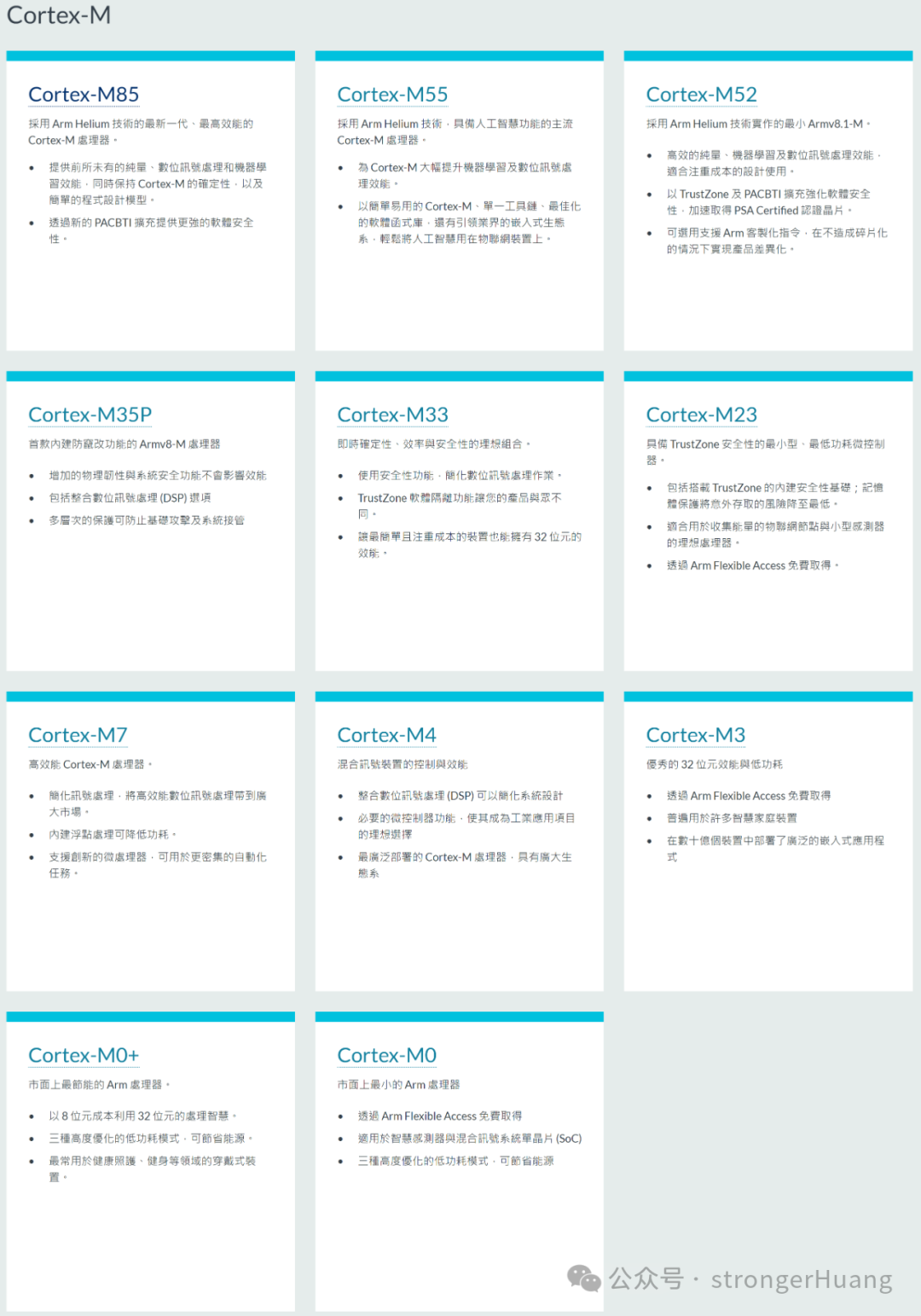
In recent years, as the demand for both low power and high performance has emerged, the M0 core can no longer meet the requirements. Therefore, low power MCUs have started using more advanced cores, and this year low power MCUs have entered the era of Cortex-M33.
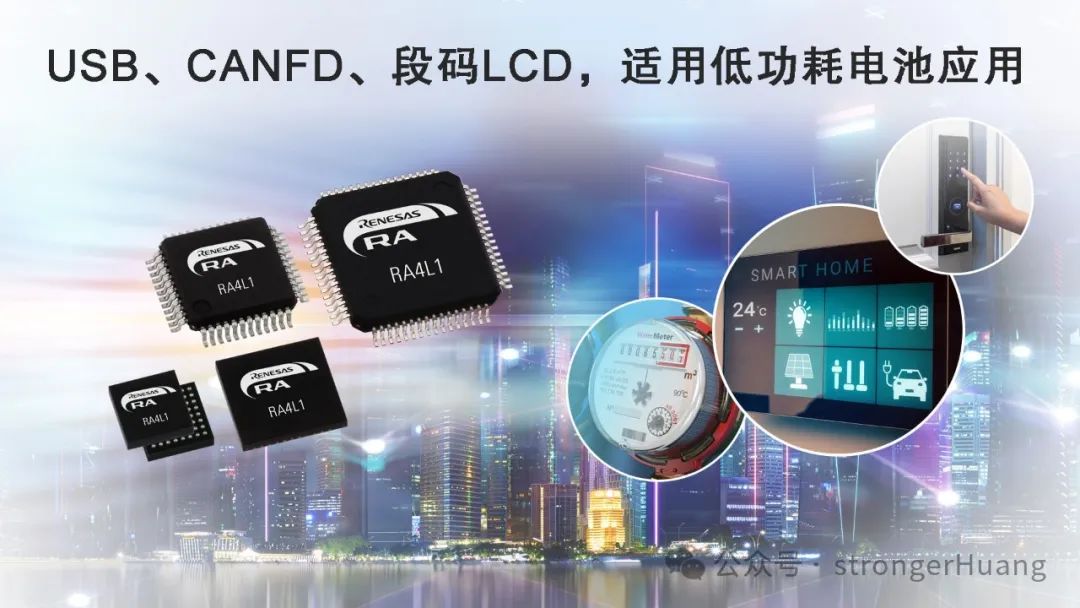
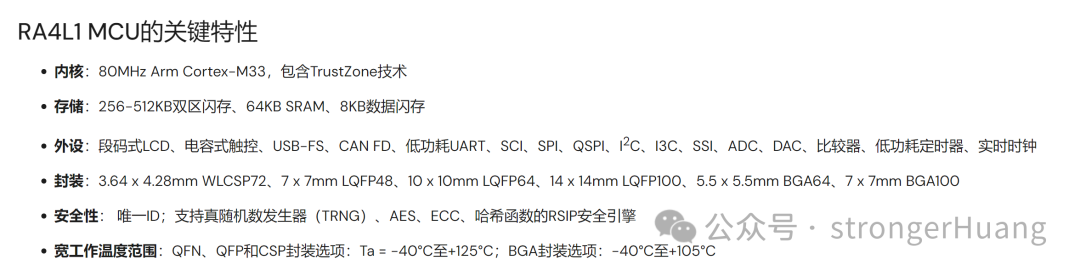
https://www.renesas.cn/zh/about/newsroom/renesas-debuts-ultra-low-power-ra4l1-mcus-capacitive-touch-segment-lcd-and-robust-security
Renesas provides a flexible configuration software package (FSP) for the RA series MCUs, which is commonly referred to as the HAL library (middleware). Projects can be quickly generated using the RASC tool, and the official e2 studio integrated development environment can also be used for one-stop development (project generation, code editing, compilation, downloading, debugging, etc.).
For software tools and development starters for Renesas microcontrollers, you can refer to the videos I shared earlier:
For tutorials on the Renesas RA8 microcontroller, you can refer to:
Renesas RA8 Series Tutorial | Introduction to Renesas RA8 Series Microcontrollers
Renesas RA8 Series Tutorial | Setting up the Renesas RA8 Development Environment and Lighting Up an LED
Renesas RA8 Series Tutorial | Developing the RA8 Microcontroller Based on Keil
Renesas RA8 Series Tutorial | Learning Which Documents and Manuals Are Commonly Used for RA8
Renesas RA8 Series Tutorial | Configuring IO Interrupts for the Renesas RA8 Microcontroller
Renesas RA8 Series Tutorial | Methods to Run RTOS on RA8 Based on e2s
Renesas RA8 Series Tutorial | Configuring Serial Output for RA8 Based on e2s
Renesas RA8 Series Tutorial | Description of SysTick Usage for RA8 Microcontroller
Renesas RA8 Series Tutorial | Methods to Implement PWM Output for RA8
Renesas RA8 Series Tutorial | Implementing RTC Real-Time Clock Functionality Based on e2s
······

Microcontroller Implementing OLED Display Principle and Implementation Method via I²C
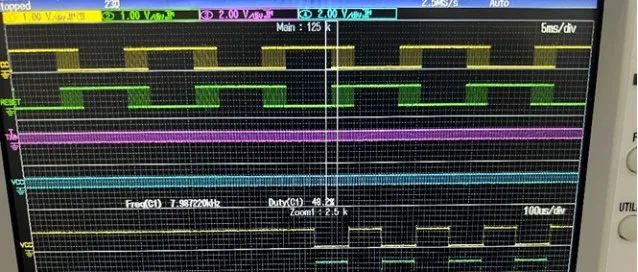
Microcontroller Four Complementary PWM Modes Principle and Implementation Method
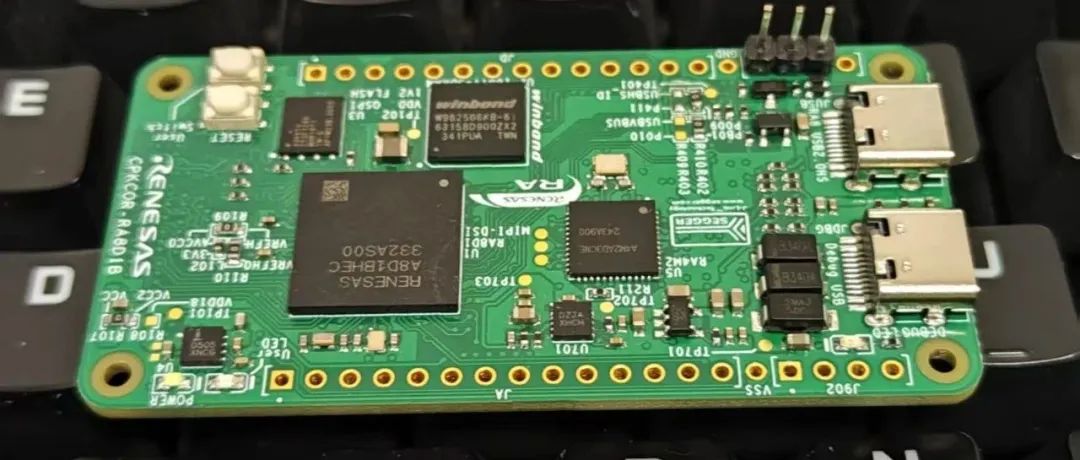
RA8 Microcontroller Implementation Tutorial on DeepSeek is Here!