Note: Swipe left on the briefing content to view the event timeline, historical background, technical details, and quick Q&A information.
TUXEDO Cancels Snapdragon X Elite Linux Laptop

TUXEDO Computers has halted the development of its Linux laptop based on the Qualcomm Snapdragon X Elite (X1E) due to performance issues, stating that the CPU “is not as suitable for Linux as expected.”
After canceling the project, the company submitted a new revision of its device tree patch to the mainline Linux kernel, but Phoronix reported that maintainers are reluctant to merge device trees for hardware that will not be shipped.
This news has been discussed in the r/linuxhardware community.
Event Timeline
❶ Recent announcement TUXEDO canceled its Snapdragon X1E Linux laptop project due to performance issues and stated that the chip “is not as suitable for Linux as expected.”
❷ Friday TUXEDO submitted a new revision of its device tree patch to the mainline Linux kernel.
❸ Following the submission Phoronix noted that kernel maintainers are unlikely to accept device trees for canceled products.
Historical Background
The device tree is the standard way Linux describes hardware on many ARM platforms, allowing the kernel to load drivers without board-specific code. In this case, TUXEDO attempted to upstream device tree support even after the project was canceled, but maintainers refused to merge descriptions of hardware that users would not receive, aiming to keep the mainline focused on shipping devices.
Did you know?
TUXEDO submitted a new revision of its device tree patch to the Linux kernel even after canceling the Snapdragon X1E laptop project.
Technical Details
Device Tree (DT): A declarative hardware description used by Linux on ARM and other architectures to inform the kernel about the components present and how they are connected; upstream DT can achieve broader community support without vendor-specific kernels.
Snapdragon X Elite (X1E): Qualcomm’s ARM-based PC-level SoC aimed at laptops; TUXEDO cited performance issues when deciding to stop development, stating it is not as suitable for Linux as expected.
Quick Q&A
Why did TUXEDO cancel its Snapdragon X1E Linux laptop? The company cited performance issues, stating that the Qualcomm CPU is not as suitable for Linux as expected.
Will the kernel still provide device tree support for this laptop? TUXEDO submitted a DT patch, but maintainers indicated they are unlikely to accept DT for canceled, unreleased products.
What chip was targeted by the canceled project? Qualcomm’s Snapdragon X Elite (X1E) SoC.
KDE Plasma 6.6 Introduces Window Recording Exclusion Feature
KDE Plasma 6.6 introduces a window screen recording exclusion feature, allowing users to exclude selected application windows from recording to protect privacy.
This version also brings visual improvements, including richer blur effects in dark themes.
Community members are also discussing whether the proximity-based desktop unlocking feature from the KDE 4 era might return, although this is just user discussion and not an announced feature.
Did you know?
There is an active community discussion thread about bringing back the KDE 4 “proximity unlock” concept to Plasma 6.
Technical Details
Window Recording Exclusion: Plasma 6.6 no longer records everything on the screen but allows users to mark individual windows to be omitted from the recording, enhancing privacy during presentations and live streams.
Richer Blur Effects in Dark Themes: Visual adjustments enhance the blur effect when using dark color schemes, aiming for a clearer and more consistent translucent effect on the desktop.
Quick Q&A
What does the new exclusion feature do? It allows you to exclude selected windows from screen recordings, so those windows do not appear in the captured video.
What other visual changes are emphasized in Plasma 6.6? The richer blur effects in dark themes are part of this update.
Will the proximity-based desktop unlocking feature return to KDE? Users are inquiring, but the provided reports do not mention any plans to reintroduce that feature.
Mozilla Adds XDG Directory Support in Firefox 147
Mozilla is bringing comprehensive support for the Freedesktop.org XDG Base Directory Specification to Linux in Firefox 147, addressing a bug that has persisted for about 21 years and aligning Firefox’s file storage on Linux with modern standards.
Event Timeline
❶ November 2025 Reports indicate that Firefox 147 will include full XDG Base Directory support on Linux, fixing a 21-year-old issue.
Historical Background
The Freedesktop.org XDG Base Directory Specification aims to standardize where Linux applications store configuration, data, and cache files in the user’s home directory and has been widely adopted by desktop Linux software. The changes in Firefox specifically address a bug that has reportedly lasted for about 21 years, aligning the browser’s behavior on Linux with the XDG standard.
Did you know?
This fix addresses a problem in Firefox’s Linux file layout that has been reported for about 21 years.
Technical Details
XDG Base Directory Specification: This specification defines standard locations, such as $XDG_CONFIG_HOME for configuration, $XDG_DATA_HOME for application data, and $XDG_CACHE_HOME for cache, helping to keep the home directory organized and consistent across applications.
Firefox 147 Integration: By implementing the XDG Base Directory Specification in Firefox 147 on Linux, Mozilla aligns the browser’s file storage with modern Linux standards and addresses long-standing Linux-specific issues.
Quick Q&A
Which version of Firefox includes full XDG directory support on Linux? Firefox 147 adds comprehensive support for the Freedesktop.org XDG Base Directory Specification on Linux.
Why is XDG support important for Firefox on Linux? It aligns Firefox’s file storage with modern Linux standards, improving consistency in organizing configuration, data, and cache files with other applications.
Has the community noticed this change? Yes, a post on r/linux highlighted that Firefox now supports the Freedesktop.org XDG Base Directory Specification.
TUXEDO Launches Ryzen AI 300 Laptop, Abandons Snapdragon X1 Elite Plans
Linux vendor TUXEDO Computers announced the launch of the 10th generation InfinityBook Max 15 equipped with an AMD Ryzen AI 300 CPU and NVIDIA GeForce RTX 5000 GPU.
TUXEDO confirmed that it has halted plans for the Snapdragon X1 Elite Linux laptop after previewing it in mid-2024 and missing the initial target for a Christmas 2024 release.
A Reddit post stated that the reason was that the SoC was not as suitable for Linux as expected.
Event Timeline
❶ Mid-2024 TUXEDO previewed the Snapdragon X Elite Linux laptop.
❷ Late 2024 The initial target for Christmas 2024 was not met.
❸ Late 2025 TUXEDO confirmed it has abandoned the Snapdragon X1 Elite Linux laptop plans.
❹ November 2025 InfinityBook Max 15 Gen10 announced with Ryzen AI 300 and GeForce RTX 5000, supporting Linux.
Historical Background
In mid-2024, TUXEDO previewed a Snapdragon X Elite Linux laptop and planned to release it before Christmas 2024, but the product never launched. As Christmas 2025 approached, TUXEDO confirmed it had abandoned the Snapdragon X1 Elite Linux laptop plans. Linux support on ARM laptops typically depends on upstream drivers, firmware, and vendor collaboration, which can extend development time.
Did you know?
Phoronix noted that TUXEDO Computers is a Bavarian Linux PC vendor focused on Linux hardware.
Technical Details
ARM SoC vs. x86 CPU: The Snapdragon X1 Elite is an ARM-based system on chip; achieving full Linux laptop support typically requires mature upstream drivers and firmware, which may lag behind x86 platforms with long-term Linux support.
Ryzen AI 300 + RTX 5000: TUXEDO’s new Linux laptop combines AMD’s Ryzen AI 300 CPU and NVIDIA GeForce RTX 5000 GPU, indicating a high-performance configuration aimed at Linux users.
Quick Q&A
What does TUXEDO’s new InfinityBook Max 15 Gen10 feature? AMD Ryzen AI 300 CPU and NVIDIA GeForce RTX 5000 GPU.
What happened to TUXEDO’s Snapdragon X1 Elite Linux laptop? TUXEDO abandoned the plans as Christmas 2025 approached, stating that the SoC was not as suitable for Linux as expected.
When was the ARM laptop originally planned for release? TUXEDO had hoped to ship it before Christmas 2024.
PHP 8.5 Released with Pipeline Operator
PHP 8.5 has been released.
It introduces the pipeline operator (|>), a new URI extension, and the “with clone” feature.
This update also brings constant properties and #attributes for marking ignored return values, along with migration guides for developers.
Phoronix noted that this continues PHP’s annual release cadence of major feature versions.
Historical Background
In recent years, PHP has maintained a stable annual release cadence for major versions, with 8.5 continuing this predictable rhythm. PHP originated in the mid-1990s and has become mainstream in web development, supporting numerous content management systems and applications.
Did you know?
The new pipeline operator uses the |> symbol — the same symbol used in several functional programming languages — and can now be used directly in PHP 8.5.
Technical Details
Pipeline Operator (|>): The pipeline operator passes the value of the left-hand expression to the function or callable on the right, allowing for code like “Hello world” |> strlen(…), which LWN notes is equivalent to strlen(“Hello world”).
URI Extension: This new core extension provides standardized tools for parsing and handling URIs, reducing the need for temporary parsing in user-space code.
# and Constant Properties: # marks functions whose return values should not be ignored, while constant properties add metadata functionality at the constant level.
Quick Q&A
What are the new major features in PHP 8.5? PHP 8.5 adds the pipeline operator (|>), a new URI extension, the “with clone” feature, and new attributes such as # and constant properties.
Does this version follow PHP’s regular release schedule? Yes, Phoronix describes 8.5 as an annual major feature release, continuing the project’s yearly release cadence.
Fedora Addresses Infrastructure Issues; openSUSE, 9to5Linux Overview
The Linux community shared exciting weekly progress: 9to5Linux highlighted new release announcements, desktop updates, key applications, new NVIDIA drivers, and new Linux laptops in its overview on November 9.
openSUSE’s Planet overview covered posts from November 15 to 21, highlighting improvements in KDE Plasma, a translators’ meeting for LinuxDays, and community-recognized applications from Hack Week.
Fedora’s report for week 47 (November 17 to 21) stated that intermittent 503 timeout issues have been resolved, previously interrupted Power10 hosts are now installed and available, and monitoring is transitioning to Zabbix, along with Varnish cache changes and planned updates/restart cycles.
Event Timeline
❶ November 9, 2025 9to5Linux weekly overview published
❷ November 15–21, 2025 openSUSE Planet highlights community highlights
❸ November 17–21, 2025 Fedora reports infrastructure fixes, Zabbix migration progress, Varnish cache changes, and planned maintenance
Historical Background
Weekly “planet” aggregators and community status posts have long been a staple of open-source projects, helping contributors and users track rapid changes. Fedora’s dedicated infrastructure and release engineering teams formally manage the project’s services and releases, which is a model used by many large distributions to ensure large-scale reliability. Cross-distribution overviews like 9to5Linux help showcase improvements in desktops, drivers, and tools in one place, promoting discovery and adoption.
Did you know?
cbs.centos.org is now fully online in the RDU3 data center, reflecting the completion of the migration of CentOS SIG build infrastructure.
Technical Details
Zabbix Monitoring: Fedora is migrating monitoring to Zabbix, a system for collecting and visualizing metrics and alerts; this supports better observability of infrastructure services.
Varnish Cache: Moving src.fpo traffic to Varnish adds an HTTP reverse proxy caching layer to reduce backend load and speed up content delivery under high demand.
Power10 Hosts: New IBM Power10 servers have been installed for Fedora, expanding computing capacity after resolving earlier issues, benefiting builds and CI on that architecture.
Quick Q&A
What exact issue did Fedora say was resolved? The team stated that the intermittent 503 timeout issue affecting infrastructure “seems to finally be resolved.”
Which desktops received updates in the overview? LXQt, KDE Plasma, and Trinity desktop environments received updates.
What dates did openSUSE’s Planet overview cover? It covered community posts from November 15 to 21, 2025.
VKD3D 1.18 Released; VKD3D-Proton 3.0 Adds FSR4
VKD3D 1.18, the Direct3D 12-on-Vulkan layer used by Wine, has been released, bringing HLSL constant folding, additional legacy bytecode operations, and extended shader targets.
Additionally, VKD3D-Proton 3.0 has also been released, supporting FSR4 and a rewritten DXBC shader backend, enhancing compatibility and functionality for Linux gaming.
The release of VKD3D 1.18 comes just ahead of the feature freeze for the upcoming stable release of Wine 11.0 next month.
Event Timeline
❶ November 2025 VKD3D 1.18 released, with shader improvements.
❷ November 17, 2025 VKD3D-Proton 3.0 released, supporting FSR4 and rewritten DXBC backend.
Historical Background
VKD3D is part of the upstream Wine project and implements a Direct3D 12 layer on top of Vulkan, allowing Windows graphics workloads to run on non-Windows platforms. Proton runs on top of Wine to run Windows games, which is a widely used compatibility method in the Steam Linux ecosystem. VKD3D-Proton is tailored for gaming needs and implements the full Direct3D 12 API for Proton users on top of Vulkan. TuxMachines noted that this VKD3D-Proton release follows the recent significant Proton 10 update.
Did you know?
VKD3D-Proton implements the full Direct3D 12 API for Proton users on top of Vulkan.
Technical Details
HLSL Constant Folding: Constant folding evaluates expressions at compile time to reduce the number of instructions and complexity in shaders, which can simplify optimization paths in D3D12-to-Vulkan conversion.
FSR4 Support: VKD3D-Proton 3.0 adds support for FSR4, integrating AMD’s latest upscaling technology into the pipeline to enhance image quality options in supported games.
DXBC Shader Backend Rewrite: Rewriting the DirectX bytecode (DXBC) shader backend modernizes the handling of legacy shader formats, paving the way for better compatibility and maintainability in the Proton-specific layer.
Quick Q&A
What are the main features of VKD3D 1.18? HLSL constant folding, more legacy bytecode operations, and extended shader targets.
What new features does VKD3D-Proton 3.0 have? Support for FSR4 and a rewritten DXBC shader backend, along with other improvements for Linux gaming.
How does this align with Wine’s release cadence? VKD3D 1.18 was released just before the feature freeze for the upcoming Wine 11.0, positioning updates for the next stable cycle.
Linux Laptops: HP ProBook Specs, Meteor Lake Performance Boost
Recent posts highlight the compatibility and performance of Linux laptops, from lightweight distributions breathing new life into old laptops to configuring the HP ProBook 440 G8 using inxi on Linux.
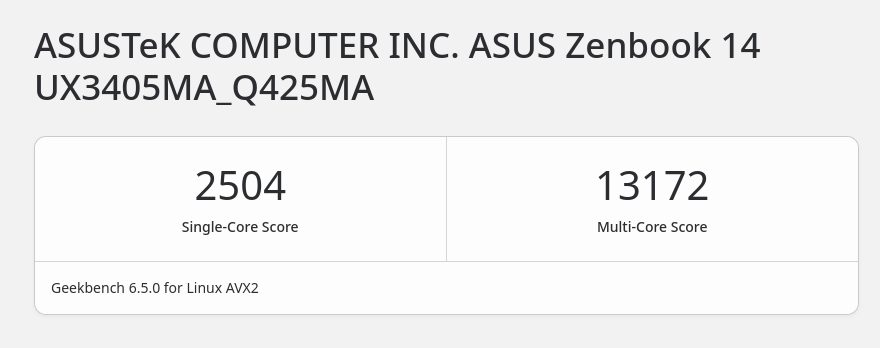
A user from r/linux_gaming reported that their Asus Zenbook 14 OLED (Intel Core Ultra 7 155H) outperformed Windows 11 in performance and battery life on Arch Linux, while others sought purchase advice and compatibility checks for models like the Lenovo IdeaPad Slim 5 Gen 10.
Overall, these posts emphasize the importance of verifying hardware support before purchasing.
Historical Background
Over the past decade, Linux laptop compatibility has steadily improved with the maturation of kernel drivers and vendor firmware support, especially in Wi-Fi, graphics, and power management. The emergence of community tools like inxi has standardized hardware reporting across distributions, helping users and developers diagnose issues and share reproducible system details. Original equipment manufacturers have acknowledged the rise of Linux on mainstream laptops, further encouraging users to test and share guidance.
Did you know?
The Zenbook test used an Arch Linux setup with KDE installed via archinstall, reporting better performance and battery life than Windows 11.
Technical Details
inxi Analyzer: inxi is a command-line system analyzer that outputs comprehensive hardware and system information; LinuxLinks uses it to detail the specifications of the HP ProBook 440 G8 running Linux.
power-profiles-daemon: This daemon manages system power profiles; Zenbook users enabled performance profiles while gaming on Arch Linux, noting better results than Windows 11.
Intel Core Ultra 7 155H: As part of Intel’s Meteor Lake series, this CPU powered the Asus Zenbook 14 OLED in user tests, where Linux provided better performance and battery life on the same hardware compared to Windows 11.
Quick Q&A
Which laptop was analyzed using inxi running Linux? The HP ProBook 440 G8 was detailed using inxi while running Linux.
Which CPU powered the reported performance boost in Linux gaming? The Intel Core Ultra 7 155H (Meteor Lake) in the Asus Zenbook 14 OLED.
What Linux issue prompted buyers to reconsider brands? Fingerprint sensor issues on Fedora with Asus laptops led users to consider Lenovo’s IdeaPad Slim 5 Gen 10 instead.
Blender 5.0 Released, Supporting HDR, ACES, Full Sequencer Upgrade
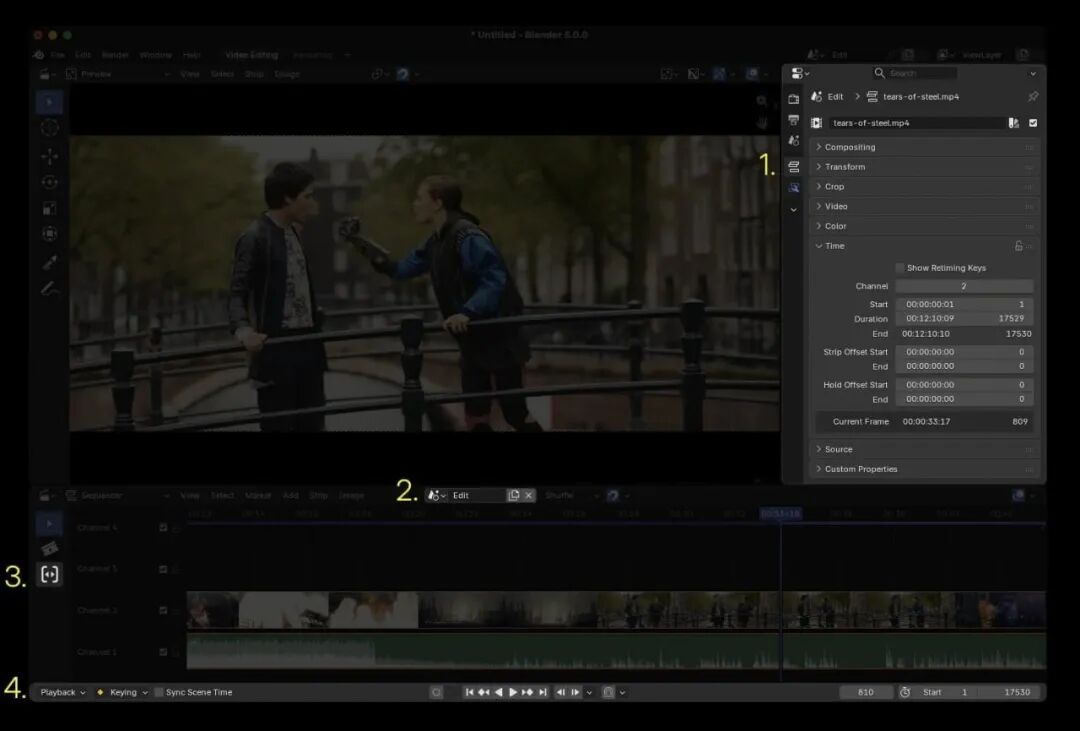
The latest major version of the free and open-source 3D creation suite Blender 5.0 is now available for download, introducing HDR color support, ACES 1.3 and 2.0 workflow compatibility, a rebuilt video sequencer, and multiple rendering and performance improvements.
This update adds wide color gamut and HDR display options, as well as support for ACES OpenEXR export, aimed at streamlining professional color workflows for film, animation, and visual effects while improving video editing and real-time preview performance.
The project notes that Linux users wishing to use HDR workflows will need compatible displays and Vulkan support on Windows/Linux, while Apple Silicon Macs will support it out of the box.
Event Timeline
❶ November 18, 2025 Blender 5.0 announced and made available for download by the project channel
❷ November 18, 2025 Praise for this comprehensive upgrade appeared in community posts and discussions on Reddit and social platforms
Historical Background
Blender has long been a free, community-driven 3D suite widely used in film, animation, game development, and visual effects; this background explains why studios and hardware vendors routinely integrate new Blender versions into their production workflows. Version 5.0 is seen as a significant milestone in the ongoing open-source development line, emphasizing color management and video editing as key investment areas.
Did you know?
The sky texture node in Blender 5.0 now uses multiple scattering, allowing for the creation of day-night cycles by animating a single parameter, simplifying realistic environmental animation.
Technical Details
ACES Workflow: Support for ACES 1.3 and ACES 2.0 provides standardized scene-referenced color management used in professional film/visual effects, allowing for consistent exchange and OpenEXR export in ACES2065-1 or ACEScg space.
Desktop HDR: HDR rendering in Blender requires a compatible HDR display and platform support: on Linux, HDR workflows require a Vulkan backend and Wayland compositor; Apple Silicon machines support it without additional configuration.
Color Space Conversion Node: The new compositor node performs explicit conversions between color spaces using the user’s OpenColorIO configuration, simplifying color workflow setups for compositing and review.
Quick Q&A
Will existing Blender projects remain compatible after the sequencer overhaul? The article describes significant upgrades to the sequencer but does not detail backward compatibility for existing projects; users should refer to the official Blender 5.0 release notes for migration guidance.
Does this version enforce a minimum GPU for HDR playback or rendering? The report mentioned platform and compositor requirements (Vulkan and Wayland) and that Apple Silicon supports it out of the box, but did not specify minimum GPU models or VRAM; users should check the hardware recommendations in Blender’s official documentation.
How can developers leverage the Closure and Bundle system? Developers can create reusable shader groups and asset bundles to accelerate material creation; documentation and examples in Blender’s release notes and community guides will showcase implementation patterns.
Xubuntu Confirms Download Site Breach, Moves to Hugo Static Site
Xubuntu disclosed that its download page was breached in mid-October, redirecting visitors to a malicious ZIP file instead of the expected torrent file, prompting them to conduct a security post-analysis and publish user safety guidelines.
The project stated that this breach only affected its website and the torrent links provided therein — the official Ubuntu repositories and cdimages.ubuntu.com were unaffected — and advised anyone who opened a file named “Xubuntu-Safe-Download.zip” to assume it was malicious and delete it after scanning with trusted anti-malware tools.
To reduce future risks, Xubuntu plans to migrate its site to the Hugo static site generator as part of a broader mitigation plan.
Did you know?
Hugo is a popular static site generator written in the Go programming language, generating static HTML files without running server-side CMS.
Technical Details
Static Site Generator (Hugo): Hugo generates static HTML files instead of running server-side code, reducing common CMS attack vectors; Xubuntu cites this feature as a primary reason for its migration plan.
Malicious ZIP vs. Torrent: The attacker replaced the download target with a malicious ZIP file named “Xubuntu-Safe-Download.zip” instead of the expected torrent file, altering the delivery of the file and increasing the risk after users opened it.
Mirrors and Official Repositories: Xubuntu emphasized that cdimages.ubuntu.com and other official Ubuntu repositories were unaffected, and that mirrors remain safe when mirroring official sources, so verifying the source of mirrors can protect users.
Quick Q&A
How will migrating to Hugo change how Xubuntu updates its website? Switching to Hugo means the site will be built as static assets (HTML/CSS/JS) before deployment, reducing server-side components and shifting the workflow to a build-then-deploy process rather than editing live CMS pages.
How can users confirm if a mirror is safe? Users should check if the mirror lists its upstream source as the official Ubuntu repositories (or cdimages.ubuntu.com) and verify file checksums when available, as Xubuntu noted that mirrors remain safe only when pulled from official resources.
KDE Community Releases Plasma 6.5.3 Bugfix Update
KDE Plasma 6.5.3 has been released as a maintenance update, providing bug fixes in KWin compositor, Discover software center, and Breeze theme, improving stability and desktop responsiveness.
This update specifically includes fixes to improve visual smoothness in multi-monitor setups using variable refresh rate (VRR) displays.
At least one major distribution, Manjaro, has moved Plasma 6.5.3 to its testing branch while updating related packages, indicating that testers can access it early.
Did you know?
Breeze is the default visual theme for KDE Plasma, providing the look and feel for many theme-related fixes.
Technical Details
KWin (Compositor): KWin is KDE’s window compositor responsible for rendering windows and managing effects; 6.5.3 includes fixes for the compositor specifically targeting frame synchronization issues related to VRR to improve perceived smoothness.
Variable Refresh Rate (VRR): VRR allows displays to dynamically change their refresh rate to match frame output, reducing tearing; the fixes in Plasma 6.5.3 aim to make multi-monitor VRR setups perform more consistently under KWin.
Quick Q&A
How can users safely test Manjaro’s Plasma 6.5.3 build? Use Manjaro’s testing branch images or the daily developer ISO provided on the project’s GitHub, and verify the image synchronization using the Mirror-Check Service before installation.
What practical benefits do the VRR fixes provide? According to reports on the changes in 6.5.3, they reduce stuttering and tearing in multi-monitor setups using variable refresh rates, achieving smoother frame delivery under KWin.
Blender 5.0 Released with Major UI Overhaul and HDR Support
Blender 5.0 has been released as a major new version of the open-source 3D graphics suite, introducing a redesigned user interface, an improved node editor with new Closure and Bundle systems, and HDR color management support.
This version also improves Vulkan viewport support and brings HDR to Wayland when using Vulkan on Linux, broadening high-fidelity display options for artists on that platform.
The project has released detailed release notes and a bug fix page documenting many fixes inherited from Blender 4.5 and earlier versions.
Historical Background
Blender, as free open-source software, has a large community of contributors and professional users. The release of version 5.0 follows a series of 4.x updates and explicit bug-fixing work — 588 commits have fixed issues present in 4.5 or earlier versions — the project has documented these prior to 5.0.
Did you know?
Blender serves as a free open-source alternative to expensive 3D suites, widely used in professional film and game production workflows.
Technical Details
Vulkan Viewport: The GPU-native rendering API for Blender’s viewport provides faster and more consistent performance across different vendors; 5.0 extends support and stability for multiple GPUs and drivers on Linux.
HDR Color Management: High dynamic range color workflows maintain brightness and color fidelity from scene to display; Blender 5.0 adds HDR color management support and enables HDR on Wayland when using Vulkan.
Closure and Bundle Systems: The new node/asset concept simplifies shader and material composition by grouping and reusing shading logic, aimed at accelerating complex node-based workflows.
Quick Q&A
Will Blender 5.0 maintain compatibility with old .blend files? The release notes and bug fix documentation are authoritative sources for compatibility details; users should refer to the specific information linked in Blender’s official release notes.
Do all Linux distributions support Blender 5.0’s Wayland HDR out of the box? Support depends on the compositor, GPU drivers, and Vulkan support of the distribution — Blender 5.0 enables HDR on Wayland using Vulkan, but platform readiness varies by vendor and distribution.
How can developers leverage the Closure and Bundle systems? Developers can create reusable shader groups and asset bundles to accelerate material creation; documentation and examples in Blender’s release notes and community guides will showcase implementation patterns.
GIMP Project Releases 3.2 Candidate Version with SVG Export Support
The GIMP project has released the first candidate version (RC1) of GIMP 3.2 and invites the community to test this version as developers focus on refining it before the stable 3.2 release.
RC introduces several workflow and format improvements, particularly improved text editing, native SVG export, and a redesigned rasterization workflow aimed at better non-destructive handling of text, vector, and linked layers.
News outlets describe this update as feature-rich, containing dozens of fixes and UI/UX quality improvements, and testers are encouraged to evaluate it before the final release.
Did you know?
GIMP stands for GNU Image Manipulation Program and is a long-standing open-source alternative to commercial image editors.
Technical Details
SVG Export: Native SVG export allows GIMP to write vector layer content directly to SVG files, enhancing portability between raster and vector workflows and reducing reliance on external converters.
Rasterization Workflow: Rasterization converts vector or text layers into pixels; GIMP 3.2’s redesigned workflow aims to make this conversion non-destructive and clearer for users working with mixed vector/raster documents.
Linked and Vector Layers: Improvements to linked and vector layers focus on retaining editability and relationships between objects so that changes can flow through the document without losing original vector data.
Quick Q&A
When will the final stable GIMP 3.2 be released? Sources describe RC1 as the beginning of the refinement phase, but no exact stable release date has been provided; developers request testing of the RC before scheduling the final release.
Will existing GIMP plugins be compatible with 3.2? The article does not specify plugin compatibility; users are encouraged to test plugins with the RC and report compatibility issues to developers to address them before the stable version is released.
Debian Project Releases Trixie 13.2 with Security Fixes
The Debian project has released Debian 13.2 (codename “trixie”), the second point update for Debian 13, packaging numerous security fixes and updated packages for existing installations.
This update is intended to be applied through the normal package update channels, with published coverage including upgrade notes for both desktop and server.
Additionally, LWN compiled a broader range of security updates from several major distributions — including Debian’s fix for libwebsockets — highlighting that several projects coordinated security maintenance on the same day.
Historical Background
Debian assigns Toy Story character codenames to its releases; “trixie” is the codename for Debian 13. Debian regularly releases point versions (x.y) to package security fixes and bug fixes accumulated in stable releases without introducing major new features.
Did you know?
Debian release codenames are taken from characters in Toy Story — “trixie” is the codename for Debian 13.
Technical Details
Point Release Mechanism: Debian point releases (e.g., 13.2) package updated .deb files and metadata, which existing installations receive via APT, rather than changing the upstream release branch.
Libwebsockets: libwebsockets is a C library implementing the WebSocket protocol; its security update affects programs providing real-time browser-to-server messaging, which is why LWN highlighted it in the announcement on that day.
APT-based Upgrades: Upgrades for stable point releases are applied by refreshing the package list and upgrading installed packages via APT tools; the article provides step-by-step guides for typical desktop and server workflows.
Quick Q&A
Which Debian packages were specifically mentioned in the security coverage? LWN highlighted Debian’s update for libwebsockets, which was one of the fixes that day; the complete Debian changelog and security tracker for the release lists all affected packages and CVEs.
Do I need to download a new ISO to get Debian 13.2? Existing installations receive the 13.2 fixes through normal package updates; new installation ISOs may be released for fresh installs, but are not necessary for upgrading running systems.
Open Source Community Faces Burnout, Calls for Collective Solutions
A new review and interviews show that open-source maintainers and contributors are experiencing widespread burnout, warning that as unpaid volunteers reach a breaking point, critical software infrastructure is at risk; this research was conducted for Sentry’s open-source commitment, led by researcher Miranda Heath.
The Open Source Initiative’s blog argues that the problem stems from the immense success of open source and urges companies to invest not only funds but also employee time, improve governance, and plan project lifecycles to sustain critical projects over the next 25 years.
The study also warns that its findings are limited by a sample bias towards white male contributors, indicating that marginalized groups may face different or additional pressures.
Historical Background
The term “open source” was coined in 1998 during the transition from physical media to early networks, and since then, the movement has quietly built many foundational components used in modern industry; OSI points out that early contributors addressed immediate code issues while the ecosystem grew organically, leaving a gap in coordinating lifecycle planning as projects became critical infrastructure.
Technical Details
Single Maintainer Risk (Bus Factor): Many widely used projects are actually operated by one or a few unpaid maintainers, resulting in a lower “bus factor,” meaning the loss or burnout of that personnel threatens users and dependent systems.
Project Lifecycle Planning: Lifecycle planning covers how projects are funded, governed, and ultimately archived or handed over; OSI believes that clear lifecycle policies help avoid projects being abandoned as their importance increases.
Governance and Coordination: Stronger governance (clear roles, decision-making processes, managing organizations) reduces reliance on unpaid heroics and enables companies and foundation partners to contribute effectively.
Quick Q&A
What practical funding and staffing models can organizations use to support maintainers? Organizations can combine corporate sponsorship and commitments, foundation grants, and formal employee paid contribution programs to fund maintainers and governance — both the OSI blog and Sentry’s open-source commitment emphasize this as part of a sustainable solution.
Debian Project Releases Free Live Images for amd64
The Debian Libre Live project has released its first pure free amd64 Live ISO images, which remove non-free components from the installation media, providing users with a way to run and install Debian without proprietary software included in the installation image.
The Debian project presents this release as an option for users prioritizing software freedom, appearing alongside other distribution updates in recent community overviews.
The new images create an official packaged path for fully free Debian installations on amd64 hardware, meeting the needs of freedom-conscious users.
Historical Background
Debian has long divided its archive into “main,” “contrib,” and “non-free” sections to separate strictly free software from proprietary packages. There has been a long-standing effort and derivative versions in the broader free software community to provide installation media that contains only free software; Debian Libre Live follows this tradition by packaging Live installation images that do not include non-free components.
Technical Details
Live ISO: Live ISO allows users to boot a complete operating system from removable media to try or install the distribution without changing the host disk.
Non-Free Components: In Debian terminology, “non-free” refers to firmware, drivers, or packages that do not comply with Debian’s Free Software Guidelines; the new images remove these components from the installation media while maintaining the normal repository structure of Debian.
Quick Q&A
Will the Debian Libre Live images provide architectures other than amd64? The provided article only mentions the initial amd64 Live ISO and does not specify plans for other architectures.
How will hardware requiring proprietary firmware be handled during installation? The source notes that the images remove non-free components from the installation media but does not explain how to manage hardware requiring proprietary firmware during or after installation.
Will the standard Debian installer officially adopt a pure free option? The provided reports do not indicate whether the standard Debian installer will integrate a pure free option outside of the standalone images from the Debian Libre Live project.
Marathon OS and Librephone Drive Linux Phone Usability
Two community-led efforts are driving better usability and transparency for Linux-based smartphones: Marathon OS is a new mobile Linux system still in development, using the Qt6 Wayland compositor and a QML touch UI inspired by BlackBerry 10, built on a pure Linux foundation.
The Librephone project aims to remove proprietary firmware blobs from phones running open-source operating systems to improve auditability and reduce reliance on pure binary components.
This week’s GNU-like mobile Linux development overview highlights the growing availability of applications and tools that together can make Linux phones more practical for everyday users, although hardware driver and closed firmware barriers still exist.
Historical Background
Community mobile Linux efforts date back many years, with projects like Ubuntu Touch and postmarketOS laying the groundwork for running mainline Linux on phones; these early efforts accumulated development experience and tools that current projects are now reusing and refining.
Did you know?
The term “blob” typically refers to pure binary firmware or drivers that cannot be audited publicly.
Technical Details
Wayland Compositor: A Wayland compositor directly manages windows and drawing for the display server; using Wayland (instead of traditional X11) can reduce input and rendering latency, helping to produce smoother touch interactions on phones.
Qt6 and QML: Qt6 is the modern version of the Qt framework; QML is its declarative UI language commonly used to build smooth, touch-optimized interfaces, making it a popular choice for mobile UIs aimed at responsiveness and animated gestures.
Proprietary Blobs: ‘Blob’ refers to pure binary firmware or drivers that are not distributed with source code; blobs can enable hardware (modems, GPUs) but prevent public auditing and modification, and Librephone aims to eliminate or replace them.
Quick Q&A
Which consumer phone models currently run Marathon OS? The provided Marathon OS article describes the project’s stack and goals but does not list specific supported consumer models.
How does Librephone plan to replace modem or GPU firmware? The Librephone article states that the project aims to remove proprietary blobs for transparency but does not detail the technical plans for replacing closed modem or GPU firmware in specific devices.
Git Project Releases Version 2.52 with New Repository Commands
The Git project has released version 2.52, a feature release that adds new repository inspection commands and performance improvements aimed at speeding up historical queries and large repository scans.
This update introduces utilities designed to help scripts and tools collect repository metadata and locate ancestor commits touching specific paths, along with other improvements.
This version is seen as part of incremental work preparing for the upcoming Git 3.0 milestone, which the project hopes to achieve by the end of 2026.
Historical Background
Git was created in 2005 as a distributed version control system and has released incremental features at a steady pace in the 2.x series. Maintainers view version 2.52 as part of phased changes and refactoring aimed at preparing for the planned Git 3.0 milestone by the end of 2026.
Technical Details
Last-modified Command: Unlike git blame (which attributes lines to commits), last-modified locates the most recent ancestor commits touching one or more paths, making it a repository-level historical query useful for tracking when files were last changed in branches.
Git Repo Command: This new command returns structured repository metadata, allowing automation, CI scripts, and development tools to programmatically understand repository features without parsing Git’s internal structure.
Quick Q&A
Where can I find the official Git 2.52 release notes and downloads? Release announcements and changelogs can be accessed through the project’s release posts and linked reports; binaries and source tarballs are provided by Git’s official channels referenced in LWN and Phoronix.
What is the project’s target timeframe for Git 3.0? Maintainers and reports indicate that work in the 2.x series is preparing for Git 3.0, which the project hopes to release by the end of 2026.