Click the blue text to follow us
The reason is that I recently bought a new refrigerator. I have never been one to read the manual carefully, and as soon as I plugged it in, I eagerly placed the freshly arrived fruits and vegetables in the upper “refrigerator compartment”.

Who would have thought, perhaps due to my ignorance, that this refrigerator does not follow the usual rules? Its refrigerator compartment is actually in the lower part… And my fresh vegetables and fruits ended up in the upper freezer compartment, meeting their unfortunate demise… As my mom said: “When I opened the refrigerator, they had already turned to water…”

I looked at the limp orange in my hand, sighed, and thought: I can’t let my orange die in vain; let’s make it serve some purpose, burning out its last spark… For example, how about we learn the English word for “orange” together?
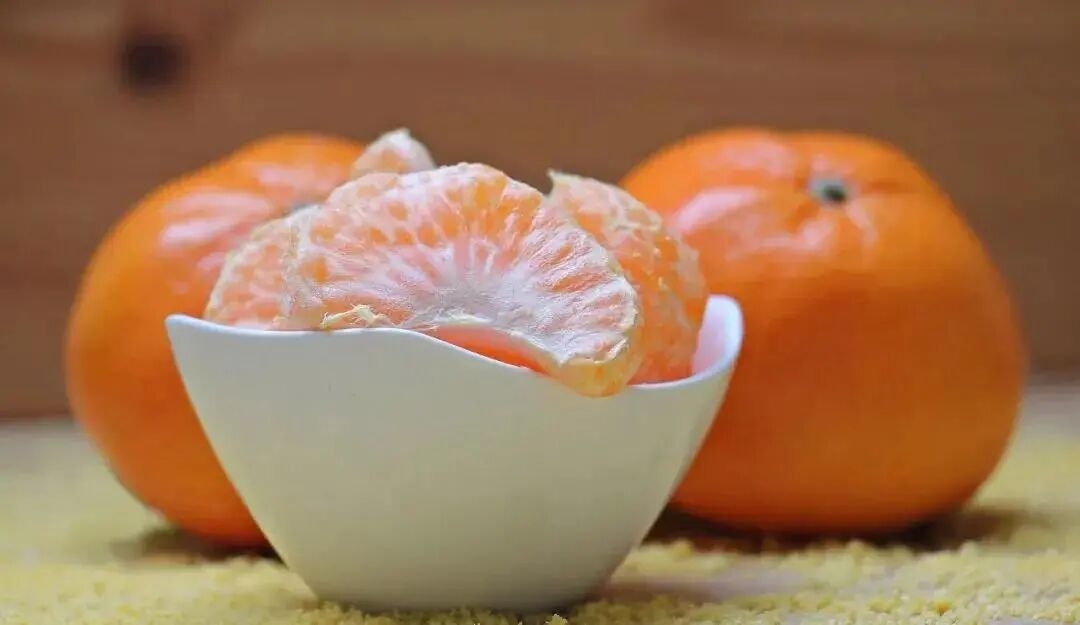
First of all, orange ≠ 橘子 (mandarin). Orange only refers to the orange fruit. Many people learn the word orange in kindergarten, and by elementary school, they are usually quite familiar with it. Initially, I also tended to use orange as a general term for both oranges and mandarins. However, in English, the distinction is quite clear! Therefore, the English expressions for the two are: ① orange refers to the orange fruit, so “orange juice” is orange juice; ② mandarin is the correct term for 橘子.

The differences between the two are:
Mandarins, also known as 橘子, are often round and have a skin that is orange or reddish, with a thin and loose peel that is easy to peel off and feels softer. They are warm in nature and can cause heat if eaten in excess.
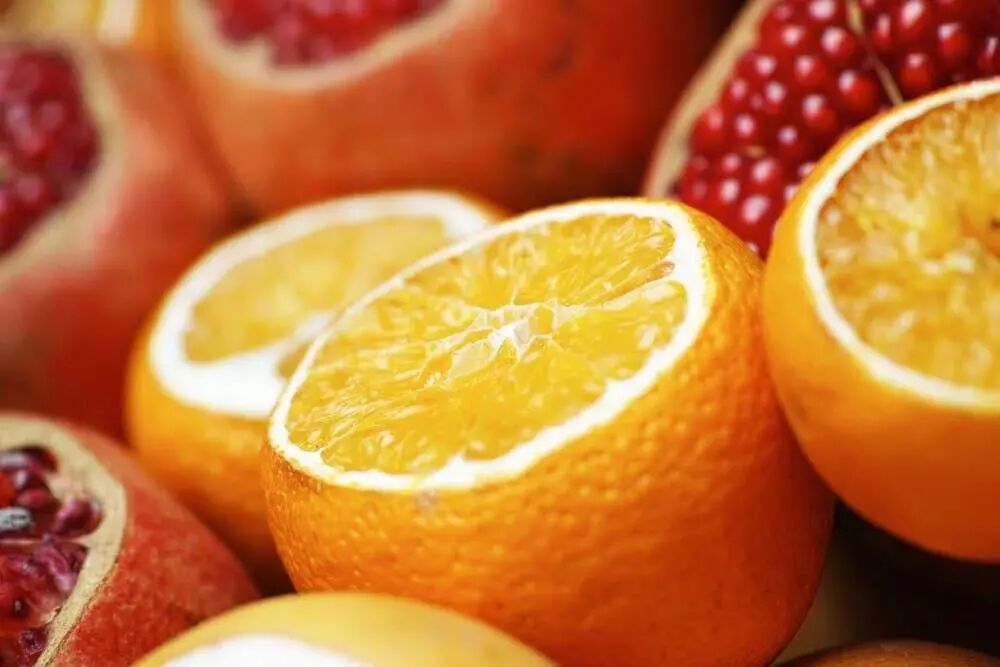
Oranges are usually round or oval, with smooth and thicker skin that is tightly wrapped and not easy to peel. They are cool in nature and can help reduce heat. Additionally, oranges are generally larger than mandarins.
This is what an orange looks like
This is what a mandarin looks like
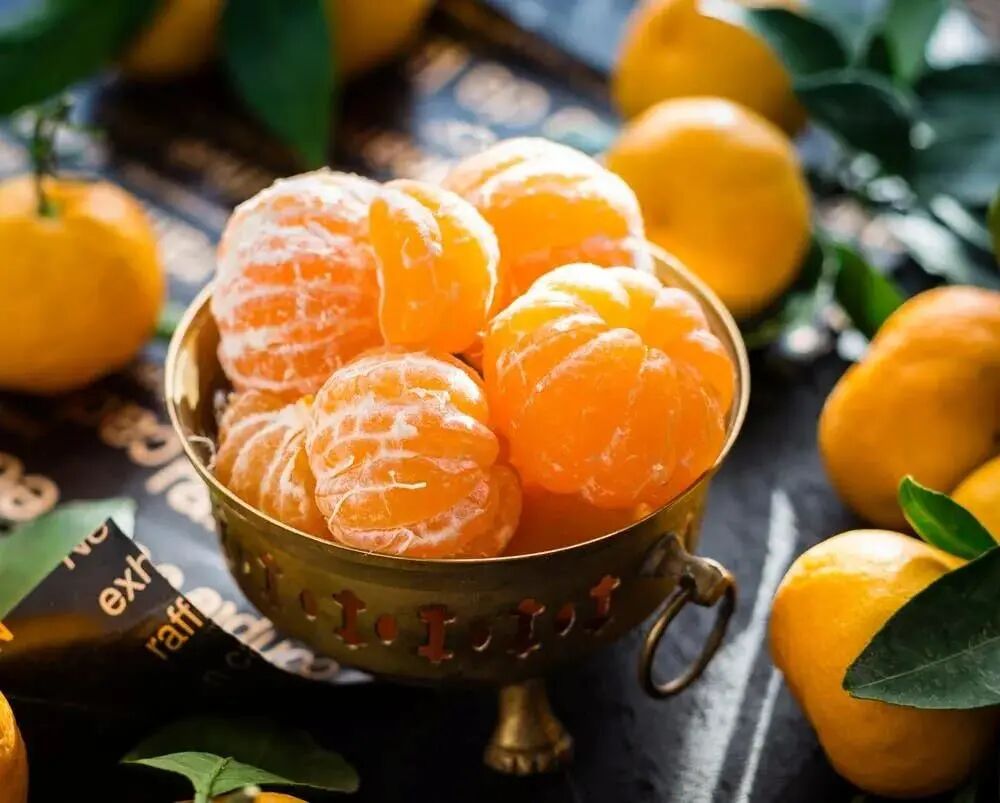
Actually, I have always simply categorized fruits that can be easily peeled as mandarins, while those that are harder to peel and require a knife to cut are oranges… It seems lazy people have their own methods?
Now, back to the term for “橘子”—mandarin. This word looks quite familiar, right?
That’s because, when capitalized, it becomes Mandarin—referring to Mandarin Chinese. Its meanings actually include: n. Chinese official language, national language, Manchu official, citrus; adj. (Chinese-style) tight-fitting coat.

According to the Merriam-Webster dictionary, the English name for “橘子” actually comes from the color of the official robes during the Qing Dynasty.
If the M is capitalized, Mandarin refers to “Mandarin Chinese”—which means “official language”.
Example sentence: Mandarin, but I don’t think it is the same as our oranges. But I believe mandarins and oranges are not the same.
In addition to the English names for mandarins and oranges, let me add two other commonly confused terms.
Cherry tomatoes ≠ small tomatoes
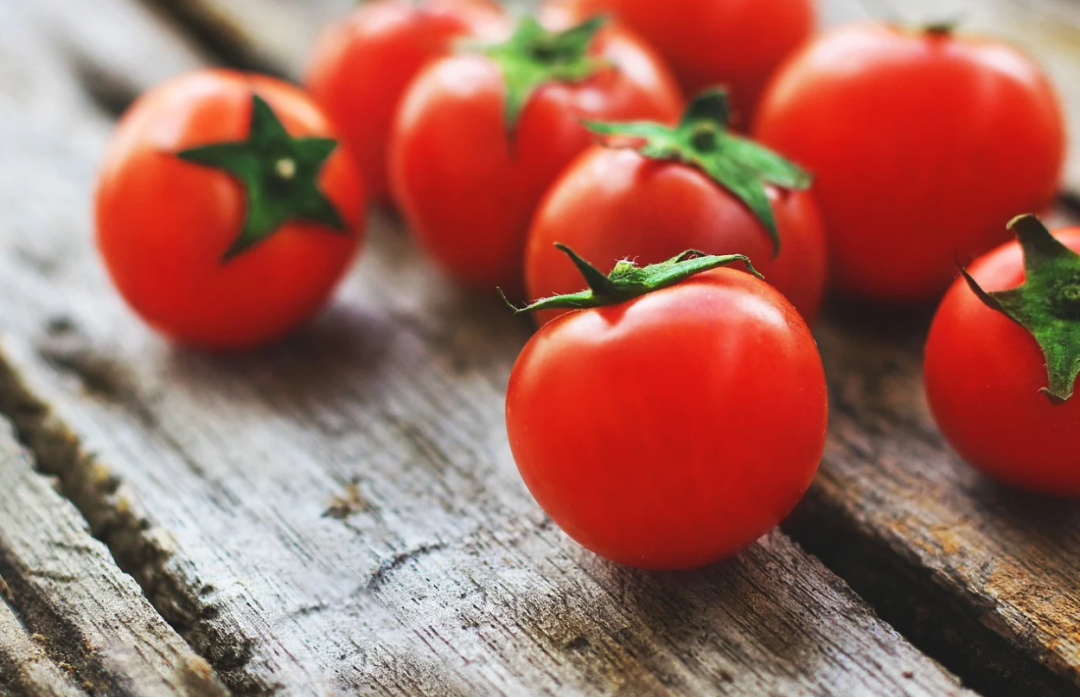
“Cherry tomatoes” are often referred to as “small tomatoes”. The official Chinese name is “樱桃小番茄” (cherry tomato), which can be both a vegetable and a fruit, and has various benefits such as clearing heat and detoxifying, and enhancing appetite.

However, its English name is not “small tomato”, nor is it “saintess/virgin fruit”, but “cherry tomato”—which actually corresponds to “樱桃番茄”.
Additionally, let me clarify that cherry tomatoes are not the genetically modified foods that people often avoid, and don’t believe that their name implies they will cause infertility; such conspiracy theories are quite childish. Their small size is due to grafting techniques that combine tomatoes with smaller cherry tomatoes introduced from abroad, developed through many experiments.
Another fun fact: Dragon fruit is indeed called dragon fruit. In fact, dragon fruit has two English names: “dragon fruit” and “Pitaya”.
If it is red-fleshed dragon fruit, it can be directly called “red dragon fruit”; however, “dragon fruit” is the professional term, while the other is a non-professional term.

Although it also has its own origin and legend, the commonly accepted explanation for its name is that it is named for its scaly appearance resembling the scales of a dragon.
Finally, let me add some common English terms for fruits:
Category A
Apple [ˈæpl] 苹果
Apricot [ˈeprɪˌkɑt] 杏子
Almond [‘ɑmənd] 杏仁
Category B
Banana [bəˈnɑ:nə] 香蕉
Bitter orange 苦柑橘
Blueberry [‘blubɛri] 蓝莓
Category C
Cherry [ˈtʃeri] 樱桃
Coconut [‘kokənʌt] 椰子
Cranberry [‘kræn’bɛri] 蔓越莓
Cumquat [‘kʌmkwɔt] 金桔
Category H
Haw [hɔ] 山楂
Hami melon 哈蜜瓜
Category L
Lemon [ˈlemən] 柠檬
Loquat [‘lokwɑt] 枇杷
Category M
Mango [ˈmæŋgəʊ] 芒果
Mangosteen [‘mæŋgə,stin] 山竹
Mulberry [‘mʌl’bɛri] 桑果
Category P
Peach [pi:tʃ] 桃子
Pear 梨
Pineapple [‘paɪn’æpl] 菠萝
Category S
Strawberry 草莓
Did you learn today’s knowledge?
★
★ ★ ★
★

Image and text source: English Learning Network
Editor: Chen Zhuoyuan
Proofreader: He Jiawen
Review: International Office
For more study abroad programs, please see the original text