Source: Optical Wave
Original Author:Bo Xiangkun
This article introduces the development of lasers and their applications in 3D printing.
1. Laser
The light produced by stimulated emission of atoms is called laser. Lasers have high coherence and good monochromaticity, and can be classified into ultraviolet lasers, visible light lasers, and infrared lasers based on their wavelengths. Depending on the type of laser and the required wavelength, the laser medium can be solid, liquid, or gas. Compared to ordinary light, lasers have higher power and energy, depending on whether they emit continuous waves or pulse waves[1]. These lasers can be focused onto a given substrate at precise points of certain sizes through any intermediate medium[2], which makes lasers widely used in material processing.
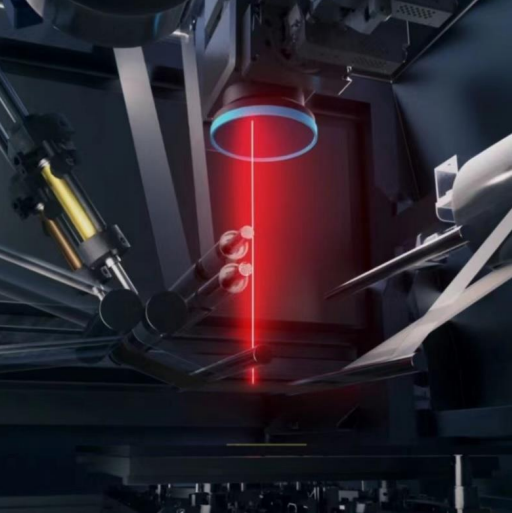
Image Source: io Tech
In 1960, Maiman invented the ruby laser and won the Nobel Prize for it. Since then, laser technology has advanced rapidly, leading to the invention of many new types of lasers, including semiconductor lasers, Nd:YAG lasers, CO2 gas lasers, as well as the latest excimer lasers and femtosecond lasers. Nd:YAG lasers and CO2 gas lasers remove materials through physical mechanisms, while excimer lasers and femtosecond lasers remove materials through ablation.
2. Laser and 3D Printing Technology
3D printing technology is based on the concept of “discrete/accumulation forming”. It is a technology that forms solid parts by “stacking” the forming material through layered processing methods. 3D printing requires a computer software to establish a three-dimensional digital model. Depending on the printing process and different part structures, reasonable cutting planes are selected to divide the digital model into several thin layers. Then, based on the profiles of these thin layers, the raw material is melted and stacked layer by layer in sequence, ultimately forming a three-dimensional object. 3D printing technology has advantages such as the ability to manufacture complex structures, saving materials, requiring no complex tooling, and fast forming speed. It is widely used in aerospace, weaponry, vehicle manufacturing, electronic devices, and biological tissue engineering. Therefore, 3D printing technology is one of the most attractive research directions in the manufacturing industry and is considered by most scholars to be a significant revolution in manufacturing[3-4].
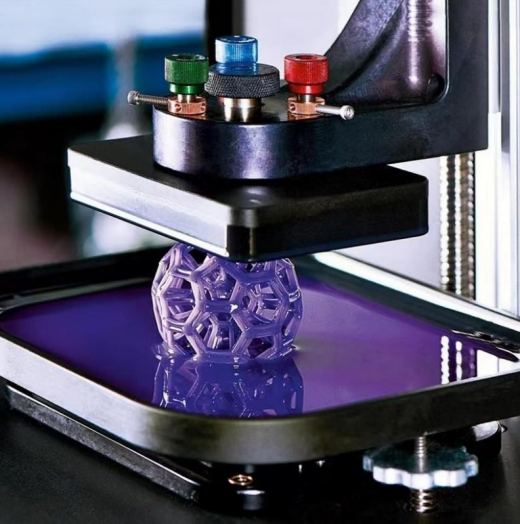
Image Source: Zhihu Industrial Design
Laser 3D printing technology is an additive manufacturing technology that uses lasers to heat materials and melt them, then accumulate them layer by layer to form a physical object. Because lasers can produce very high energy, their energy is sufficient to melt difficult-to-fuse metals. Therefore, laser 3D printing technology can be used for 3D printing of difficult-to-melt metals, such as common high-temperature alloys. Another advantage of laser 3D printing technology is that it can print parts with complex structures, as the printing process is a layer-by-layer accumulation of materials, and the internal structure of the parts is exposed during processing, allowing for the manufacturing of complex structures[4-5].
3. Classification of Laser 3D Printing
Currently, common laser 3D printing technologies include Selective Laser Sintering (SLS), Selective Laser Melting (SLM), and Stereolithography (SLA) 3D printing technologies.
3.1 Selective Laser Sintering (SLS)
Selective Laser Sintering (SLS) uses a laser beam (usually a carbon dioxide laser) to selectively sinter thin layers of powdered polymers or polymer-based composites, forming solid 3D objects with macro and micro features. SLS has several advantages in forming design objects, including high part accuracy, strong material versatility, and no need for part support during manufacturing, as the material is not fused together by the heat generated by the laser beam, providing good support for the sintered objects. Additionally, SLS can generate irregularly shaped objects, including structures with channels and overhang features. During the SLS process, the powder material is heated by the laser beam, overcoming the surface tension of individual particles in the powder, and the selectively sintered powder fuses together, solidifying thin layers, and then builds solid 3D objects layer by layer[6].
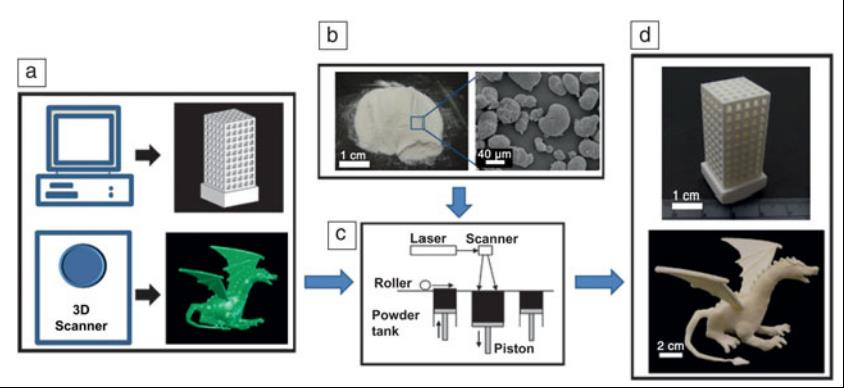
Figure 1. Selective Laser Sintering (SLS) Preparation Process[6].
Before the selective sintering of powder materials, the entire part bed of the machine (including the area of sintered powder and sintered parts) is heated to just below the melting temperature of the material (or close to the glass transition temperature of amorphous polymers) to minimize thermal deformation and promote the fusion of the sintered layers. The laser beam then scans the cross-sectional profile of the powder surface according to the slice data, heating the powder and causing the particles to fuse together to form a solid layer. After one layer is completed, the part bed is lowered, and one of the powder containers filled with powder material is raised. Then a new layer of powder is spread using a roller, and the selective sintering process is repeated. The powder that has not been scanned by the laser beam remains in place as support for the next layer of powder, and is then removed and recycled after the object is completed[6].
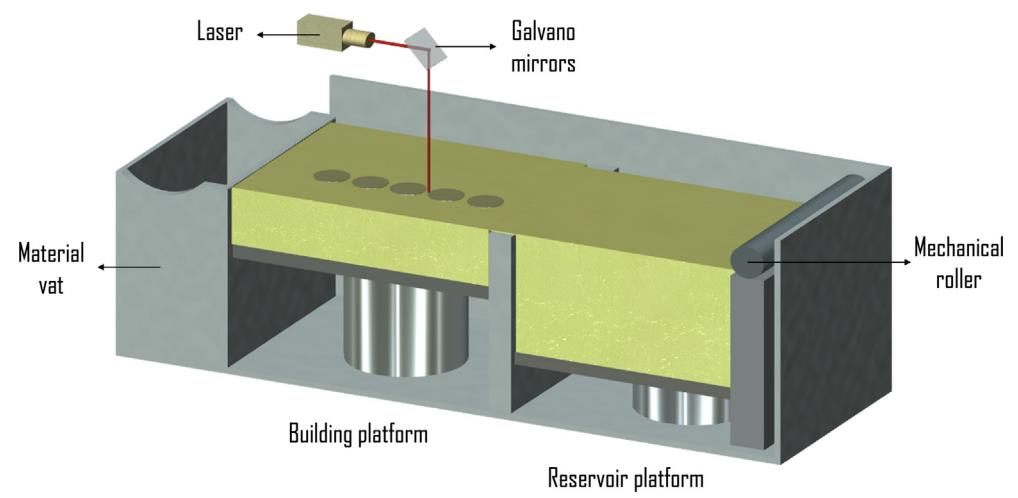
Figure 2. Graphic Illustration of SLS 3D Printer and Its Main Components[7].
3.2 Selective Laser Melting (SLM)
Selective Laser Melting (SLM), also known as rapid prototyping technology for metal powders, is a technology that quickly melts and solidifies metal powders under the thermal action of a laser beam. To completely melt the metal powder, the laser energy density must exceed 10^6 W/cm2. Currently, the lasers used in SLM technology mainly include Nd-YAG lasers, CO2 lasers, and fiber lasers, which produce laser wavelengths of 1064 nm, 10640 nm, and 1090 nm respectively. Metal powders have a higher absorption rate for shorter wavelength lasers like 1064 nm, while their absorption rate is lower for longer wavelength lasers like 10640 nm. Therefore, during the forming process of metal parts, lasers with shorter wavelengths have higher energy utilization efficiency, while using longer wavelength CO2 lasers results in lower energy utilization efficiency. The SLM technology utilizes high-energy lasers to completely melt the metal powder, which, after cooling, metallurgically welds with the base metal, and then accumulates layer by layer to form a three-dimensional solid.
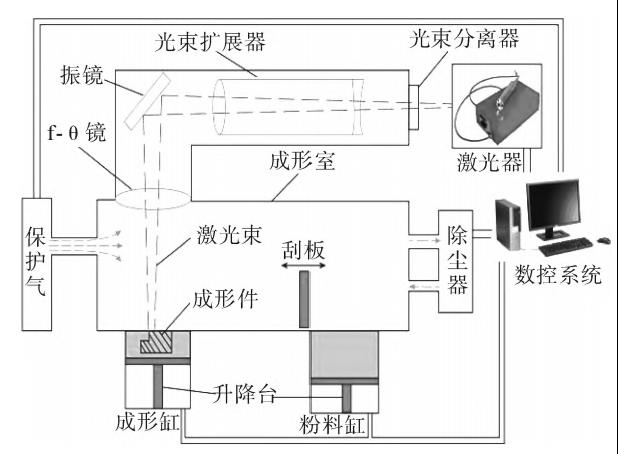
Figure 3. SLM Technology Principle Diagram[4].
3.3 Stereolithography (SLA) 3D Printing
Stereolithography (SLA) 3D printing uses ultraviolet lasers (355 nm or 405 nm) as the light source, with a galvanometer system to control the laser spot scanning. The photosensitive resin undergoes a photopolymerization reaction under ultraviolet laser irradiation at a certain wavelength, transforming from liquid resin to solid state.
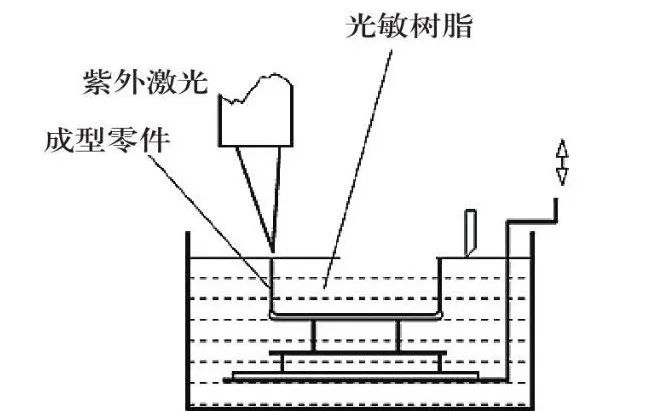
Figure 4. SLA Principle Diagram[8].
The forming process: The three-dimensional model to be printed is imported into slicing software in formats such as STL. After slicing, a series of contour data for the item to be printed is obtained → the computer controls the deflection of the galvanometer according to the contour data to move the ultraviolet light according to the contour shape, causing the irradiated photosensitive resin to rapidly undergo photopolymerization, forming a cured layer → after curing is complete, the Z-axis moves a layer thickness distance, the scraper levels the page or the material tank descends at an angle, and after the resin completely immerses the cured layer, the next cross-section profile is irradiated; the newly cured contour surface will cure on the previously cured layer; this process is repeated until printing is complete[8].
4. Conclusion
With the continuous advancement of laser 3D printing technology, its applications in the manufacturing industry are becoming increasingly widespread, especially in key indicators such as density, precision, roughness, strength, and bonding, where the parts produced have reached or even surpassed those made by traditional processing methods. In the future, laser 3D printing is expected to achieve greater technological breakthroughs and applications.References:[1] H. Rong, R. Jones, A. Liu, O. Cohen, D. Hak, A. Fang etal., “A continuous-wave Raman silicon laser,” Nature 433(7027), 725–728 (2005).[2] R.R. Gattass and E. Mazur, “Femtosecond laser micromachining in transparent materials,” Nature photonics 2(4), 219–225 (2008).[3] GNANASEKARAN K, HEIJMANS T, BENNEKOM S V. et al. 3D printing of CNT and graphene-based conductive polymer nano composites by fused deposition modeling [J]. Applied Materials Today, 2017, 9:21-28.[4] Li Ruifeng, Li Ke, Zhou Weizhao. Research progress of laser metal 3D printing technology [J]. Adhesion, 2022, 49(07):98-105.[5] RANEY J R, COMPTON B G, MUELLER J. Rotational 3D printing of damage-tolerant composites with programmable mechanics [J]. Proc Natl Acad Sci USA, 2018, 115(6):1198-1203.[6] Duan B, Wang M. Selective laser sintering and its application in biomedical engineering. MRS Bulletin. 2011;36(12):998-1005. doi:10.1557/mrs.2011.270.[7] Atheer Awada, Fabrizio Finaa, et al. 3D printing: Principles and pharmaceutical applications of selective laser sintering. International Journal of Pharmaceutics 586(2020) 119594.[8] Wang Yongkuan, Liu Fang, Wang Junge, et al. Research status of photopolymerization 3D printing technology in the casting field [J]. Screen Printing, 2023(19):99-102. DOI:10.20084/j.cnki.1002-4867.2023.19.029.
END
The reproduced content only represents the author’s views
It does not represent the position of the Semiconductor Institute of the Chinese Academy of Sciences
Editor: Schrödinger’s Cat
Editorial: Mu Xin
Submission Email: [email protected]
Previous Recommendations
1. The Semiconductor Institute has made progress in research on bionic covering type neuron models and learning methods
2. The Semiconductor Institute has made significant progress in inverted structure perovskite solar cells
3. Why is copper used as the interconnect metal in chips?
4. What exactly is 7nm in chips?
5. Silicon-based integrated optical quantum chip technology
6. How anomalous is the quantum anomalous Hall effect? It may lead to the next revolution in information technology!