From August8 to 12, the 2025 World Robot Conference (WRC) became a hot topic of interest, comparable in popularity to last month’s tickets for the 2025 World Artificial Intelligence Conference (WAIC), which were speculated to reach over two thousand yuan.
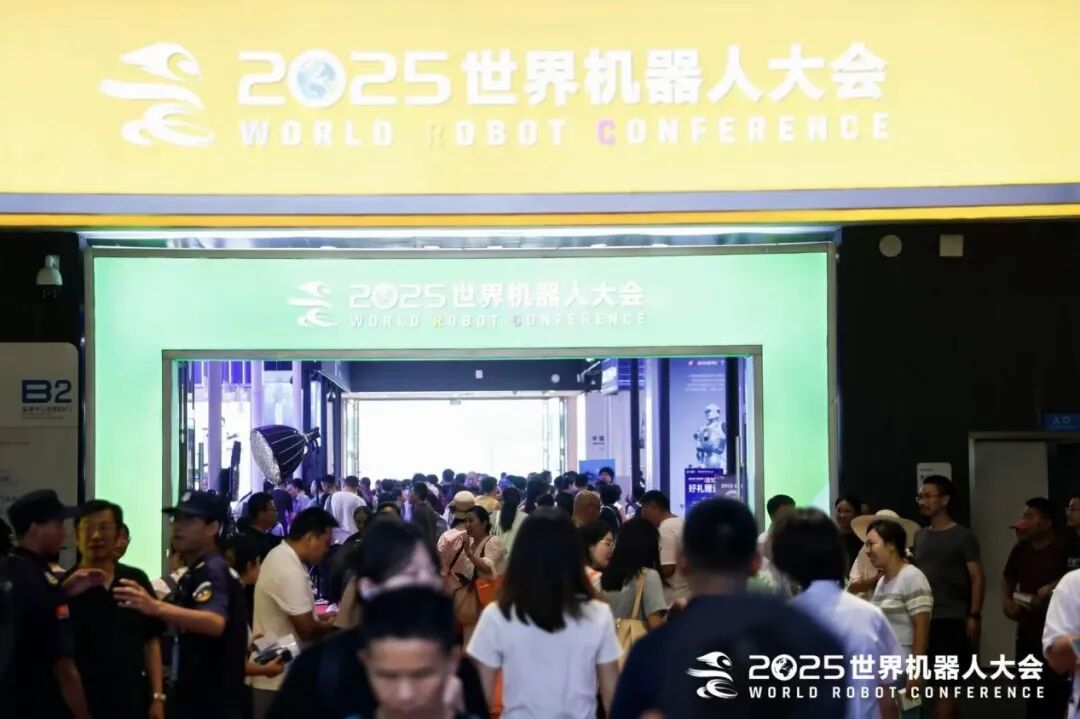
Entering the conference venue, the audience was bustling with excitement. Several humanoid robot companies showcased their latest research achievements. The welding robot from Siasun has accumulated 6 million industrial data points, while Yushutech announced that its R1 humanoid robot, priced at 39,900 yuan, will achieve mass production by the end of the year. Galaxy General has developed a retail robot capable of grasping 50 types of products through training with 99% simulation data.
However, there are differing opinions on the current state of embodied intelligence development. Niu Wenwen, chairman of Chuangye Heima, stated in a video on April 19 that “those who start businesses in humanoid robots will fail; they basically cannot survive.”
Is the hardware ready, but AI lagging behind?
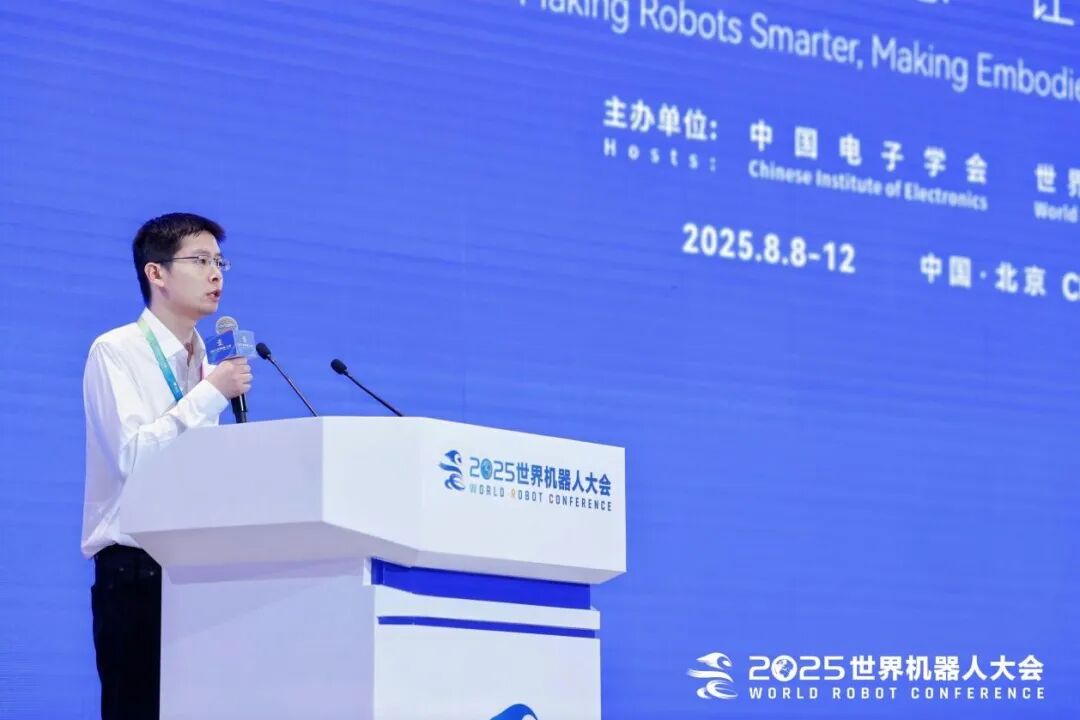
“From a technical perspective, or from the standpoint of AI, the current hardware is completely sufficient. The biggest challenge remains embodied intelligence, or the development of AI technology, which is still inadequate. This is also the biggest issue limiting the large-scale application of robots, especially humanoid robots.” Wang Xingxing, founder of Yushutech, stated bluntly during a forum at the 2025 World Robot Conference.
Cost and hardware are not the key issues; even machines costing 100,000 or even 1 million yuan can find a market as long as they are functional.
This viewpoint was corroborated by several companies on-site. Siasun emphasized that scenarios like welding and handling are mature due to deep data accumulation, while Pro Universe Robotics adapts modular hardware to industrial needs. Changmugu’s orthopedic surgical robot has even achieved “20 minutes to complete a surgery.” Zhang Yiling, chairman of Changmugu, stated, “Previously, that surgical robot would take about 4 to 5 hours to complete a surgery, and could only operate on pigs. But now our robot can perform surgery on humans in about 20 minutes.”
However, the progress in hardware contrasts with market expectations.
Wang He, founder of Galaxy General, pointed out during a small media meeting at the 2025 World Robot Conference that “the working capability of robots is still not strong enough, and the types of tasks they can complete are quite limited. However, if they can achieve a very general level within these limited skill sets, they can empower many scenarios at once.” Ge Jin, founder and COO of Pro Universe Robotics, admitted that their product efficiency “only matches that of humans,” and the precision advantage has yet to translate into disruptive value.
Various issues stem from the insufficient generalization ability of embodied intelligence models, with robots lacking the ‘brain’ to adapt to complex scenarios.
Is the VLA craze cooling?
Currently, there are significant industry disagreements on how to build robot intelligence.
Taking the VLA (Visual Language Action) model as an example, Wang Xingxing, founder of Yushutech, bluntly stated that VLA is a “fool’s architecture.” He expressed skepticism about the relatively popular VLA model, stating, “I personally maintain a rather skeptical attitude towards the VLA model. When interacting with the real world, the amount and quality of data it can collect are insufficient.”
Jiang Lei, head of the humanoid robot innovation center at Guodi, expressed a similar viewpoint to Future Turing, stating that while the VLA has validated the Scaling Law, it “may not be the ultimate solution.”
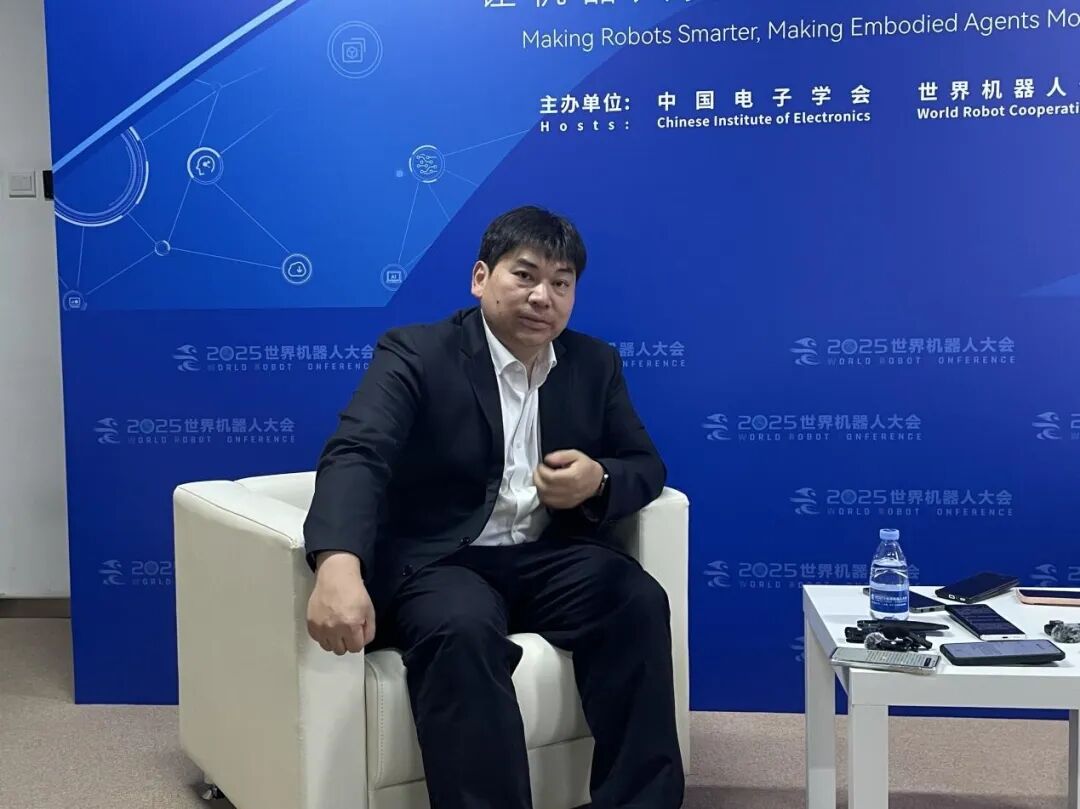
Jiang Lei, head of the humanoid robot innovation center at Guodi / Source: Future Turing on-site photography
He further explained, “The VLA is somewhat like a large model version of our past motion calibration. Previously, robots also had motion calibration; you would push them continuously to generate an action, but they had no generalization capability. The VLA solves this problem through trajectory tracking at the motion level. However, it has good generalization ability; whether you are grasping a doll or parts of different shapes, it can still grasp them. But our next step in reinforcement learning will address the issue of force control. For example, our hands need to perceive when there is water, and when friction is insufficient, how to grasp better and provide feedback.”
Video generation and world models may be becoming a new hope for training humanoid robots. Wang Xingxing revealed that Yushutech had attempted to drive robotic arms using video generation models. However, due to the enormous training scale of video generation models and considering the company’s computational power and investment, large-scale training was challenging. After attempts, it was found that the versatility of these models did not fully meet expectations, leading to a halt in further progress.
Wang Xingxing believes that the industry’s focus on the data issue is somewhat excessive. Nevertheless, the data shortage problem is widely regarded as a significant bottleneck restricting industry development. Jiang Lei revealed that the innovation center has currently accumulated 6 million real machine data, and through the fusion training of real and simulation data, has initially verified the feasibility of the robot’s evolutionary generalization ability. Wang He pointed out from the data dimension that current model training overly relies on publicly available internet data, and the lack of a large amount of private domain knowledge leads to inherent limitations in model reasoning capabilities, necessitating the establishment of a controllable data augmentation mechanism.
NVIDIA’s Omniverse and simulation technology vice president Rev Lebaredian asserted at the event: “If you want to build a robot system that can act in the real world and is safe and reliable, the only choice is to use simulation.”
Traditional enterprises transforming, lost in confusion
During discussions, Jiang Lei sharply pointed out two key dilemmas currently faced in the transformation of the robot industry.
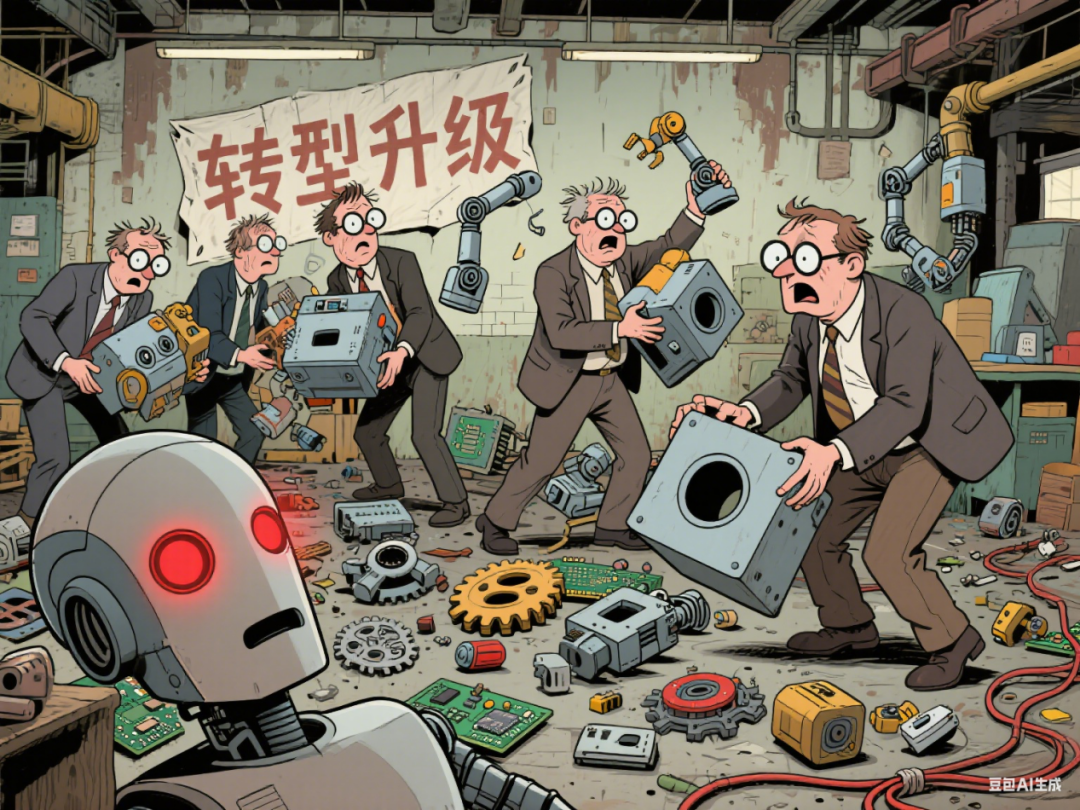
The first dilemma is the phenomenon of “pseudo-transformation” among traditional manufacturing enterprises.
Jiang Lei described this as “changing categories without changing tracks,” revealing the cognitive limitations of traditional manufacturing enterprises during the transformation process. “Many core component manufacturers, such as those previously making stamped parts, ask me if they can process your robot.” Jiang Lei cited, “I have always said that these types of enterprises are merely changing categories, not changing tracks.” Although these enterprises have entered the robot field, they still use traditional manufacturing thinking and lack genuine digital transformation and upgrading.
Jiang Lei emphasized that digital transformation must be driven by the digital economy. He suggested that manufacturing enterprises need to fill the digitalization gap, “For example, your own enterprise’s operating system, cloud facilities, and your vertical large models and data factories need to be built.”
The second dilemma is the “soft-hard split” dilemma arising from the emergence of AI companies.
Jiang Lei observed that many AI companies are falling into another extreme: “You will find that many AI companies at the bottom of the pyramid are now also struggling; markets for visual recognition and access control are becoming saturated.” These companies focus excessively on software algorithms while neglecting the importance of hardware carriers.
In response, Jiang Lei made clear suggestions: “For companies with software capabilities, I recommend they develop some hardware devices. For example, create an electronic pet; you need to present your large model capabilities through a hardware product that the public can interact with.” He emphasized that “the integration of software and hardware is a crucial foundation for future enterprises.”
The rise of China’s new energy smart driving vehicles corroborates one fact: if the digital economy-driven transformation and traditional enterprise transformation occur simultaneously, then enterprises driven by the digital economy develop significantly faster. “Enterprises driven by the digital economy (Chinese new energy vehicles) have an overwhelming number of orders, while traditional large manufacturers like Mercedes-Benz and BMW follow the traditional manufacturing transformation model, facing significant market impacts,” Jiang Lei stated.
In the face of the industrial transformation pain, Li Bing, head of the Beijing Agricultural Commercial Bank’s Economic Development Zone branch, proposed that banks are innovating the supply model of “patient capital” to provide financial support to the robot industry in need. Unlike traditional credit, this support method focuses more on the industry cultivation cycle, promoting the development of the robot industry through risk-controlled diversified financial solutions combined with national policies.
It is worth noting that despite the gradual improvement of policies and financial support, small and medium-sized enterprises still face significant survival pressures and require more precise support measures.
We see that the spring of embodied intelligence has arrived, but the harvest season still needs to wait for another winter.


With the rapid iteration of artificial intelligence technology, the capability boundaries of large models are continuously expanding. Intelligent agents, as an important application mode of large models, are leading an industrial transformation with their unique innovation and practicality in planning, decision-making, memory, and tool usage.
To implement the “National Guidelines for the Construction of a Comprehensive Standardization System for the Artificial Intelligence Industry (2024 Edition)”, the China Mobile Communications Association has officially launched the development of three group standards:
●“Requirements for the Capabilities of Artificial Intelligence Agents” (Plan No.: T/ZGCMCA 011-2025)
●“Technical Requirements for the Inherent Safety of Artificial Intelligence Agents” (Plan No.: T/ZGCMCA 023-2025)
●“Interoperability Interface Specifications for Artificial Intelligence Agents” (Plan No.: T/ZGCMCA 024-2025)
We sincerely invitedata service enterprises, medical institutions, research institutes, universities, and testing and certification organizations and other industry organizations along the entire chain, as well as R&D engineers, project managers, and application experts to participate in the standard formulation.
We look forward to your active participation, let us work together to lead the development direction of the artificial intelligence industry!
Contact: Li Zhenqi
Contact Information:18519753675 (same as WeChat)