
Former Intel CEO Pat Gelsinger boldly predicts that GPUs will begin to be replaced by 2030, with quantum computing expected to become mainstream in two years. The AI bubble is unlikely to burst in the next two years, but it will eventually be punctured by breakthroughs in quantum computing.
The AI bubble will not burst.
Gelsinger describes quantum computing, traditional computing, and AI computing as the “holy trinity” with the potential to disrupt the computing industry. Unlike Jensen Huang, who estimates that quantum computing will take 20 years to become mainstream, Gelsinger believes it will only take two years.
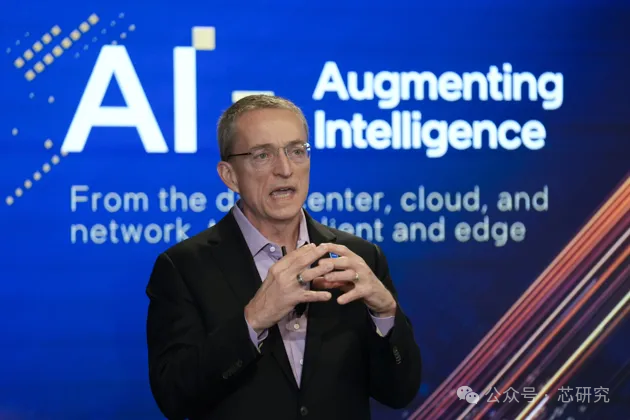
Regardless of who is correct, “for those in the tech industry, we are entering the most exciting 10 or 20 years ahead.”
Regarding the recent hot topic of the “AI bubble,” Gelsinger states that the AI bubble will not burst in the next two years, but he predicts that future breakthroughs in quantum computing technology may puncture the AI bubble.
The hottest GPUs will begin to be phased out starting in 2030.
Commenting on Silicon Valley tech giants.
Gelsinger also shared his views on other tech giants in Silicon Valley.
Google’s development of AI is risky, it’s time for Apple to initiate the next innovation, Amazon’s investment in self-developed chips and alliance with Anthropic is establishing a position similar to Google’s, while Tesla is bold but needs to respect customers and partners more.
What about Microsoft?
Gelsinger thought for a moment and then said, “Basically, what Ultraman is doing with Microsoft now is very similar to what Bill Gates did with IBM back in the day.”
Back then, Gates had the intellectual property rights to the PC operating system, turning IBM into a software distribution partner.
When the contract was finalized in the 1980s, Microsoft was relatively small, but by the 1990s, it had surpassed the blue giant IBM.
How do you view OpenAI signing over $1 trillion in AI infrastructure contracts and plans to enter the AI consumer hardware market?
Gelsinger stated that since leverage will be heavily used in future business models, many mistakes cannot be afforded. If I were in that position, I wouldn’t try to build any hardware.
Reorganizing Intel, yet quietly stepping down.
Gelsinger returned to his old company Intel in 2021, launching a $20 billion restructuring plan, hoping to regain Intel’s leadership in semiconductor manufacturing by having foundries produce chips for other companies.
Initially, morale was high throughout Intel, but the honeymoon period ended quickly, and major customers for foundry services were still waiting.
Gelsinger pointed out that Intel’s internal “decay” was unexpected; in the five years since he took the helm, not a single product was delivered on time, and basic discipline was lost.
It’s like saying, oh no, we no longer know how to do chip engineering!
The result was a delay in the launch of Intel’s 18A advanced process technology, which is crucial for challenging TSMC’s dominance.
The Biden administration’s delay in disbursing chip act subsidies also discouraged Gelsinger.
He said, “After two and a half years, not a single cent has been disbursed? I think that’s terrible! And the way it was finally pushed out at the last minute made me very angry.”
The U.S. government ultimately approved about $11 billion in subsidies for Intel, but weeks later, Gelsinger was dismissed by the Intel board, with his five-year restructuring only reaching the fourth year.
Ironically, the new CEO, Pat Gelsinger, largely continues Gelsinger’s strategy, allowing Intel to keep playing the manufacturing game and launching the 18A within the promised five-year timeframe.
Gelsinger admits this is somewhat ironic and reflects on whether he focused too much on “downward” management; if “upward” management had been done better, perhaps the outcome would have been different.
If he had worked harder to bring more semiconductor experts onto the board, perhaps he could have gained the board’s support all the way through.