
The Institute of Electrical and Electronics Engineers (IEEE) shared an expert article on the 16th, forecasting how artificial intelligence (AI) robots will assist in elderly care in the future.
The article cites data from the World Health Organization, stating that with the acceleration of global aging, it is expected that by 2050, the proportion of the global population aged 60 and above will reach 22%. Elderly individuals, especially those living independently, generally face three major challenges: mobility issues, memory decline, and feelings of loneliness.
The article points out that for many years, the concept of developing “robots for elderly care” has received significant attention. Currently, much of the work in caring for the elderly is done with the help of full-time or part-time caregivers, and as the aging population increases, the demand for care grows while the workforce decreases.
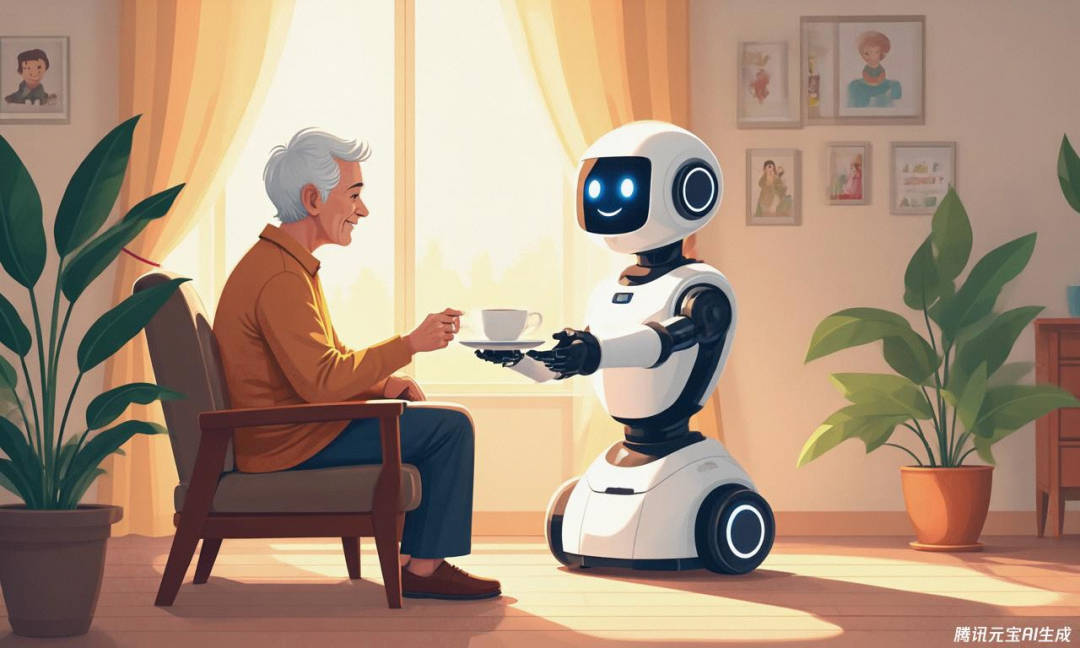
The article envisions that with the development of AI technology in recent years, robots utilizing AI technology are expected to help the elderly address these challenges and effectively compensate for the shortage of caregivers, thereby improving the quality of life and happiness of the elderly.
IEEE experts note that while there are currently no all-purpose household robots, robots with specific caregiving functions have already appeared on the market. In the future, technological advancements will enable caregiving robots to more easily recognize objects in their environment, navigate freely, assist the elderly with daily chores, detect emergencies in the surrounding environment, and receive data from sensors worn by the elderly to monitor their health status and call for help when necessary.
IEEE experts also pointed out that with advancements in natural language processing technology, people can now frequently “converse” with smartphones and other electronic devices using generative AI technology, and caregiving robots will also possess similar “capabilities” in the future.
Future caregiving robots will not only be able to remind the elderly to take their medication but may also accompany them to “cure loneliness.” The article states that with significant progress in chatbots, there are already some devices on the market that utilize generative AI to serve as “emotional support robots.” Once multifunctional caregiving robots appear on the market, endowing them with conversational abilities is “just a matter of time.”
Source: China News Service
Editor: Ma Huaiyu