The mini circuit breaker, abbreviated as MCB, is a widely used circuit breaker product with a vast range of applications. Its main function is to provide protection for electrical distribution devices at building electrical terminals. It is suitable for overload and short-circuit protection of circuits with an AC rated voltage of 230/400V at a frequency of 50/60Hz and a rated current of up to 63A, and can also be used for infrequent switching of circuits under normal conditions. Mini circuit breakers (MCBs) are mainly used in various places such as industry, commerce, high-rise buildings, and residential areas. The common tripping characteristics of circuit breakers are A, B, C, and D types. So the question arises, how to properly choose A, B, C, and D mini circuit breakers?
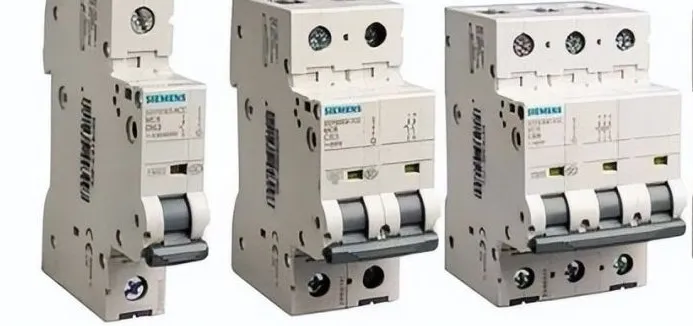
There are generally four types of tripping characteristics for circuit breakers, namely A, B, C, and D:
A-type circuit breakers: 2 times the rated current, rarely used, generally for semiconductor protection (usually using fuses).
B-type circuit breakers: 2-3 times the rated current, generally used for purely resistive loads and low-voltage lighting circuits, commonly used in household distribution boxes to protect household appliances and personal safety, currently used less frequently.
C-type circuit breakers: 5-10 times the rated current, must trip within 0.1s, circuit breakers with this characteristic are most commonly used to protect distribution lines and lighting circuits with larger connection currents.
D-type circuit breakers: 10-20 times the rated current, mainly used in environments with high instantaneous current, generally used less in households. Suitable for systems with large inductive loads and high inrush currents, commonly used to protect devices with high inrush currents.
The so-called multiple currents: refers to the resistance to inrush current. The switch does not trip within a certain time. Its characteristic is to avoid inrush current.
Selection of low-voltage circuit breaker tripping types: The tripping types of circuit breakers include overcurrent tripping, undervoltage tripping, parallel tripping, etc.
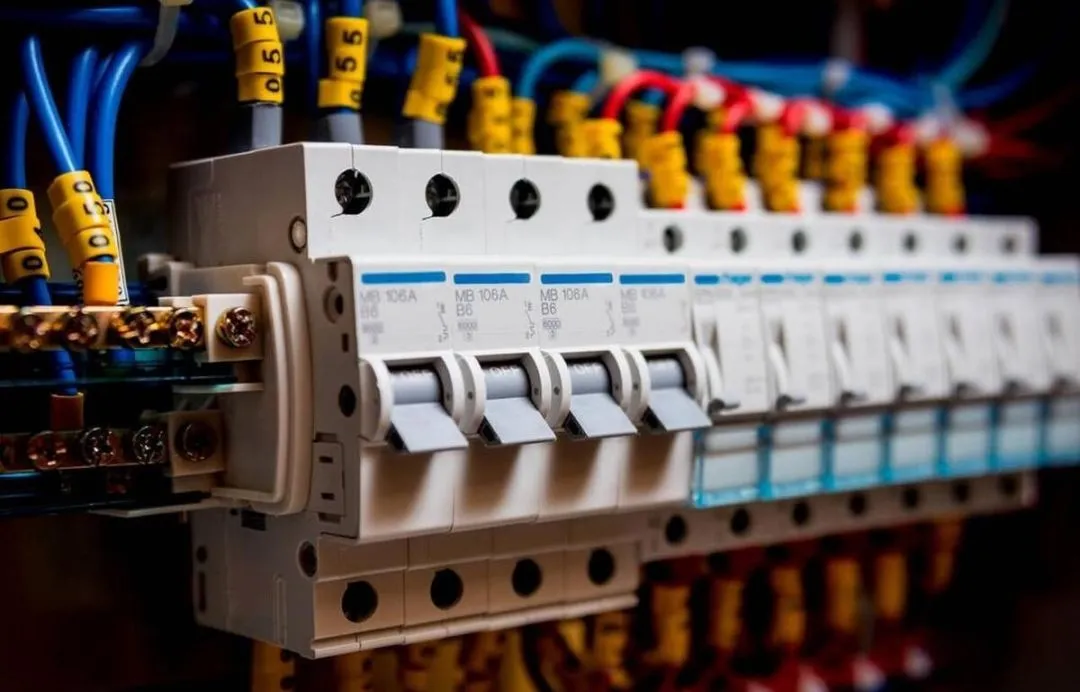
Overcurrent trip devices: can be divided into overload trip devices and short circuit current trip devices, which have long delay, short delay, and instantaneous types, with overcurrent trip devices being the most commonly used. The setting value of the operating current for overcurrent trip devices can be fixed or adjustable, usually adjusted using a rotary or adjustment lever. There are two electromagnetic overcurrent release methods: fixed and adjustable. Electronic overcurrent releases are usually adjustable.
The breaking capacity of the circuit breaker: refers to the ability to withstand the maximum short-circuit current, so the breaking capacity of the rotary circuit breaker must be greater than the short-circuit current of its protective device.
Overcurrent trip devices by installation method: are divided into fixed installation and modular installation. Fixed devices are processed as a whole with the circuit breaker when leaving the factory. After the product leaves the factory, the rated current of the release cannot be adjusted, while modular installation releases can be adjusted at any time, providing strong flexibility.
Instantaneous type: 0.02s, used for short-circuit protection;
Short delay type: 0.1-0.4s, used for short-circuit and overload protection;
Long delay type: less than 10s, used for overload protection.
The commonly used DZ series air switches (mini circuit breakers with leakage protection) have the following specifications:
C16, C25, C32, C40, C60, C80, C100, etc., where C represents the tripping current characteristic of C, that is, the tripping current, such as C20 represents a tripping current of 20A, with a tripping characteristic of C curve. A C20 circuit breaker is generally selected for a 3500W water heater installation, while a C32 circuit breaker is generally used for a 6500W water heater installation.
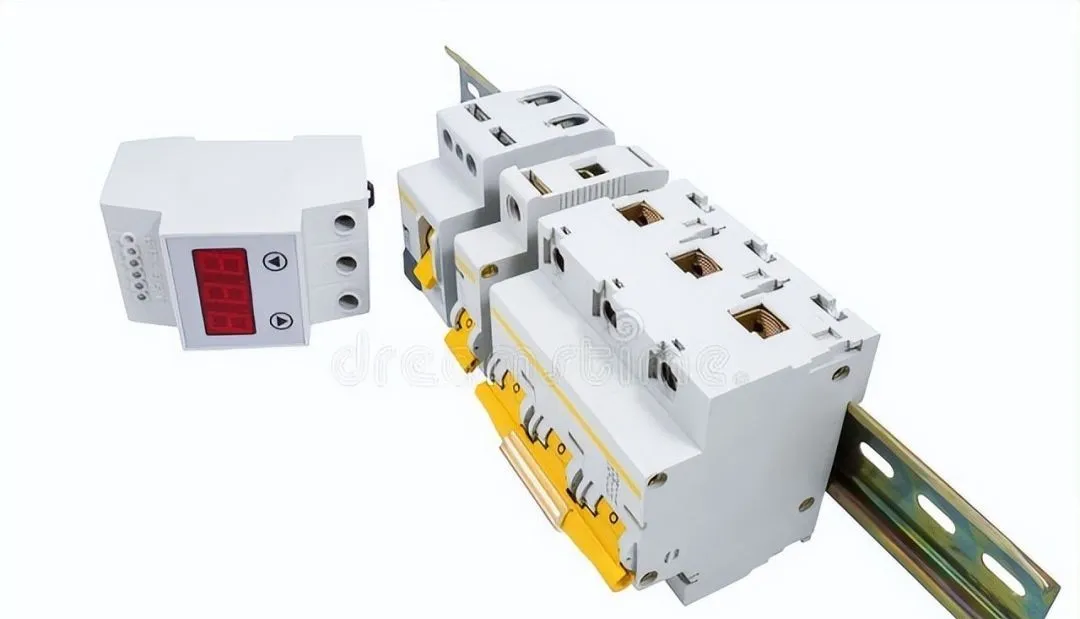
Circuit breakers are used to protect wires and prevent fires, so they should be selected based on the size of the wire rather than the power.
If the selection of the circuit breaker is too large, it cannot protect the wire. When the circuit breaker is overloaded, it still does not trip, posing a safety hazard to the household.
1.5 square wire matches with C10 switch;
2.5 square wire matches with C16 or 20 switch;
4 square wire matches with C25 switch;
6 square wire matches with C32 switch.
For air switches with motors as loads, D-type characteristics should be selected to avoid high starting currents of 5-8 times the motor’s starting current.

Is C-type circuit breaker suitable for motor circuits?
It is well known that ordinary circuits such as lighting circuits use C-type mini circuit breakers; motors and other power circuits use D-type circuit breakers, so can motor circuits use C-type mini circuit breakers?
Let’s take a look at the differences between C-type and D-type mini circuit breakers:
C-type mini circuit breaker: includes overload protection and short-circuit protection, with the short-circuit protection tripping value being 5-10 times the rated current;
D-type mini circuit breaker: includes overload protection and short-circuit protection, with the short-circuit protection tripping value being 10-20 times the rated current;
The overload protections of the two are the same, and the only difference is in the tripping range of the short-circuit protection.
In general, ordinary loads have no starting current, that is, the starting current is equal to the rated current; three-phase motors have a starting current of about 6-8 times the rated current.
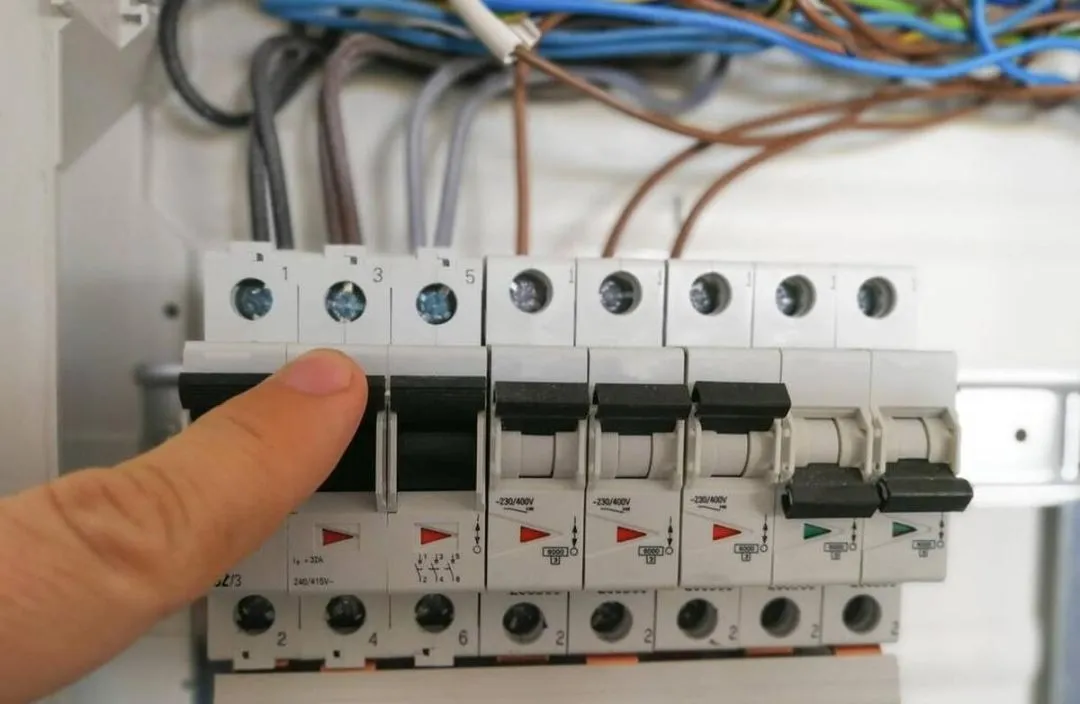
For example: A 4kw three-phase motor has a rated current of 9A, and the starting current is calculated at 10 times, which is 90A.
Generally, a D-type 16A mini circuit breaker is selected as the protective device. Calculating the tripping current at 10 times, the short-circuit protection tripping current is 160A, which can avoid the motor’s starting current.
If a C-type 16A mini circuit breaker is selected as the protective device, the short-circuit protection tripping current calculated at 5 times is 80A, which cannot avoid the motor’s starting current.
Does this mean that C-type circuit breakers are absolutely not to be chosen?
Of course not. From a technical perspective, if a C-type 25A mini circuit breaker is chosen as the protective device, the short-circuit protection tripping current calculated at 5 times is 125A, which can avoid the motor’s starting current.
From an economic perspective, taking Schneider’s C65 series micro-fault as an example, the C series is slightly lower.
In general, our principle for selecting circuit breakers is that the rated current of the circuit breaker should be greater than the load current, and then choose C-type or D-type based on the nature of the load. D-type is specifically designed by manufacturers for motor loads, but it does not mean that C-type circuit breakers cannot be used; just adjust the calculation method and be flexible.
Differences and Applications of Mini Circuit Breakers:
For mini circuit breakers, 1pn, 1p, and 2p are usually used for the switch control of single-phase electrical equipment.
Differences:

To reduce costs, 1p can be used, but advanced circuit breakers must have leakage trip functions. To prevent accidents caused by confusion between live wires and neutral wires during maintenance, the upstream power supply must be cut off;
To avoid this problem during maintenance, 1pn can be used;
The same 18mm module circuit breaker shell has differences in the internal installation of 1p and 1pn. In the case of a short-circuit accident, the former must have a higher “limit breaking capacity” than the latter, as space is an important factor affecting breaking capacity.
Therefore, for more important, frequent maintenance and operations, and power circuits prone to failure, it is best to use 2p (which is more expensive).
When using 1p, the lighting distribution box must have a leakage trip function, and at least the incoming line (or upper outgoing line) should use a leakage circuit breaker.
Ordinary socket circuits can use 1P+N completely, but if leakage is to be added, it won’t work because the 1P+N circuit breaker cannot assemble leakage protection attachments and other electrical attachments.
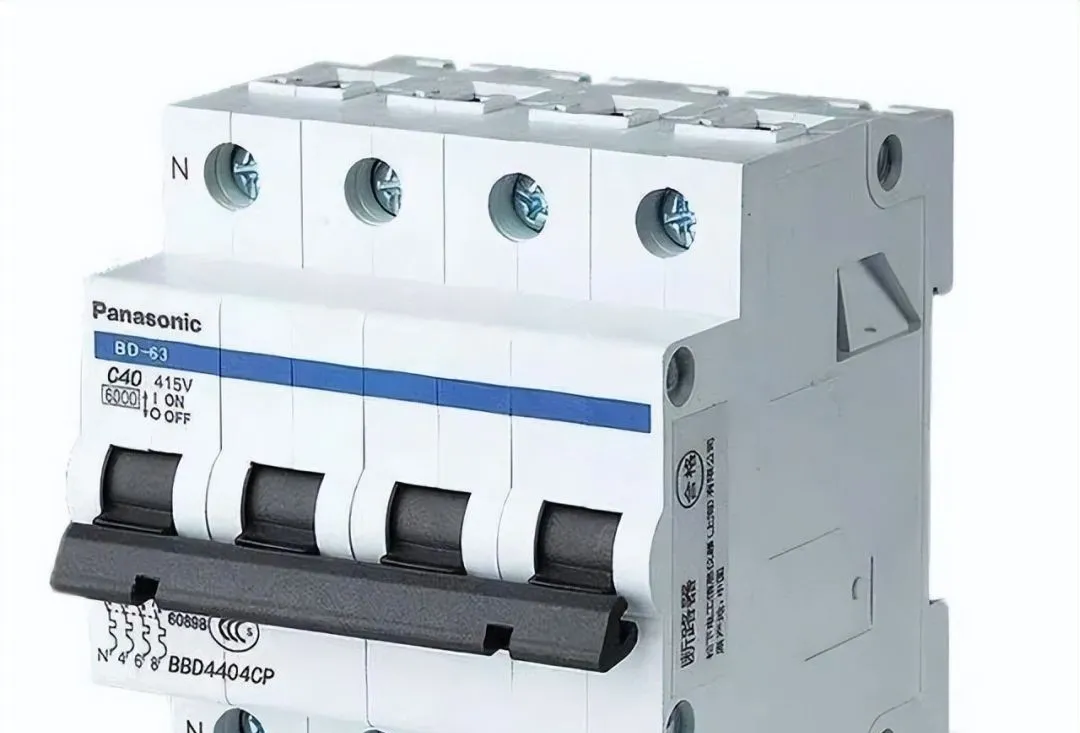
Three-phase circuit breakers are generally divided into three types, namely 3P, 3PN, and 4P:
Differences:
3P: Pure three-phase electrical equipment only uses three wires, and in the absence of single-phase loads, it trips when a ground or phase-to-phase short circuit occurs; otherwise, when one phase has an N line load, the N line circuit breaker acts as a leakage current;
3PN: Four wires L12L3N can use three-phase or single-phase electricity after passing through the transformer coil, regardless of whether the three-phase load is balanced, the leakage switch does not act; it only acts when there is leakage, i.e., when there is a single-phase ground or phase-to-phase short circuit;
4P: The method of using four wires L12L3 through the transformer coil is the same as that of 3PN, with the difference that 4P disconnects the N line, while 3P keeps the N line.
Four-pole circuit breakers are divided into four types: A, B, C, and D:
A: The N pole does not have an overcurrent trip device, and the N pole is always connected together, not closing or opening with the other three poles.
B: The N pole does not have an overcurrent trip device, and the N pole opens and closes with the other three poles.
C: The N pole has an overcurrent trip device, and the N pole opens and closes with the other three poles.
D: The N pole is equipped with an overcurrent release device, and the N pole is always connected, not closing or opening with the other three poles.
When using four poles, it is necessary to specify which product to choose, as it is the same as the four poles, but whether the overcurrent release device is installed on the N line has different functions and uses.
The overcurrent trip device installed on the N line can be used for three-phase four-wire distribution lines with single-phase load as the main component, and can also be used for nonlinear loads that generate a large amount of harmonics, such as gas discharge lamps, thyristor dimming, speed regulation lines, etc., in special requirements. In general, equipment circuits can choose N line circuit breakers without overcurrent trip devices.
In fact, although A and D are called four-pole circuit breakers, their N poles are always connected and will not close or open with the other three poles together. Therefore, this colloquially called “pseudo-four-pole” molded case circuit breaker is actually a 3PN, and there is no essential difference from a three-pole molded case circuit breaker. The only advantage of a four-pole molded case circuit breaker over a three-pole molded case circuit breaker is that it may be more convenient for circuit access in integrated cabinets. Therefore, this circuit breaker can only be used for three-phase loads, and only for a small number of single-phase loads (if there is a control power supply, use a complete 220V system).
Conclusion:
If the A, B, C, D types of circuit breakers are chosen incorrectly, they will not only fail to provide protection but may also cause significant problems. This is currently the most chaotic issue in design and use and should be taken seriously.