 C Language FundamentalsIn embedded development, C language is the “heavyweight champion.” To find a job related to embedded systems, you must master C language proficiently. From basic syntax and data types to pointers, arrays, and functions, you need to understand these concepts thoroughly. For instance, pointers are essential in embedded development, whether for memory manipulation or accessing hardware registers. You not only need to use pointers to write code but also understand the principles behind them.
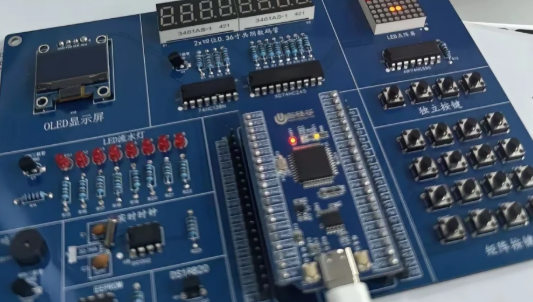
 For example, manipulating memory addresses through pointers to achieve direct control over hardware devices is a common operation in many low-level driver developments. Moreover, the flexible use of structures in C language is crucial when describing complex hardware data structures or building data models in programs, as structures can combine different types of data for unified management and operation.In addition to C language, it is also advisable to have some knowledge of C++. Although some resource-constrained embedded products primarily use C language, especially for low-level driver development, C++ is often used for upper-layer application development on more resource-rich platforms. For instance, in some smart home embedded systems, the user interface interaction part may be developed using C++, leveraging C++’s object-oriented features to enhance code maintainability and scalability.Furthermore, when learning programming languages, do not overlook related knowledge such as compilation, building, and debugging, as they are highly useful in actual development. For example, the GCC compiler is widely used in embedded development, and you should be familiar with its compilation options to optimize code compilation based on different requirements. In terms of debugging, mastering the GDB debugger is essential; learning to set breakpoints, step through code, and inspect variable values can help quickly locate issues in the code.Hardware PrinciplesFor instance, ARM architecture processors, known for their high performance and low power consumption, are widely used in various embedded devices. You should understand their register organization, interrupt handling mechanisms, and memory management methods. Additionally, you need to be familiar with various hardware interfaces and communication protocols, such as SPI, I2C, and UART, and know how to understand and implement them. Taking the SPI protocol as an example, you should understand its master-slave mode, clock signals, and data transmission formats, and be able to implement communication between the SPI interface and peripherals, such as reading and writing data to an SPI Flash chip. By practically operating development boards, you can better understand how hardware and software integrate.
 Operating SystemsAlthough not all embedded projects use operating systems, understanding and mastering embedded operating systems is a significant advantage. You should be proficient in at least one real-time operating system (RTOS), such as FreeRTOS or μC/OS. You need to grasp the basic principles of task scheduling, memory management, and interrupt handling in operating systems. For example, different RTOS may use different scheduling algorithms, such as preemptive scheduling or time-slice round-robin scheduling; you should understand how these algorithms work and how to choose the appropriate scheduling algorithm based on actual application scenarios to ensure system real-time performance.In addition to RTOS, being familiar with the basic usage of the Linux operating system and mastering application development knowledge under Linux, such as multithreading programming, multiprocessing programming, file I/O programming, and network programming, would be even more impressive. Nowadays, many embedded developments involve Linux systems, and mastering this knowledge can provide you with more job options. In Linux multithreading programming, you should understand thread creation, synchronization, and mutual exclusion operations to avoid thread safety issues; in network programming, you should be familiar with socket programming interfaces to implement network communication based on TCP or UDP protocols, such as developing a simple embedded network server to facilitate data exchange with other devices.Version Control ToolsAdditionally, it is advisable to master version control tools like Git, as well as tools like gcc and gdb, as they play a crucial role in team development and code management. In collaborative development, using Git for code version management allows for easy code submission, pulling, and branch management, helping to avoid code conflicts and improve development efficiency.