Written by Helen
Edited by Zhao Yang
Jensen Huang has mentioned multiple times in his speeches this year that NVIDIA is actively laying out “Physical AI”.
Physical AI will enable autonomous machines such as robots and self-driving cars to possess motion skills, helping them understand and interact with the real world. Huang emphasized that Physical AI will bring revolutionary breakthroughs to the robotics field, stating:“We have entered the era of AI inference, and the next wave will be Physical AI.”
At the 2025 World Robot Conference, Rev Lebaredian, Vice President of NVIDIA Omniverse and Simulation Technology, stated that Physical AI will leverage a trillion-dollar physical economy. Compared to the $5 trillion scale of the IT industry, the total of physical industries such as manufacturing, logistics, and healthcare is a hundred times larger. If robots can connect computational power with these industries, it will greatly enhance productivity and bring about exponential changes.
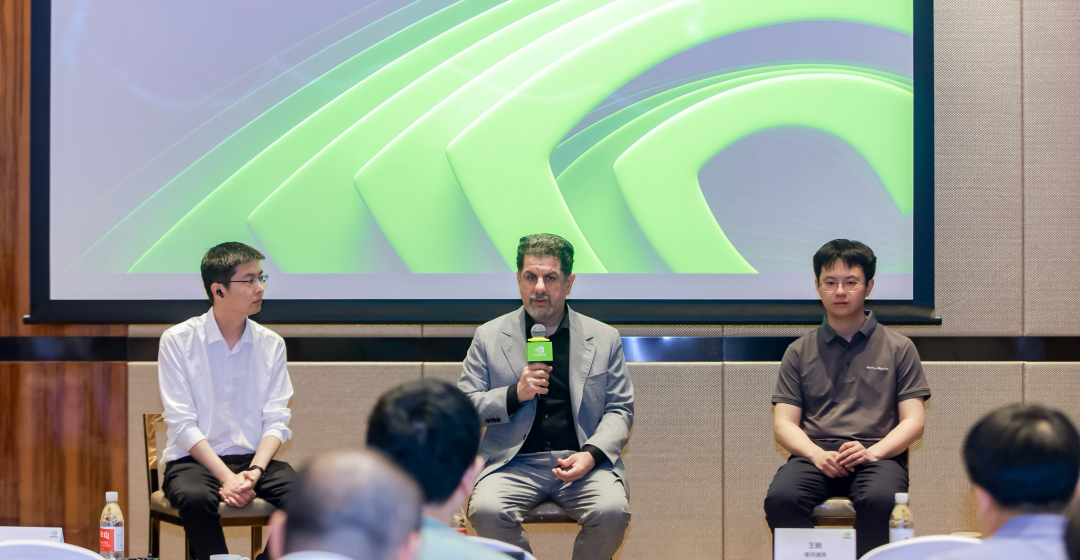
After the meeting, NVIDIA’s Rev Lebaredian held a closed-door discussion with the founders of its robotics ecosystem partners, Galaxy General and Yushu Technology, Wang He and Wang Xingxing, along with several media representatives, to further explore the future development path of Physical AI.
During the meeting, Rev Lebaredian expressed high recognition of the development of Physical AI in the Chinese market. He told Tencent Technology: “China has a unique scale and talent advantage in the field of Physical AI and robotics, forming a unique ecosystem. China not only has deep expertise in manufacturing electronic hardware and key components for robots but also possesses a globally leading manufacturing scale. These advantages lay a solid foundation for the rapid development of Physical AI and the robotics industry.”
Below is the full transcript of the discussion:
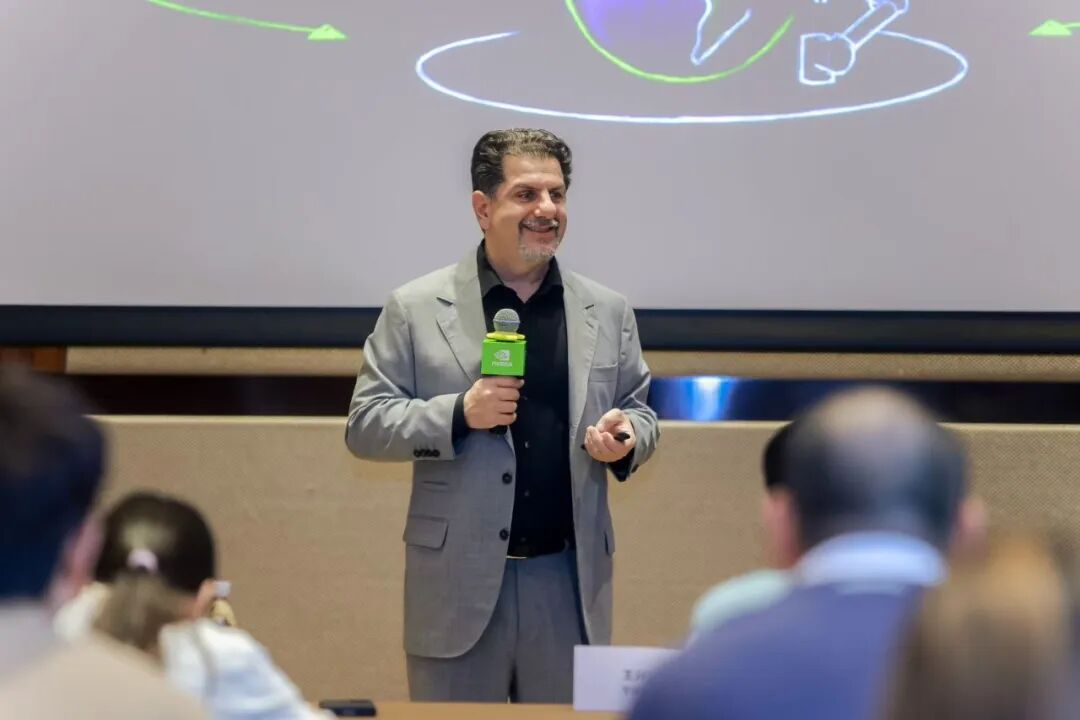
Rev Lebaredian, Vice President of NVIDIA Omniverse and Simulation Technology

Rev Lebaredian, Vice President of NVIDIA:
Physical AI Brings the Intelligent Revolution of Computing into the Real World
Over the past three to four decades, we have built the computer and IT industries, which have amplified the capabilities of various sectors. However, the impact of computing has mostly remained in the “information space”—that is, content that can be digitized, such as language and various encodable information.
The advent of the internet has truly brought computing technology into everyone’s lives, connecting all people and leading to decades of growth. From a global market perspective, the total scale of the IT industry is about $5 trillion, which, while substantial, is just a small part compared to the total of all industries exceeding $100 trillion. Other industries are more valuable because they deal with the “atoms” of the real world—fields involving transportation, manufacturing, supply chains, logistics, healthcare, pharmaceuticals, etc.
Today, with the emergence of artificial intelligence, we finally have the capability to endow machines with “physical intelligence,” allowing us to truly connect the physical world with the information world. In other words,the power of computing is no longer limited to that $5 trillion information market but can enter the $100 trillion physical world market. And the bridge to this is robots. With robots, we can bring computing and artificial intelligence into the real world, creating intelligent agents that can understand and change the physical environment.
China is the best place to achieve this leap, as it has unique conditions:
-
Top AI talent: Nearly half of the world’s AI researchers and developers are in China, including the best talents from top universities.
-
Electronic and computing technology capabilities: China not only has technological R&D capabilities but also an unmatched global electronic manufacturing industry, which is crucial in the field of Physical AI and robotics.
-
A large manufacturing base: There are real scenarios for large-scale deployment and testing of robots, allowing for rapid data collection and algorithm iteration, enabling robots to continuously evolve.
Therefore, it is not surprising to see so much energy, capability, and enthusiasm at the World Robot Conference.
NVIDIA has also contributed a unique piece to this puzzle. We have long dreamed of participating in solving this problem and have worked hard for it. In the field of robotics, we have built three types of computers:
-
Robot body computer: Embedded within the robot, such as in self-driving cars or humanoid robots. The Jetson Thor, designed specifically for humanoid robots, falls into this category and can be seen in Galbot and other exhibited robots at this year’s WRC.
-
AI factory computer: Before using the robot body computer, its “brain” must first be developed. This relies on DGX and HGX systems to process massive amounts of raw data, generating Physical AI algorithms, Physical AI models, and neural networks, which are then deployed to the robots.
-
Simulation computer: Data from the physical world cannot be directly obtained from the internet and can only be acquired in two ways: through real-world sensor collection or through computer simulation based on physical laws and world rules. Simulation can not only generate data but also test robots before deployment, ensuring they operate safely in real environments, with testing speeds faster than real-time.
In the field of robotics, NVIDIA has a complete Isaac platform that combines the hardware with the software stack required for the three computers, including: runtime and computing environment, simulation tools, and training frameworks. NVIDIA Jetson Thor is a supercomputer designed for intelligent reasoning agents in the physical world (especially robots), which Huang refers to as the “real-time reasoning machine.”
Highlights of Jetson Thor’s performance:
-
Computing power is 7.5 times that of the previous generation Jetson Orin, approaching 10 times;
-
Performance per watt improved by 3.5 times;
-
CPU performance improved by 3.1 times;
-
I/O throughput improved by 10 times, meeting high bandwidth perception needs.
-
The Isaac platform also includes NVIDIA’s simulation and simulation framework:
-
Isaac Sim: Environment and sensor simulation, robot testing, generating synthetic data.
-
Isaac Lab: Simulation platform for reinforcement learning.
-
NVIDIA Cosmos: World foundational models and frameworks that support building AI that understands the physical world, combined with simulators like Omniverse to generate more accurate and larger-scale data.
While the world foundational models are still in their infancy and cannot fully understand the world, they are already very useful and bring new capabilities to robot development.

Wang Xingxing, CEO of Yushu Technology:
AI and Robotics Co-evolution, Moving Towards the Next Technological Era
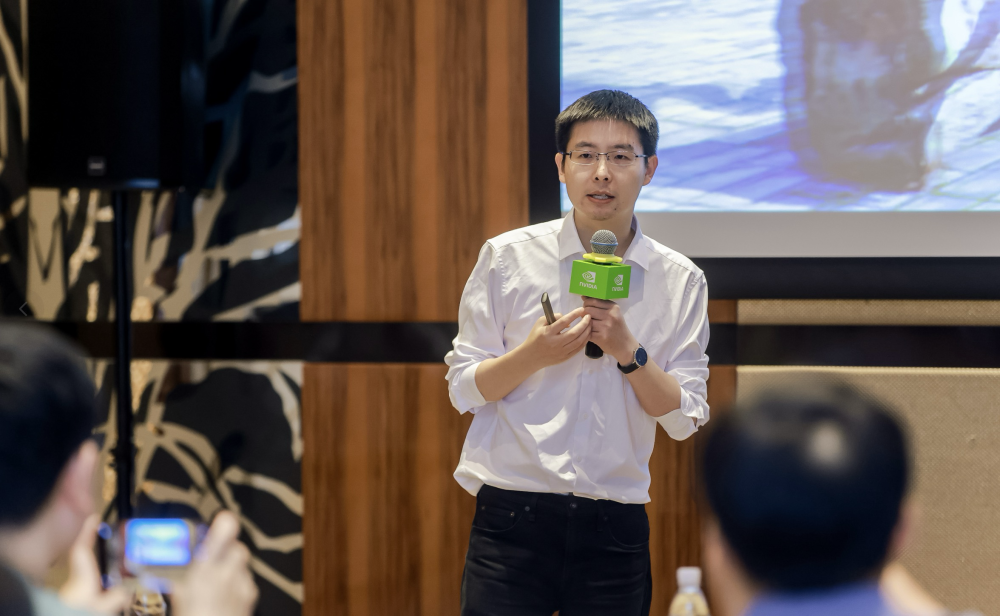 Wang Xingxing, CEO of Yushu Technology
In recent years, we have placed great emphasis on humanoid robots. In a sense, I view humanoid robots as an important carrier for general robots. It is well known thatgeneral AI is currently the most mainstream development direction globally, and true general AI will inevitably rely on robots to perform tasks, especially general-purpose robots.
In comparison, humanoid robots are currently the most ideal form of specialized robots. Although they appear complex, their actual structure is not as complicated as imagined; they are essentially composed of several joint motors linked together. Therefore, the structure is relatively simple, unlike tracked vehicles or other forms of robots that are more complex.
I have always believed that when general AI matures on a large scale, everyone will be able to easily manufacture a humanoid robot, just as people can today buy computer components to assemble a computer. In the future, if AI is strong enough, the requirements for hardware will become lower and lower.
Last year, we launched a robot priced at about 99,000 RMB, which still has strong market competitiveness today. Its number of joints and flexibility are excellent, and after its release, its architecture has become one of the more mainstream design configurations globally.
In the second half of last year and this year, many new products from emerging robotics companies have architectures similar to this one, with only differences in appearance. Our design is smooth and structurally simple, while other designs may be more complex and less aesthetically pleasing, thus giving our product a strong competitive edge in the market.
Recently, we released a new version. Although the paint is somewhat flashy, we hope customers can freely modify and paint the appearance, such as changing colors or adding personalized decorations. Many customers dress the robots in clothes, hats, or wigs during outdoor live broadcasts, creating various styles. The customizability of appearance and design is crucial for customer experience. This new version is priced at about 39,000 RMB, has strong global competitiveness, and performs excellently. It is currently in stock, with mass production expected to be completed by the end of the year.
In addition, we recently launched the A2 robotic dog, which features a compact and lightweight design while achieving a large load capacity. Weighing about 37 kg, it can carry a continuous load of up to 30 kg and has a range of 20 km when unloaded. Its appearance draws on past design experiences, giving it a more sci-fi feel, and it is also dustproof and waterproof. We have always hoped that robots can replace humans in industrial scenarios to complete heavy, dangerous, or repetitive tasks. Our robotic dog has already achieved 24-hour uninterrupted operation in some public welfare projects, with automatic charging and patrol detection capabilities.
At the end of last year, we upgraded our wheeled robot, which is larger, weighing about 70-80 kg, making it inconvenient for some scenarios. Therefore, we launched a smaller, dustproof, and waterproof version suitable for various indoor and outdoor scenarios. Although it is larger, its flexibility remains excellent. Typically, smaller robots are more flexible, while larger robots are less so, but we have ensured good motion performance even at a larger size.
In January of this year, our robot appeared on CCTV’s Spring Festival Gala, with the highlight being fully automated formation dancing. It is equipped with three laser radars on its head, capable of automatic mapping and changing formations. To adapt to the stage performance, we handed over backstage control to the stage control system, achieving millisecond-level synchronization between music and actions. A total of 16 robots participated in this performance, all connected to our backend server and integrated into the stage system. The biggest challenge of this project was multi-machine collaboration and complex programming maintenance. Currently, these robots perform daily at MGM Macau.
In terms of action learning, we collect human motion data and train using deep reinforcement learning. Unlike language model training, action training requires only a small amount of real data, with the rest completed by reinforcement learning. We mainly use NVIDIA’s Isaac Sim platform for training and have mastered various actions such as dancing, jumping, and flipping. The current limiting factor for robots executing more complex actions is not the algorithms but the physical limits of the hardware. For example, to increase running speed from 3-4 meters per second to 10 meters, the hardware improvement requirements are extremely high.
We also place great emphasis on the development of robotic upper limbs and hands. We have independently developed a dexterous hand with about 20 degrees of freedom, aiming to enable robots to perform daily tasks, not just showcase actions. We hope to achieve natural interaction in the next one to two years, such as instructing a robot to pour water for someone without prior adaptation.
At the end of May this year, we collaborated with CCTV to hold a robot fighting competition lasting about 1.5 hours, featuring four teams. The algorithm complexity of the fighting competition is higher than that of dance or kung fu performances, as the action combinations are random and subject to strong interference, requiring smooth action transitions and free combinations. Our goal is to achieve “any action’s real-time generation” in the future.
Additionally, we launched the R1 robot, weighing about 25 kg, which is lightweight and safe. Although it is small, it has strong power performance, mainly aimed at industrial applications. Its algorithms are similar to those of humanoid robots, but due to the better stability of quadruped robots, it can perform more intense actions without damage and has strong obstacle-crossing capabilities.
Looking back,the development of AI and robotics technology has always been a result of global collaboration,with multiple forces, including NVIDIA, continuously promoting global cooperation in the field of robotics and AI. Before the widespread adoption of general intelligent large models and truly task-executing robots, we still need to work together to push humanity into the next technological era. I believe that AI and robotics technology will elevate human civilization to new heights, just like the invention of electricity and the steam engine.

Wang He, CEO of Galaxy General:
Synthetic Data is Key to Rapidly Realizing Embodied Intelligence
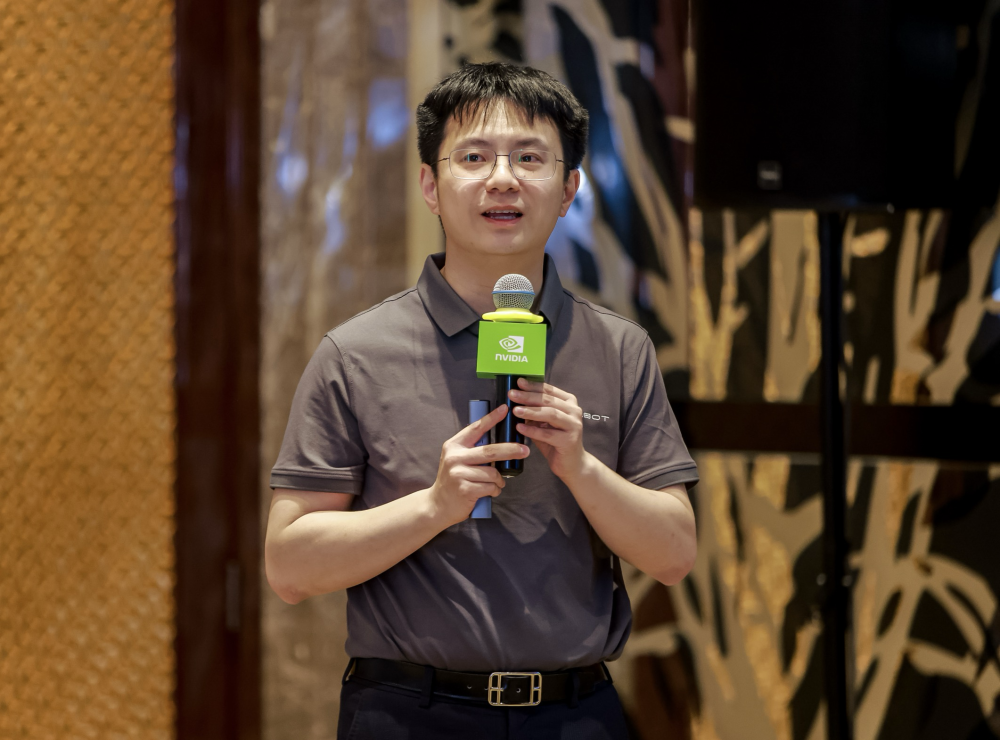 Wang He, CEO of Galaxy General
Today, all the robotics companies present, including NVIDIA and Galaxy General, share a common goal of creating general robots. Such general robots will become key and revolutionary products in the next multi-trillion-dollar market.
This revolutionary product encompasses several core elements:
-
The first element is the robot’s body;
-
The second element is theembodied intelligence model that drives it;
-
Behind the model is data support—what kind of data can train such capabilities.
Next, I will share Galaxy General’s explorations and achievements in these areas and introduce the final products.
What sets Galaxy General apart from other companies is that our robots are not entirely humanoid but take the form of wheeled dual-arm and dual-hand robots. We use a wheeled chassis, focusing on high endurance, industrial-grade safety, and the ability to achieve large-scale, high-reliability delivery. The Galaxy General G1 robot will debut in May 2024, having undergone over a year of iteration, and is now meeting the standards for large-scale autonomous commercial use in terms of automatic charging, operational smoothness, and stability.
In China, we have deployed NVIDIA Jetson Thor chips in humanoid robots and are one of the first companies globally to receive this chip, achieving on-site deployment at this WRC conference. In the demonstration, the robots equipped with this chip exhibited smooth motion performance and real-time cargo visual processing and motion planning capabilities, significantly increasing speed and earning unanimous praise from the audience as the “fastest humanoid robot.” This is supported by the powerful chip.
The reason our robots can navigate efficiently in complex environments is due to Galaxy General’s long-term research and development of large-scale embodied models, VLA.Among them, the navigation model can autonomously move in a scene with just a one-sentence command. Just before Children’s Day, we globally launched TrackVLA, which can follow people in any complex scene without mapping, capable of natural language interaction and navigating obstacles, running autonomously throughout.
In terms of upper body operations, we launched the Grasp VLA, a foundational model for grasping, achieving real-time closed-loop generation of grasping actions. Under various lighting conditions and challenging backgrounds, it can achieve zero-shot grasping of specified objects without prior training on those objects. This lays the foundation for future “natural language + immediate execution” capabilities.
Based on Grasp VLA, we developed retail scene applications that can handle the same model for grasping and delivering various items, whether bottled, bagged, loose, hung, or soft items. This is the world’s first end-to-end retail model capable of handling over 50 different object placements, covering everything from rigid to soft items.
Galaxy General’s ability to launch multiple foundational models globally and apply them stably in real store scenarios is thanks to a complete set of simulation engines. We, along with NVIDIA, believe thatsynthetic data is key to rapidly realizing embodied intelligence. Currently, real-world data accounts for only 1% of our training data, with the remaining 99% being synthetic data.
We input self-developed robot models and a large number of object and material assets into the synthetic pipeline, generating the world’s first hundred billion-level grasp operation dataset and the world’s first hundred billion-level flexible object operation dataset. This data enables our models to possess high robustness and generalization capabilities in real environments.
Currently, Galaxy General is in wheeled form, while the next generation will adopt a purely bipedal design. Whether in simulation or real environments, this platform can train and deploy various task capabilities, such as pushing carts and picking up ground objects.
Galaxy General’s multiple skills have achieved full commercialization. We launched the world’s first 24-hour unmanned pharmacy solution, signing contracts with over 100 pharmacies in cities like Beijing, Shanghai, and Shenzhen. Users can place orders through an app, and the robot completes the medication retrieval in-store and delivers it to the delivery personnel. In 2024, we also announced a 24-hour unmanned retail store project, deploying Galaxy General’s “space capsule” retail terminals in hundreds of core business districts and tourist attractions across ten cities to sell beverages and other products.
Media Interaction Session:
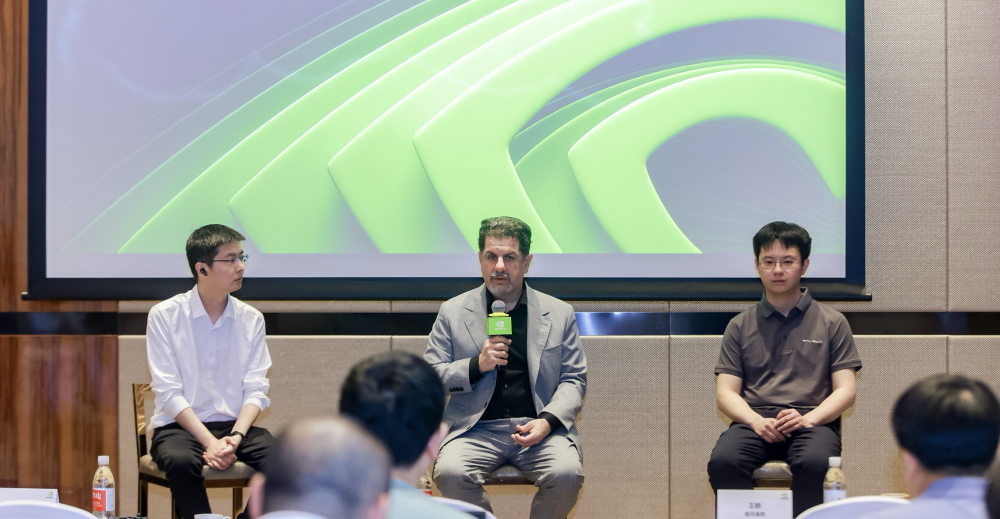

The Future of Physical AI:
Breaking the Limitations of General Computing through Dedicated Computing Platforms
Question: NVIDIA showcased a series of Physical AI achievements at the 2025 World Robot Conference. Physical AI, especially in the robotics field, has high demands for energy consumption, thermal management, and size limitations. How is NVIDIA addressing these challenges? How will future computing platforms meet these needs?
Rev:Looking back, every generation of NVIDIA products has significantly improved performance per watt and performance per dollar. In the past, we had Moore’s Law, which meant that computing power would grow exponentially—at its best, performance would increase tenfold every five years and a hundredfold in ten years. However, relying solely on Moore’s Law is no longer sufficient to solve many of the problems we face.
We foresee thatthe utility of Moore’s Law in CPUs and general-purpose computers will gradually end. Therefore, we are committed to building dedicated computers for specific algorithms. These dedicated computers require not only chip-level improvements but also overall optimization at the algorithm, software, and application levels to achieve maximum performance. This is not achieved by a single factor, such as making chips smaller or faster, but through full-stack optimization. This is a very challenging engineering task and is precisely NVIDIA’s core competitiveness.
We initially applied this approach to computer graphics rendering (especially in the gaming field), and then expanded it to other areas. After the introduction of CUDA, we began applying it to physical simulation, and later, as deep learning and AI emerged on GPUs, we continuously specialized our processors. With each generation of products, we have achieved significant performance leaps at the same power consumption and cost, and this will continue in the future, as our path of innovation is far from over.
Question: Regarding the Chinese market, how do you view the demand for AI and the challenges in practice compared to other countries?
Rev:China is both an important market and a production base for AI technology and products. China has a large number of smart, well-educated, and passionate AI researchers and developers, with nearly half of the world’s top AI talent concentrated here, along with top AI universities.
In the field of Physical AI and robotics, China has a unique scale advantage, combined with talent advantages, forming a unique ecosystem. China has deep expertise in manufacturing electronic hardware and key components needed for robots, and this ecosystem and manufacturing scale are difficult for other countries to match. This enables companies like Galaxy General and Yushu Technology to manufacture robots on a large scale, learning and iterating quickly. China’s unique comprehensive conditions provide a solid foundation for the rapid development of Physical AI and the robotics industry.
Question: In high-precision application scenarios such as healthcare and elderly care, how does NVIDIA Omniverse ensure that robots trained with simulation data are reliable and safe?
Rev:If you want to build a robot system that can act in the real world and be safe and reliable, the only choice is to use simulation.
Take autonomous driving as an example; we absolutely do not want a car to hit a person or a child, but when a child appears on the street, how should the vehicle’s brain react, and how can we obtain training data for such systems? The only way is through simulation. Because we cannot ethically or safely place a child in front of a car as a training sample, and doing so would be time-consuming and expensive.
Even after training the system, it must be tested in these same scenarios before deployment to ensure it can react correctly when similar situations occur in reality. Therefore, the real choice is to achieve this through simulation, as real-world testing is too slow, costly, and dangerous; we do not want robots to fail in the real world first.
In other words, if we cannot make the simulation accurate enough to test the robots, we will not be able to manufacture reliable robots. Fortunately, there are already very accurate simulators available. However, these simulators require significant computational resources and are costly, and the real challenge we face is how to improve simulation speed to make it cost-effective in large-scale system construction, which is also a direction we have been striving for.
Question: In the coming years, what key technological trends in the simulation field driving AI robots will change the entire industry? Can you share some cases of how Chinese ecosystem partners are using NVIDIA simulation technology to accelerate product innovation?
Rev:I believe the biggest trend right now is that all the technologies and developments that have emerged in conventional AI are being applied to physical AI. Among them, the most important breakthrough is the enhancement of inference capabilities. For example,DeepSeek has brought inference capabilities into the open-source domain, and we are now seeing various other models.
We have made leaps in intelligence levels, applying the same technology to physical AI, which is a significant breakthrough in the robotics field. Our robots will be able to interact with people more naturally and complete complex multi-step tasks. This is a critical capability. Combining this capability with simulation, I believe this is a point that may not yet be widely understood but will become a significant breakthrough.
Currently, the main issue we face is that AI is extremely data-dependent, and obtaining suitable data is very challenging. Our existing inference models, especially for reasoning about the physical world, can now help us improve the data generation and creation processes.
Today, the data we generate, even synthetic data, still requires a lot of human involvement, with humans constructing virtual worlds and simulation environments, determining what data to generate to make intelligent systems smarter. However, if we apply the AI technologies we are developing to the data generation process, we can achieve automation, creating an “autonomous driving” synthetic data generation.
If we have an autonomous driving synthetic data generation factory, we can directly integrate it into the training process, automating the training process, reducing human intervention, and making the robot brain smarter. As for how Chinese companies are applying simulation technology and its impact, I believe they are actively exploring and applying these technologies.
Wang He:I believe that with the advancement of simulation engines and parallel renderers, the generation of synthetic data has become more efficient, whether through reinforcement learning or through data generation followed by imitation learning, the overall difficulty has been greatly reduced. Whether it is training humanoid robots to walk, dance, or perform tasks like grasping, folding clothes, and navigation, all rely on efficient simulators and parallel renderers. We are very grateful for NVIDIA’s support as an ecosystem partner in this process, providing strong support for the entire industry from chips to simulation platforms.
Question: What are the differences between NVIDIA Jetson Thor and previous Jetson platforms? How is it particularly beneficial for robotic applications?
Rev:With each generation of Jetson products, we strive to maximize their computing power because intelligent problems are inherently very complex computational challenges. In the field of robotics, this challenge is even greater: computing must be extremely fast and performed in extremely demanding environments.
Robots often operate in real-time on-site, needing to complete computations within tight loops, with limited power, so it is necessary to minimize power consumption to extend battery life while also considering thermal management and other issues. All these factors greatly increase the difficulty.
What sets Jetson Thor apart from previous versions is that it now has sufficient computing power to run larger and more powerful neural networks and models, supporting more complex inference tasks, which previous products could not achieve. Additionally, Jetson Thor has higher bandwidth, allowing it to process large amounts of information from various sensors more quickly, enabling robots to react quickly and operate at high speeds in dynamically changing environments.
Question: NVIDIA emphasizes a simulation-first strategy in robot training and has launched a series of supporting technologies. However, the gap between simulation and reality (Sim2Real) still presents challenges. How does NVIDIA work with partners to address this issue? Can you share specific customer cases or collaborative projects that demonstrate the effectiveness of this approach? Looking ahead, what are the key directions for enhancing simulation physical realism and improving efficiency in real-world transfer?
Rev:This is a very good question. If we rely on simulation to build and test AI, we must ensure that the simulation is as close to reality as possible; otherwise, we cannot trust it. If the AI we build is trained in a “cartoon world,” it cannot truly understand the real world; therefore, we must ensure that the testing scenarios match reality. So how do we bridge the gap between simulation and reality? There are actually multiple ways, and we are fully promoting these methods.
First, we need to improve the accuracy of the simulator itself.We have been building physical simulation algorithms for decades, and these algorithms have been validated to reflect the physical laws of the real world well. For example, we use simulations to design airplane wings and cars, ensuring aerodynamic performance and verifying that simulation results match the real world. The problem is that these high-precision simulation calculations are extremely costly, often requiring hours of computation on large computers. The challenge is how to speed up simulations to be fast enough to be embedded in AI training processes, enabling large-scale, efficient data generation and testing.
To this end, we are leveraging AI itself as a tool to enhance simulation speed and accuracy. AI can approximate any mathematical function, and we can convert physical simulation functions into AI functions, building AI simulators to complete simulations. As long as we provide enough example data, AI can learn the simulation functions. This is precisely what we are developing in the “Cosmos” project. These “world foundational models” are AI models that understand the physical laws of the world, and we can train them using real-world data and credible simulation data. Once we have such AI foundational models that understand the world, we can combine them with traditional simulations to build more accurate and efficient simulators.
The second method is to directly capture the real world.We also use physical AI technology to digitize real environments (such as the room we are in) and import them into simulation environments, ensuring that virtual scenes are highly consistent with reality.
NVIDIA is making comprehensive efforts in these three directions to develop related technologies, but this work far exceeds the capabilities of any single company. We are collaborating with partners across the entire ecosystem to advance these three paths together. In fact, we have already achieved considerable results, and our existing simulators can generate sufficiently high-quality data to help us enhance AI performance.

Development of Multimodal Large Models Faces Data Scarcity
Simulation Technology is Key to Breaking Through the Data Bottleneck
Question: OpenAI recently released GPT-5, and the impression is that the technological breakthroughs are not significant, and it resembles a system rather than a single model. Can we understand this as the scaling law of large models encountering some challenges?
Wang He:Currently, there are many types of large models, including pure text large models, multimodal large models, and multimodal large models that are divided into visual understanding and video generation types, including our embodied intelligence VLA, which is also a type of large model. Therefore, whether we can say that the scaling of large models has encountered bottlenecks cannot be simply summarized with a single conclusion.
I understand that in the current pure text stage, our main data source is publicly available data on the internet, but much private knowledge is not online, which leads to a discrepancy between the reasoning capabilities of the model and the publicly available data. Unless we can obtain additional data enhancement through some controllable means, relying solely on public data to improve model capabilities is limited.
This part of capability growth will not naturally occur through simply expanding the model scale. However, we cannot underestimate the progress of reasoning models; for example, in the IMO International Mathematical Olympiad, the text model won a gold medal, performing excellently on problems it had never seen before, indicating that the capabilities of text large models are continuously improving.
Regarding multimodal large models (such as VLM and VLA), if we say that text models are now very strong, then multimodal models are currently still slightly weaker than language models.The core reason is data scarcity: text data is very abundant, while text-image paired data is relatively scarce, and action data is even less, resulting in a significant gap in visual understanding capabilities and action operation capabilities based on vision.
This is why synthetic data and simulation technology are so important. As Rev mentioned, simulation can reproduce real-world scenes and actions in virtual environments, generating a large amount of data with actions, images, and semantic pairs, which will greatly promote the development of text-image, multimodal large models, and embodied intelligence large models.If we rely entirely on real data, progress will be significantly limited. Overall, I believe that fully utilizing simulation technology will be the most effective way for multimodal large models and embodied large models to address data bottlenecks.
Question: Currently, some experts believe that the architecture of large models in the robotics field has not yet been unified. What directions is Yushu Technology focusing on for the foundational models of embodied intelligence? Can you share some specific content?
Wang Xingxing:I have always felt that the current model architectures are indeed very ununified, which leads to the overall progress not being as fast. If the model architecture could be more unified and the direction clearer, everyone could actually achieve breakthroughs more quickly. But the reality is that progress is still relatively slow.
Our company has explored many directions. For example, this morning we also demonstrated a project we attempted last year using a video generation model as a “world model” to drive and align robotic arms, which achieved certain results. However, due to the enormous training scale of video generation models and considering our company’s computing power and investment, it is difficult to conduct large-scale training.
Moreover, we found that the versatility of such models does not fully meet expectations, so we have not continued using them. However, recently Google released a new video generation model that has excellent physical alignment effects, and they publicly attempted to use the video generation model as a world model directly for robotic arms and general intelligence. This makes me feel that this direction is worth exploring again.
Due to the limitations of our company’s scale and computing power, we are only exploring this direction preliminarily and have not deeply advanced it. However, Google’s results prove that this direction has great potential. Video generation models have reached good expectations in terms of temporal content, data sources, and effects. For example, if we control a video generation model to generate a video of a robot cleaning the entire house, and the effect is good, theoretically, as long as we align the video with the robot’s actions, we can achieve similar effects.
However, the alignment work is still very complex and challenging. This direction is mainstream and worth investing in, both for robotic applications and for pure video generation technology itself.
In addition, there are other solutions. As the capabilities of foundational models rapidly improve, many potentials have yet to be fully explored. We have found that if we incorporate robotic instruction control and spatial understanding training during the training of foundational models, the effects can be significantly improved. For example, some of the robotic control effects demonstrated by Wang He’s team based on foundational models are quite good.
Our company’s strategy is very simple: to continuously try various new models and ideas. Today there may be one idea, and tomorrow it may be adjusted; this is normal. For emerging technologies, I believe everyone should boldly try. The AI field is full of possibilities, and often a flash of inspiration can lead to breakthroughs. I hope to encourage more people to explore; perhaps the next innovation will come from you.
Question: What are the key technological bottlenecks currently limiting the large-scale deployment of humanoid robots?
Wang He: The core bottleneck currently limiting the large-scale deployment of humanoid robots is very clear—the ability of robots to complete tasks is still insufficient, and the types of tasks they can perform are limited. However, if we can achieve high generalization within these limited skill ranges, we can quickly expand their application scenarios.
Galaxy General’s current breakthroughs focus on “grasping” and “mobility” capabilities. As long as robots can grasp any object, achieve lower limb movement and upper limb extension, and accurately place objects, these three basic capabilities can support many practical application scenarios. Behind this requires a precise target recognition and positioning system, which we are currently promoting through synthetic data.
Even if these key issues are resolved, there are still many tasks that robots cannot currently complete. However, as long as target recognition and positioning technology breaks through, the humanoid robot market could reach a scale of at least hundreds of billions, achieving significant results within five years. Once this technological bottleneck is resolved, with substantial market investment, robots will unlock more skills and move towards a trillion-dollar market.
Reducing Robot Hardware Costs:
Not a Commercialization Barrier Anymore, Versatility of Embodied Intelligence Models is Key
Question: Why should robots be bipedal? Besides emotional value, what are the commercial considerations for bipedalism?
Wang Xingxing:Using a bipedal design is actually relatively simpler; the key is that legs can provide greater versatility. Motion capability is inherently a relatively weak AI capability. For example, while small animals, ants, and even insects walk very flexibly, their AI capabilities are not strong. Therefore, I have always believed that a truly versatile and capable embodied AI model considers mobility and leg control as merely additional components.
If a robot can complete tasks, then leg control will naturally not be poor; if it cannot even control its legs well, it indicates that it has not reached the stage of a general AI model. Thus, bipedal design is a natural development direction. Although bipedal robots still face some challenges, our company focuses on leg design, making this direction both a logical and very interesting one for us.
Currently, most companies on the market are using wheeled chassis, which may lead to homogenized competition, but we believe there is no need to follow the trend. Wheeled chassis are very stable and energy-efficient when navigating open industrial scenes and between shelves, but their adaptability in complex environments is poor, and if the chassis is further reduced in size, stability will decrease.
Therefore, the lower body solutions for robots need to be flexibly adjusted according to the requirements of different application scenarios. We firmly believe that bipedal design is the future development direction because it can cover all reachable spaces of the upper body and provide more flexible waist movements. However, at different stages, the most suitable form for practical applications may vary, and we are not limited to a single solution. Currently, we are simultaneously researching both wheeled chassis and humanoid robot lower body control, striving to achieve optimal solutions across multiple dimensions.
Question: Currently, there is ongoing debate among domestic and foreign experts and enterprises about the necessity of “humanoid” robots. Some believe that humanoids are the ultimate carriers of AGI, while others think that humanoid robots will only account for 10% of the market in the next decade. How does Galaxy General view the necessity of humanoids?
Wang He:In the long run, humanoid robots will undoubtedly integrate into human life. From an endgame perspective, humanoid robots can not only work and reach heights of 1 or 2 meters or even touch the ground, but they can also navigate flexibly in our environment. There is no other suitable form besides humanoid.
In the coming years, humanoid robots will continuously evolve from mobile composite robots towards higher intelligence and flexibility. If it is a fixed-point robot, the tasks it can complete are limited to the work at hand, which poses significant limitations. Therefore, possessing mobility is an inevitable trend. A simple mobile cart can only be used for carrying goods and cannot perform any complex operations. The robots we design now incorporate liftable and foldable features on a mobile platform, equipped with two robotic arms to perform more flexible operations.
Regarding the market share of humanoid robots in the next decade, although the current market scale of humanoid robots is small compared to other industrial robots, I expect its value to grow exponentially with technological advancements. Currently, leading companies sell about 1,000 humanoid robots annually, and in three years, this number is expected to reach 10,000, and in another three years, it could reach 100,000. Even if each unit costs several hundred thousand RMB, the total market value of humanoid robots will exceed 100 billion RMB, surpassing the entire industrial robotic arm market.
In the next decade, we will see a robotics industry that surpasses the scale of all current industrial robot markets. Looking further ahead, in ten years, the humanoid robot market may surpass the automotive and mobile phone industries, becoming a trillion-dollar market. Therefore, although this market will not rapidly reach a scale comparable to the automotive industry in the short term, its future potential and impact should not be underestimated.
Question: Since robots can replace many jobs, such as in elderly care, will this lead to a decrease in birth rates?
Rev:I believe there is no direct correlation between reproductive choices and the number of robots. However, one thing is clear: when the population grows, GDP and productivity typically increase as well. The productive capacity of society is directly linked to population size, and most countries are currently facing a trend of population decline, which may lead to stagnation or even shrinkage of economic growth.
If effective countermeasures are not taken, the economy will inevitably head towards recession. Therefore, developing robotic technology to supplement the “artificial population” and help complete various tasks while enhancing productivity has become an urgent task. This not only helps maintain current productivity levels but also promotes further social development.
Question: The Yushu R1 is priced at 39,900 RMB, significantly lowering the threshold for consumer humanoid robots. Does this mean that hardware costs are no longer a barrier to the commercialization of robots? What challenges remain in promoting the large-scale commercial use of humanoid robots at this stage?
I have always shared the view that although the price of humanoid robots has significantly decreased, such as the Yushu R1 priced at 39,900 RMB, hardware costs are not the key barrier to the grassroots commercialization of humanoid robots. In fact, even if the price of robots reaches 100,000 or 1 million RMB, as long as they can achieve functionality, they can still be applied in many scenarios.
The biggest challenge currently lies in the versatility and practicality of embodied intelligence models.Although hardware costs and performance have made significant progress in recent years, the applicability and practicality of the models still need to be improved further, which is the most challenging issue at present. Hardware is no longer a limiting factor; although we still need to improve reliability and cost control, the real challenge lies in how to optimize and enhance embodied intelligence models to enable broader application capabilities.
Question: Yushu Technology has mentioned that humanoid robots have gradually accelerated from being primarily used in entertainment performances to liberating factory and household productivity applications. In which scenarios will robots see large-scale popularization in the future?
In the future, robots will definitely develop towards more practical directions, but this process will still take time. Whether in industrial, service, or household fields, the entire industry’s maturity cycle is relatively long. Looking back, for example, with new energy vehicles, people thought they would develop rapidly over a decade ago, but the reality is that the overall maturity took much longer.
Every industry requires a long maturation cycle. The current generation of humanoid robots or general robot technology has only developed for two to three years. Compared to technologies from ten to twenty years ago, the hardware and software have undergone tremendous changes. However, many people still tend to apply past standards to today’s technology when discussing robots, believing that the robotics industry has been developing for a long time, but the technology back then cannot be compared to today’s level. Although current technology is still in its early stages of development, and overall progress requires more time, I personally believe that this industry is still growing rapidly,and in the coming years, personnel and shipments are expected to double annually, which is very likely for the entire industry.
If more powerful and versatile AI large models can be launched in the future, robots will perform better in factories, homes, and more general scenarios. The more versatile the robots are, the smaller the challenges for popularization will be. Conversely, if robots lack versatility, promotion will face greater challenges. Therefore, I believe the overall development cycle will be relatively long, especially in the household field.
The biggest challenge for household robots is not the technology itself but the high standards involving ethics and safety, which create higher barriers for the popularization of household robots.
Question: This year, many humanoid robots have begun training in automotive factories. How long will it take for robots to be truly deployed in factory workshops? What key challenges still need to be addressed?
Wang He:This year, many humanoid robots have begun training in automotive factories. Most companies deploying humanoid robots in factories are focusing on two areas: one is handling, and the other is sorting.
In terms of handling, the robots recently demonstrated by Galaxy General have handling speeds that are already close to human levels, with calculations showing that the number of items handled per hour is comparable to that of humans. This stage is already close to actual factory deployment, and I expect that by the end of this year, Galaxy General will have dozens of robots entering factory workshops for practical applications.
However, handling is just the first step. In addition to handling, robots need to achieve closed-loop capabilities for stacking; only when both handling and stacking are completed can robots truly fulfill the entire workflow. If only one part is completed, the effectiveness will be greatly reduced.
Sorting presents a more complex challenge. Whether picking items from a conveyor belt or retrieving items from shelves, the current biggest difficulty lies in speed. Although robots have made progress in models and hardware, they still struggle to reach the speed and precision of skilled workers.
In our retail robot applications, the item retrieval and placement involved share many similarities with industrial sorting, but retail has lower rhythm requirements, and the consequences of picking the wrong item are relatively mild. In an industrial environment, especially in automotive manufacturing, a minute of downtime on a production line can lead to significant economic losses, so the speed and precision requirements for sorting are extremely high.
In summary, while sorting technology has made significant progress, it has not yet reached the level of human workers and still requires further technological iteration and breakthroughs.
 AI Energy Station gathers foundational science popularization and tutorials for AI applications, covering basic theories, technical research, value alignment theories, and industry development reports from popular global companies, top scientists, researchers, and market institutions, as well as global AI regulatory policies. It helps AI novices get started and allows advanced players to track the latest AI knowledge. AI Energy Station gathers foundational science popularization and tutorials for AI applications, covering basic theories, technical research, value alignment theories, and industry development reports from popular global companies, top scientists, researchers, and market institutions, as well as global AI regulatory policies. It helps AI novices get started and allows advanced players to track the latest AI knowledge. |
Recommended Reading
 Understanding the GPT-5 Release Conference in One Article | Price Slashing, Programming Surprises, New Features Lackluster
 OpenAI Returns to Open Source! Ultraman Announces Two New Models, Running on Phones and Laptops
 Google Launches Third-Generation World Model Genie 3 (Includes Demonstration Images): One Sentence Instantly Creates a World