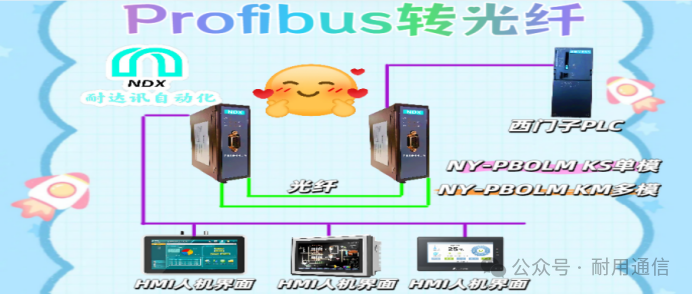
In the wave of smart manufacturing and Industry 4.0, the HMI (Human-Machine Interface) serves as the “bridge” between equipment and operators, undertaking core functions such as real-time data display, equipment monitoring, and interactive control. However, traditional Profibus bus connections often suffer from issues such as electromagnetic interference and transmission distance limitations, leading to screen freezes, command delays, and even communication interruptions, severely affecting production efficiency. Dalian Automation’s Profibus to fiber optic technology is revolutionizing the reliability boundaries of HMI communication with a disruptive solution.
Technical Breakthrough: From “Signal Interference” to “Lossless Fiber Transmission”
The HMI requires extremely high real-time and stability in communication, especially in complex electromagnetic environments such as chemical and metallurgy industries, where the shortcomings of traditional Profibus copper cables are particularly prominent:
Short transmission distance: Standard Profibus-DP cables only support transmission within 120 meters, beyond which repeaters are needed, increasing system complexity;
Poor anti-interference capability: Strong electromagnetic fields (>100V/m) cause HMI screens to flicker, data loss, with a bit error rate exceeding 5%;
Uncontrollable delay: At high baud rates (12Mbps), traditional copper cables have delays of >10bit time (>830ns), affecting operational response.
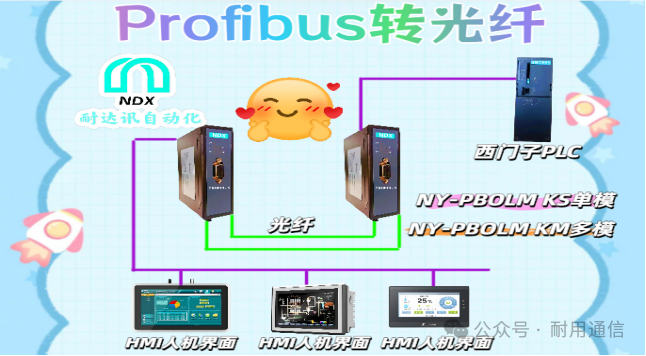
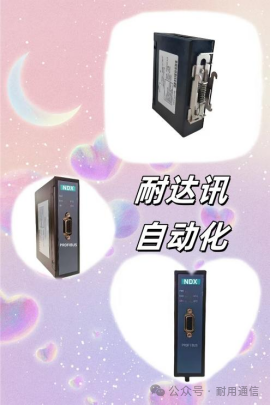
Dalian Automation’s Profibus to fiber optic solution completely addresses these pain points through photoelectric conversion + fiber optic transmission. Its core device is equipped with a high-precision codec chip that converts RS-485 differential electrical signals into optical signals of wavelengths 850nm/1310nm/1550nm, and transmits them via multimode/single-mode fiber optics. Key parameters are as follows:
Ultra-long distance: Single-mode fiber supports stable transmission over 20 kilometers (@12Mbps), while multimode fiber can reach 2 kilometers;
Anti-interference capability: 2500V AC RMS electrical isolation + fiber optic insulation characteristics shield against interference sources such as variable frequency drives and welding machines;
Low latency assurance: End-to-end transmission delay is <1bit time (<83ns), with clock synchronization accuracy of ±1μs;
Environmental adaptability: Wide temperature design (-40℃ ~85℃), IP67 protection level, suitable for harsh conditions such as high temperatures and dust.
Practical verification: The “ultimate answer” for HMI communication
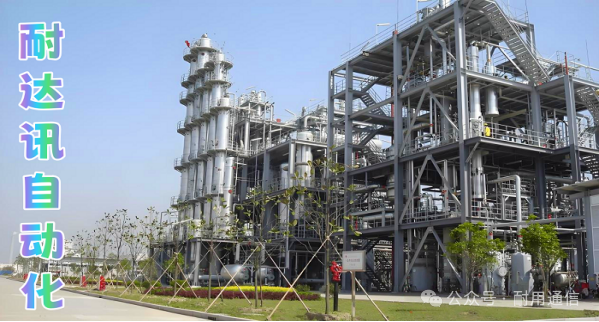
In a large chemical plant’s control room, multiple HMIs are deployed to monitor parameters such as reactor temperature and pressure. The original Profibus copper cable frequently dropped connections due to distance limitations (3 kilometers), with screen refresh delays reaching 50ms. After adopting Dalian Automation’s NY-PBOLM KS single-mode fiber module, communication performance significantly improved:
The bit error rate dropped from 0.5% to 0.001%, and the HMI screen refresh delay was optimized to 5ms;
Flexible topology: Supports star + chain hybrid networking, with an expandable node count of up to 256;
Remote diagnostic function: Built-in Web/Telnet interface for real-time monitoring of optical power (-27.5dBm) and link status, improving fault location efficiency by 60%.
Industry value: More than just a medium upgrade, it is a reliability revolution
Dalian Automation’s Profibus to fiber optic technology is not merely a replacement for copper cables, but through protocol-transparent transmission, redundant ring network design (MRP failover <200ms), injects new vitality into HMI communication. In fields such as mining, energy, and automotive manufacturing,
Conclusion: The “invisible guardian” of HMI communication
When traditional Profibus copper cables struggle in electromagnetic storms, Dalian Automation’s Profibus to fiber optic solution, with its three core advantages of long distance, anti-interference, and high real-time performance, becomes the ultimate solution for HMI communication. Whether in the high-temperature and high-pressure environment of chemical plants or the high-frequency vibration scenarios of automotive production lines, it can provide stable and reliable performance, helping enterprises break through technical bottlenecks and achieve cost reduction and efficiency improvement.
Deploy Dalian Automation’s fiber conversion solution, allowing HMI communication to be “zero lag” from now on.