High Reliability And Performance Vehicle MCU For Intelligent Driving
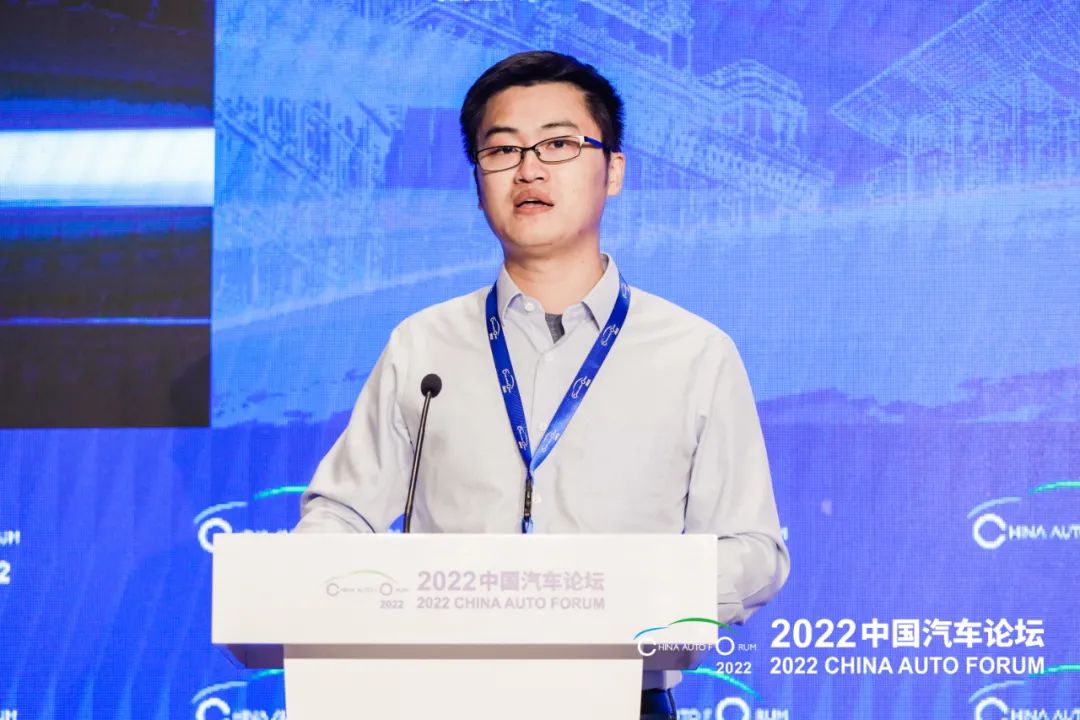
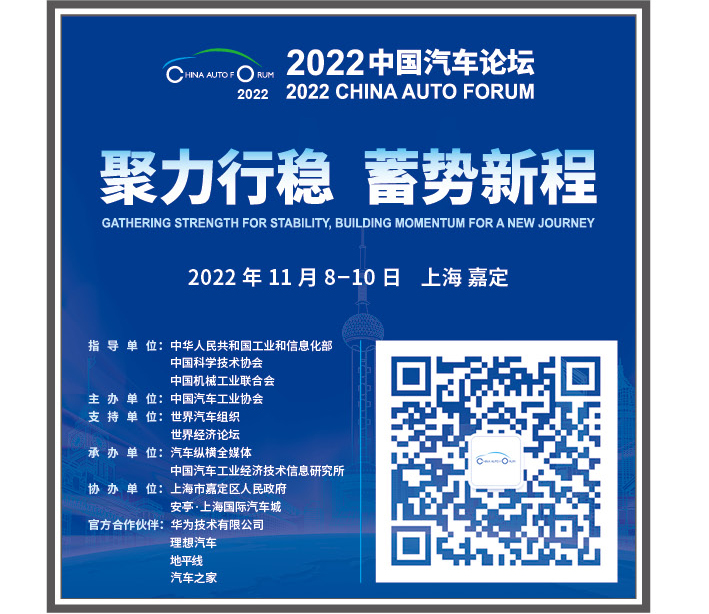
From November 8 to 10, 2022, the 12th China Automotive Forum, hosted by the China Association of Automobile Manufacturers, was held in Jiading, Shanghai. As the first grand event of the automotive industry after the 20th National Congress of the Communist Party of China, this forum was themed “Gathering Strength for Stability and Building a New Journey,” featuring “1 closed-door summit + 1 main forum + 16 thematic forums”. The main line was the high-quality development of the automotive industry, working with industry elites to implement new spirits, assess new situations, and discuss new measures. Among them, on the afternoon of November 9, at “Thematic Forum 3: The Integration of Automotive and Chip Development,” He Xupeng, Marketing Director of Xinchi Technology, delivered an exciting speech.Today’s sharing is themed “Releasing Chips to Drive Forward — High Reliability and High Performance Vehicle MCU Supporting Intelligent Driving Steadily Landing”. My speech is mainly divided into four parts:First, I will introduce the “Four-in-One” product system of Xinchi, then discuss Xinchi’s views on the future development trends of automotive MCUs, and also introduce an overview of our automotive MCU products, as well as the project implementation of Xinchi’s automotive MCUs in core application areas of vehicles.With the development of automotive electronic and electrical architecture, computing power has become increasingly important in the fields of intelligent cockpits, intelligent driving, intelligent gateways, or intelligent end controllers. Safe, reliable, and high-performance central computing + end intelligent chips are the core of intelligence; only by possessing these two foundations can complete vehicle intelligence be realized. The entire product system and solutions of Xinchi are also laid out around these four important areas, and the overall product planning targets the core areas of future automotive electronic applications, which we refer to as “Four-in-One, Endowing Vehicles with Soul”. In the intelligent cockpit, we launched the Cabin Chip X9, which can drive LCD dashboards, central control, co-driver entertainment, external electronic rearview mirrors, and even rear entertainment screens with one chip, supporting up to ten high-definition displays and realizing interaction between screens to meet future cockpit needs.For intelligent driving, we launched the Driving Chip V9, which features high computing power and high reliability while having flexible and powerful interfaces. Such products can adapt to the continuously increasing computing power demands of the future intelligent driving market, ensuring the application landing of intelligent driving-related products.There is also the Networking Chip G9, where more and more ECUs in the new automotive electronic and electrical architecture need to communicate and share data, and the optimization of vehicle wiring and improvement of communication performance rely on the new generation of automotive central gateways. G9 is a vehicle-grade network processor launched for automotive central gateways, meeting the communication security and performance needs required by automotive central gateways.Against the backdrop of the continuous increase in the computing power of the entire automotive central computing and the industry’s recognition of this, Xinchi believes that to truly realize the intelligence of the entire vehicle, the computing power of end intelligent chips is also very important. To meet such market demands, Xinchi launched the Control Chip E3 this April, filling a gap in the domestic market, which is also the focus of my introduction today.Having just introduced the product layout of the Four-in-One, I will now discuss how these four chips are oriented towards the future central computing architecture, or how these four chips can adapt to future automotive systems. We at Xinchi also have our own views on this issue.First, we believe that future vehicles will have three very important components: the central computing unit, the integrated controller of the chassis and power domain, and the area controllers.The purple part in the diagram is the central computing unit, which needs to provide sufficient computing power for future intelligent cockpits and intelligent driving. This computing power includes both the general and real-time computing power provided by CPUs, as well as GPU and NPU computing power; this part will become the brain of future vehicles.It has several characteristics: such a central computing unit can support the realization of high-performance intelligent cockpits while integrating L2.99 level ADAS functions. The central computing unit needs to have scalable computing power, providing corresponding interfaces to flexibly expand this computing power based on the varying computing power demands of manufacturers for cockpits and intelligent driving.For safety reasons, under the premise of matching with functional safety MCUs, it needs to support the highest possible system safety function level of ASIL-D; this is the brain of future vehicles, the central computing unit.The yellow-green part in the diagram is the controller for the chassis and power domain, which will undergo many changes in the future. In addition to the well-known need for high real-time performance, high reliability, and high safety MCU computing power, the chassis domain may need to use machine learning, deep learning, or deploy more complex tuning algorithms on general high computing power cores in the future. Xinchi has deployed E3 Control Chip and G9 Networking Chip to enhance the intelligence level of future chassis and power domains.The area controller is the central nervous system of future vehicles, distributed in various areas of the vehicle. It can optimize hardware and software costs for the entire vehicle, and in the context of software-defined vehicles, it can accelerate the iteration speed of the entire vehicle’s software. It is an important architecture and link for serving future intelligent vehicles, where we mainly promote the MCU product E3 Control Chip.Here is the second part, where I will discuss Xinchi’s views on future automotive MCUs.As mentioned earlier, the central computing architecture of vehicles cannot be realized without two types of intelligent chips: automotive SoCs and automotive MCUs. From the data, as of 2020, the total computing power of SoCs and MCUs in a vehicle has been continuously increasing. Xinchi believes that by 2025, the total computing power of SoCs in a vehicle can reach 300k DMIPS, while the total computing power of MCUs will also reach 300k DMIPS. We believe that only when both SoCs and MCUs reach such high computing power levels can complete vehicle intelligence be achieved without bottlenecks and balanced vehicle intelligence be realized.The diagram in the middle shows (as shown in the PPT) the statistics of the average number of main MCUs in a vehicle. It can be seen that by 2020, there could be 60 main MCUs in a vehicle. However, as the electronic and electrical architecture of vehicles further evolves towards centralization, we believe this number will decrease by 2025, as more functions will be integrated together during domain integration or cross-domain integration. By 2025, a vehicle may have 20 main MCUs, but each MCU will have a significant upgrade in computing power. We believe that by 2025, the average computing power level of main MCUs in vehicles will reach 15k DMIPS.From the product information publicly available from major international automotive MCU manufacturers, we can also see such products and their subsequent R&D plans.With the arrival of the era of software-defined vehicles, we believe that the era of large-scale application of high-performance MCUs in vehicles will ultimately come.The third part introduces Xinchi’s MCU products.Having just mentioned the high computing power development trend of end intelligent chips, I would like to briefly discuss how we define MCU products in the face of such development trends, what points need to be considered, and the logic and reasons behind them.First is high computing power, in 2000, the total number of lines of code in the ECUs of a vehicle was 4,000 lines, and by 2020, the total number of lines reached 100 million and is still increasing. The computational tasks behind the code are allocated to MCU and SoC products, and MCUs also need high computing power. At the same time, with the evolution of automotive electronic and electrical architecture, the original MCUs only served as small controllers; now they will integrate more functions, such as vehicle control, thermal management, etc., thus requiring even higher computing power for MCU chips.When defining the E3 series MCU products, Xinchi configured up to 5 independently operable cores, with a maximum frequency of 800 MHz to meet computing power demands.The second part is large capacity and expandable memory.As mentioned earlier, the increase in software functions in future vehicles puts pressure on both computing power and storage. From the market situation we observe, some manufacturers have regional controllers that use more than 10 MB of MCU flash, and in future plans, storage usage will continue to grow.For another type of controller, such as satellite navigation and inertial navigation in intelligent driving, there will be a significant demand for satellite positioning calculations, with RAM requirements reaching 6 MB or even larger levels. Such large on-chip RAM is relatively hard to find in vehicle-grade MCU products on the market, and in this case, flexible and high-performance interfaces are needed to expand Flash and RAM. Xinchi’s MCU products all have XSPI high-speed buses, allowing RAM and Flash expansion through address memory mapping.The third part is high functional safety.This point is also well-known to everyone; whether in the current discrete ECUs or in the future new electronic and electrical architectures, functional safety is very important. Especially in the future new electronic and electrical architecture, with more functions included, it is inevitable to involve safety-related functions, at which point the MCU needs to support safety functions. The E3 series products from Xinchi are developed according to the SEooC method, with functional safety levels reaching up to ASIL-D. With such products, our system integration, R&D cycles, and costs will become better.The fourth point is information security.In the era of intelligent vehicles, MCUs store more and more personal information, and there is also an increasing amount of information exchange. In the software-defined vehicle era, many functional developments are carried out in a Service-Oriented Architecture (SOA) manner, meaning that MCUs will have a lot of data and service transmission. Xinchi’s E3 series products are equipped with information security modules, supporting domestic cryptographic and commercial cryptographic algorithms, and will undergo relevant certifications.Automotive-grade certification is a very important aspect of automotive MCUs. Many guests have mentioned this point; it is related to the reliability and usability of the entire product. Xinchi has conducted strict automotive-grade certifications based on the temperature requirements of MCU product terminal applications, certified to different automotive-grade temperature levels, such as Automotive Grade 1 and Automotive Grade 2.The last important point is new and richer communication peripherals. Taking the area controller as an example, a current area controller needs to connect to many more sensors and actuators than before, requiring a large number of CAN and LIN interfaces to achieve these connections. At the same time, in the new electronic and electrical architecture, 100M or 1G Ethernet exists as a backbone network in future vehicles, and Ethernet has also become a very important communication method.As intelligent vehicles and intelligent driving are implemented, more and more new demands have been raised in existing peripherals. For instance, in intelligent driving, achieving precise time synchronization and frame duplication and elimination requires hardware support from chip hardware for TSN protocol functions. Currently, the Ethernet planned by Xinchi supports the TSN protocol family across the entire product line.The peripherals of the Xinchi E3 product are very rich; in the maximum case, we provide 24 CAN-FD, 16 LIN, and two Gigabit Ethernet TSN, FlexRay, and other interfaces on a single chip to meet future automotive electronic resources.After discussing the product design ideas and considerations, we would like to take a look at the product planning of Xinchi’s automotive MCUs.We have divided them into three sub-series based on chip functional safety levels, automotive-grade certification temperature levels, and different applications. Although there are three sub-series, they share the same basic software and toolchain.On the far left is the high-reliability MCU series, which is certified to ASIL-D and has an Automotive Grade 1 temperature level. It mainly targets applications including the three electric systems of new energy vehicles, such as VCU, motor drive, and BMS, as well as the currently popular automatic driving and advanced driver assistance controllers. In the new automotive electronic and electrical architecture, we have some large package products suitable for area controllers and gateways. Applications also include popular chassis controllers, such as electric power steering, suspension systems, or chassis domain control.In the middle is the display MCU series, which has relatively few manufacturers in this category. The entire product is certified to ASIL-D level, with an automotive-grade temperature level of Grade 2, targeting more defined applications. On one hand, it includes 2D ultra-high-definition LCD dashboards; on the other hand, it includes external electronic rearview mirrors that replace physical rearview mirrors, which have low latency and functional safety requirements, as well as head-up display controllers.On the far right is the body MCU series, which has functional safety certification to ASIL-B and a temperature of Automotive Grade 2, targeting more applications, including TBOX, body control, air conditioning, lighting, and so on. You can see that the entire series ranges from single-core to dual-core lock-step products, with frequencies ranging from 300 MHz to 800 MHz, making it a large product series.As mentioned earlier, our products have functional safety certifications; I would like to highlight our “Four-in-One” concept.Xinchi has always been very committed to process systems and certifications. The “four certificates” we refer to are as follows:First is the ACQ-100 certification; all our automotive-grade products have certificates. Second is the ISO26262 ASIL D functional safety process certification; all functional safety products must be developed based on completing process certification before obtaining functional safety product certification. The functional safety product certification varies by product level; our SoC products were released earlier and have already obtained ASIL-B product certification, while the MCU is still in the process of obtaining ASIL-D certification, which is expected to be completed in 2023.Additionally, there are certifications related to information security, including national and commercial cryptographic certifications. The gateway chips previously launched by Xinchi integrated national and commercial cryptographic functions, certified to national cryptographic level 1, while our MCUs will have higher standards, achieving national cryptographic level 2.The last part mainly introduces the landing situations of MCU products in automotive electronic applications and the product values highlighted in these landing projects.Here, I have listed the main applications to briefly introduce them.First, advanced driver assistance and automatic driving controllers. These controllers require high-performance SoCs and cannot do without MCUs. With their high computing power, large storage capacity, and support for functional safety, Xinchi’s MCUs have gained a number of landing projects. Typically, our MCUs play roles in sensor connection, regulatory algorithm implementation, system power management, and functional safety monitoring.In addition to core applications related to intelligent driving and automatic driving, we also have landing projects for automotive laser radars. With two Gigabit Ethernet TSN peripheral configurations, we have helped major domestic manufacturers optimize the costs of laser radar systems, greatly enhancing product competitiveness and accelerating the landing of laser radar products in vehicles.Moreover, we have made significant contributions in the chassis domain, including electric power steering, suspension controllers, and chassis domain controllers. A significant transformation in the chassis domain is moving towards drive-by-wire and domain control, resulting in changes in MCU demand. Many mechanical and hydraulic devices will decouple from controllers, replaced by electric wires, leading to the integration of ECUs in the chassis domain, which is the main reason we see more opportunities in this area.In the power domain, we have many projects related to the three electric systems, including BMS, motor control, and VCU. Notably, the feedback from the BMS market has been very positive, thanks to our high-performance product layout, enabling more complex power measurement and balancing algorithms to maximize the usable energy of the battery pack, thereby enhancing the economic benefits of the entire BMS product.Moving up to area controllers and body controllers, applications in this category usually require a lot of IO control. Manufacturers are making these ECUs larger; Xinchi has helped customers achieve multi-IO designs using our E3 MCUs.Also, as mentioned earlier, we have three display applications. First is the LCD dashboard, where Xinchi provides a 2D LCD dashboard with a resolution of 1920 x 720 and a refresh rate of 60 frames, delivering an impressive performance. The MCU enables the implementation of safety functions for the 2D LCD dashboard. Our chips support a series of safety components, including safety manuals and functional safety software libraries, which can support ASIL-B functional safety levels in critical display links.Additionally, for external electronic rearview mirrors, we provide reference designs focusing on low latency; the lower the latency, the better the user experience and safety. We have achieved a latency level of 20 milliseconds, performing excellently, thanks to the display-related hardware accelerators within Xinchi chips.Xinchi’s MCU electronic rearview mirrors can support the realization of functional safety, which is a distinctive feature.Finally, for head-up displays (HUD), the penetration rate of HUD products is continuously increasing. Our feature is that the chip integrates a hardware distortion engine, projecting distorted images onto the windshield, all accomplished by a single chip, giving us a BOM advantage.Xinchi is also exploring more applications with many Tier 1 and OEMs, and we believe there will be more collaboration and innovation points in the future automotive field, creating more success stories with Xinchi E3 MCUs.The Xinchi E3 products are now in mass production. We thank our automotive peers for their support and affection towards Xinchi, and we hope that Xinchi’s products will shine more brightly and drive the transformation of automotive intelligence and the mass production of intelligent vehicles.(Note: This article is organized based on on-site shorthand and has not been reviewed by the speaker.)
↙
Click below “Read Original” to view the forum topic