Happy 34th Birthday to Linux!
Will the Linux system also experience anxiety about turning 35?
Haha…
Wishing Linux a happy 34th birthday!
On August 25, 1991, a 21-year-old Finnish university student, Linus Torvalds, announced on the Usenet newsgroup that he was developing a “personal hobby” free operating system.
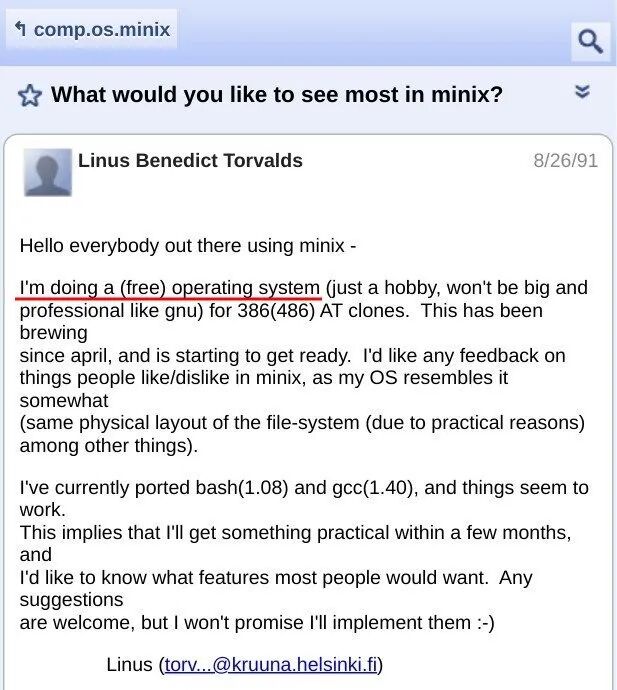
Linus Torvalds initially considered the Linux kernel as a personal hobby and never intended to develop it into a professional version. He stated at the time that this operating system “is just a hobby and will not be as large and professional as GNU.”
On September 17, 1991, version 0.01 of Linux was released, but the name of the operating system was decided at the last minute by others as “Linux,” without consulting Linus Torvalds.

In October 1991, version 0.02 of Linux was released, which was the first “usable” version, containing significant fixes, VM (disk paging), and job control features.
Since the release of these early versions, Linux has undergone a long journey, with version numbers continuously rising. For example, it jumped from 0.12 to 0.95, and later to versions 1.0, 2.0, and so on.
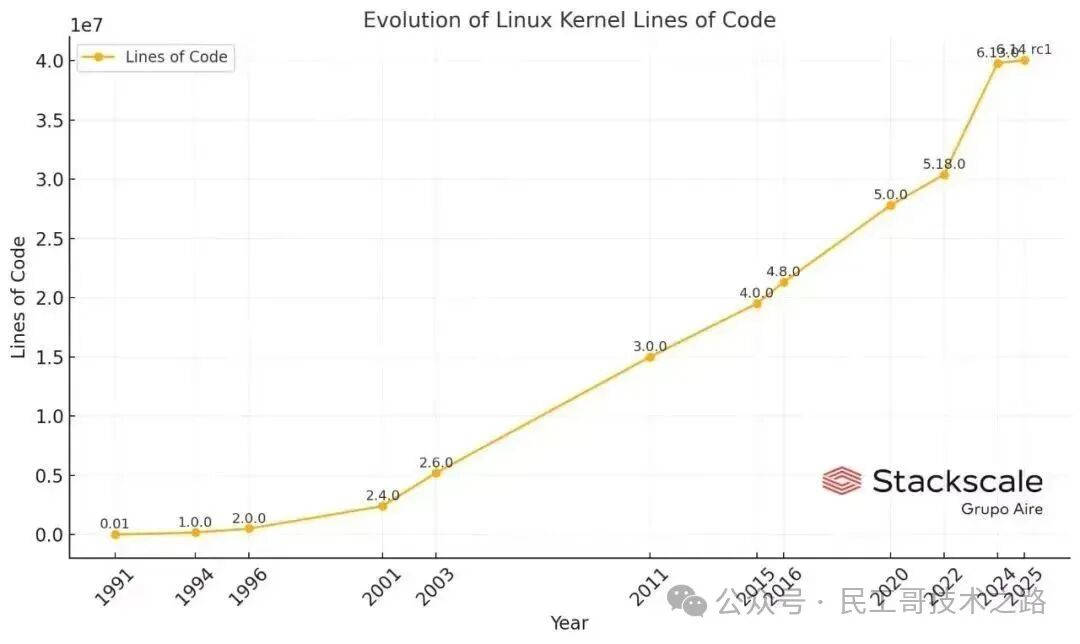
By 2025, the Linux kernel has been updated to the third candidate version of 6.17, demonstrating its ongoing technological innovation and iterative capability.
Linux is widely used on servers, supporting most cloud infrastructure. For example, in 2020, 90% of global cloud devices used the Linux operating system, and by 2025, 90% of public cloud workloads are expected to be based on Linux.
Linux runs on most supercomputers worldwide, showcasing its powerful computing capabilities and stability.
Linux exists in many embedded devices, such as routers and video game consoles, reflecting its wide applicability and flexibility.
Linux is the core of Android, providing operating system support for billions of mobile devices worldwide.

With the continuous development of technologies such as cloud computing, big data, and artificial intelligence, the importance of Linux as a foundational operating system will become even more prominent. Its open-source, free, and customizable features will enable it to play a greater role in these fields.
With the retirement of Windows 10 and the upcoming arrival of SteamOS on desktops, 2025 may become the year of Linux. The market share of Linux in desktop operating systems is expected to further expand.
👍 Since you’ve read this far, if you think it’s good, please give a like, a view, and share! If you want to receive updates first, you can also give me a star ⭐~