Introduction: From “Digital Hub” to “Intelligent Policing Brain” Transition
During the 14th Five-Year Plan period, China’s public security information technology construction has undergone a profound structural foundation: successfully establishing a “digital neural hub” that connects the entire police force. Through top-level design and pragmatic advancement, a robust infrastructure centered around police cloud and powered by big data centers has taken shape, achieving the aggregation of massive data and the initial integration of platforms.
Entering the new journey of the 15th Five-Year Plan, the release of the national “Artificial Intelligence +” action plan has provided a clear evolutionary direction for the modernization of public security work. If the 14th Five-Year Plan completed the laying of the “nervous system,” then the core task of the 15th Five-Year Plan is to awaken and activate the “Intelligent Policing Brain” based on it. New generation artificial intelligence technologies represented by language large models, visual large models, and AI Agents will become the core engine driving fundamental changes in policing models.
This article will deeply analyze how new generation artificial intelligence technologies empower practical policing from six core dimensions of public security business: “Strike, Prevent, Manage, Control, Serve, and Govern,” giving rise to new qualitative combat capabilities.
Core Technology Interpretation: The Synergistic Relationship between Large Models and AI Agents
Before delving into applications, it is necessary to clarify the relationships among these three core technological concepts. Language large models (LLM) and visual large models (VLM) serve as the perceptual and cognitive foundation of the “Intelligent Policing Brain,” playing the roles of “language hub” and “visual hub” respectively. Language large models excel at understanding, analyzing, and generating text, capable of deeply interpreting massive amounts of textual information such as case files and intelligence; visual large models focus on analyzing images and videos, identifying targets, understanding scenes, and judging behaviors from complex visual signals.
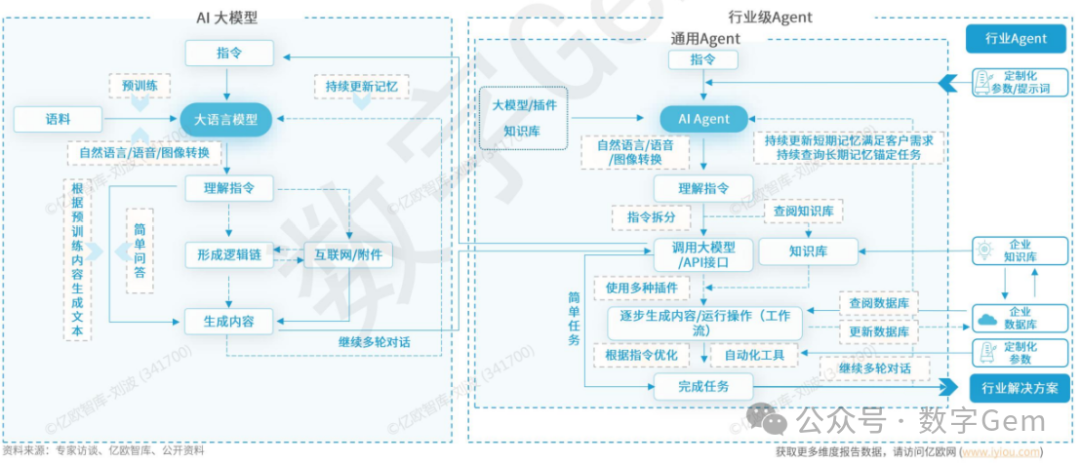
Figure: AI Agent Architecture, sourced from “2025 China AI Agent Commercial Application Scenario Insight Research Report”
However, large models themselves primarily handle information processing and do not directly execute tasks. At this point, **AI Agents** play the roles of “commander” and “executor.” They are a higher-level intelligent system, with large models as the core engine, capable of perceiving the environment, autonomously planning, calling tools, and executing a series of complex tasks to achieve final goals.
The relationship among the three can be understood as follows: AI Agents are task-oriented “action entities,” while large models are the “super organs” providing core capabilities. A “Reconnaissance and Analysis Agent” at work will call upon the language large model to “read” case files, invoke the visual large model to “view” surveillance, and then conduct comprehensive reasoning based on the information provided by both models, ultimately autonomously generating analysis reports or issuing commands. It is this synergistic relationship that forms the foundation for the “Intelligent Policing Brain” to proactively solve problems.
Transformation of Core Dimensions in Policing from the 14th to the 15th Five-Year Plan
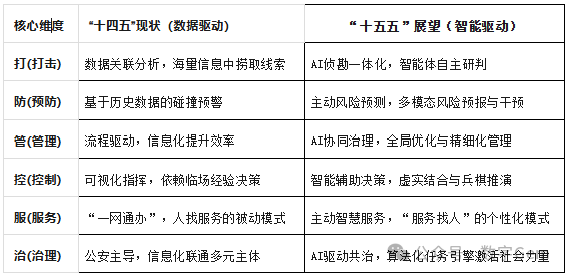
1. Strike: From “Association Analysis” to “AI Integrated Investigation”
Combating crime is the sharp sword of public security work. During the 15th Five-Year Plan, the operational model of investigation and analysis will be fundamentally reshaped, achieving a leap from data association to intelligent integration.
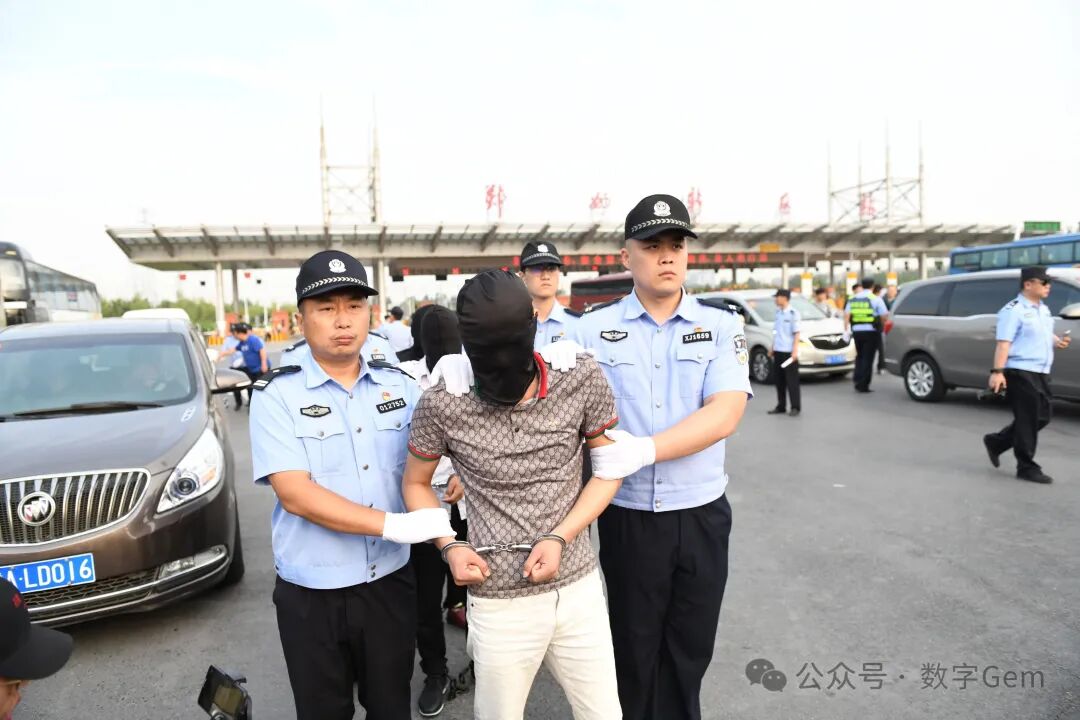
The “Policing Language Large Model” empowers intelligent review of case files: Faced with the mountain of electronic case files, interrogation records, and financial flows in complex cases, the “Policing Language Large Model” can achieve second-level reading and deep analysis, automatically constructing networks of involved personnel, analyzing financial chains, and locating key evidence, liberating police officers from heavy desk work.
The “Visual Large Model” creates an all-domain video eagle eye: The visual large model will evolve from simple facial and vehicle recognition to deeper scene understanding and behavior analysis. It can accurately retrieve complex behavior patterns such as “lingering abnormally in specific areas” from massive video data and, through cross-camera tracking (Re-ID) technology, lock onto suspects without clear features.
The “Investigation and Analysis Intelligent Agent” serves as the autonomous analysis hub: The “Investigation and Analysis Intelligent Agent,” which integrates language and visual capabilities, will become a powerful assistant for frontline police officers. It can autonomously plan and execute multi-step tasks: intelligently reviewing case files, analyzing electronic data, issuing video retrieval commands, colliding multi-dimensional information, and generating in-depth analysis reports to provide high-value intelligence support for operational decision-making.
2. Prevent: From “Post-Event Warning” to “Proactive Risk Prediction and Intervention”
Preventing crime is a core measure of social governance level.During the 15th Five-Year Plan, a forward-looking proactive defense system will be established, transforming passive responses into active interventions.
The “Urban Public Safety Large Model” achieves “Public Security Weather” forecasting: By integrating multi-modal data such as public security, crowd flow, traffic, and even online public opinion, the large model can predict public safety risk levels in different urban areas and time periods, accurately identifying risk signs such as “abnormal gatherings” and “potential conflicts.”
AI Agents transform into “All-Time Patrol Sentinels”: Drones, patrol robots, and fixed cameras equipped with visual large models work together to create a 24/7 intelligent patrol network. They can autonomously identify risks such as objects thrown from heights, crowd congestion, and fights, and autonomously conduct preliminary responses such as issuing warnings, linking traffic lights, and reporting to command centers.
3. Manage: From “Process-Driven” to “AI-Driven Refined Governance”
Social management tasks are complex, and the new generation of artificial intelligence will inject refined governance capabilities from both dynamic and administrative levels, enhancing social operational efficiency.
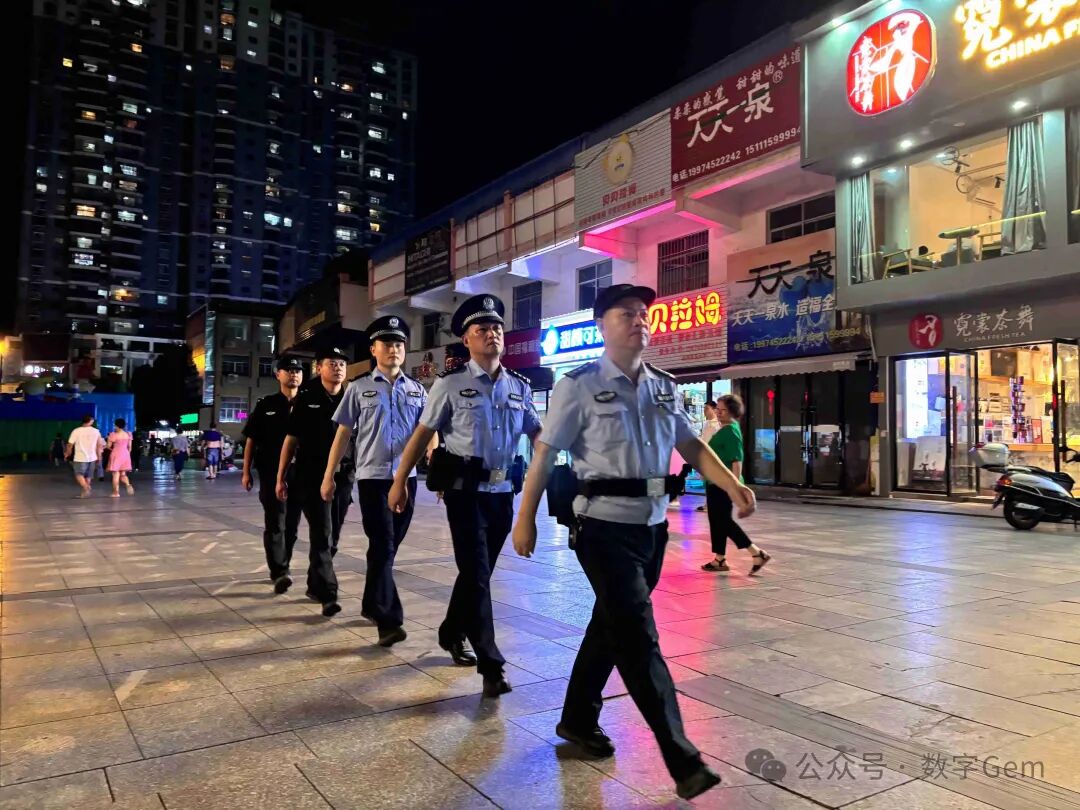
The “Traffic Intelligence Brain” achieves global optimization: AI Agents will enable global coordination and real-time adaptive control of urban traffic signals, accurately predicting future traffic conditions, intervening in advance, and automatically generating and executing optimal traffic organization plans in scenarios such as large events and severe weather.
The “AI Government Service Officer” reshapes service models: Virtual police officers driven by language large models will provide 24/7 business consultation and processing services to the public through various online channels in a natural conversational manner. They can accurately understand policies and intelligently review materials, achieving over 80% automation of routine administrative services.
4. Control: From “Experience-Based Decision Making” to “Intelligent Assistance and Virtual Simulation”
Emergency control tests the hard power of public security agencies.During the 15th Five-Year Plan, the ability to control complex situations will be fundamentally enhanced through intelligent assistance and virtual simulation.
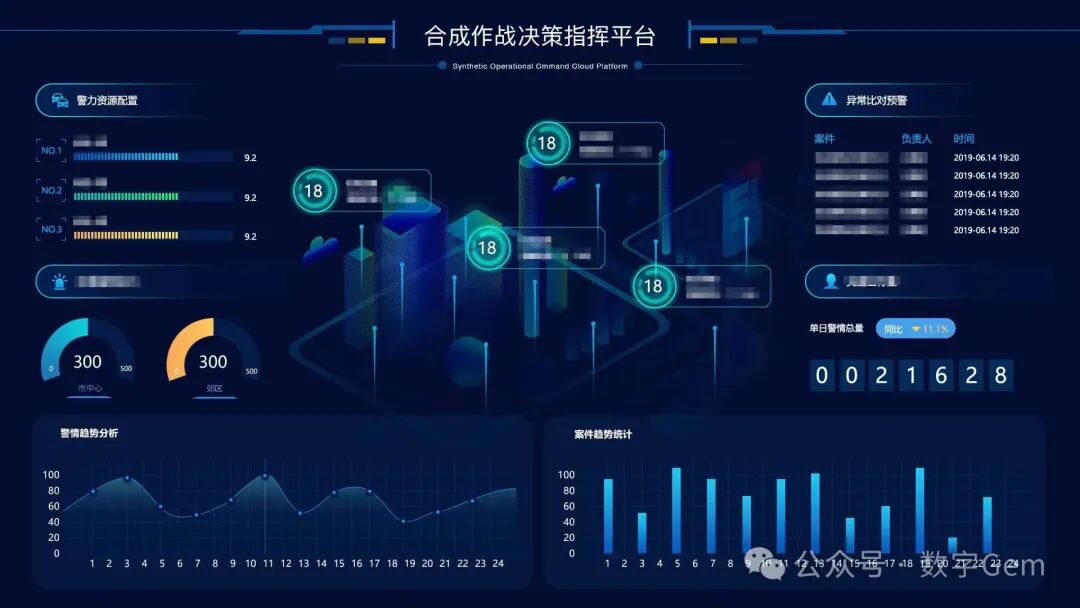
The “Command Decision AI Advisory System” provides scientific assistance: In the face of major emergencies, AI Agents can analyze massive现场数据 in real-time, instantly identify key targets, assess现场态势, and provide multiple quantifiable options for handling to commanders based on the pre-planned response library, assisting in scientific decision-making.
Digital twins empower “War Game Simulations” and “Virtual-Real Collaboration”: On the urban digital twin platform, various emergencies can be simulated through “wargaming,” continuously optimizing response plans. In practice, commanders can grasp the overall situation in a virtual space, while frontline police forces receive three-dimensional command indicators overlaid in the real world through AR glasses, achieving precise, efficient, and safe command control.
5. Serve: From “People Seeking Services” to “Seamless, Proactive Intelligent Services”
Serving the public is the bridge to building harmonious police-community relations.During the 15th Five-Year Plan, the service model will shift from a passive “one-stop service” to a proactive, personalized “service seeking people” model.
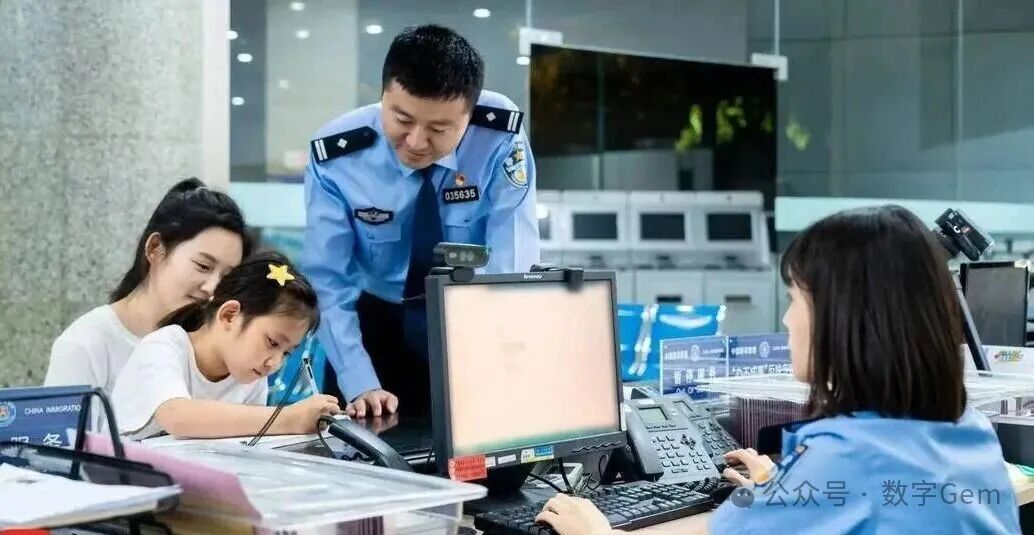
The “Personalized AI Policing Butler” realizes proactive service anticipation: With user authorization, the AI service agent can anticipate public needs in advance. For example, it can proactively remind users of upcoming license expirations and guide them through online renewal, or push safety tips and consular protection information before traveling abroad.
The “Full-Chain AI Anti-Fraud Guardian” builds a technical firewall: AI can not only identify potential victims through big data models but also be deployed at the front end of communication links to real-time identify and block fraudulent calls and messages. For high-risk calls, AI can even intervene as a virtual assistant, using professional language to directly dissuade the public after obtaining consent.
6. Govern: From “Police-Led” to “AI-Driven Multi-Party Co-Governance”
The future of social governance lies in collaborative co-governance.AI will become the catalyst for activating social forces and deepening the “Fengqiao Experience” in the new era.
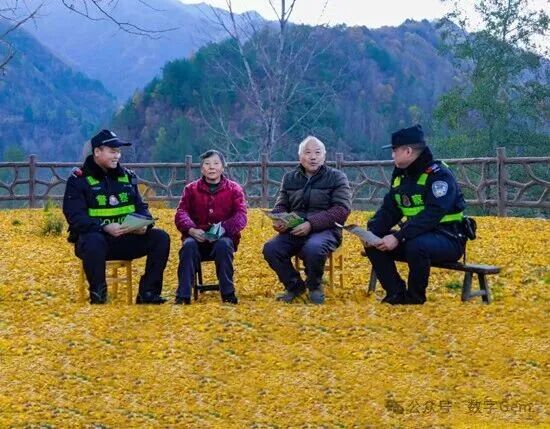
The “Intelligent Conflict Mediation Assistant” empowers grassroots: AI will become the “think tank” for grassroots police officers. When handling neighborhood disputes, it can instantly provide relevant laws, similar cases, and professional mediation language references, and can quickly link community grid members and people mediators to form online collaborative work groups.
The “Social Governance Task Intelligent Engine” activates social forces: The platform can algorithmically and gamify governance tasks such as patrolling and publicity based on community security conditions, accurately pushing them to peace volunteers and other community defense forces. The public can “report hazards” with a simple click, “take tasks” to participate in patrols, and AI will automatically provide incentives based on contribution levels, thereby efficiently activating the “nerve endings” of social governance.
Conclusion: Embracing the New Era of Human-Machine Collaboration in Policing
The comprehensive reform of “Strike, Prevent, Manage, Control, Serve, and Govern” indicates that the new generation of artificial intelligence centered around large models and AI Agents will no longer be merely technical tools but will deeply integrate into the practical policing process, becoming “intelligent comrades” and “senior advisors” working alongside police officers.
During the 15th Five-Year Plan, public security work is ushering in a profound leap from data-driven to intelligence-driven. This is not only a technological iteration but also a reshaping of policing mechanisms, organizational forms, and combat power generation models. A more intelligent, efficient, and precise modern policing paradigm is on the horizon.