 ChemSocRev (Chemical Society Reviews) is a leading journal published by the Royal Society of Chemistry, featuring high-impact, authoritative, and highly readable review articles. Since its inception in 1947 as the predecessor Quarterly Review of the Chemical Society, ChemSocRev has published many influential review papers over the past 70 years, growing to become one of the most impactful and recognized journals in the field of chemical sciences, consistently ranking at the top of various impact metrics among all scientific journals.“Symmetry breaking” has become an effective strategy for fine-tuning the electronic structure of catalytic sites, significantly enhancing the electrocatalytic performance of single-atom catalysts (SACs). Due to their inherent characteristics, traditional SACs (such as M–N₄ configurations) often exhibit symmetric electronic density distributions, which can lead to suboptimal adsorption and activation of reaction intermediates, limiting catalytic efficiency.By breaking the symmetry of SACs, the electronic distribution around the active center can be modulated, thereby optimizing the selectivity and adsorption strength of key intermediates. These changes directly affect the reaction pathway, lowering energy barriers and enhancing catalytic activity. However, achieving precise control over catalytic performance through symmetry breaking in SACs remains a challenging issue.
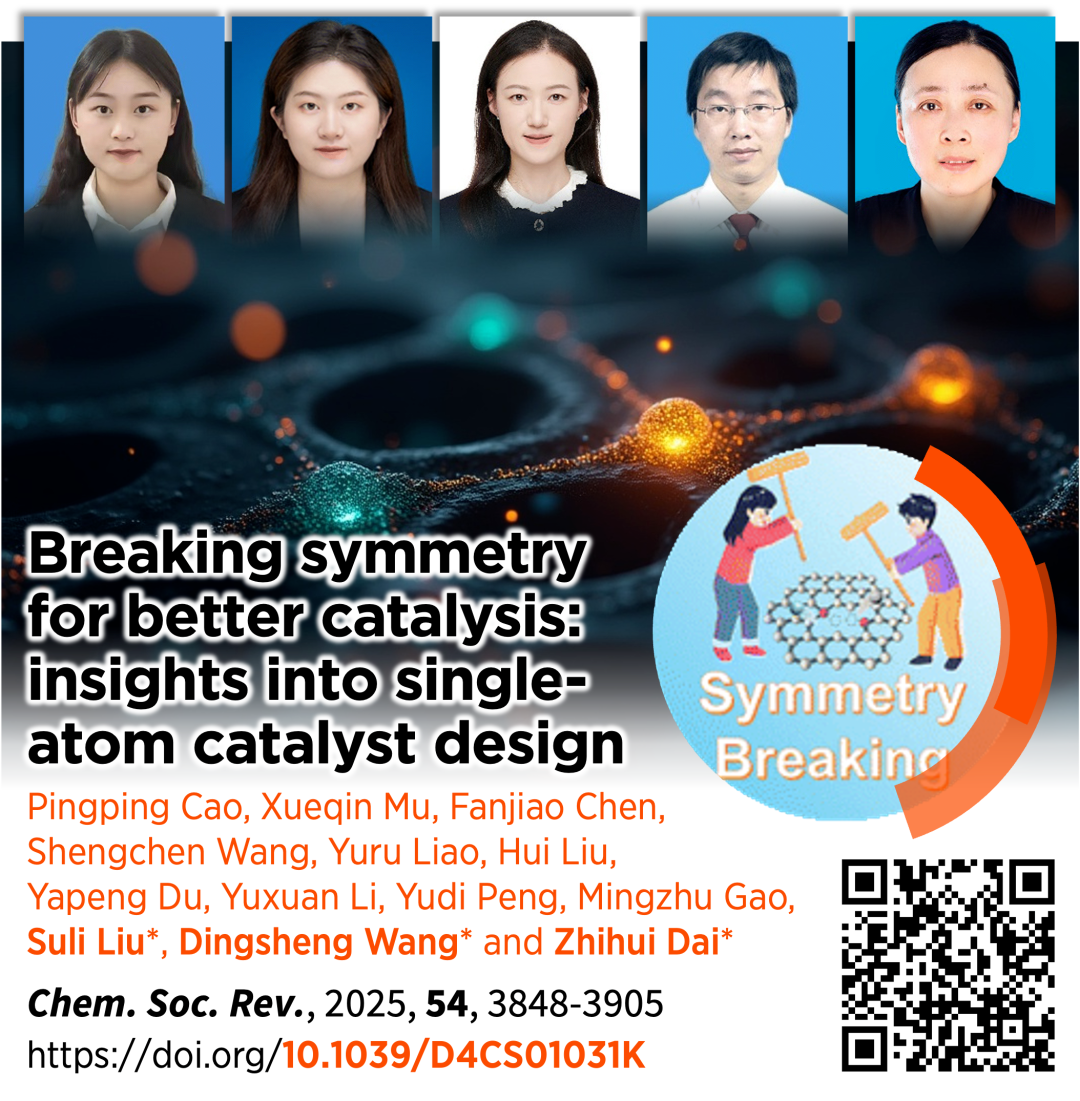 A team led by Professor Zhihui Dai from Nanjing Tech University, Professor Suli Liu, and Professor Dingsheng Wang from Tsinghua University published a review in ChemSocRev focusing on the atomic-level symmetry-breaking strategies of catalysts—including charge breaking, coordination breaking, and geometric breaking—and their electrocatalytic applications in electronic structure modulation and active site design. The review elucidates the impact of these strategies on oxidation, reduction, and bifunctional catalytic reactions through advanced characterization techniques combined with density functional theory (DFT).The review emphasizes the importance of symmetry-breaking structures in catalysis and points out the need for further research on how to achieve precise control at the atomic scale.
Welcome to scroll down for more information ⬇️
Review Article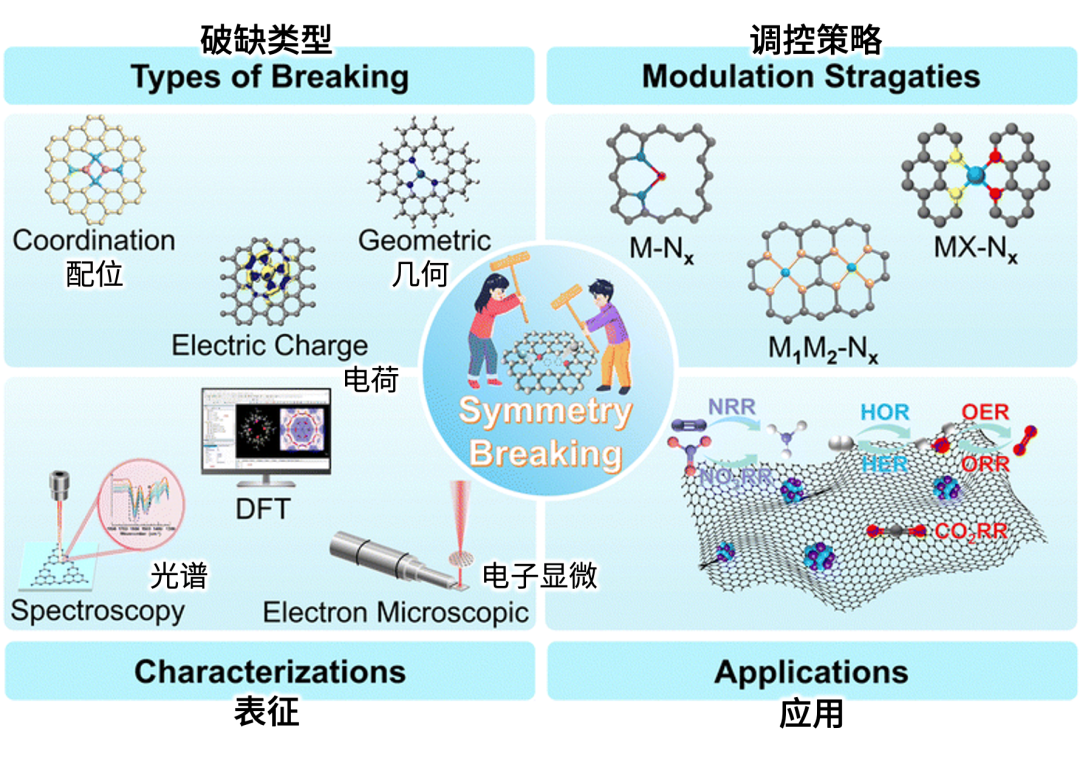
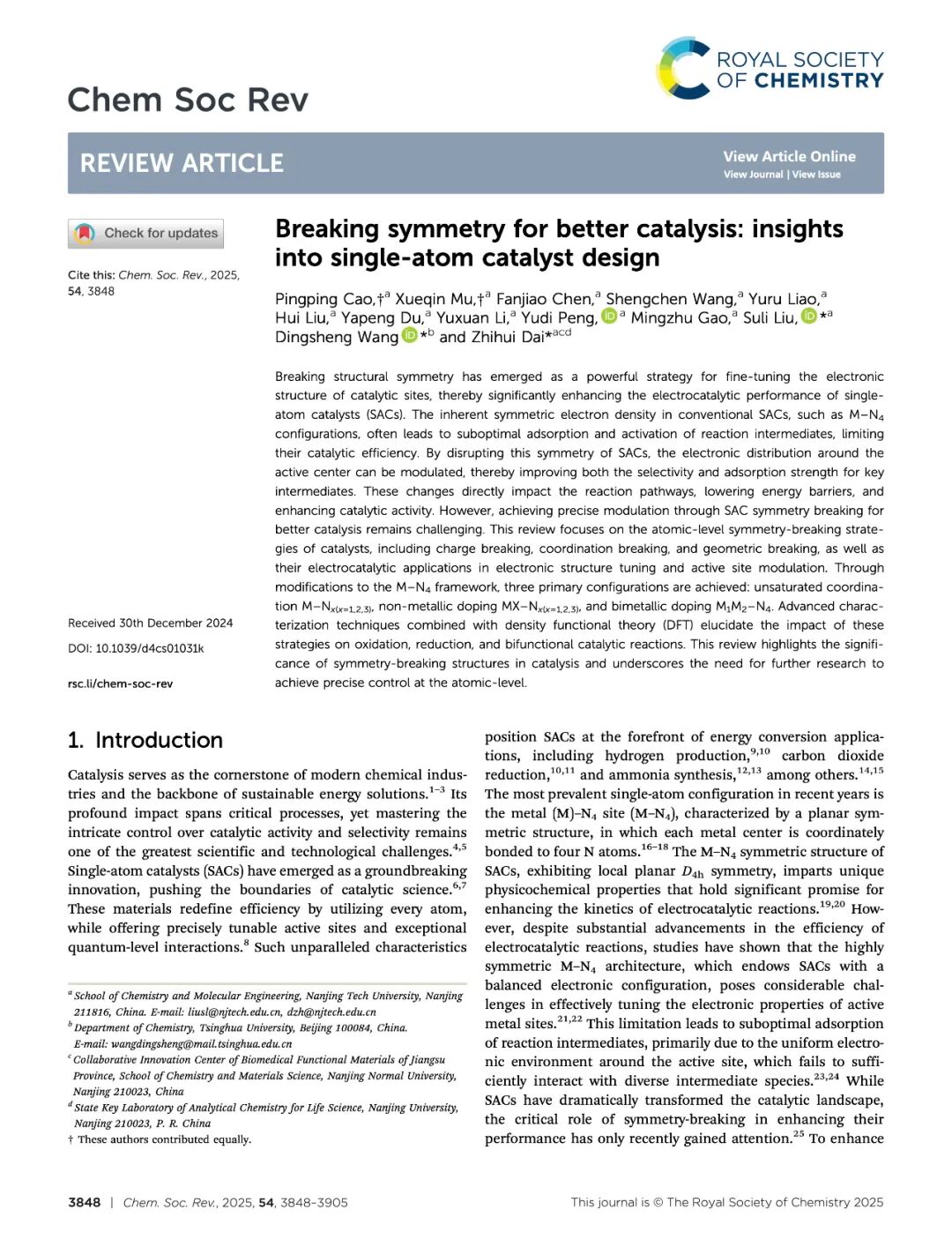
- Breaking symmetry for better catalysis: insights into single-atom catalyst design Pingping Cao†, Xueqin Mu†, Fanjiao Chen, Shengchen Wang, Yuru Liao, Hui Liu, Yapeng Du, Yuxuan Li, Yudi Peng, Mingzhu Gao, Suli Liu*, Dingsheng Wang* and Zhihui Dai*Chem. Soc. Rev., 2024, 54, 3848-3905 Please click the “Read the original” link at the end of the article, or copy the following link to open the original article in your browser:https://doi.org/10.1039/D4CS01031K

Pingping Cao
Nanjing Tech University
Currently a graduate student at Nanjing Tech University, focusing on the application of atomically dispersed nanomaterials in water electrolysis.

Xueqin Mu
Nanjing Tech University
Obtained a master’s degree in chemistry from Nanjing Normal University in 2021 and will receive a Ph.D. in materials science and engineering from Wuhan University of Technology in 2025. Currently a postdoctoral researcher at Nanjing Tech University, focusing on the design of metal nanomaterials and their applications in electrocatalytic reactions.

Suli Liu
Nanjing Tech University
Professor, master’s supervisor, recipient of the Jiangsu Provincial Association for Science and Technology Young Talent Support Program, outstanding young backbone teacher of the Jiangsu Provincial “Qinglan Project”, and a key talent in the Jiangsu Provincial Six Talent Peaks Program (Category B). Graduated with a Ph.D. from Nanjing Normal University in June 2014 and joined the postdoctoral research station at Nanjing Normal University in the same year, completing the program in November 2016.
Research focuses on new energy materials, key materials for fuel cells, and the development of electrocatalysts. Over 70 high-quality papers published as the first or corresponding author in authoritative journals in the field of catalysis, such as Nat. Commun., Chem. Soc. Rev., Natl. Sci. Rev., J. Am. Chem. Soc., and Angew. Chem. Int. Ed.; over 10 authorized national invention patents; and has led eight research projects including the National Natural Science Foundation, Jiangsu Provincial Natural Science Foundation, and Jiangsu Provincial Higher Education Fund.

Dingsheng Wang
Tsinghua University
Long-term professor at Tsinghua University and a national-level scientific talent. Obtained a bachelor’s degree in science from the University of Science and Technology of China in 2004 and a Ph.D. in science from Tsinghua University in 2009. Conducted postdoctoral research in the Department of Physics at Tsinghua University from 2009 to 2012. Joined the Department of Chemistry at Tsinghua University in July 2012.
Research areas include inorganic nanomaterials chemistry, focusing on the synthesis, structural regulation, and catalytic performance of inorganic functional nanomaterials primarily composed of metal nanocrystals, clusters, and single atoms. Over 300 academic papers published in journals such as Nature, Nature Chem., Nature Nanotech., Nature Catal., Nature Synth., Nature Commun. (19 papers), Angew. Chem. Int. Ed. (65 papers), J. Am. Chem. Soc. (27 papers), Adv. Mater. (30 papers).

Zhihui Dai
Nanjing Tech University
Professor, doctoral supervisor; currently serves as a member of the Standing Committee of the Party Committee and Vice President of Nanjing Tech University; recipient of the National Outstanding Youth Fund, National Special Talent Program of the Ministry of Education, and a leading talent in scientific innovation for young and middle-aged scientists from the Ministry of Science and Technology.
Mainly engaged in research on photoelectrochemical analysis and biosensing. Leads several national and provincial-level projects, including the National Natural Science Foundation’s Outstanding Youth Project, key projects, and exploratory projects in frontier technology. Received the First Prize in Natural Science from the Ministry of Education (third contributor), the “National Electrochemistry Youth Award” from the Chinese Chemical Society, and enjoys special government allowances from the State Council. Over 150 SCI papers published as the first or corresponding author in high-level journals such as J. Am. Chem. Soc., Angew. Chem. Int. Ed., Nat. Commun., Adv. Mater., Anal. Chem.; over 20 authorized Chinese invention patents. Selected for the Ministry of Education’s New Century Excellent Talents Support Program, Jiangsu Provincial “333 High-Level Talent Training Project”, Jiangsu Provincial Six Talent Peaks Program, and Jiangsu Provincial “Qinglan Project” Outstanding Young Backbone Teacher. Serves as the director of the academic committee of the Jiangsu Provincial Large Scientific Instrument Open Laboratory, executive director of the Jiangsu Provincial Association for Analysis and Testing, deputy chairman of the Analytical Chemistry Professional Committee of the Jiangsu Provincial Chemical and Chemical Engineering Society, and a member of the Electrochemical Analysis Professional Committee of the Chinese Society of Instrumentation.
Introduction
Catalytic reactions are the cornerstone of modern chemical industry and the pillar of sustainable energy solutions; however, precise control over catalytic activity and selectivity remains one of the most severe scientific and technological challenges today.Single-atom catalysts (Single-atom catalysts, SACs) represent a groundbreaking innovation that is pushing the boundaries of catalytic science.
In recent years, the most commonly used single-atom configuration is the metal-N₄ site (M–N₄), characterized by a planar symmetric structure—each metal center (M) is coordinated to four nitrogen (N) atoms. The M–N₄ symmetric structure of SACs exhibits local planar D₄ₕ symmetry, endowing it with unique physicochemical properties that are significant for enhancing the kinetics of electrocatalytic reactions.
Despite significant progress in the efficiency of electrocatalytic reactions, studies have shown that the highly symmetric M–N₄ structure, while providing SACs with balanced electronic configurations, poses a significant challenge for tuning the electronic properties of active metal sites. This limitation leads to suboptimal adsorption of reaction intermediates, primarily due to the homogeneous electronic environment around the active sites, which makes it difficult to interact sufficiently with diverse intermediates.
In light of this, symmetry breaking (symmetry breaking) has become an effective strategy for modulating the electronic properties of SACs: it breaks the symmetry in atomic or molecular structures, profoundly affecting the electronic properties and geometric arrangement of active sites, thereby optimizing the electron transfer pathways and reaction efficiency, thus enhancing catalytic activity and selectivity. Additionally, symmetry breaking strengthens the binding of single atoms to support materials to prevent metal agglomeration and enhances the stability of the catalyst.
Current methods for achieving symmetry breaking in SACs mainly include: 1️⃣ “doping“—introducing heteroatoms (such as non-metal or metal heteroatoms) to alter the symmetry of the support or coordination environment; 2️⃣ “surface modification & defect engineering“—introducing defect sites (such as vacancies, lattice distortions) or modifying the surface with specific functional groups to effectively break the symmetry of the coordination environment and create heterogeneous active sites; 3️⃣ “anchoring ligands“—designing asymmetric ligand molecules to anchor single atoms at specific sites, significantly altering their coordination environment and electronic properties.
The symmetry-breaking strategy in catalyst design—especially in single-atom catalysts (SACs)—still faces many challenges: achieving symmetry breaking at the atomic level while ensuring uniformity is an extremely complex problem. Techniques such as doping or defect engineering often lead to random distribution of defects, making precise and efficient symmetry modulation difficult; stability is also a key issue—symmetry breaking may introduce structural heterogeneity or defects, leading to instability under reaction conditions (such as atomic migration, agglomeration, or loss), affecting the long-term performance of the catalyst. Therefore, designing effective symmetry-breaking methods in SACs requires careful balancing between breaking symmetry and maintaining structural integrity to achieve and sustain optimal catalytic activity.
This review addresses the challenges posed by symmetry breaking in SACs, systematically summarizing current research progress and proposing specific solutions. At the atomic level, symmetry breaking can lead to issues of randomness and stability, specifically categorized into three types: charge breaking (charge breaking), coordination breaking (coordination breaking), and geometric breaking (geometric breaking). These methods form three typical structural configurations: unsaturated coordination M–Nₓ (x=1,2,3), non-metallic doping MX–Nₓ (x=1,2,3), and bimetallic doping M₁M₂–N₄.
Through strategic design of doping elements and the introduction of defect structures, precise modulation of charge distribution and coordination environment in SACs can be achieved. On this basis, advanced characterization techniques such as atomic-resolution transmission electron microscopy and various spectroscopic methods can systematically reveal the microscopic features of symmetry-breaking structures. Meanwhile, using density functional theory (DFT) calculations to analyze the environment of active centers in depth clarifies the specific mechanisms by which symmetry breaking affects catalytic performance. This systematic approach not only achieves high-precision construction of symmetry-breaking structures but also effectively evaluates their key roles in catalytic oxidation, reduction, and bifunctional reactions. Ultimately, this paper emphasizes that a deep understanding of the formation mechanisms and control strategies of symmetry breaking will provide an indispensable theoretical foundation and practical guidance for the design optimization of SACs (Figure 1).
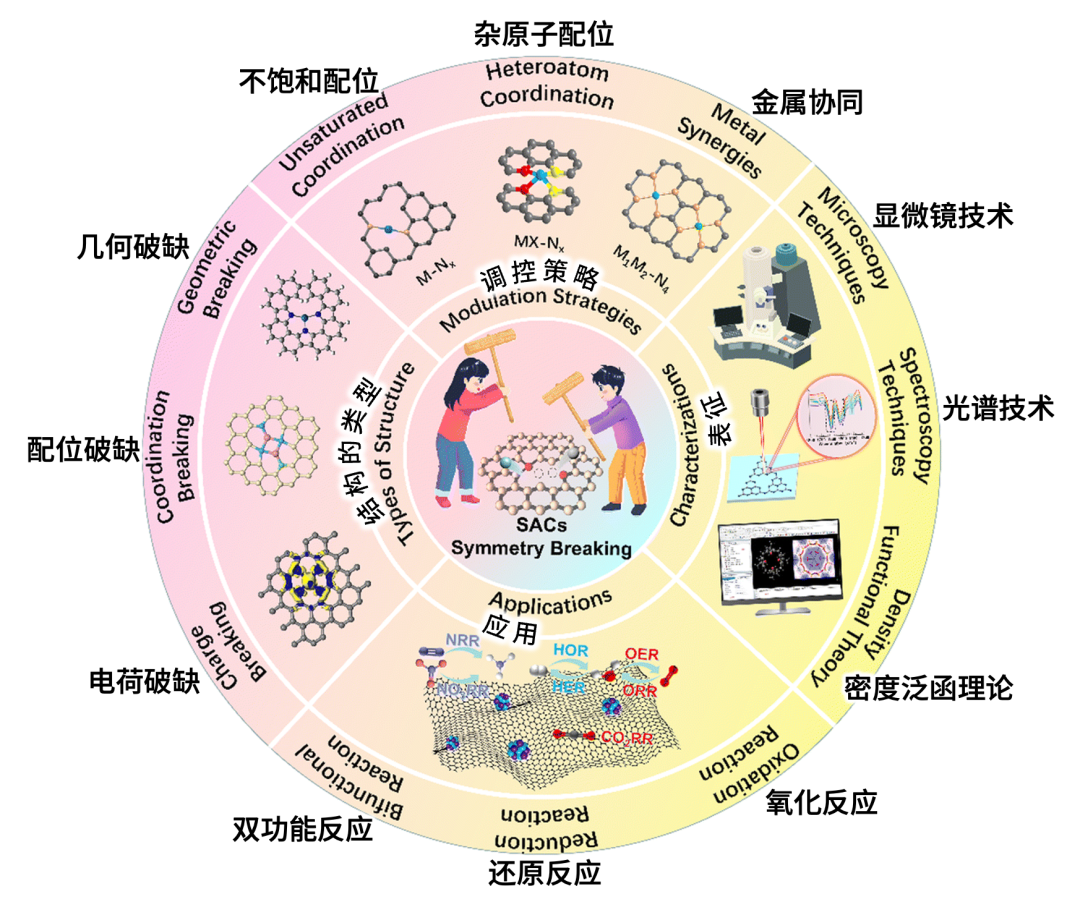
- Original Figure 1. This review covers various structural types and modulation strategies of symmetry-breaking SACs, advanced characterization techniques, and the wide applications of symmetry-breaking SACs in catalytic processes.

 10.1039/D4CS01031K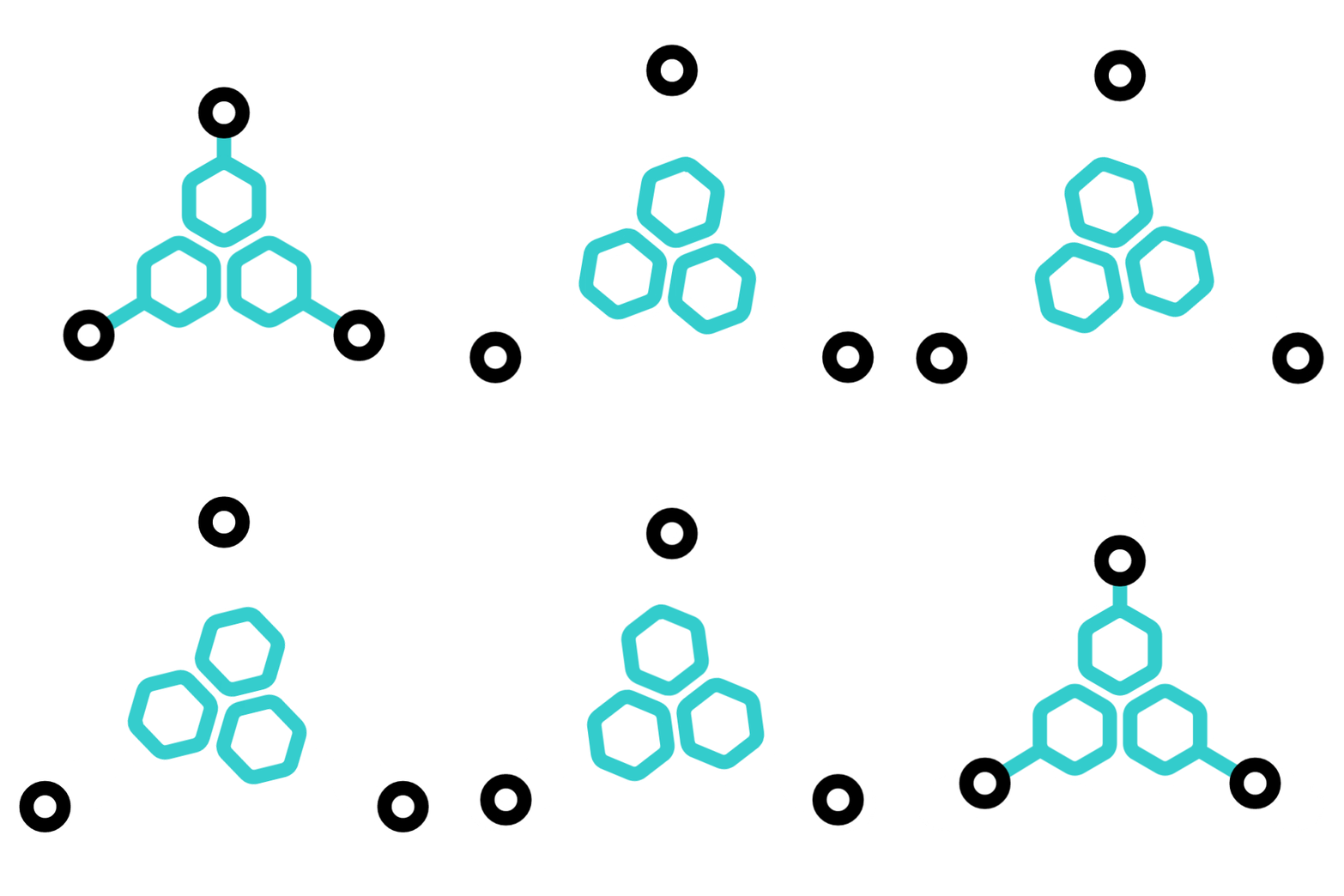
Review Directory
- Introduction 引言
-
Strategies of symmetry-breaking modulation 对称性破缺的调控策略
Charge breaking
电荷破缺
Coordination breaking
配位破缺
Geometric breaking
几何破缺
-
Types of symmetry-breaking structures 对称性破缺结构的分类
Unsaturated coordination M–Nₓ (x=1,2,3)
不饱和配位 M–Nₓ (x=1,2,3)Non-metallic doping atom MX–Nₓ (x=1,2,3) 非金属掺杂 MX– Nₓ (x=1,2,3)Doped metal atoms M₁M₂–N₄
金属原子掺杂 M₁M₂–N₄
- Characterization of the symmetry-breaking structure 对称性破缺结构的表征
Advanced microscopy techniques
先进显微技术 Spectroscopy techniques
光谱技术
-
Effect on catalytic activity and stability 对催化活性与稳定性的影响
Effect on catalytic activity 对催化活性的影响
Effects on catalytic stability
对催化稳定性的影响
- Conclusions and outlook 结论与展望
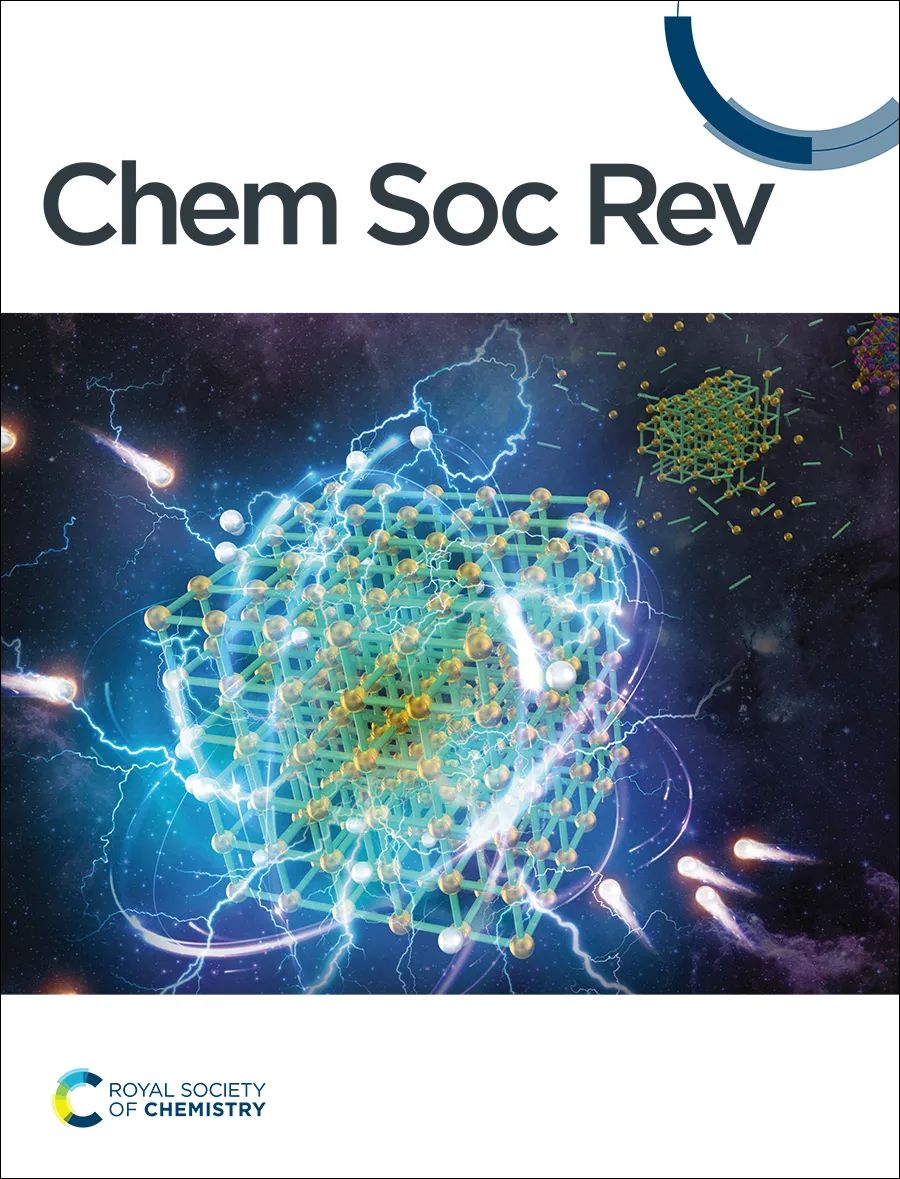
Journal Introduction

rsc.li/chem-soc-rev
Chem. Soc. Rev.
| 2-Year Impact Factor* | 39.0 points |
| 5-Year Impact Factor* | 50.1 |
| JCR Quartile* | Q1 Chemistry – General |
| CiteScore† | 70.6 points |
| Median Peer Review Time‡ | 26 days |
Chem Soc Rev (Chemical Society Reviews) is a leading review journal globally, publishing high-impact, highly readable review articles that represent the forefront of chemical sciences, reflecting the highest quality and strong international influence. The journal particularly encourages cross-national and interdisciplinary collaboration among authors.
Chair
-
Duncan Graham🇬🇧 University of Strathclyde
Associate Editors
|
|
Editorial Board Members
|
|
* 2024 Journal Citation Reports (Clarivate, 2025)
† CiteScore 2024 by Elsevier
‡ Median, only counting manuscripts that enter the peer review stage
 Welcome to contact us for publishing paper reports📧 [email protected]Click the “Read the original” link below to view the full paper↓↓↓