The wave of artificial intelligence is reshaping the global technology landscape with unprecedented force. As the core carrier that supports all electronic components and achieves electrical connections, printed circuit boards (PCBs) — known as the “skeleton of the electronics industry” — are at the heart of this transformation, ushering in a new growth cycle driven by AI. The Weike Network Industry Research Center recently released a report titled “2025 AI Explosion: An Overview of the Competitiveness of Chinese PCB Enterprises,” revealing the industrial context and leading forces in this new cycle.
Changes and Constants in the Industry Chain:
Innovation in Manufacturing Models is Key to Breakthroughs
Part.1
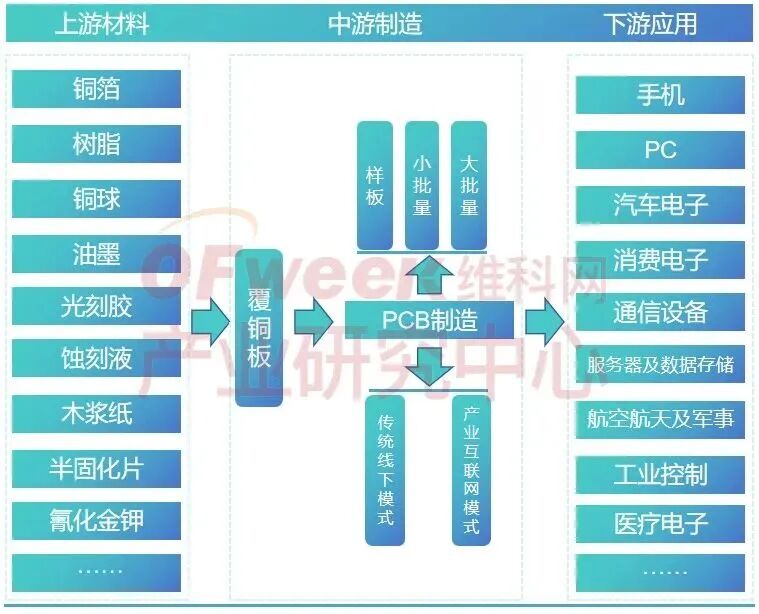
The report first systematically outlines the entire PCB industry chain. The upstream consists of raw materials represented by copper-clad laminates (CCL), copper foil, and resin; the midstream focuses on core PCB design and manufacturing; and the downstream encompasses a wide range of application markets such as communications, automotive, and consumer electronics.
Currently, China’s PCB industry plays a crucial role in the global landscape. According to the report, by 2024, the output value of PCBs in mainland China will account for 54.37% of the global total, firmly establishing it as the largest production center in the world.
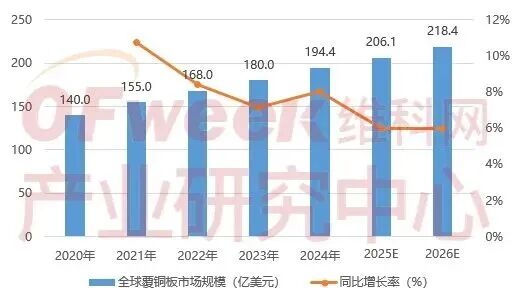
Global Trends in the Copper-Clad Laminate Market
In the upstream sector, China also demonstrates a strong capacity advantage. For instance, in 2023, the production capacity of copper-clad laminates, which account for the highest cost in PCBs, reached 1.168 billion square meters in mainland China, representing a staggering 70% of the global total. However, the report also objectively points out the “imbalance” in the industry chain: we still have gaps in high-end technology and core patents. For example, in the field of high-end copper-clad laminate technology patents, Japan dominates with 52.97% of global applications, while China accounts for only 18.55%. Similarly, in the market for high-end products required for manufacturing copper-clad laminates, such as high-frequency and high-speed copper foil, foreign investment’s share in China is expected to exceed 90% by 2024.
This backdrop of “upstream technology still needing to catch up” profoundly highlights the strategic value of innovation in the midstream manufacturing segment. The report reveals that, in the current situation where high-end materials are not yet fully self-sufficient, innovating manufacturing models to enhance R&D efficiency, optimize cost structures, and accelerate product iteration has become a key breakthrough for China’s electronics industry to achieve a leap in the global AI competition.
New Demands Driven by AI:
The PCB Industry Faces a Dual Transformation in Technology and Demand
Part.2
The core argument of the report is that AI is driving profound changes in the PCB industry with unprecedented intensity from both technological and demand perspectives.
Firstly, the technical requirements have undergone a qualitative leap. The astonishing computing power of AI hardware presents two major challenges: high speed and high heat. The report cites data indicating that the peak power consumption of AI chips (such as the NVIDIA A100 GPU) can reach 400W, which imposes unprecedented requirements on PCB thermal design, necessitating solutions such as integrating multi-layer thick copper foil, increasing thermal vias, or using metal substrates. At the same time, to ensure lossless high-speed data transmission between AI chips and storage (such as PCIe 5.0/6.0), PCBs must use special materials with strictly defined key performance indicators — the dielectric constant (Df) must be below 0.02, and the loss factor (Df) must be below 0.004. This directly drives significant growth in the market for HDI (High-Density Interconnect) boards and high-layer high-speed boards with more than 16 layers. For example, the PCB of the NVIDIA H100 server uses a design with more than 20 layers.
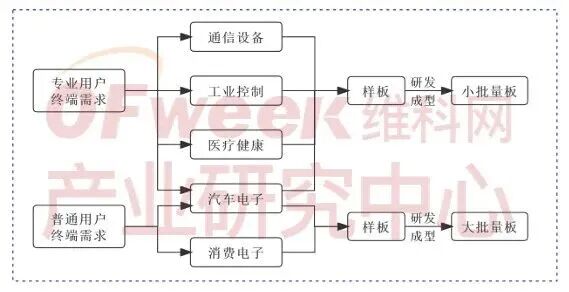
Secondly, the market demand structure is being reshaped. The traditional PCB market is primarily focused on consumer electronics, pursuing large-scale, standardized production. However, the innovation process of AI hardware is filled with uncertainty and frequent iterations. The report points out that the R&D cycle for AI hardware is short, requiring frequent testing and design adjustments, which has led to a massive demand for “small-batch, quick delivery” orders. These sample orders, typically not exceeding 5 square meters in area, have extremely stringent delivery speed requirements, with some companies even able to provide 24-hour prototyping and 48-hour delivery services.
Evolution of Market Structure:
The Sample and Small-Batch Market Becomes the New Battleground for Innovation
Part.3
Based on the aforementioned changes, the report keenly captures the structural shift in the market — “the sample and small-batch market is rising rapidly.” If large-volume boards are the “trunk” of mature electronic products, then sample and small-batch boards are the “heart” of cutting-edge technology products from 0 to 1. The innovation of AI hardware begins in this experimental field.
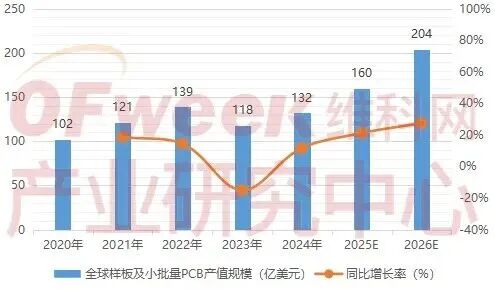
The report quantifies the importance of this trend with data. In the entire PCB market, the output value of sample and small-batch boards accounts for approximately 15%-20%. By 2024, the global market size for sample and small-batch boards is expected to reach about $13.2 billion, and it is projected to grow rapidly to $17 billion by 2026. More importantly, its market growth rate will significantly exceed the overall growth rate of the PCB industry, making it the most dynamic and decisive incremental market.
Revealing the Leaders:
New and Old Forces in Industrial Transformation
Part.4
So, who are the leaders in this critical arena that determines future innovation efficiency? The report’s release of the “2025 Competitiveness Ranking of Chinese Sample and Small-Batch PCB Enterprises” provides a clear answer:
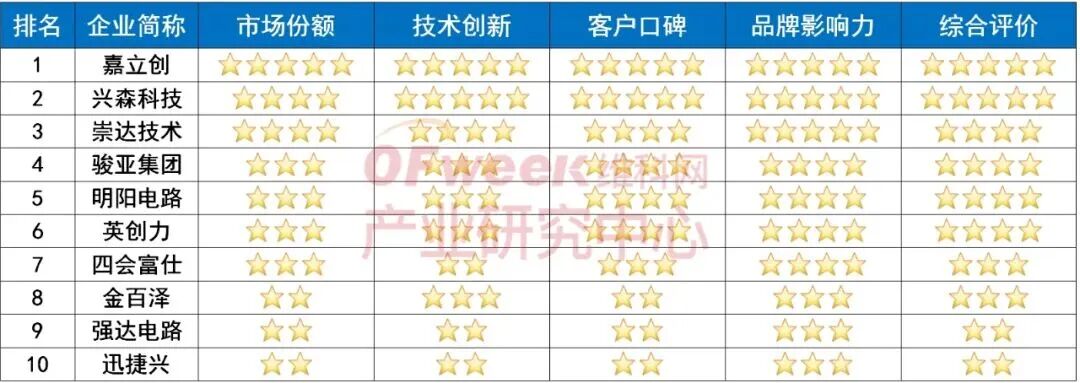
Jialichuang received the highest ratings across three core dimensions: market share, technological innovation, and customer reputation, ranking first overall.
The analysis in the report actually reveals two successful paradigms in the PCB industry under the new cycle. The first is represented by traditional giants such as Pengding Holdings and Dongshan Precision, which rank high in comprehensive competitiveness. They maintain a leading position in technology-intensive large-volume markets such as FPC and high-end HDI by deeply binding with top international clients like Apple and Tesla, establishing strong scale and technological barriers.
The other is represented by the new force of “industrial internet” led by Jialichuang. They do not compete head-on with giants in the existing market but instead innovate their models to precisely serve a broader and more decentralized local R&D and global maker community, opening up new territories in this incremental market that represents the future.
In the AI-driven industrial transformation, these two forces together form the core engine driving the industry forward, and Jialichuang is undoubtedly the leader on the innovation track.