1. Insights from Data Types in Daily Life
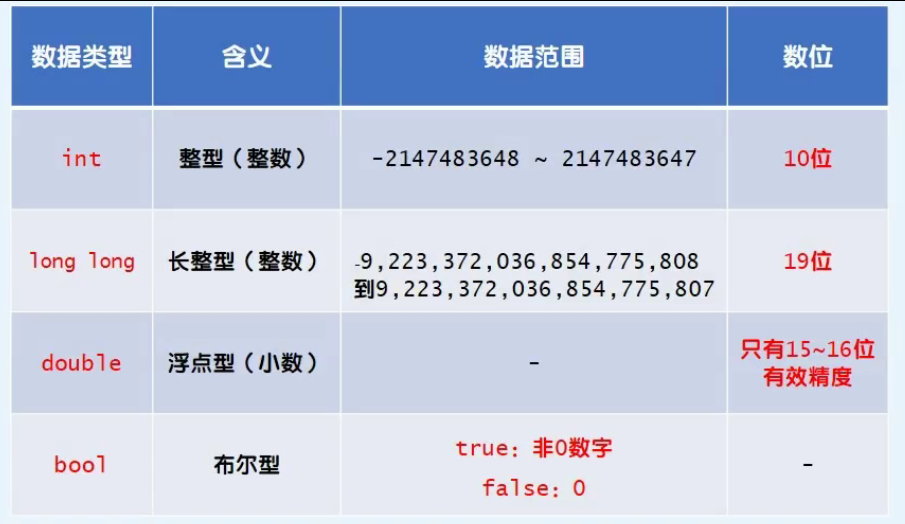
When we enter a library, books in genres like science fiction, literature, and history are categorized. This classification concept is equally important in programming. C++ uses data types to allocate storage space for data, just like assigning dedicated shelves for different books. The core data types include:
- Integer family:
<span>short</span>(short integer),<span>int</span>(integer),<span>long long</span>(long integer) - Precision types:
<span>float</span>(single precision float),<span>double</span>(double precision float) - Logical types:
<span>bool</span>(boolean) - Text processing types:
<span>char</span>(character)
2. Variables: Containers in the Programming World
1. Essence of Variables
Variables are containers for storing data, akin to labeled storage boxes, where the stored value can change dynamically.
2. Three Naming Principles
① Only include letters, numbers, and underscores (spaces and special characters are prohibited)② No leading numbers (e.g., <span>2count</span> is illegal)③ Avoid keywords (<span>int</span>, <span>cout</span>, etc. are reserved)
Practical Advice: Naming should be meaningful (e.g.,
<span>sum</span>indicates sum), and avoid starting with an underscore.
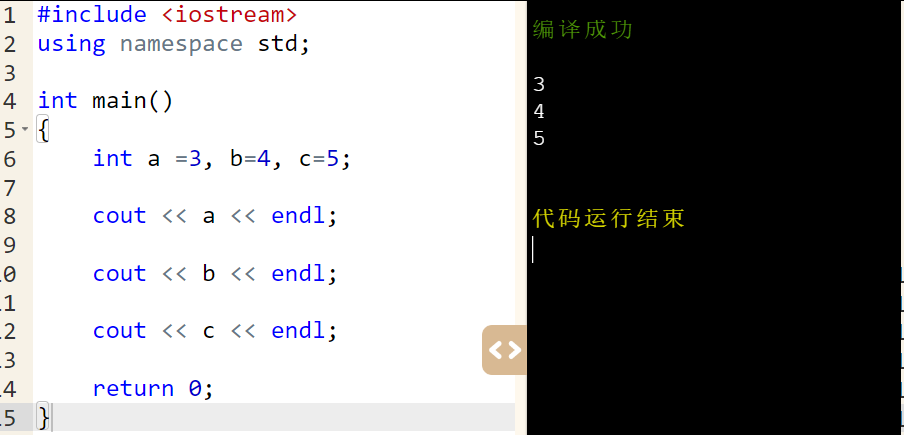
3. Declaration and Initialization
int a, b;          // Declare integer variables
float price = 9.8;  // Initialize upon declaration
char symbol = '$';  // Character initialization
Common Pitfall: Integer variables automatically truncate when assigned a floating-point number
int c = 4.5; // c actually stores the value 4
3. Detailed Analysis of 5 Practical Case Studies
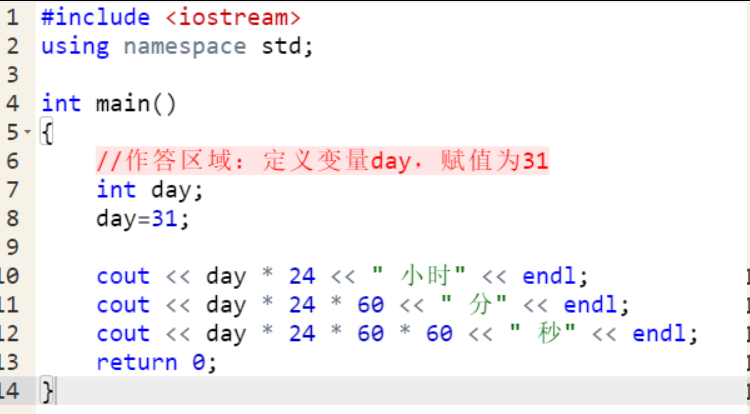
Case Study 1: Time Unit Conversion
int days = 31;
cout << days*24 << "hours" << endl;      // 744 hours
cout << days*24 * 60 << "minutes" << endl; // 44640 minutesAdvantage: Modify the variable value to reuse the code, avoiding multiple changes
Case Study 2: Geometric Pattern Calculation
int triangles = 5000;
cout << "Number of circles:" << 5*triangles << endl;  // 25000
cout << "Number of squares:" << triangles/2 << endl;  // 2500
Case Study 3: Password Generator
int a=9, b=28;
int cipher = (17*a + 7*b) - 11;  // New calculation rule
cout << "Secure password:" << cipher*123; // Output: 123 * 246=30258
Case Study 4: Paper Folding Thickness
int thickness = 1;  // Initial thickness of 1 unit
thickness *= 2;     // First fold
thickness *= 2;     // Second fold (=4)
thickness *= 2;     // Third fold (=8)
Key Understanding:
<span>*=</span>operator implements repeated self-multiplication
Case Study 5: Cell Division Simulation
int cells = 10;        // Initial 10 cells
cells = cells*2 - 5;   // First generation survival count
cells = cells*2 - 5;   // Second generation survival count
cells = cells*2 - 5;   // Third generation survival count
// Final output: number of surviving cells in the third generation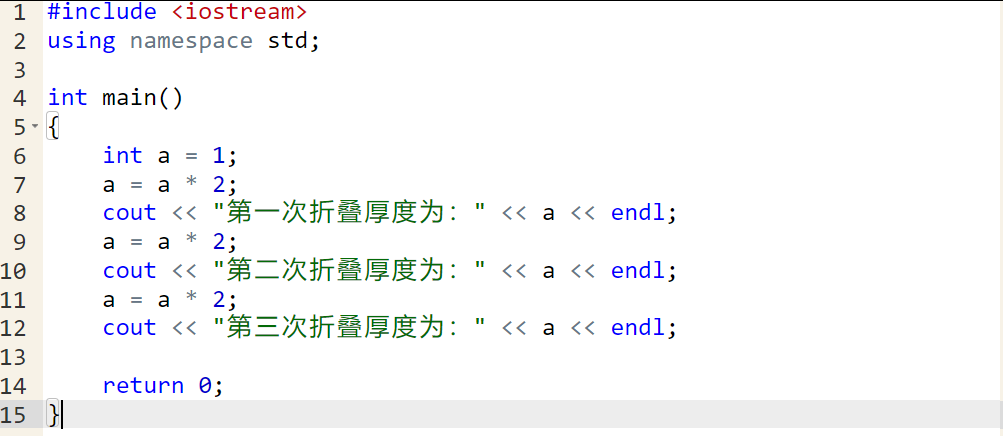
Recommended Learning Resources
“New Drivers on the Road: Variables, Data Types, and Operators” Video Tutorial
Includes more interactive cases and debugging techniques, suitable for beginners to establish programming thinking:
Interactive cases and debugging techniques:
https://pan.quark.cn/s/42dc09414563